

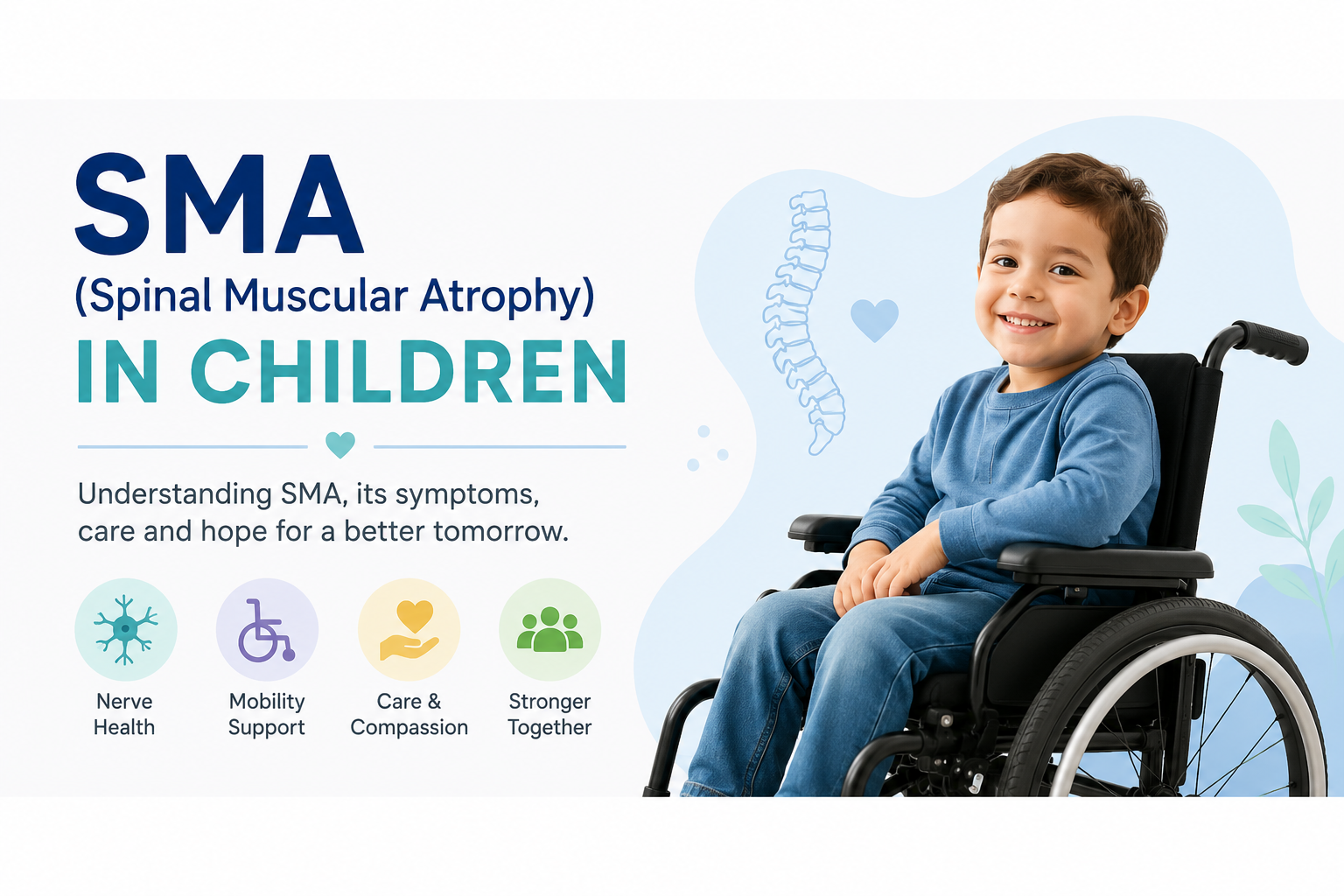
🧬 SMA (Spinal Muscular Atrophy) 2026: The Genetic Condition That’s Finally Being Beaten
What if a single genetic test at birth could prevent your child from ever losing the ability to move, swallow, or breathe? 😔 SMA — Spinal Muscular Atrophy — was once a death sentence for babies. But 2025–2026 has changed everything. Discover the life-saving newborn screening, the one-time gene therapy, and what every special needs parent must demand from their doctor right now.

- 🔬 What Is SMA (Spinal Muscular Atrophy) — and Why Every Parent Needs to Know About It?
- 📊 SMA Statistics 2026: The Numbers That Define the Stakes
- 🧬 What Causes SMA? The Genetics Made Simple
- 🧩 SMA Types: A Complete Guide for Families
- 🚨 SMA Symptoms: Warning Signs at Every Age
- In Newborns and Infants (Type 1 Warning Signs)
- In Older Children (Types 2 and 3)
- The Crucial Insight for Special Needs Families
- 🌟 The Newborn Screening Revolution: Why This Changes Everything
- 💊 SMA Treatment 2026: The Three Life-Changing Options
- 💉 Treatment 1: Onasemnogene Abeparvovec (Zolgensma®) — One-Time Gene Therapy
- 💧 Treatment 2: Risdiplam (Evrysdi®) — Daily Oral Liquid
- 💊 Treatment 3: Nusinersen (Spinraza®) — Intrathecal Injection
- SMA Treatment Comparison Table 2026
- Can Children Receive More Than One Treatment?
- 💔 The Remaining Burden: What Life With SMA Looks Like in 2026
- 🧩 SMA and Special Needs: The Intersections That Matter Most
- 🛡️ The SMA Family Action Plan: What Every Parent Needs to Do
- 🔗 Trusted SMA Resources for Families
- ❓ FAQs: SMA (Spinal Muscular Atrophy)
- Q: How common is SMA?
- Q: Is SMA detected in newborn screening?
- Q: What is the life expectancy for SMA Type 1?
- Q: What is Zolgensma and is it a cure for SMA?
- Q: What is risdiplam (Evrysdi) and how is it different from nusinersen?
- Q: Can a child with SMA have normal intelligence?
- Q: My child has another special needs diagnosis but also seems very floppy. Should I test for SMA?
- 💙 A Final Word — Because for SMA, Timing Is Everything
🔬 What Is SMA (Spinal Muscular Atrophy) — and Why Every Parent Needs to Know About It?
SMA — Spinal Muscular Atrophy — is a rare but devastating genetic condition that destroys the motor neurons controlling muscle movement, causing progressive muscle weakness, atrophy, and in its most severe form, death in infancy.
In simple terms: the body cannot make enough of a critical protein called SMN, and without it, the nerve cells that move muscles gradually die.
SMA is a rare genetic disorder characterised by muscle weakness and progressive loss of mobility. It has a significant physical, emotional and social impact on patients and their caregivers, necessitating comprehensive medical and supportive care. (Source: PMC — Nusinersen and Risdiplam Systematic Review)
For families in the special needs community, SMA is one of the most important conditions to understand. It affects newborns, infants, children, and adults.
And thanks to a revolution in treatment — including a one-time gene therapy that can prevent the disease from ever manifesting — early knowledge is now the difference between a lifetime of disability and a child who meets all their developmental milestones.
📊 SMA Statistics 2026: The Numbers That Define the Stakes
| Statistic | Figure | Source |
|---|---|---|
| SMA birth incidence (global) | ~1 in 6,000–10,000 live births | PMC — German NBS Study |
| SMA as most common neurodegenerative disease in childhood | #1 | PMC — German NBS Study |
| SMA Type 1 (most severe) proportion | ~50% of all SMA cases | PMC — Italian NBS Study |
| SMN1 gene deletion as cause | ~95% of all SMA cases | PMC — Utah NBS Five-Year Review |
| SMA Type 1 survival without treatment | Most do not survive beyond age 2 | PMC — Italian NBS Study |
| Carrier frequency of SMA gene | ~1 in 40–50 people | HRSA Newborn Screening |
| Infants treated presymptomatically — milestone outcomes | Most reached age-appropriate milestones | PMC — Utah Five-Year NBS Review |
| States/countries with mandatory SMA newborn screening | Expanding rapidly across US and Europe | HRSA |
| Median age at diagnosis with newborn screening | 7 days | PMC — Italian NBS Study |
| Median age at treatment with newborn screening | 20.5 days | PMC — Italian NBS Study |
SMA is the most common neurodegenerative disease in childhood. Since motor neuron injury is usually not reversible, early diagnosis and treatment are essential to prevent major disability. (Source: PMC — German Newborn Screening Study)
These numbers tell a story of urgency — and increasingly, of hope.
🧬 What Causes SMA? The Genetics Made Simple
SMA is caused by a mutation in the SMN1 gene (Survival Motor Neuron 1 gene). This gene normally produces a protein called SMN — essential for the health and survival of motor neurons. Without enough SMN protein, motor neurons die. When motor neurons die, muscles stop receiving the signals they need to function, and weakness sets in progressively.
SMA is an autosomal recessive neuromuscular disease resulting from biallelic pathogenic variants of the survival motor neuron 1 (SMN1) gene that leads to motor neuron degeneration, progressive muscle atrophy, and weakness.
In its most severe form and without timely initiation of treatment, SMA can be fatal or lead to a requirement for permanent ventilation by 2 years of age. (Source: SAGE Journals — Zolgensma Updated Expert Guidance, November 2025)
The SMN1 and SMN2 Gene Relationship
This is the key to understanding both the disease and its treatment.
Every human has two genes involved in SMN protein production:
| Gene | Role | What Happens in SMA |
|---|---|---|
| SMN1 | Primary SMN producer — makes full-length, functional SMN protein | Deleted or mutated in SMA; cannot do its job |
| SMN2 | Backup gene — produces mainly shorter, less effective SMN protein | Still present; number of copies determines SMA severity |
The more SMN1 and SMN2 genes you have in your cells, the more SMN protein your body can make. In SMA, your baby’s body cannot make enough SMN protein. When a baby cannot make enough SMN protein, motor neurons die, damaging the connection between the brain and the muscles. (Source: HRSA — Newborn Screening for SMA)
The number of SMN2 copies a child has is the single most important genetic predictor of SMA severity:
| SMN2 Copies | SMA Type Usually Associated | Expected Outcome Without Treatment |
|---|---|---|
| 1–2 copies | SMA Type 1 (most severe) | Death or permanent ventilation by age 2 |
| 3 copies | SMA Type 2 | Cannot walk; survives but significantly disabled |
| 4 copies | SMA Type 3 | Can walk; weakness progresses |
| 5+ copies | SMA Type 4 / asymptomatic | Mild weakness in adulthood |
(Source: PMC — German NBS Study | HRSA)
This is why newborn screening that identifies both the SMN1 deletion and SMN2 copy number is so critical — it tells doctors exactly how urgently treatment is needed.
🧩 SMA Types: A Complete Guide for Families
SMA is not a single condition. It presents across a wide spectrum. Understanding the type is essential for treatment decisions, expectations, and planning.
The Four Main SMA Types
🔴 SMA Type 1 — The Most Severe Form
Approximately 50% of SMA cases are categorised as type 1, marked by a severe onset in early infancy and in most cases a presence of 2 SMN2 copies.
Without treatment, symptoms manifest within the first 6 months of life, accompanied by the inability to reach the milestones of sitting and walking. Most type 1 patients do not survive beyond the second year of life, often dying of respiratory failure unless mechanical ventilation is provided. (Source: PMC — Italian NBS Study)
🟡 SMA Type 2 — Intermediate Severity
Type 2 children can survive to early adulthood but will never walk. They almost invariably develop severe curvature of the spine, feeding and respiratory insufficiency that require appropriate intervention. Cognitive abilities are not impaired and children are generally bright and sociable. (Source: ClinicalTrials.gov — NBS Proof of Principle Study)
🟢 SMA Type 3 — Milder Childhood Form
Children with SMA Type 3 can walk in childhood but may lose this ability later. They have a near-normal life expectancy. Weakness is predominantly in the legs and hips. They often need ongoing physiotherapy and orthopedic support.
🔵 SMA Type 4 — Adult Onset
The mildest form. Onset is in adulthood, usually after age 30. Life expectancy is normal. Mild to moderate weakness develops gradually.
SMA Type Comparison at a Glance
| SMA Type | Onset | Key Features | Life Expectancy |
|---|---|---|---|
| Type 1 | Birth to 6 months | Cannot sit without support; respiratory failure | Without treatment: under 2 years |
| Type 2 | 7–18 months | Can sit; cannot walk; scoliosis common | Early adulthood |
| Type 3 | 18 months to 17 years | Can walk; weakness progresses | Near-normal |
| Type 4 | After age 30 | Mild limb weakness | Normal |
(Source: NINDS — SMA Information)
🚨 SMA Symptoms: Warning Signs at Every Age
Understanding SMA symptoms is critical — both for families monitoring diagnosed children and for those who may not yet know their child carries the mutation.

In Newborns and Infants (Type 1 Warning Signs)
- 🔴 Floppy baby / hypotonia — unusual limpness when held; head falls back unsupported
- 🔴 Weak cry or cough — insufficient respiratory muscle strength
- 🔴 Difficulty feeding or swallowing — poor sucking reflex
- 🔴 Reduced spontaneous movement — limited arm and leg movement
- 🔴 Tongue fasciculations — visible rippling movements of the tongue
- 🔴 Bell-shaped chest — due to breathing with the diaphragm while intercostal muscles weaken
- 🔴 Missing developmental milestones — not lifting head, not rolling
In Older Children (Types 2 and 3)
- 🔴 Proximal muscle weakness — difficulty climbing stairs, rising from the floor, lifting arms
- 🔴 Frequent falls — particularly with Type 3 as children age
- 🔴 Scoliosis — progressive spinal curvature developing with Type 2
- 🔴 Fatigue with physical activity — tiring much faster than peers
- 🔴 Reduced respiratory endurance — difficulty with sustained physical exertion
- 🔴 Joint contractures — stiff joints from reduced movement
The Crucial Insight for Special Needs Families
For families already managing a child’s developmental differences — autism, cerebral palsy, Down syndrome — hypotonia (low muscle tone) is a shared feature across multiple conditions. This means SMA symptoms in children with existing special needs can be masked or misattributed.
If your child has unexplained hypotonia, progressive weakness, or is not meeting motor milestones — regardless of any existing diagnosis — requesting specific SMA genetic testing (SMN1 deletion analysis) is fully justified.
🌟 The Newborn Screening Revolution: Why This Changes Everything
This is the section that represents the single greatest advance in SMA care in history — and one that most families have never heard of until their baby is already showing symptoms.
Presymptomatic treatment dramatically shifts the natural history of SMA, with most patients meeting appropriate developmental milestones. Patients with two copies of SMN2 identified through newborn screening constitute a neurogenetic emergency. (Source: PMC — Utah Five-Year NBS Review)
What Newborn Screening for SMA Involves
Newborn screening for SMA uses a tiny dried blood spot sample — the same heel prick test already used for other newborn conditions — to detect the absence of SMN1 exon 7, the genetic change present in 95% of SMA cases.
Newborn screening only looks for one specific change in the SMN1 gene (the absence of exon 7). It is estimated that 2 to 5 percent of SMA cases are caused by a different genetic change that is not currently detected by newborn screening. (Source: HRSA — Newborn Screening for SMA)
Real-World Results: What Newborn Screening Is Achieving
The Italian regional newborn screening study produced results that should give every parent with a new baby enormous hope:
Over the first 20 months since regional NBS introduction, four out of 42,492 screened children were identified. Median age at diagnosis was 7 days and median age at treatment was 20.5 days. All but one were asymptomatic at birth, showed no clinical signs of disease after a maximum follow-up of 16 months and reached motor milestones appropriate with their age. The timely administration of disease-modifying therapies prevented presymptomatic subjects from developing disease symptoms. (Source: PMC — Italian NBS Study)
Children who would have previously developed SMA Type 1 — and who, without treatment, would not have survived past age 2 — are now meeting their milestones and showing no clinical signs of disease. That is the power of early detection.
The Utah five-year programme similarly found:
Treated patients with two copies of SMN2 are meeting important developmental milestones inconsistent with the natural history of type 1 SMA. Patients with 3–4 copies of SMN2 follow normal developmental timelines. (Source: PMC — Utah Five-Year NBS Review)
The critical action point for every new parent: Ask your obstetric or neonatal team whether SMA is included in your region’s newborn screening panel. In the US, SMA was added to the Recommended Uniform Screening Panel (RUSP) in 2018. Not all countries have adopted it yet. If you are unsure — ask directly.
💊 SMA Treatment 2026: The Three Life-Changing Options
The treatment revolution for SMA is one of the most remarkable stories in modern medicine. Three approved treatments now exist — each targeting SMN protein production through a different mechanism.
💉 Treatment 1: Onasemnogene Abeparvovec (Zolgensma®) — One-Time Gene Therapy
Onasemnogene abeparvovec (Zolgensma, Novartis), approved by the FDA in 2019, is a gene therapy that uses the adeno-associated virus serotype 9 (AAV-9) vector to deliver a functional copy of the SMN1 gene. Onasemnogene abeparvovec is given as a one-time intravenous (IV) injection. (Source: ICER — SMA Therapies Review, 2025)
This is the most transformative treatment in SMA history. One injection. One time. The functional SMN1 gene is delivered directly into the child’s cells, enabling them to produce the SMN protein they were born unable to make.
Key facts about Zolgensma:
- Approved for children under 2 years of age
- One-time IV infusion — not a repeated treatment
- Requires short-term corticosteroid treatment to manage immune response
- Currently the most expensive single drug dose in the world
- Families are key monitors of long-term outcomes after treatment
Families occupy an important role in monitoring the occurrence of long-term adverse events. Caregivers are encouraged to maintain regular communication with healthcare providers to discuss any concerning signs and symptoms or complications. (Source: SAGE Journals, November 2025)
💧 Treatment 2: Risdiplam (Evrysdi®) — Daily Oral Liquid
Risdiplam (Evrysdi, Genentech), approved by the FDA in 2020, is a splicing modifier that targets SMN2 to increase the production of SMN protein. Unlike nusinersen, it is an oral medication taken once daily. (Source: ICER — SMA Therapies Review, 2025)
For families — and particularly for children with special needs — the oral delivery of risdiplam is a major practical advantage over spinal injections. It is available from newborn through adulthood.
Risdiplam has proven to significantly enhance SMA Type 1 patient outcomes. According to a Matching-Adjusted Indirect Comparison (MAIC) approach, risdiplam has a lower incidence of serious adverse events, better survival rates, and improved motor function than nusinersen. (Source: PMC — SMA Biology and Treatment Strategies)
💊 Treatment 3: Nusinersen (Spinraza®) — Intrathecal Injection
Nusinersen was the first FDA-approved SMA treatment (2016). It works by modifying how the SMN2 gene is “read” by the body, increasing production of full-length SMN protein. It is delivered by spinal injection every four months after a loading phase.
While highly effective, the spinal delivery route is more challenging — particularly for children with special needs who may have heightened anxiety or physical complications (such as scoliosis in Type 2) that make lumbar puncture difficult.
SMA Treatment Comparison Table 2026
| Treatment | Type | FDA Approval | How Given | Age Range | Key Advantage |
|---|---|---|---|---|---|
| Onasemnogene abeparvovec (Zolgensma) | Gene therapy | 2019 | One-time IV infusion | Under 2 years | Single dose; addresses root cause |
| Risdiplam (Evrysdi) | SMN2 splicing modifier | 2020 | Daily oral liquid | Newborn to adult | Easiest administration; oral |
| Nusinersen (Spinraza) | SMN2 splicing modifier | 2016 | Spinal injection | Newborn to adult | Longest track record of safety |
(Sources: ICER SMA Review 2025 | PMC Systematic Review)
Can Children Receive More Than One Treatment?
Yes — and this is an emerging area of SMA care. “Bridging,” “switching,” and “combination” therapy approaches are being used and studied.
In some cases, patients are treated with multiple disease-modifying therapies at the same time or sequentially. “Bridging therapy” refers to risdiplam or nusinersen administered prior to onasemnogene abeparvovec and then discontinued. “Combination therapy” is defined as continuing or initiating risdiplam or nusinersen treatment after onasemnogene abeparvovec. (Source: SAGE Journals — Updated Zolgensma Guidance, November 2025)
Treatment decisions are complex and should always be made with a specialist SMA neurologist.
💔 The Remaining Burden: What Life With SMA Looks Like in 2026
SMA treatments have achieved extraordinary outcomes — but they have not eliminated all challenges. For families living with SMA today, an honest picture is essential.
The majority of caregivers of paediatric patients (62.5%) described muscle weakness as “severe” or “very severe.” On a scale of 1–10, caregivers of paediatric patients strongly attributed the patients’ difficulties in performing daily activities to muscle weakness (mean = 7.7). Limitations experienced in motor function were highly attributed to muscle weakness (mean = 7.8). (Source: PMC — Remaining Burden of SMA Survey, August 2024)
Even treated children with SMA continue to face:
- Ongoing muscle weakness that affects daily activity and independence
- Need for assistive devices — wheelchairs, ventilators, feeding supports
- Regular multidisciplinary appointments across multiple specialties
- Family financial and emotional strain
- Uncertainty about long-term outcomes as treatments are still relatively new
A Story That Speaks for Thousands of Families
Meet Lena. She is the mother of a 4-year-old son named Matteo, diagnosed with SMA Type 1 through newborn screening at just 7 days old. Matteo received onasemnogene abeparvovec at 3 weeks of age.
Today, Matteo walks. He runs — shakily, but he runs. He talks in full sentences. He goes to nursery.
“Without that heel prick test,” Lena says quietly, “I would be living a completely different life. He would be on a ventilator. Or we might have lost him already.”
But Lena is also clear about what remains: “People look at him and think he’s ‘cured.’ He’s not cured. He needs physiotherapy twice a week. He tires much faster than other children. We watch for any sign of regression with every cold. This is forever. But ‘forever’ with Matteo walking is the most beautiful forever I can imagine.”
Matteo’s story represents both the triumph and the continued reality of SMA in 2026.
🧩 SMA and Special Needs: The Intersections That Matter Most
SMA does not exist in isolation. Many families in the HopeForSpecial community navigate SMA alongside other neurodevelopmental differences. Here is what they need to know:
🔸 SMA Type 2 children have normal cognitive function — but are frequently underestimated.
Children with Type 2 SMA are generally bright and sociable with unimpaired cognitive abilities. (Source: ClinicalTrials.gov) Yet they are routinely placed in education settings that underestimate their academic capacity because of their physical needs. Every SMA Type 2 child deserves educational expectations that match their intelligence.
🔸 Hypotonia is a shared feature with many special needs conditions.
SMA’s characteristic “floppy baby” presentation overlaps with Down syndrome, cerebral palsy, Prader-Willi syndrome, and other conditions. For children with existing diagnoses, additional motor regression or unexplained weakness should trigger SMA-specific genetic testing even if hypotonia was previously attributed to the primary diagnosis.
🔸 The quality of life impact on families is profound and underrecognised.
Nusinersen therapy was associated with improved communication and emotional functioning in subsets of the SMA population, particularly for patients on maintenance therapy for longer duration. However, increases in family resources burden and worry were also documented. (Source: PMC — QoL Outcomes with Nusinersen) Treatment improves outcomes AND adds new caregiving demands simultaneously. This dual reality needs acknowledgement.
🔸 SMA is a rare genetic disorder characterised by muscle weakness and progressive loss of mobility from prenatal to 18 years. It has a significant physical, emotional and social impact on patients and their caregivers, necessitating comprehensive medical and supportive care. (Source: PMC — Systematic Review) This comprehensive care often falls disproportionately on mothers. Fathers, siblings, and extended family members are largely invisible in SMA care research.
🔸 Newborn screening is not universal.
Despite being added to the US RUSP in 2018, implementation varies by state. Globally, many countries still do not screen. Parents in regions without mandatory SMA NBS should advocate for its inclusion — and ask their midwife or paediatrician about private genetic testing if they have a family history of SMA or unexplained neuromuscular conditions.
🛡️ The SMA Family Action Plan: What Every Parent Needs to Do
The EARLY Framework for SMA Families 💙
| Letter | Action | What It Means |
|---|---|---|
| E | Ensure newborn screening | Confirm your region screens for SMA; advocate if not |
| A | Act on out-of-range results immediately | SMA with 2 SMN2 copies is a neurogenetic emergency |
| R | Request SMN2 copy number testing | Critical for treatment decisions |
| L | Link to a specialist SMA centre | Do not manage SMA with a general neurologist alone |
| Y | You as caregiver need support too | Caregiver mental health is part of SMA care |
The Multidisciplinary Team Every SMA Child Needs
A comprehensive SMA care team should include:
- 🧠 Paediatric neurologist (SMA specialist)
- 🫁 Pulmonologist (respiratory monitoring)
- 🍽️ Gastroenterologist / dietitian (swallowing and nutrition)
- 🦴 Orthopaedic surgeon (scoliosis, joint management)
- 🖐️ Occupational therapist (daily function and independence)
- 🏃 Physiotherapist (mobility, strength, positioning)
- 🗣️ Speech-language therapist (communication and swallowing)
- 💬 Psychologist (family and child mental health)
- 👩⚕️ Specialist nurse coordinator (care coordination)
(Source: CURE SMA — Standards of Care | SAGE Journals)
🔗 Trusted SMA Resources for Families
- 🌐 Cure SMA — The leading US patient advocacy and research organisation for SMA
- 🌐 HRSA — Newborn Screening for SMA — NBS programme information and resources
- 🌐 SMA Foundation — Research funding and clinical trial information
- 🌐 Muscular Dystrophy Association — SMA — Comprehensive patient and family education
- 🌐 ClinicalTrials.gov — SMA — Current open trials for SMA in children
- 🌐 SMA UK — UK-specific support and resources for SMA families
❓ FAQs: SMA (Spinal Muscular Atrophy)
Q: What is SMA (Spinal Muscular Atrophy) in simple terms?
SMA is a rare genetic disorder characterised by muscle weakness and progressive loss of mobility, with a significant physical, emotional and social impact on patients and their caregivers. (Source: PMC) It is caused by a mutation in the SMN1 gene that prevents production of a protein motor neurons need to survive.
Q: How common is SMA?
SMA occurs in approximately 1 in 6,000–10,000 live births globally. SMA is the most common neurodegenerative disease in childhood. (Source: PMC — German NBS Study) It affects all ethnicities and sexes equally and occurs when a child inherits mutated SMN1 genes from both parents.
Q: Is SMA detected in newborn screening?
Yes — in regions where it has been implemented. Newborn screening helps babies lead healthier lives. Your baby may need to get treatment right away, even if they are not showing signs or symptoms. (Source: HRSA) In the US, SMA was added to the RUSP in 2018, but coverage varies by state. Ask your doctor whether your region screens for SMA.
Q: What is the life expectancy for SMA Type 1?
Without treatment, most Type 1 patients do not survive beyond the second year of life, often dying of respiratory failure. (Source: PMC — Italian NBS Study) However, with early treatment through newborn screening, children who would have had Type 1 SMA are now reaching age-appropriate motor milestones and living active childhoods.
Q: What is Zolgensma and is it a cure for SMA?
Onasemnogene abeparvovec (Zolgensma) is a gene therapy that uses the AAV-9 vector to deliver a functional copy of the SMN1 gene. It is given as a one-time intravenous injection. (Source: ICER, 2025) It is not technically a cure — it does not repair existing motor neuron damage — but when given early, it can prevent SMA from ever manifesting.
Q: What is risdiplam (Evrysdi) and how is it different from nusinersen?
Risdiplam (Evrysdi) is a splicing modifier that targets SMN2 to increase SMN protein production. Unlike nusinersen, it is an oral medication taken once daily. (Source: ICER, 2025) For families — especially those managing children with special needs — the oral delivery is a significant practical advantage over nusinersen’s spinal injection.
Q: Can a child with SMA have normal intelligence?
Absolutely. Children with SMA Type 2 have unimpaired cognitive abilities and are generally bright and sociable. (Source: ClinicalTrials.gov NBS Study) SMA affects motor neurons only — not cognitive function. Children with SMA Type 2 and Type 3 often excel academically and require educational environments that match their intellectual capacity.
Q: My child has another special needs diagnosis but also seems very floppy. Should I test for SMA?
Yes — it is worth discussing with your child’s paediatrician or neurologist. Unexplained or progressive muscle weakness, even in a child with an existing diagnosis, can have SMA as an additional cause. A blood-based SMN1 deletion test is straightforward and can confirm or rule out SMA quickly.
💙 A Final Word — Because for SMA, Timing Is Everything
SMA was once one of the most devastating diagnoses a family could receive. A baby born with SMA Type 1 faced a near-certain prognosis of death before age 2. That reality has changed — but only for the families who get the right information at the right time.
The newborn heel prick test. The seven-day diagnosis. The 20-day treatment. These are not numbers from a research paper. They are the difference between a child who walks and a child who cannot. Between a family watching their baby grow and a family watching their baby deteriorate.
For the special needs community — where so many of our children already navigate complex medical profiles — SMA awareness is not a peripheral concern. It is a critical piece of the knowledge base every parent deserves to have.
Ask about newborn screening. Know the symptoms. Understand the treatments. And never accept “it’s probably just low tone” as a complete answer when something tells you it is more.
Your advocacy is your child’s earliest and most powerful treatment. 💙
📌 If you suspect your child may have SMA, or if you have a family history of muscle weakness or SMA, speak with your GP or paediatrician immediately and ask for SMN1 genetic testing. For families in the US, visit Cure SMA or call their helpline for immediate guidance.


