
🔴 Psoriasis 2026: The Chronic Skin Condition Most Families Misunderstand
Could the red, scaly patches on your child’s skin be psoriasis — the chronic immune condition that affects millions of children, triggers anxiety and depression, and is almost always misunderstood? 😔 Discover the shocking mental health connection, the 2025–2026 FDA-approved breakthroughs, and what special needs parents urgently need to know. This could change your child’s future completely.

- 🔬 What Is Psoriasis — and Why Should Every Special Needs Parent Understand It?
- 📊 Psoriasis Statistics 2026: The Numbers That Show the True Scale
- 🧬 What Causes Psoriasis? The Immune System Explained Simply
- 🧩 Types of Psoriasis: A Complete Guide
- 👶 Psoriasis in Children: The Special Needs Intersection Nobody Talks About
- A Story That Resonates With Many Families
- The Mental Health Crisis in Children with Psoriasis
- Psoriasis and Specific Special Needs Conditions
- Psoriasis and Cognition: What 2024–2025 Research Reveals
- 🚨 Recognising Psoriasis Symptoms: What Parents Must Never Miss
- 💊 Psoriasis Treatment 2026: The Most Complete Guide Available
- 🏥 Treatment Step 1: Topical Therapies (First Line)
- 💡 Treatment Step 2: Phototherapy
- 💊 Treatment Step 3: Systemic Medications
- 🌟 Breakthrough 1: Guselkumab — First IL-23 Inhibitor for Children
- 🌟 Breakthrough 2: The Shift From Corticosteroids to Targeted Therapy
- 🌿 Managing Psoriasis at Home: Practical Daily Strategies
- 💔 The Emotional Impact of Psoriasis on Children and Families
- 🔍 What Special Needs Families Needs to Know about Psoriasis
- 🔗 Trusted Psoriasis Resources for Families
- ❓ FAQs: Psoriasis
- Q: What is psoriasis in simple terms?
- Q: Can children get psoriasis?
- Q: Is psoriasis hereditary?
- Q: What are the new treatments for psoriasis in children in 2026?
- Q: Does psoriasis affect mental health in children?
- Q: How is psoriasis treated in children?
- Q: What triggers psoriasis flares in children?
- Q: Is psoriasis related to psoriatic arthritis?
- 💙 A Final Word — Because Psoriasis Is Never “Just a Skin Condition”
🔬 What Is Psoriasis — and Why Should Every Special Needs Parent Understand It?
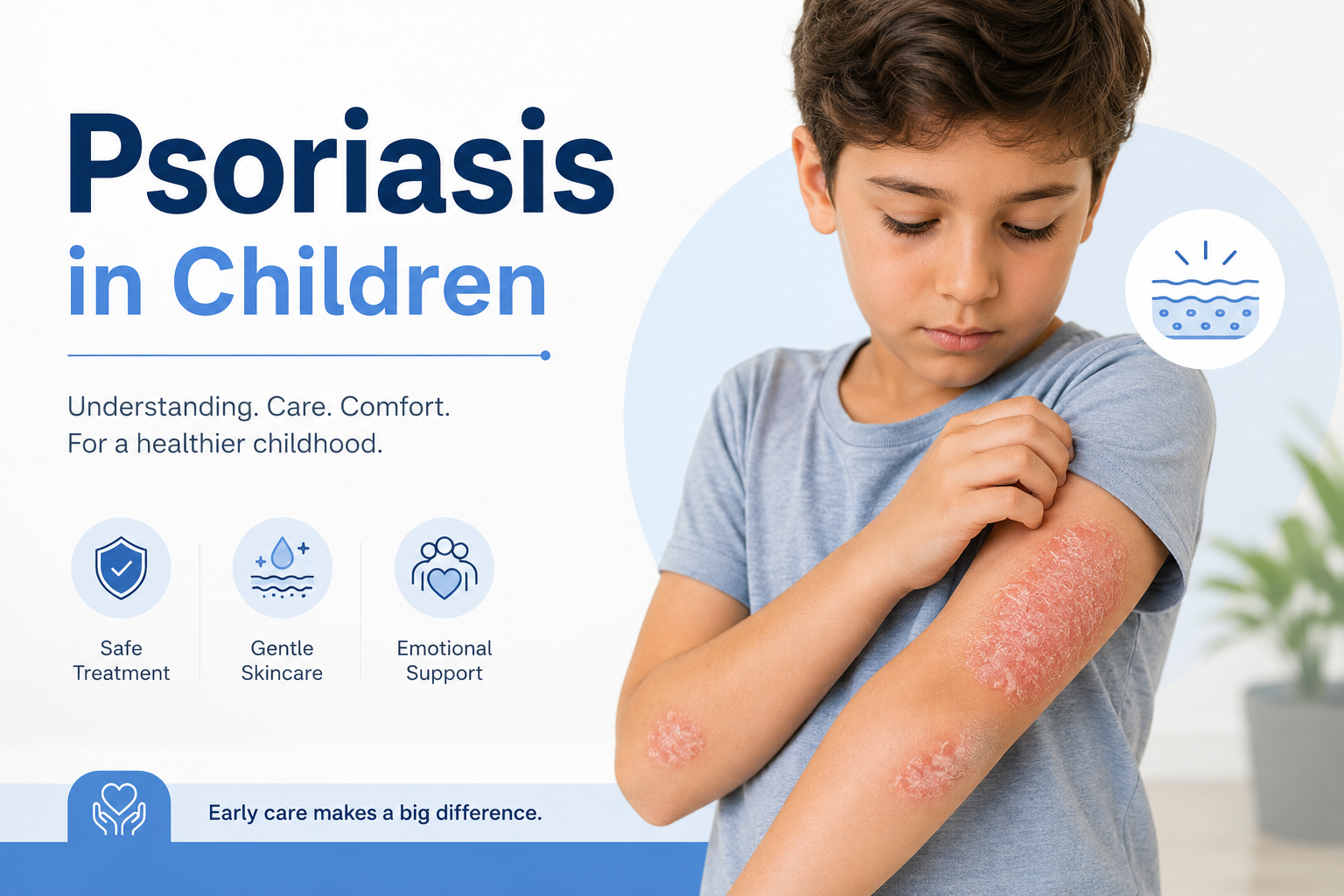
Psoriasis is a chronic, immune-driven inflammatory skin condition that causes skin cells to multiply up to ten times faster than normal, producing raised, red, scaly patches called plaques. It is not contagious. It is not caused by poor hygiene. And it is far more than a skin problem.
Approximately 0.09–11.43% of the global population has psoriasis and nearly one-third of psoriasis cases occur in children. The WHO views psoriasis as a critical global health issue due to its substantial psychological and social effects on young people with limited treatment choices. (Source: Archives of Medical Science, June 2025)
For families raising children with special needs, psoriasis matters deeply. It occurs alongside neurodevelopmental conditions. Psoriasis symptoms amplify anxiety, depression, and social isolation. And it frequently goes undiagnosed — or undertreated — in children who already have complex medical profiles.
📊 Psoriasis Statistics 2026: The Numbers That Show the True Scale
ASIRs (age-standardised incidence rates) for psoriasis increased from 1990 to 2021 by 10.3% for men and 7.3% for women. By 2050, global incidence is projected to reach approximately 70 per 100,000 for men and 66 per 100,000 for women. (Source: Medscape / GBD Study, November 2025)
| Statistic | Figure | Source |
|---|---|---|
| Global population with psoriasis | 0.09–11.43% | Archives of Medical Science, 2025 |
| Proportion of psoriasis cases in children | ~1 in 3 (nearly one-third) | Archives of Medical Science, 2025 |
| US adults with psoriasis | ~7.5 million | National Psoriasis Foundation |
| Global incidence increase (1990–2021) | +10.3% in men; +7.3% in women | Medscape / GBD 2025 |
| Projected global incidence by 2050 | ~70 per 100,000 (men); ~66 per 100,000 (women) | Medscape / GBD 2025 |
| Children with psoriasis in US study (2016–2020) | 8,935 paediatric patients identified | Springer / Dermatology & Therapy, Sept 2025 |
| Paediatric patients with moderate-severe psoriasis | 1,448 of 8,935 (16.2%) | Springer / Dermatology & Therapy, Sept 2025 |
| Psoriasis patients with psychiatric disorder | Significantly higher than general population | PMC — Mental Health in Children with Psoriasis, 2025 |
| Risk of depression in psoriasis patients | 2–3x higher than non-psoriasis peers | Cureus / Psychiatric Morbidities in Psoriasis |
| Psoriatic arthritis risk in psoriasis patients | ~30% develop it | NPF |
Remarkable progress has been made in the past year for the management of psoriasis. Several new FDA regulatory approvals across both adult and paediatric populations have expanded treatment options. 2025 has been marked by a growing emphasis on individualisation of treatment and aiming for optimal therapeutic targets. (Source: Dermatology Times, 2025)
🧬 What Causes Psoriasis? The Immune System Explained Simply
Psoriasis is not caused by an allergy, a virus, or a lack of cleanliness. It is caused by a malfunction in the immune system — and understanding this is the first step toward understanding why it is so persistent and why it requires medical treatment, not willpower.
In a healthy immune system, white blood cells called T-cells protect the body from infection by attacking foreign invaders.
In psoriasis, T-cells mistakenly attack healthy skin cells. The body responds by producing new skin cells at an accelerated rate — up to 10 times faster than normal. The result is a build-up of skin cells that form the characteristic raised, red, scaly plaques.
The Trigger-Inflammation Cycle in Psoriasis
| Stage | What Happens |
|---|---|
| Trigger event | Infection, stress, injury, or medication activates the immune system |
| T-cell activation | T-cells attack healthy skin cells by mistake |
| Inflammatory response | Inflammatory chemicals (cytokines like TNF-α, IL-17, IL-23) flood the skin |
| Accelerated cell production | Skin cells produced in 3–4 days instead of 28–30 days |
| Plaque formation | Dead skin cells accumulate faster than they can shed, forming plaques |
| Cycle continues | Inflammation persists; plaques recur, especially after new triggers |
(Source: National Psoriasis Foundation | NIMH / NIAMS — Psoriasis)
What Triggers Psoriasis Flares?
Understanding triggers is one of the most important tools for managing psoriasis. Common triggers include:
- 🔴 Stress — one of the strongest and most consistent psoriasis triggers
- 🔴 Infection — especially streptococcal throat infections (particularly in children)
- 🔴 Skin injury — cuts, sunburn, or scratches can trigger the “Koebner phenomenon”
- 🔴 Medication — beta-blockers, lithium, and antimalarials are known triggers
- 🔴 Weather changes — cold, dry conditions typically worsen psoriasis
- 🔴 Smoking and alcohol — both worsen severity and reduce treatment effectiveness
- 🔴 Hormonal changes — puberty, pregnancy, and menopause can trigger flares
- 🔴 Sensory irritation — rough clothing, adhesives, and skin products
For special needs children, stress is a particularly critical trigger. Children navigating sensory challenges, social difficulties, school pressure, and medical appointments carry an enormous daily stress burden — and that stress directly influences psoriasis activity.
🧩 Types of Psoriasis: A Complete Guide
Psoriasis is not a single condition. It presents in several distinct forms — some more common in children than adults. Understanding the type your child has shapes everything from treatment choice to daily management.
| Type | Description | Most Common In | Key Features |
|---|---|---|---|
| Plaque Psoriasis | Raised, red patches covered in silver/white scales | All ages; most common overall | Elbows, knees, scalp, lower back |
| Guttate Psoriasis | Small, drop-shaped lesions across the body | Children and young adults | Often follows a strep throat infection |
| Inverse Psoriasis | Red, smooth patches in skin folds | Any age | Armpits, groin, under breasts, behind knees |
| Pustular Psoriasis | White, pus-filled blisters on red skin | Adults mainly; rare in children | Hands and feet; generalised form is serious |
| Erythrodermic Psoriasis | Widespread redness across the body | Rare; any age | Medical emergency; requires urgent care |
| Scalp Psoriasis | Scaling on scalp, hairline, behind ears | Very common in children | Flaking mistaken for dandruff |
| Nail Psoriasis | Pitting, discolouration, thickening of nails | Common alongside plaque psoriasis | Nails may separate from nail bed |
(Source: American Academy of Dermatology | NIAMS)
Guttate psoriasis deserves special attention for the special needs community. It is the second most common type of psoriasis and is especially prevalent in children — and it is often triggered directly by throat infections. For children who already have immune system differences (as is common in certain genetic conditions), this infection-psoriasis link is particularly important to monitor.
👶 Psoriasis in Children: The Special Needs Intersection Nobody Talks About
A Story That Resonates With Many Families
Meet Rohan. He is 8 years old and has ADHD. Last winter, small red teardrop-shaped patches appeared across his chest and back following a severe throat infection. His parents — already managing ADHD medication, school supports, and sensory challenges — initially dismissed the rash as a viral skin response.
Six weeks later, the patches had spread. A dermatologist confirmed guttate psoriasis. Rohan had recently had a streptococcal throat infection — the classic trigger.
His mother, Priya, describes the moment she realised how psoriasis was affecting him differently because of his ADHD:
“He could not stop scratching. The itch was unbearable for a child who already struggled with sensory regulation. His sleep fell apart completely. His meltdowns tripled. Nobody connected his skin to his behaviour until we did.”
With a targeted treatment plan combining topical therapy and careful attention to sensory management, Rohan’s plaques cleared significantly within 12 weeks. His sleep improved. His classroom behaviour followed.
His story is not unique. It is underreported.
The Mental Health Crisis in Children with Psoriasis
Children and adolescents with chronic cutaneous conditions are at risk of experiencing adverse psychosocial effects such as anxiety, depression, and loneliness.
Children with psoriasis had significantly higher rates of any psychiatric disorder, but these are often unrecognised or under-recognised and not referred to mental health services. It is also clear that the well-being of these children’s families may also be impacted by their child’s condition. (Source: PMC — Mental Health in Children with Psoriasis, August 2025)
Furthermore, psychiatric morbidities which are commonly seen in psoriasis patients are often missed or ignored, leading to poor quality of life. The association between psoriasis and depression, anxiety, and reduced quality of life is well-established. (Source: Cureus — Psychiatric Morbidities in Psoriasis)
For special needs children — who already face elevated rates of anxiety, depression, and social challenges — the additional burden of a visible, chronic skin condition creates a compounding mental health risk that demands serious attention.
Psoriasis and Specific Special Needs Conditions
| Special Needs Condition | Psoriasis Intersection | What Parents Should Know |
|---|---|---|
| ADHD | Stress triggers flares; itching worsens sensory dysregulation and concentration | Itch management and sleep support are critical to ADHD stability |
| Autism | Sensory sensitivity makes itch and creams highly distressing; social visibility worsens anxiety | Gradual, sensory-adapted product introduction is essential |
| Down Syndrome | Higher rates of autoimmune conditions including thyroid and skin conditions | Regular dermatology monitoring recommended from childhood |
| Anxiety Disorders | Stress is the #1 psoriasis trigger; psoriasis worsens anxiety in a cycle | Treating both conditions simultaneously produces best outcomes |
| Intellectual Disability | Communication barriers make self-reported itch and pain unreliable | Behavioural indicators of discomfort must be monitored carefully |
Psoriasis and Cognition: What 2024–2025 Research Reveals
Numerous publications indicate high prevalence of anxiety and depressive symptoms, suicidal thoughts, and alcohol abuse among patients with psoriasis. Cognitive impairment is demonstrated through memory difficulties and difficulties with concentration and decision-making, which translates to the quality of life of the patients. (Source: MDPI Healthcare — Psoriasis and Cognitive Decline, 2024)
For children with special needs who already navigate cognitive challenges, this evidence highlights why psoriasis cannot be treated as “just a skin problem” in this population. Untreated or undertreated psoriasis actively interferes with learning, concentration, and daily functioning.
🚨 Recognising Psoriasis Symptoms: What Parents Must Never Miss
Early recognition of psoriasis is critical — especially for children who may not have the vocabulary or communication skills to describe their symptoms accurately.

Common Psoriasis Symptoms in Children
- 🔴 Red or pink patches — raised areas of inflamed skin, often with silver-white scales
- 🔴 Persistent itch — ranging from mild to intensely disruptive; often worse at night
- 🔴 Dry, cracked skin — which may bleed, especially in cold or dry weather
- 🔴 Burning or stinging sensation — in and around the plaques
- 🔴 Thickened, pitted, or ridged nails — a commonly overlooked psoriasis sign
- 🔴 Scalp scaling — often mistaken for severe dandruff
- 🔴 Swollen or stiff joints — may indicate early psoriatic arthritis
How Psoriasis Presents Differently in Children vs Adults
| Feature | Children | Adults |
|---|---|---|
| Most common type | Guttate psoriasis (especially post-infection) | Plaque psoriasis |
| Scale thickness | Often thinner | Typically thicker |
| Facial involvement | More common | Less common |
| Scalp involvement | Very common | Common |
| Nappy area involvement | Common in younger children | Rare |
| Response to treatment | Often faster improvement | Variable |
(Source: American Academy of Dermatology — Psoriasis in Children)
💊 Psoriasis Treatment 2026: The Most Complete Guide Available
The treatment landscape for psoriasis has changed more dramatically in 2025–2026 than in the previous decade. For the first time, children have access to advanced biological therapies that were previously only available to adults.
🏥 Treatment Step 1: Topical Therapies (First Line)
For mild psoriasis, topical (applied to skin) treatments are the starting point.
| Topical Treatment | How It Works | Used For |
|---|---|---|
| Emollients / Moisturisers | Hydrate skin, reduce scale and itch | All severities; daily maintenance |
| Corticosteroid creams | Reduce inflammation | Mild to moderate plaques |
| Vitamin D analogues (e.g. calcipotriol) | Slow skin cell production | Mild to moderate plaques |
| Calcineurin inhibitors (tacrolimus) | Reduce immune response | Sensitive areas: face, folds |
| Coal tar preparations | Slow cell turnover; reduce itch | Scalp and plaque psoriasis |
| Roflumilast (Zoryve) | PDE4 inhibitor — reduces inflammation | Approved for children ≥2 (foam) and ≥6 (cream) |
The standard of care is shifting away from topical and systemic corticosteroids for inflammatory diseases.
Expert panels and international councils have outlined what constitutes topical and systemic treatment failure and are providing recommendations for the transition to advanced targeted topical therapies, as well as biologics and JAK inhibitors when appropriate. (Source: Dermatology Times, 2025)
💡 Treatment Step 2: Phototherapy
For moderate psoriasis, phototherapy uses controlled ultraviolet light to slow skin cell growth. Narrowband UVB phototherapy is the most commonly used form for children. It is effective, generally well-tolerated, and does not require immunosuppressant medications.
For children with sensory sensitivities, the phototherapy booth environment may need careful preparation and gradual exposure.
💊 Treatment Step 3: Systemic Medications
For moderate to severe psoriasis, systemic treatments that work throughout the body are needed.
| Systemic Treatment | Type | Age Approved | Key Information |
|---|---|---|---|
| Methotrexate | Traditional systemic | Used in children (off-label) | Reduces immune overactivity; requires monitoring |
| Cyclosporine | Traditional systemic | Used in children (off-label) | Short-term use for severe flares |
| Adalimumab (Humira) | Biologic — anti-TNF | ≥4 years (FDA) | First biologic approved for paediatric psoriasis |
| Etanercept (Enbrel) | Biologic — anti-TNF | ≥6 years (FDA) | Twice weekly injection |
| Ustekinumab (Stelara) | Biologic — anti-IL-12/23 | ≥6 years (FDA) | Quarterly dosing after initial doses |
| Secukinumab (Cosentyx) | Biologic — anti-IL-17A | ≥6 years (FDA) | Monthly maintenance; very high clearance rates |
| Ixekizumab (Taltz) | Biologic — anti-IL-17A | ≥6 years (FDA) | High PASI 90 response rates |
| Guselkumab (Tremfya) | Biologic — anti-IL-23 | Newly approved paediatric | First IL-23 inhibitor approved for paediatric use |
(Sources: Dermatology Times, 2025 | Springer — Paediatric Psoriasis Treatment Landscape, 2025)
🌟 Breakthrough 1: Guselkumab — First IL-23 Inhibitor for Children
Guselkumab (Tremfya) was approved in a clinical trial in which 56% of patients achieved PASI 90 (90% improvement in psoriasis area and severity) and 66% achieved IGA score of 0/1 at week 16. Guselkumab is now the first IL-23 inhibitor approved for paediatric use. (Source: Dermatology Times, 2025)
56% achieving PASI 90 means more than half of children treated reached near-complete skin clearance. That is a transformative outcome for children whose psoriasis was previously difficult to control.
🌟 Breakthrough 2: The Shift From Corticosteroids to Targeted Therapy
One of the most significant shifts in psoriasis care in 2025–2026 is the systematic move away from corticosteroids — which carry long-term risks including skin thinning — toward targeted therapies that address the specific immune pathways driving psoriasis.
Looking ahead to 2026, there is growing anticipation for additional advancements in the treatment of inflammatory skin diseases. Emerging therapeutic targets, including oral IL-23 and TYK2 inhibitors for psoriasis, are expected to further expand and refine available treatment options. (Source: Dermatology Times, 2025)
This means parents of children with psoriasis in 2026 have more targeted, more effective, and potentially safer options than ever before. If your child is still on long-term corticosteroid treatment, a specialist review in light of these advances is strongly recommended.
🌿 Managing Psoriasis at Home: Practical Daily Strategies
Medical treatment works best when supported by thoughtful daily management. These strategies are especially adapted for families navigating special needs alongside psoriasis.
Skin Care Essentials for Children with Psoriasis
| Strategy | What It Does | Special Needs Adaptation |
|---|---|---|
| 🧴 Daily emollient application | Maintains skin barrier; reduces itch and scale | Use unscented, simple formulas; introduce gradually |
| 🛁 Lukewarm baths | Hydrates skin; removes scale; calming | Sensory-friendly: avoid strongly scented products |
| 🌡️ Temperature regulation | Cold, dry air worsens psoriasis | Humidifier in bedroom; avoid overheating |
| 👕 Soft, loose clothing | Prevents Koebner response from friction | Seamless or tagless clothing for sensory-sensitive children |
| 🕶️ Sun exposure (limited) | Moderate sunlight can improve plaques | 10–15 minutes daily; always avoid sunburn |
| 💧 Hydration | Supports skin health from within | Build consistent water-drinking routines |
| 😴 Sleep protection | Poor sleep worsens inflammation and itch | Address sleep sensory environment; consider cooling sheets |
Stress Management for Children with Psoriasis
Because stress is one of the most powerful psoriasis triggers — and children with special needs carry disproportionate daily stress — stress management is not a “nice to have.” It is a clinical priority.
Effective strategies include:
- ✅ Consistent, predictable daily routines (especially important for autistic children)
- ✅ Physical activity — exercise reduces cortisol and improves psoriasis
- ✅ Mindfulness and breathing exercises adapted for age and ability
- ✅ Reducing sensory overwhelm in the home environment
- ✅ Therapeutic play and creative expression
- ✅ Regular family connection and emotional validation
💔 The Emotional Impact of Psoriasis on Children and Families
Psoriasis is visible. It is itchy. It is chronic. And it is often misunderstood by peers, teachers, and even well-meaning family members. The emotional consequences — particularly for children already navigating social challenges — are profound.
Numerous publications indicate the high prevalence of anxiety and depressive symptoms, suicidal thoughts, and alcohol abuse among patients with psoriasis. Cognitive impairment is demonstrated through memory difficulties and difficulties with concentration and decision-making, which translates to the quality of life of the patients. The symptoms range from mild to acute. (Source: MDPI Healthcare, 2024)
For a child with autism who is already socially isolated, plaques on visible areas of the body — face, hands, scalp — can be a source of intense distress and peer rejection. For a child with ADHD who already struggles with impulse control, the compulsive urge to scratch can escalate conflicts and worsen school performance.
These connections are real. They deserve to be named. And they deserve to be addressed within the child’s overall treatment plan.
🔍 What Special Needs Families Needs to Know about Psoriasis
Here is what HopeForSpecial families genuinely need to know:
🔸 Non-verbal children cannot report itch intensity, burning, or skin pain.
Behavioural changes — increased scratching, touching affected areas, sleep disturbances, irritability — are often the only signals available. Caregivers must become highly attuned to these non-verbal indicators of psoriasis discomfort.
🔸 Product introduction in sensory-sensitive children requires a gradual, structured approach.
A child with tactile hypersensitivity may refuse creams, emollients, or topical treatments entirely at first. Occupational therapy strategies for gradual desensitisation can make the difference between treatment adherence and complete rejection.
🔸 Guttate psoriasis and strep infections form a critical pattern in children.
Every strep throat infection is a potential psoriasis flare trigger. Families of children prone to throat infections — including those in school or childcare settings — should have a pre-agreed management plan with their dermatologist.
🔸 The mental health comorbidity in paediatric psoriasis is severely underrecognised.
Children with psoriasis had significantly higher rates of any psychiatric disorder, but these are often unrecognised or under-recognised and not referred to mental health services. (Source: PMC, August 2025) If your child has psoriasis, asking for a mental health screen is not over-cautious — it is essential.
🔸 Biologics are now available for children — but many families don’t know this.
Surveys of paediatric psoriasis care reveal significant under-treatment of moderate to severe psoriasis in children. Biologics may have altered the standard of care for paediatric psoriasis, highlighting the current burden of the condition and the need for improved disease awareness. (Source: Springer / Dermatology & Therapy, September 2025) If your child’s psoriasis is moderate to severe and they have never been referred to a specialist or offered biologic therapy, please ask for a specialist dermatology review.
🔸 Family wellbeing is directly affected.
It is clear that the well-being of these children’s families may also be impacted by their child’s psoriasis condition. (Source: PMC, 2025) For families already stretched by special needs caregiving, the additional burden of managing a chronic skin condition — with its daily routines, medical appointments, and emotional weight — deserves acknowledgement and support.
🔗 Trusted Psoriasis Resources for Families
- 🌐 National Psoriasis Foundation — The leading US patient organisation for psoriasis education and support
- 🌐 American Academy of Dermatology — Psoriasis — Clinical guidance and treatment information
- 🌐 AAD — Psoriasis in Children — Child-specific recognition and management guidance
- 🌐 Psoriasis and Psoriatic Arthritis Alliance (PAPAA) — UK-based resources with excellent paediatric content
- 🌐 ClinicalTrials.gov — Psoriasis — Current open clinical trials for children with psoriasis
❓ FAQs: Psoriasis
Q: What is psoriasis in simple terms?
Psoriasis is a chronic immune-driven skin condition where the immune system mistakenly attacks healthy skin cells, causing them to grow too quickly. The result is raised, red, scaly patches called plaques. Psoriasis is a common chronic inflammatory skin disease and nearly one-third of psoriasis cases occur in children. (Source: Archives of Medical Science, 2025) It is not contagious and not caused by poor hygiene.
Q: Can children get psoriasis?
Yes. Psoriasis is common in children. Nearly one-third of all global psoriasis cases occur in children, and the WHO views paediatric psoriasis as a critical global health issue due to its substantial psychological and social effects on young people. (Source: Archives of Medical Science, 2025) Guttate psoriasis is the most common form in children, often triggered by a throat infection.
Q: Is psoriasis hereditary?
Yes. Psoriasis has a strong genetic component. Having one parent with psoriasis approximately doubles a child’s risk. Having both parents with psoriasis raises the risk further. However, genetics alone do not cause psoriasis — environmental triggers are also required to activate the condition.
Q: What are the new treatments for psoriasis in children in 2026?
Guselkumab (Tremfya) is now the first IL-23 inhibitor approved for paediatric use. In clinical trials, 56% of patients achieved PASI 90 and 66% achieved IGA score 0/1 at week 16. (Source: Dermatology Times, 2025) Additionally, looking ahead to 2026, oral IL-23 and TYK2 inhibitors are in development.
Q: Does psoriasis affect mental health in children?
Children with psoriasis have significantly higher rates of any psychiatric disorder, but these are often unrecognised or under-recognised and not referred to mental health services. (Source: PMC, August 2025) Depression and anxiety in particular are significantly more common in children with psoriasis than in their unaffected peers — especially when psoriasis is moderate to severe.
Q: How is psoriasis treated in children?
Treatment is stepwise — starting with moisturisers and topical therapies for mild psoriasis, moving to phototherapy for moderate psoriasis, and advancing to biologic medications for moderate to severe cases. Biologics may have altered the standard of care for paediatric psoriasis. (Source: Springer, September 2025) Always seek a specialist paediatric dermatologist for assessment.
Q: What triggers psoriasis flares in children?
The most common triggers in children are stress, streptococcal throat infections, skin injury, cold and dry weather, and certain medications. For special needs children, stress and infection are often the most significant. Managing these triggers proactively — especially during winter and school transition periods — reduces flare frequency significantly.
Q: Is psoriasis related to psoriatic arthritis?
Yes. Approximately 30% of people with psoriasis develop psoriatic arthritis — a type of inflammatory joint disease. In children, watch for joint stiffness, swelling, or pain alongside skin symptoms. Early dermatology and rheumatology involvement can prevent long-term joint damage. (Source: National Psoriasis Foundation)
💙 A Final Word — Because Psoriasis Is Never “Just a Skin Condition”
For the parent reading this at midnight, applying cream to a child who cannot stop scratching — please hear this: what you are managing is real, complex, and genuinely challenging. And it is not your fault.
Psoriasis in a child with special needs is not simply a dermatological concern. It is a neurological stressor, a mental health risk, a sensory challenge, and a social barrier — all at once. It deserves the same multidisciplinary attention that every other aspect of your child’s care receives.
The good news is real. The biologic revolution in paediatric psoriasis care means that children who suffered through years of inadequate treatment now have access to medications that produce near-complete skin clearance. The first IL-23 inhibitor approved specifically for children has arrived. More are coming in 2026.
Your child does not need to spend another winter fighting their own skin.
Ask for the specialist referral. Request the biologic discussion. Advocate for the mental health screen. And know that the research, the science, and the treatments are finally — at last — catching up with the complexity of what your child needs. 💙
📌 If your child’s psoriasis is poorly controlled or you are unsure whether their current treatment is optimal, ask your GP for a referral to a paediatric dermatologist. You can find specialist resources through the National Psoriasis Foundation or the AAD’s Find a Dermatologist tool.


