
Mental Health Awareness Month 2026: Theme, Dates, Activities & Resources
Mental Health Awareness Month, observed every May, is a crucial campaign to raise awareness, fight stigma, and encourage conversations about mental health. As mental health issues affect millions worldwide, this observance provides a dedicated time to focus on prevention, education, and support.
In this article, we’ll explore the importance of Mental Health Awareness Month, how to participate, signs of mental health issues, and actionable ways to promote mental well-being—all while making the content SEO-friendly and highly readable.
- 🌿 Mental Health Awareness Month 2026: Theme, Weekly Themes & What’s New This Year
- Why Mental Health Awareness Month Matters
- Common Mental Health Conditions
- Signs to Watch For
- How to Get Involved in Mental Health Awareness Month
- 1. Educate Yourself and Others
- 2. Host Events and Workshops
- 3. Share Resources on Social Media
- 4. Support Mental Health Organizations
- Easy Ways to Prioritize Mental Health
- Mental Health Statistics at a Glance
- Mental Health in the Workplace
- 💚 Mental Health Awareness Month Color, Symbol & How to Show Support
- 👨👩👧 Mental Health Awareness Month and Special Needs Families
- Why Mental Health Awareness Month Matters MORE for Special Needs Families
- Mental Health Red Flags to Watch in Children with Special Needs
- 🧘♀️ Caregiver Mental Health: You Cannot Pour From an Empty Cup
- 📅 Week-by-Week Mental Health Awareness Month Action Calendar for May
- 🖥️ Free Mental Health Screening Tools You Can Use Right Now
- 📞 Mental Health Helplines by Country: Get Help or Help Someone Else
- 💬 How to Talk to Your Child About Mental Health: A Simple Guide for Parents
- Ages 3–6: Feeling Words
- Ages 7–12: Normalizing Conversations
- Ages 13–18: Open, Non-Judgmental Space
- For children with communication challenges or non-verbal autism:
- 📱 Screen Time, Digital Wellness & Mental Health: The 2026 Conversation We Need to Have
- 🏢 Mental Health Awareness Month at Work: What Employers and Employees Can Do
- FAQs about Mental Health Awareness Month
- Conclusion
🌿 Mental Health Awareness Month 2026: Theme, Weekly Themes & What’s New This Year
Every year in May, the world comes together to observe Mental Health Awareness Month. But 2026 brings something special — a theme that is warm, human, and community-focused.
The official 2026 theme from Mental Health America is “More Good Days, Together.” It encourages all of us to reflect on what a “good day” really looks like — for ourselves and for our communities — so we can connect people to the right support at the right time.
A good day doesn’t always mean sunshine and rainbows. Sometimes, a good day is simply getting through the hard moments without falling apart. That is enough. And together, we can make more of those days possible for everyone.
Additionally, SAMHSA (Substance Abuse and Mental Health Services Administration) has built this year’s campaign around four weekly themes that move from awareness to action throughout May.
Here is what each week of Mental Health Awareness Month 2026 focuses on:
| Week | Theme | What It Means |
|---|---|---|
| Week 1 | Understanding Mental Illness | Learn what mental illness actually is and respond with understanding rather than stigma. Mental illnesses are medical conditions involving changes in emotion, thinking, or behavior that can affect daily functioning. |
| Week 2 | Self-Care Matters | Practical steps to maintain mental wellbeing — stress management, sleep, physical activity, and connection. SAMHSA emphasizes that protecting mental health works best when it happens daily, not only during a crisis. |
| Week 3 | Person-First Language | Share examples of person-first, recovery-affirming language that helps people feel safe enough to ask for help. |
| Week 4 | Community & Whole-Person Care | Mental health challenges often intersect with substance use, housing, employment, and physical health. Lasting recovery requires addressing those connections. |
Furthermore, Mental Health Awareness Week runs from May 11 through May 17, and National Children’s Mental Health Awareness Day falls on May 7.
📌 Sources: Mental Health America – Mental Health Month 2026 | SAMHSA 2026 Toolkit
Why Mental Health Awareness Month Matters
Mental health disorders are among the most common health conditions globally. According to the World Health Organization, 1 in 8 people live with a mental disorder. Yet, stigma and misinformation remain widespread.
Mental Health Awareness Month serves to:
- Normalize conversations around mental health
- Promote mental health education
- Highlight resources for prevention and treatment
- Encourage policies and funding for mental health services

Common Mental Health Conditions
Understanding the scope of mental health conditions is key to recognizing the importance of Mental Health Awareness Month.
| Condition | Description | Prevalence (U.S.) |
|---|---|---|
| Depression | Persistent sadness, lack of interest | 17.3 million adults annually |
| Anxiety Disorders | Excessive worry or fear | 40 million adults annually |
| Bipolar Disorder | Mood swings from high energy to deep depression | 2.8% of adults annually |
| PTSD (Post-Traumatic Stress Disorder) | Trauma-related disorder | 8 million adults annually |
| OCD (Obsessive-Compulsive Disorder) | Unwanted, intrusive thoughts and behaviors | 2.2 million adults annually |
Source: NIMH
Signs to Watch For
Recognizing early signs of mental health challenges is a core message of Mental Health Awareness Month. Here are key symptoms:
- Sudden mood changes or irritability
- Constant fatigue or insomnia
- Changes in appetite or weight
- Trouble concentrating or performing daily tasks
- Feelings of hopelessness or thoughts of self-harm
If you or someone you know experiences these signs, it’s important to seek professional help. Mental Health Awareness Month is a time to remind everyone that help is available.
How to Get Involved in Mental Health Awareness Month
There are several ways individuals, schools, and organizations can participate during Mental Health Awareness Month:
1. Educate Yourself and Others
Use this month as an opportunity to learn more about mental health. Reputable sources include:
2. Host Events and Workshops
Organize local events or virtual webinars featuring:
- Mental health professionals
- Mindfulness workshops
- Storytelling from lived experiences
3. Share Resources on Social Media
Use these hashtags to spread awareness:
- #MentalHealthAwarenessMonth
- #BreakTheStigma
- #MentalHealthMatters
4. Support Mental Health Organizations
Donate or volunteer with nonprofits such as:
Easy Ways to Prioritize Mental Health
Mental Health Awareness Month is not just about awareness—it’s also about action. Here are small daily practices to improve mental well-being:
| Activity | Benefit |
|---|---|
| Practicing mindfulness | Reduces stress and anxiety |
| Regular physical activity | Boosts mood and cognitive function |
| Journaling thoughts | Helps process emotions |
| Limiting screen time | Improves sleep and focus |
| Connecting with loved ones | Strengthens emotional support systems |
| Seeking therapy or counseling | Offers professional guidance |
Mental Health Statistics at a Glance
To reinforce the urgency of Mental Health Awareness Month, let’s visualize the state of mental health in the U.S.
U.S. Adults Living with Mental Illness (2023)
Anxiety Disorders: ██████████████████████████ 19%
Depression: ███████████████████ 15%
PTSD: ██████████ 8%
Bipolar Disorder: ████ 2.8%
OCD: ███ 2.2%
Visual approximation — data from Mental Health America
Mental Health in the Workplace
With burnout and stress on the rise, Mental Health Awareness Month has become a pivotal time for employers to step up:
Strategies for Employers:
- Promote flexible schedules
- Offer Employee Assistance Programs (EAPs)
- Encourage mental health days
- Provide training on mental health first aid
- Foster an inclusive, supportive work culture
💚 Mental Health Awareness Month Color, Symbol & How to Show Support
Let’s talk about something simple but powerful — the color of mental health awareness.
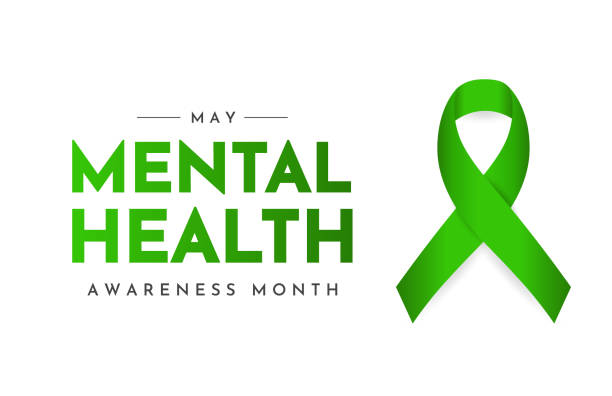
The official color of Mental Health Awareness Month is GREEN. The green ribbon is the recognized symbol of support for mental health. Wearing green during May is one of the easiest ways to show you stand with those living with mental health conditions.
Here are some simple ways to show your support this month:
- Wear a green ribbon or green clothing throughout May
- Contact buildings and monuments in your community to ask them to light up green — the official awareness color — during Mental Health Awareness Month
- Put a green ribbon on your car, bag, or workspace
In addition to wearing green, you can also use these official hashtags when posting on social media: #MentalHealthAwarenessMonth, #MHAM2026, #SeeThePerson, and #MoreGoodDaysTogether.
📌 Source: Mental Health America – Be Seen in Green Campaign
👨👩👧 Mental Health Awareness Month and Special Needs Families
Mental health challenges look different in families like yours. And they are often harder.
Why Mental Health Awareness Month Matters MORE for Special Needs Families
Mental health touches every part of life — from housing and work to relationships and community. When mental health challenges arise, they often intersect with other life struggles, and whole-person care that addresses everything is essential to lasting well-being.
For families raising children with disabilities, autism, ADHD, learning differences, or chronic health conditions, this truth runs deeper. Consider these realities:
- Children with developmental disabilities are 2–3 times more likely to experience anxiety and depression than neurotypical children. (American Academy of Pediatrics)
- Parents of children with special needs report significantly higher levels of stress, anxiety, and depression than other parents. (JAMA Pediatrics)
- Many special needs children cannot easily communicate when they are struggling emotionally, which means warning signs go unnoticed longer.
Moreover, parents and caregivers are often the first to notice when something feels different. Changes in mood, sleep, appetite, or behavior may signal that a young person needs support.
So during this Mental Health Awareness Month, we encourage every special needs family to pay close attention — not just to their child’s development, but to their emotional world too.
Mental Health Red Flags to Watch in Children with Special Needs
| Red Flag | What It May Look Like |
|---|---|
| Increased meltdowns | More frequent, longer, or more intense tantrums or emotional outbursts |
| Social withdrawal | Refusing activities they once enjoyed; pulling away from family |
| Sleep changes | Difficulty falling asleep, nightmares, sleeping too much |
| Appetite changes | Refusing food, eating too fast, or emotional eating |
| Self-injurious behavior | Head banging, biting, scratching — especially new behaviors |
| Flat or blank expression | Loss of typical emotional responsiveness |
Furthermore, timely assessment and access to services improve outcomes. Community awareness strengthens early identification and support. If you notice two or more of these signs lasting more than two weeks, do not wait — speak to your child’s pediatrician or behavioral therapist.
📌 Sources: American Academy of Pediatrics | SAMHSA Children & Families Resources | JAMA Pediatrics
🧘♀️ Caregiver Mental Health: You Cannot Pour From an Empty Cup
If you are a parent of a child with special needs, you are likely giving 110% every single day. And while that love and dedication is beautiful, it can also quietly drain you until there is nothing left.
This is called caregiver burnout — and it is very real.
Signs You May Be Experiencing Caregiver Burnout
- You feel exhausted even after resting
- You feel resentful, frustrated, or emotionally numb
- You have stopped doing things you used to enjoy
- You feel hopeless or like nothing will ever improve
- You are isolating yourself from friends and family
- You are neglecting your own health (skipping doctor visits, poor sleep)
Self-awareness is an important step in anyone’s mental health journey. Recognizing that you are burnt out is not a failure — it is the first step toward healing.
Simple Self-Care Ideas for Special Needs Caregivers
| Self-Care Strategy | Why It Helps |
|---|---|
| 10-minute daily journaling | Releases built-up emotions and stress |
| Asking for respite care | Allows physical and emotional rest |
| Joining a parent support group | Reduces isolation and builds community |
| Walking or gentle exercise daily | Proven to reduce anxiety and depression |
| Saying “no” to non-essential tasks | Protects your limited energy |
| Therapy or counseling | Provides a safe space to process challenges |
Additionally, Employee Assistance Programs (EAPs) provide free, confidential phone support, which can include direct counseling or help employees find mental health services. Surprisingly, 25% of people don’t even know if these benefits are available to them. If you are employed, check whether your workplace offers an EAP — it may include free therapy sessions.
Most importantly, remember this: Taking care of yourself is not selfish. It is essential. A rested, emotionally healthy caregiver is a more present, patient, and effective caregiver.
📌 Sources: NAMI – Caregiver Support | Mental Health America – Caregiver Resources | American Psychological Association – Caregiver Burnout
📅 Week-by-Week Mental Health Awareness Month Action Calendar for May
Not sure how to actually observe Mental Health Awareness Month? This calendar gives you something simple and doable for every week of May — whether you are an individual, a parent, or part of a community.
Week 1 (May 1–7): Learn & Understand
- Read one article about a mental health condition you don’t fully understand
- Watch a documentary or YouTube video on mental illness and its effects
- Wear a green ribbon to signify your support for mental health
- Observe National Children’s Mental Health Awareness Day on May 7 by starting a conversation about feelings with your child
Week 2 (May 8–14): Self-Care in Action
- Start a 5-minute morning mindfulness or breathing routine
- Go for a 20-minute walk outside every day this week
- Take time to identify how you feel and label your emotions — reach out to a friend if you need to talk
- Turn off screens for one hour before bedtime
- Observe Mental Health Awareness Week (May 11–17)
Week 3 (May 15–21): Use Kind Language
- Practice saying “person with depression” instead of “depressed person”
- Avoid words like “crazy,” “psycho,” or “mental” used as insults
- Tell someone in your life: “I’m here for you, no matter what”
- Write a kind note or message to someone who may be struggling
Week 4 (May 22–31): Take Community Action
- Donate to a mental health organization (see list below)
- Volunteer at a local mental health event or helpline
- Organize a mental health awareness walk or run in your community (in-person or virtual)
- Write to your local representative or school board about mental health resources for children
📌 Source: SAMHSA 2026 Monthly Toolkit | Mental Health America Action Guide 2026
🖥️ Free Mental Health Screening Tools You Can Use Right Now
One of the best things you can do during Mental Health Awareness Month is take a free mental health screening. These are not diagnoses — they are starting points that help you understand how you are feeling.
Here are trusted, free tools:
| Tool | What It Screens For | Link |
|---|---|---|
| MHA Online Screening | Depression, anxiety, PTSD, eating disorders, addiction | mhascreening.org |
| NAMI Mental Health Screening | General mental health check | nami.org |
| PHQ-9 (Patient Health Questionnaire) | Depression severity | [Available via your doctor or online] |
| GAD-7 | Anxiety severity | [Available via mental health apps] |
| CDC Mental Health Resources | Multiple conditions | cdc.gov/mentalhealth |
Furthermore, taking an online mental health screening can be one of the most empowering things you can do for yourself. You can use it as an opportunity to seek professional help, journal about your findings, or connect with a loved one who may have similar experiences.
If your results suggest you may be struggling, please reach out to a professional. Getting screened does not mean something is “wrong” with you — it means you are taking your health seriously.
📌 Source: Mental Health America Screening Tools | CDC Mental Health
📞 Mental Health Helplines by Country: Get Help or Help Someone Else
During Mental Health Awareness Month — and every other month — knowing where to turn in a crisis can save a life. Here is a country-specific guide for our top readers.
🇺🇸 United States
| Helpline | Number | Who It’s For |
|---|---|---|
| 988 Suicide & Crisis Lifeline | Call or text 988 | Anyone in mental health crisis |
| Crisis Text Line | Text HOME to 741741 | Text-based crisis support |
| NAMI Helpline | 1-800-950-6264 | Mental health information & referrals |
| SAMHSA National Helpline | 1-800-662-4357 | Mental health and substance use |
🇬🇧 United Kingdom
| Helpline | Number | Who It’s For |
|---|---|---|
| Samaritans | 116 123 | Emotional support, 24/7 |
| Mind Infoline | 0300 123 3393 | Mental health information |
| PAPYRUS (young people) | 0800 068 4141 | Suicide prevention for under 35s |
🇨🇦 Canada
| Helpline | Number | Who It’s For |
|---|---|---|
| Crisis Services Canada | 1-833-456-4566 | Suicide crisis support |
| Kids Help Phone | 1-800-668-6868 | Children and youth |
| Text Crisis Line | Text HELLO to 686868 | Youth crisis text support |
🇦🇺 Australia
| Helpline | Number | Who It’s For |
|---|---|---|
| Lifeline | 13 11 14 | Crisis support, 24/7 |
| Beyond Blue | 1300 22 4636 | Anxiety and depression |
| Kids Helpline | 1800 55 1800 | Ages 5–25 |
🇮🇳 India
| Helpline | Number | Who It’s For |
|---|---|---|
| iCall (TISS) | 9152987821 | Mental health counseling |
| Vandrevala Foundation | 1860-2662-345 | 24/7 crisis helpline |
| NIMHANS | 080-46110007 | National mental health institute |
📌 Source: 988lifeline.org | Samaritans UK | Crisis Services Canada | Lifeline Australia | iCall India
💬 How to Talk to Your Child About Mental Health: A Simple Guide for Parents
Talking to children about mental health can feel uncomfortable. Many parents worry about saying the wrong thing, or they wonder whether their child is even old enough to understand. The answer is: yes, they are — at any age.
In fact, sometimes the most important step is simply listening. Taking time to listen to the concerns of a young person in your life can help them feel safe sharing what they are experiencing.
Here is a simple, age-by-age guide:
Ages 3–6: Feeling Words
- Use simple feeling words: happy, sad, scared, angry, worried
- “It’s okay to feel sad. Can you tell me where you feel it in your body?”
- Read picture books about emotions together (try “The Color Monster” by Anna Llenas)
Ages 7–12: Normalizing Conversations
- “Everyone has days when they feel really low. What does a hard day look like for you?”
- Teach the difference between a “big feeling” and a “small feeling”
- Let them know asking for help is brave, not weak
Ages 13–18: Open, Non-Judgmental Space
- “I’ve noticed you seem stressed lately. I’m not here to fix it — I just want to understand.”
- Avoid minimizing: Don’t say “you have nothing to be sad about”
For children with communication challenges or non-verbal autism:
- Use emotion cards or visual boards to help them identify feelings
- Watch for behavioral changes as communication — they speak through behavior
- Work with a speech therapist or occupational therapist on emotion vocabulary
Young people thrive when support comes early. Asking for help on behalf of a child, teen, or young adult is an act of protection and advocacy.
📌 Source: SAMHSA – Talking to Young People | Child Mind Institute | Zero to Three
📱 Screen Time, Digital Wellness & Mental Health: The 2026 Conversation We Need to Have
The 2026 Children’s Mental Health Action Week theme is “Beyond the Screen: Education, Prevention, Connection.” It explores the relationship between technology, family life, and the mental health of children and youth.
This is not about demonizing technology. It is about using it wisely.
How Excess Screen Time Affects Mental Health
| Screen Time Issue | Mental Health Impact |
|---|---|
| Social media comparison | Increased anxiety, low self-esteem in teens |
| Doom scrolling news | Higher stress, feelings of hopelessness |
| Blue light before bed | Disrupted sleep, increased irritability |
| Reduced face-to-face connection | Loneliness, depression |
| Online bullying exposure | Anxiety, PTSD symptoms |
For children with special needs, the effects can be even more pronounced. Screens can become an avoidance tool — a way to escape uncomfortable emotions without ever processing them.
Simple Digital Wellness Tips to Start This Week
- Set a consistent “screens off” time 60 minutes before bed
- Create one daily “device-free” meal at the table
- Use apps like Headspace, Calm, or Smiling Mind as healthier screen alternatives
- For children, use parental controls to set screen time limits, not as punishment, but as healthy boundaries
Furthermore, if you notice your child becomes highly distressed or dysregulated when screens are taken away, that itself may be a sign worth discussing with a mental health professional.
📌 Source: National Federation of Families – CMHAW 2026 | American Academy of Pediatrics – Screen Time | Common Sense Media
🏢 Mental Health Awareness Month at Work: What Employers and Employees Can Do
Beyond offering mental health days, truly supportive workplaces take meaningful, sustained action. Here is what that looks like in practice:
For Employers: A Mental Health Action Checklist
- [ ] Audit your current health insurance — does it cover therapy and psychiatric care?
- [ ] Survey employees anonymously about their mental health needs this May
- [ ] Host a Mental Health First Aid training for managers (available through Mental Health First Aid USA)
- [ ] Designate a quiet room or wellness corner in the office
- [ ] Clearly communicate your EAP (Employee Assistance Program) — because 25% of employees don’t know if their employer even covers mental health services
- [ ] Light your building green for May in support of mental health awareness
For Employees: Protecting Your Mental Health at Work
- Set clear start and end times for your workday — boundaries matter
- Take your full lunch break away from your screen
- Talk to HR about flexible scheduling if stress is affecting your performance
- Know your rights — in many countries, mental health days are protected under health leave policies
- Remember: a 2024 survey found that nearly 60% of individuals with mental health challenges avoid treatment because of fear or shame — reaching out at work is brave, not weak
📌 Source: NAMI – Mental Health in the Workplace | Mental Health First Aid USA | WHO Workplace Mental Health
FAQs about Mental Health Awareness Month
Q: When is Mental Health Awareness Month?
A: It’s observed every May in the U.S. and increasingly recognized globally.
Q: What is the goal of Mental Health Awareness Month?
A: To educate the public, reduce stigma, and encourage access to resources and treatment.
Q: How can I get involved?
A: Share mental health facts, donate to nonprofits, or attend local and virtual events.
Conclusion
Mental Health Awareness Month provides a vital opportunity to reflect, educate, and take meaningful steps toward better mental health for ourselves and our communities. Whether you’re advocating for policy changes, checking in on a friend, or prioritizing your own well-being, every action counts.
Let this Mental Health Awareness Month be a reminder: mental health is health—and we all have a role to play in supporting it.


