

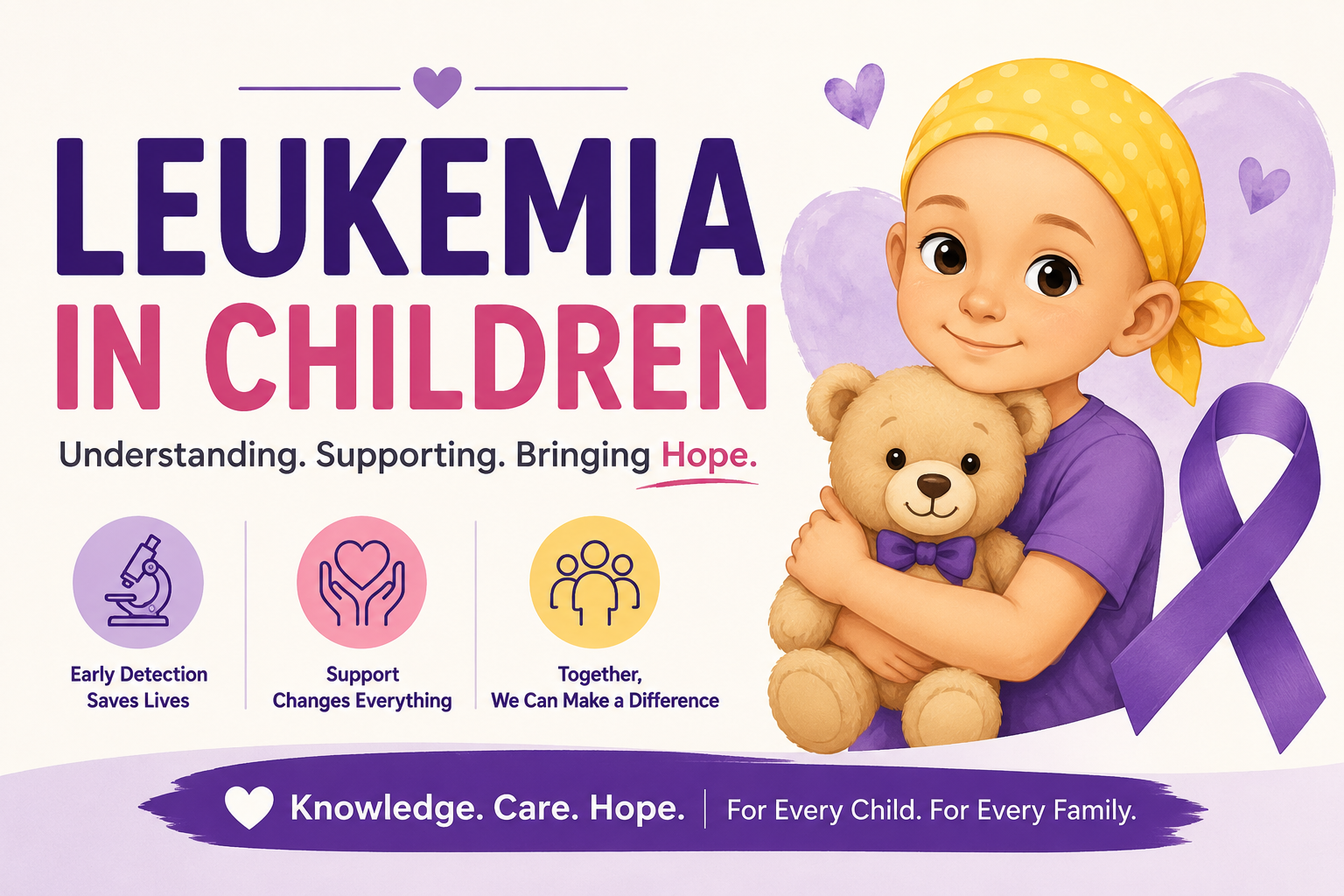
Leukemia in Children 2026: Why Should Special Needs Parents Pay Urgent Attention?
😢 Your special needs child may be at up to 150x higher risk of leukemia — and most parents never find out until it’s too late.
Leukemia is the most common cancer in children — and for families raising special needs children, the risk can be dramatically higher than most parents are ever told. Put simply, leukemia is a cancer of the blood and bone marrow where the body makes abnormal white blood cells that crowd out healthy ones.
The critical truth? Children with Down Syndrome face up to 150 times the risk of developing certain types of leukemia compared to the general population.
Yet most parents receive this information only after a diagnosis.
This article is written specifically for you — the parent or caregiver of a special needs child who deserves complete, honest, research-backed guidance. Not generic medical jargon. Not cold statistics. Real information, delivered with compassion, that could make a life-saving difference.

- 📖 Understanding Leukemia: What Every Parent Needs to Know First
- 📊 Leukemia Statistics 2026: The Numbers Every Parent Should See
- 🧬 What Causes Leukemia in Children? Understanding the Risk Factors
- 🚨 Warning Signs of Leukemia in Children — A Parent’s Checklist
- 🔬 How Is Leukemia Diagnosed in Children?
- 💊 Leukemia Treatments for Children in 2026 — From Chemotherapy to CAR-T Cell Therapy
- Standard Treatment Options
- 🔬 The CAR-T Cell Therapy Revolution
- 🔬 Blinatumomab — Another Major Breakthrough
- Treatment Considerations for Children with Down Syndrome
- 🗓️ Leukemia Awareness Month 2026 — Everything Your Family Should Know
- When Is Leukemia Awareness Month?
- Key Events and Campaigns in September 2026
- Why This Month Matters for Special Needs Families
- 🏫 Supporting a Child with Leukemia Through School and Daily Life
- 🍽️ Nutrition Support During Leukemia Treatment
- 🧠 The Emotional Impact of Leukemia on Special Needs Families
- What Families Often Feel
- What the Research Tells Us About Family Support
- 🌈 Practical Emotional Support Strategies
- ❓ Frequently Asked Questions About Leukemia in Children (2026)
- Q1: What is the most common type of leukemia in children?
- Q2: What are the early warning signs of leukemia in a child?
- Q3: Do children with Down Syndrome have a higher risk of leukemia?
- Q4: What is the survival rate for childhood leukemia in 2026?
- Q5: What is CAR-T cell therapy for childhood leukemia?
- Q6: When is Leukemia Awareness Month?
- Q7: Can a child with leukemia continue attending school?
- Q8: Is leukemia in children hereditary?
- Q9: How is leukemia different from other childhood cancers?
- Q10: Where can families get financial help during childhood leukemia treatment?
- 🔍 The Special Needs + Leukemia Intersection
- 💛 Final Words: There Is More Hope Than You Know
📖 Understanding Leukemia: What Every Parent Needs to Know First
Before we go deeper, let’s build a clear foundation. Leukemia is a blood cancer. It starts in the bone marrow — the soft tissue inside bones where blood cells are made.
In a healthy child, the bone marrow makes:
- Red blood cells — which carry oxygen through the body
- White blood cells — which fight infections
- Platelets — which help blood clot when there is a cut or injury
In a child with leukemia, the bone marrow begins producing abnormal white blood cells. These abnormal cells do not fight infection properly. Worse still, they multiply rapidly and crowd out the healthy red blood cells and platelets the body needs to survive.
The Main Types of Childhood Leukemia
| Type | Full Name | How Common | Who It Affects Most |
|---|---|---|---|
| ALL | Acute Lymphoblastic Leukemia | ~75% of all childhood leukemia cases | Children aged 2–5 years; most common overall |
| AML | Acute Myeloid Leukemia | ~20% of cases | Children under age 2; higher in children with Down Syndrome |
| AMKL | Acute Megakaryoblastic Leukemia | Rare | Strongly linked to Down Syndrome |
| TL | Transient Leukemia | Rare | Newborns with Down Syndrome |
| CML | Chronic Myeloid Leukemia | Very rare in children | Mostly adolescents |
| JMML | Juvenile Myelomonocytic Leukemia | Very rare | Children under age 6 |
Understanding which type your child may be at risk for is the first step. For families of children with special needs — particularly Down Syndrome — this classification matters enormously, as we will explain shortly.
📊 Leukemia Statistics 2026: The Numbers Every Parent Should See
These figures paint a vivid and urgent picture. They are drawn from the most current and credible sources available.
| Statistic | Data | Source |
|---|---|---|
| Most common cancer in children | Leukemia accounts for 1 in 3 childhood cancer diagnoses | American Cancer Society |
| New childhood leukemia cases per year (US) | 3,500–4,000 annually | WifaTalents / Childhood Leukemia Data 2026 |
| ALL 5-year survival rate in children under 5 | 94.4% — an extraordinary improvement | Leukemia & Lymphoma Society |
| ALL survival rate in children under 15 | 94.0% (from 2014–2020 data) | Blood Cancer United |
| AML 5-year survival rate in children under 15 | 69.3% | Blood Cancer United |
| Survival rate for ALL in the 1960s | Less than 10% — compared to ~90% today | WifaTalents 2026 |
| % of all childhood cancers that are leukemia | 25.7% of all new childhood cancer cases | NCI SEER |
| Children with Down Syndrome diagnosed with leukemia | 2.8% vs. just 0.05% of other children | UC Davis Health / ASCO Post |
| Risk of AML before age 5 for Down Syndrome children | 150-fold higher than the general population | UC Davis Health |
| New ALL cases in the US in 2026 (all ages) | ~6,250 new cases expected | American Cancer Society |
| Peak age for ALL diagnosis | Children aged 2–5 years | American Cancer Society |
The survival rate transformation alone — from less than 10% in the 1960s to over 90% today — represents one of modern medicine’s greatest achievements. And yet, early detection remains the single biggest factor in determining outcomes. That is why knowing the signs matters so much.
🧬 What Causes Leukemia in Children? Understanding the Risk Factors
This is the question every parent asks. And it deserves a clear, honest answer.
The direct cause of leukemia in most children is not fully understood. However, research has identified a number of risk factors that increase the likelihood.
Some of these are especially relevant to families of special needs children.
Known Risk Factors for Childhood Leukemia
- Genetic conditions — Particularly Down Syndrome (Trisomy 21), which carries the single highest known genetic risk
- Prior radiation exposure — Including radiation therapy for another cancer
- Certain inherited immune disorders — Conditions where the immune system doesn’t function normally
- Family history — A sibling with leukemia increases risk (though this remains rare)
- Prior chemotherapy — Treatment for another cancer can, in rare cases, trigger secondary leukemia
💡 What Makes Special Needs Children More Vulnerable?
For families at HopeForSpecial, this is critical.
Children with Down Syndrome and Leukemia: The Alarming Numbers
Children with Down Syndrome are 10 to 20 times more likely to develop leukemia than the general population, with notable types including acute lymphocytic leukemia (ALL), acute myeloid leukemia (AML), and megakaryoblastic leukemia, including transient leukemia (TL) and acute megakaryoblastic leukemia (AMKL).
Research indicates that approximately 10% of newborns with Down Syndrome may develop transient leukemia, which typically resolves without chemotherapy, while those with TL have a 20 to 30% chance of later developing AMKL.
Furthermore, researchers found that 2.8% of children with Down Syndrome were diagnosed with leukemia, compared to 0.05% of other children, and those with Down Syndrome had a higher risk of developing AML before age 5 and a higher risk of developing ALL regardless of their age.
| Special Need / Condition | How It Increases Leukemia Risk |
|---|---|
| Down Syndrome | 10–20× overall increased risk; 150× for AML before age 5 |
| Inherited immune deficiencies | Weakened immune surveillance allows abnormal cells to multiply |
| Fanconi Anemia | Rare genetic disorder causing high AML risk |
| Li-Fraumeni Syndrome | TP53 gene mutation significantly raises ALL risk |
| Neurofibromatosis Type 1 | Increases risk of JMML and other blood cancers |
| Bloom Syndrome | DNA repair disorder linked to elevated leukemia risk |
If your child has any of these conditions, proactive blood monitoring and regular pediatric check-ups are not optional — they are essential.
🚨 Warning Signs of Leukemia in Children — A Parent’s Checklist
Leukemia’s symptoms are often subtle at first. They can easily be mistaken for a common cold, growing pains, or ordinary tiredness. This is especially true for children with special needs, who may not be able to verbally communicate what they are feeling.

Know these signs. Don’t dismiss them.
🔴 Physical Warning Signs
- Persistent tiredness or fatigue — not the normal tiredness after play, but exhaustion that doesn’t improve with rest
- Pale or yellowish skin — caused by anemia from too few healthy red blood cells
- Frequent infections — colds, ear infections, or fevers that keep coming back
- Unexplained bruising — bruises that appear without any injury, especially in unusual places
- Tiny red or purple spots on the skin (petechiae) — caused by low platelet count
- Bone or joint pain — often described as aching in the legs or back; children may refuse to walk
- Swollen lymph nodes — lumps in the neck, armpits, or groin
- Abdominal swelling or discomfort — caused by an enlarged liver or spleen
- Shortness of breath — feeling breathless without exertion
- Unexplained weight loss — losing weight without dietary changes
🟡 Behavioral Signs (Especially Important for Non-Verbal Children)
- Refusing to walk or being reluctant to use their legs
- Increased crying, especially when touched or held
- Loss of appetite or sudden food refusal
- Sleeping far more than usual
💬 A Real Parent’s Story — Liam’s Story
“Liam has Down Syndrome. He was two years old when I noticed he seemed more tired than usual and had some bruising on his legs that I couldn’t explain. His pediatrician initially thought it was from bumping around — toddlers do that, right? But something in my gut said this was different.
I pushed for blood work. Three days later, we had a diagnosis: AML. Looking back, the signs were there for almost six weeks before I acted.
I thank God every day that I listened to my instincts. He is now seven years old and cancer-free.” — Sarah M., mother of a child with Down Syndrome and AML
Sarah’s story is not rare. Many parents of children with special needs catch leukemia only because they pushed back. Your instinct matters. Trust it.
🔬 How Is Leukemia Diagnosed in Children?
Diagnosis typically begins when a doctor orders a blood test (complete blood count or CBC) based on symptoms. Abnormal results lead to further testing.
Standard Diagnostic Steps
- Complete Blood Count (CBC) — Checks levels of red cells, white cells, and platelets
- Blood smear — A lab technician examines the blood cells under a microscope for abnormalities
- Bone marrow biopsy — A small sample from inside the hip bone confirms the diagnosis and identifies the exact type
- Lumbar puncture (spinal tap) — Checks if leukemia has spread to the fluid around the brain and spinal cord
- Imaging (X-ray, CT, MRI) — Checks for swollen lymph nodes or organ involvement
- Genetic testing of leukemia cells — Identifies specific gene changes that guide treatment decisions
For children with Down Syndrome, doctors should be extra vigilant when interpreting CBC results, as certain blood abnormalities are more common in this population even without leukemia.
💊 Leukemia Treatments for Children in 2026 — From Chemotherapy to CAR-T Cell Therapy
The treatment landscape for childhood leukemia has transformed dramatically — and hope has never been greater.
Standard Treatment Options
| Treatment Type | What It Does | Best For |
|---|---|---|
| Chemotherapy | Uses powerful drugs to kill leukemia cells | All types; most common first-line treatment |
| Targeted therapy | Uses drugs designed to attack specific cancer cell features | Certain ALL and AML subtypes |
| Immunotherapy (Blinatumomab) | Uses the body’s own immune cells to target leukemia | B-cell ALL — shown to greatly improve outcomes |
| CAR T-cell therapy | Genetically re-engineers the patient’s own T-cells to kill cancer | Relapsed or refractory B-cell ALL |
| Stem cell transplant | Replaces diseased bone marrow with healthy donor cells | High-risk or relapsed cases |
| Radiation therapy | Uses high-energy rays to kill cancer cells | Specific cases; less common now due to long-term effects |
🔬 The CAR-T Cell Therapy Revolution
This is the most exciting development in pediatric leukemia treatment in decades — and it was developed specifically for children first.
CAR T-cell therapy’s rapid progression from bench to bedside has revolutionized the treatment of relapsed or refractory juvenile B-cell ALL. CAR T cells are autologous T lymphocytes genetically modified to express a synthetic receptor that recognizes surface antigens on malignant B cells, most commonly CD19, producing antigen-directed cytotoxicity and, in many cases, minimal residual disease-negative remissions.
Tisagenlecleucel’s major global registration study demonstrated high initial remission rates (about 81% total remission), with longer follow-up revealing persistent remissions in a significant portion of patients.
In simple terms: scientists take your child’s own immune cells, re-program them in a laboratory to recognize and destroy leukemia cells, then infuse them back into your child’s body. The results have been called — in the words of one children’s hospital specialist — “the most significant therapeutic advance in childhood leukemia in a generation.”
🔬 Blinatumomab — Another Major Breakthrough
Alongside CAR-T therapy, blinatumomab has emerged as a powerful addition to the treatment arsenal.
A 2025 study published in the New England Journal of Medicine showed that blinatumomab given alongside standard chemotherapy for standard-risk B-cell ALL in children significantly improved outcomes. This means children who previously faced more limited options now have stronger first-line treatments available.
Treatment Considerations for Children with Down Syndrome
Children with Down Syndrome respond differently to leukemia treatment — and this nuance is critical. Research has shown that children with Down Syndrome and AML actually respond better to certain chemotherapy regimens than children without Down Syndrome.
However, they are also more sensitive to the side effects of treatment, particularly those involving methotrexate. This means their treatment plans must be carefully individualized by specialists experienced with this population.
Always request a referral to a pediatric oncologist with specific experience in Down Syndrome-related leukemia if your child is in this category.
🗓️ Leukemia Awareness Month 2026 — Everything Your Family Should Know
When Is Leukemia Awareness Month?
September is Leukemia and Lymphoma Awareness Month — and also Childhood Cancer Awareness Month. These two observances happening in the same month make September one of the most powerful months of the year for families affected by blood cancer.
The month is led by organizations including the Leukemia & Lymphoma Society (LLS), the Leukemia Research Foundation, and the American Association for Cancer Research (AACR).
Key Events and Campaigns in September 2026
| Event | Details | How to Participate |
|---|---|---|
| LLS Blood Cancer Awareness Month | Entire month of September | Donate, volunteer, or share stories at lls.org |
| Light the Night (LLS Annual Event) | September walk events across the US | Register at lls.org — families carry lit lanterns in solidarity |
| Childhood Cancer Awareness Month | All of September | Wear gold — the color of childhood cancer awareness |
| AACR Research Grants for Leukemia | Ongoing in 2026 | Support at aacr.org |
| LLS Co-pay Assistance Program | Open year-round | Apply at lls.org for financial help with treatment costs |
Why This Month Matters for Special Needs Families
September is not just about raising awareness. It is about action. For families of special needs children — particularly those with Down Syndrome who carry elevated leukemia risk — this month is a meaningful reminder to:
✨ Schedule a comprehensive blood panel if your child has not had one recently
✨ Connect with other families — The Leukemia & Lymphoma Society offers free, personalized one-on-one support from trained information specialists
✨ Wear gold ribbon badges in your child’s classroom to open conversations about cancer awareness
✨ Explore financial support — LLS offers co-pay assistance programs that have helped thousands of families afford treatment
✨ Share your story — Your experience as a special needs parent can help another family catch leukemia earlier
💛 The Origin of LLS: In 1944, a 16-year-old named Robert Roesler de Villiers died of leukemia after a heartbreakingly short battle. At the time, most leukemia patients died within three months of diagnosis. His parents founded what became the Leukemia & Lymphoma Society in 1949 — driven by one powerful belief: no other family should face this alone. Today, LLS has funded over $1.3 billion in research. And the survival rate has climbed from near-zero to over 90% for the most common type.
That is what awareness, funding, and determination look like over time.
🏫 Supporting a Child with Leukemia Through School and Daily Life
A leukemia diagnosis changes everything. But with the right planning, children can continue to thrive — including in school settings.
Key School Accommodations to Request
- Homebound or hospital instruction during intense treatment phases — many school districts are required to provide this
- 504 Plan or updated IEP to address fatigue, immunocompromise, and any learning effects from treatment
- Infection control protocols — teachers should notify parents of illness outbreaks immediately, as a child undergoing chemotherapy cannot be exposed to certain infections
- Flexible attendance policies — treatment schedules are unpredictable; schools must accommodate this
- Emotional support services — school psychologists can provide counseling for both the child and siblings
For Children Already on an IEP or 504 Plan
If your child already has an IEP for a special need like Down Syndrome, autism, or a learning disability, request an immediate meeting to update it following a leukemia diagnosis. The new medical needs must be incorporated. Do not wait for the annual review.
🍽️ Nutrition Support During Leukemia Treatment
Chemotherapy is hard on the body. Children often experience nausea, mouth sores, and appetite loss. For special needs children who may already have feeding challenges, this requires extra attention.
Nutrition Tips During Treatment
| Challenge | Practical Strategy |
|---|---|
| Nausea from chemotherapy | Small, frequent meals; cold foods often tolerated better than hot |
| Mouth sores | Soft, bland foods; avoid acidic or spicy foods; rinse with saltwater |
| Low appetite | High-calorie small portions; smoothies with protein powder |
| Weakened immune system | Avoid raw or undercooked foods; strict food safety practices |
| Constipation from medications | High-fiber foods when tolerated; adequate hydration |
| Weight loss | Work with a registered dietitian — many children’s hospitals offer this |
💡 Always work with your child’s oncology team before making any dietary changes or starting supplements during treatment. Some supplements can interfere with chemotherapy.
🧠 The Emotional Impact of Leukemia on Special Needs Families
A leukemia diagnosis in a child with special needs creates a layered emotional experience that is unlike almost anything else a family can face. It is not just one crisis — it is two worlds colliding.
What Families Often Feel
- Shock and disbelief — “Didn’t we already have enough to deal with?”
- Guilt — Wondering if something could have been caught sooner
- Grief — For the routines, the therapy schedules, the life that suddenly has to pause
- Exhaustion — Hospital stays, treatment side effects, and managing other children at home
- Fear — Of what the treatment will do, and of what comes after
- And also — hope. Because childhood leukemia is, in many cases, beatable.
What the Research Tells Us About Family Support
The Leukemia & Lymphoma Society offers free, personalized support through its Information Resource Center — including one-on-one calls with trained specialists, financial assistance navigation, and peer connections with families who have been through a similar journey.
Additionally, childhood cancer survivors are at an increased risk of a second cancer diagnosis later in life, and screening recommendations for breast cancer, colon cancer, and leukemia are different for childhood cancer survivors — making long-term follow-up care essential.
🌈 Practical Emotional Support Strategies
- For yourself: Ask your child’s hospital if they offer a parent support group — many pediatric cancer centers do
- For siblings: Sibling support programs exist at many major children’s hospitals; do not let the diagnosis swallow the entire family
- For your relationship: Seek couples counseling if needed — the stress of a child’s cancer diagnosis is one of the most tested periods any partnership can face
- For your child’s identity: Remind them — and yourself — that they are not their diagnosis
❓ Frequently Asked Questions About Leukemia in Children (2026)
Q1: What is the most common type of leukemia in children?
About 3 in 4 leukemias among children and teens are acute lymphoblastic leukemia (ALL). Most of the remaining cases are acute myeloid leukemia (AML). ALL is most common in early childhood, peaking between ages 2 and 5 years.
Q2: What are the early warning signs of leukemia in a child?
The most common early signs include unexplained fatigue, pale skin, frequent infections, unusual bruising, and bone or joint pain. In non-verbal children with special needs, watch for refusing to walk, increased crying when touched, and sudden appetite loss.
Q3: Do children with Down Syndrome have a higher risk of leukemia?
Yes — significantly. Children with Down Syndrome have a particularly elevated risk (estimated 150-fold) of developing AML before age 5. A large-scale study confirmed that Down Syndrome is a strong risk factor for childhood leukemia. This makes regular blood monitoring essential for children with Down Syndrome.
Q4: What is the survival rate for childhood leukemia in 2026?
The 5-year survival rate for children with ALL has increased to about 90%, while the 5-year survival rate for children with AML is approximately 65 to 70%. For children under 5 with ALL specifically, the survival rate reaches 94.4%.
Q5: What is CAR-T cell therapy for childhood leukemia?
CAR-T cell therapy takes a patient’s own T-cells, genetically re-engineers them to recognize and destroy leukemia cells, then infuses them back into the patient. It has demonstrated high initial remission rates of about 81% total remission in relapsed or refractory B-cell ALL.
Q6: When is Leukemia Awareness Month?
September is Leukemia and Lymphoma Awareness Month, as well as Childhood Cancer Awareness Month. It is led by the Leukemia & Lymphoma Society (LLS) and other major cancer organizations.
Q7: Can a child with leukemia continue attending school?
Yes, often — with modifications. Children undergoing treatment need flexible attendance, infection control measures, and updated IEPs or 504 plans. During the most intense treatment phases, homebound instruction may be arranged. Always coordinate with both the medical team and the school.
Q8: Is leukemia in children hereditary?
In most cases, no. Childhood leukemia is not typically inherited. However, certain genetic conditions — particularly Down Syndrome — significantly raise the risk. A sibling having leukemia does slightly increase another sibling’s risk, but overall, inherited leukemia remains rare.
Q9: How is leukemia different from other childhood cancers?
Leukemia is a blood cancer — it does not form solid tumors. Instead, it affects the bone marrow and bloodstream. Childhood leukemia represents 25.7% of all new childhood cancer cases, making it the most common pediatric cancer type. Its treatment protocols, symptoms, and outcomes differ significantly from solid tumor cancers.
Q10: Where can families get financial help during childhood leukemia treatment?
The Leukemia & Lymphoma Society (LLS) offers co-pay assistance, free information specialist consultations, and financial navigation support. The National Cancer Center’s Fighting Childhood Leukemia program also provides research funding that leads to better, more affordable treatment options.
🔍 The Special Needs + Leukemia Intersection
Here is what it truly means to navigate leukemia when your child already has a disability or special need.
1. The Down Syndrome blood test baseline problem.
Children with Down Syndrome often have naturally different CBC values. This can delay leukemia diagnosis because doctors may attribute abnormalities to the condition itself. Ask your hematologist to establish a personal baseline.
2. Non-verbal children can’t report pain.
A child with autism or an intellectual disability who cannot say “my legs hurt” or “I’m tired” needs caregivers who are trained to read behavioral signals. Behavioral changes ARE symptoms.
3. IEP implications of leukemia.
When a child with an existing IEP develops leukemia, the plan must be immediately updated. This rarely happens automatically. Parents must request it.
4. The transient leukemia window in newborns with Down Syndrome.
This is a critical — and almost completely overlooked — fact: up to 10% of newborns with Down Syndrome develop transient leukemia, a temporary leukemia-like condition. Most parents are not told this at birth.
5. Parental mental health during dual diagnosis.
Managing a child with both a disability and cancer is a unique psychological burden. Resources must be sought proactively because the medical system rarely offers them automatically.
💛 Final Words: There Is More Hope Than You Know
If you are reading this because your child has just been diagnosed with leukemia — or because you are worried and looking for answers — we want you to hear this clearly.
The survival rates for childhood leukemia are at their highest point in human history. Research is moving faster than ever. CAR-T cell therapy is changing lives. Blinatumomab is improving outcomes. And the entire medical community is committed to improving these numbers further.
Your child is not a statistic. They are a person. And as a parent who came here looking for answers, you are already doing one of the most important things: staying informed, staying proactive, and refusing to accept less than the best possible care.
That is advocacy. And that advocacy saves lives.
🔗 Essential Resources for Families
- 🌐 Leukemia & Lymphoma Society (LLS) — Support, financial assistance, information specialists
- 🌐 American Cancer Society – Childhood Leukemia — Trusted clinical statistics and guides
- 🌐 NCI SEER – Childhood Leukemia Stats — Official US cancer data
- 🌐 Leukemia Research Foundation — Research funding and awareness resources
- 🌐 NAAF / Children’s Hospital LA – CAR-T Info — Latest treatment information
- 🌐 UC Davis Health – Down Syndrome & Leukemia — Research specifically on DS + leukemia risk
- 🌐 ClinicalTrials.gov — Find active leukemia clinical trials for children
This article is written for educational and informational purposes only. It does not constitute medical advice. Always consult a qualified pediatric oncologist for the diagnosis and treatment of leukemia in your child.


