

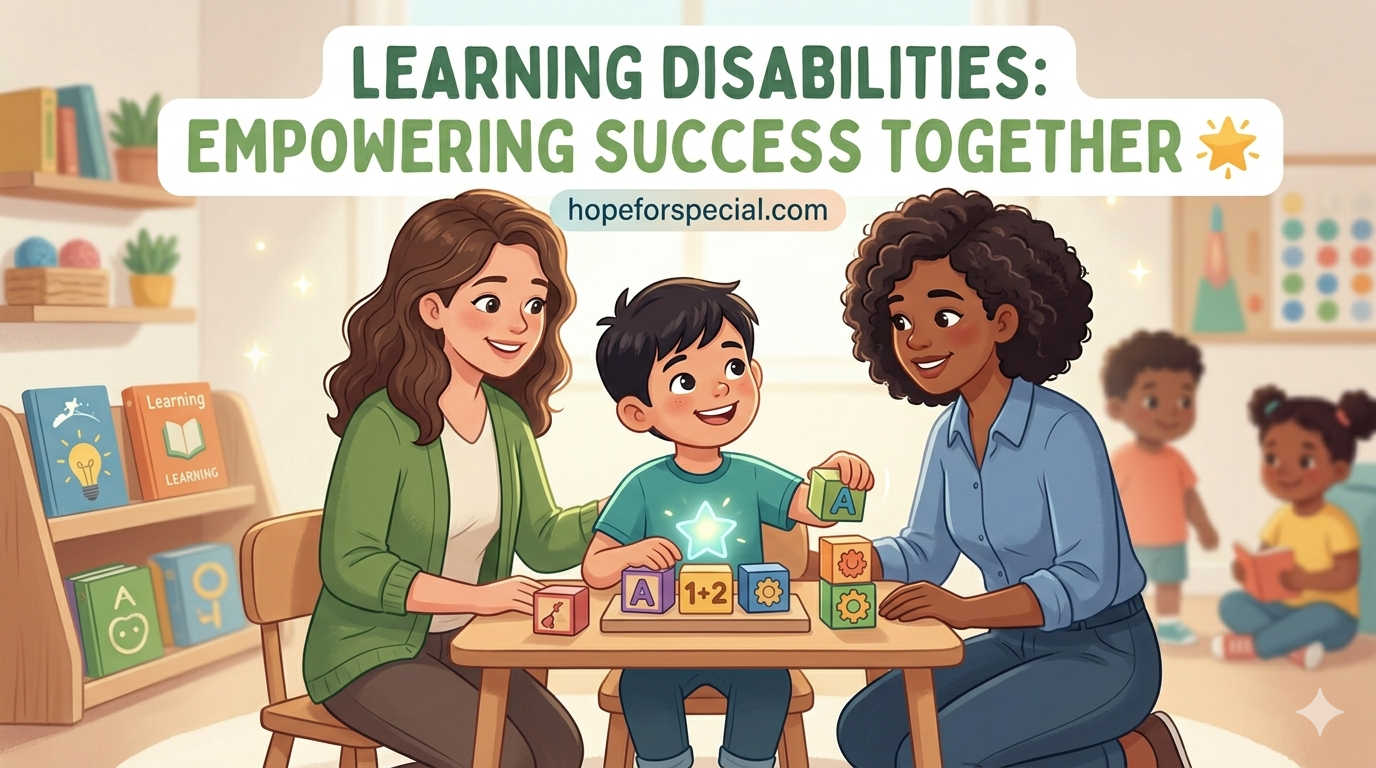
🧠 Learning Disability – Hidden Signs, Causes & Powerful Support Strategies (2026 Guide for Parents)
This guide will help you understand learning disability symptoms causes and support strategies in a simple and practical way 💡
Every child learns differently.
But sometimes, you may notice:
👉 Your child struggles to read 📖
👉 Writing feels confusing ✍️
👉 Math becomes stressful ➕
You might ask:
👉 “Is this normal… or a learning disability?”
In my experience working with families, this is one of the most common concerns.
Many children are misunderstood—not because they cannot learn, but because they learn differently.

- 🧠 What Is a Learning Disability?
- What are sped learning disabilities?
- Can learning disabilities be diagnosed at any age?
- Can learning disabilities be cured?
- 🧠 Deep Insight
- 📊 Real Statistics (Research-Based)
- 🧩 Types of Learning Disabilities
- 📊 Types Table
- 🔍 Symptoms of Learning Disabilities
- 📊 Symptoms Table
- 🧬 Causes of Learning Disabilities: A Deep, Research-Backed Explanation
- 1. Genetic and Hereditary Factors
- 2. Brain Development Differences
- 3. Prenatal and Birth Factors
- 4. Environmental Factors
- What Does NOT Cause Learning Disabilities
- 🛠️ Diagnosis Process
- 🏠 Real Parent Story
- 🧠 Daily Challenges
- ❌ Academic Struggles
- ❌ Emotional Stress
- ❌ Social Difficulties
- Treatment of Learning Disability
- Therapies and Tutoring
- Educational Interventions
- Medications
- Assistive Technology
- Behavioural Interventions
- Psychological Interventions
- Benefits of Learning Disability Schools Near Me
- What Are the Needs of Students with Learning Disabilities? | Learning Disability Needs
- 🛠️ Powerful Support Strategies
- 🧑🏫 1. Individualized Learning
- 📚 2. Multisensory Learning
- 🏠 3. Home Support
- 📱 4. Technology Tools
- 🤝 5. Emotional Support
- 📊 Support Table
- 📱 Technology in Learning (2026)
- 🧠 Education Planning
- 📊 Education Plan Table
- ⚠️ Common Myths about Learning Disability
- 📊 Progress Chart
- Famous People with Dyslexia: Proof That Learning Differently Is Not a Barrier to Success
- Famous People with Dyscalculia: Numbers Were Hard — Success Was Not
- Dyslexia in Teenagers: Signs That Are Different from Children
- Learning Disability in Adults: Signs You Were Never Diagnosed
- Signs an Adult May Have an Undiagnosed Learning Disability
- What Happens When LD Goes Undiagnosed in Adults
- Learning Disability and Mental Health: The Emotional Cost of Struggling in Silence
- Dyscalculia: Strategies and Tips for Children Who Struggle with Maths
- Learning Disability Statistics: The Essential Numbers Every Parent Should Know
- Why Girls with Learning Disabilities Are Diagnosed Later — and What Parents Can Do
- Toys and Tools That Help Children with Learning Disabilities Learn Better
- For Dyslexia — Reading and Language Tools
- For Dyscalculia — Number and Maths Tools
- For Dysgraphia — Writing and Fine Motor Tools
- 🤖 Voice Search Section
- 🌐 Sources
- ❤️ Final Thoughts
- ❓ FAQs
- 1. What are learning disability symptoms causes and support strategies?
- 2. What are early signs of learning disability?
- 3. Can learning disabilities improve?
- 4. What causes learning disabilities?
- 5. How are learning disabilities diagnosed?
- 6. Can children with learning disabilities go to school?
- 7. What therapies help?
- 8. Is learning disability lifelong?
- 9. How can parents help?
- 10. Are learning disabilities common?
🧠 What Is a Learning Disability?
A Learning Disability is a condition that affects how a child learns, processes, or understands information.
👉 Important facts:
- It does NOT mean low intelligence ❌
- It affects specific skills
- It is lifelong but manageable
According to the Centers for Disease Control and Prevention:
https://www.cdc.gov/ncbddd/learning-disabilities
Learning disabilities affect academic performance but not overall intelligence.
What are sped learning disabilities?
SPED learning disabilities are a group of disorders that affect how an individual understands, processes and uses data. They are typically diagnosed in childhood and lead to problems in writing, listening, reading, reasoning, speaking or math.
Can learning disabilities be diagnosed at any age?
Yes. A learning disability diagnosis can be performed at any age. For example, you can diagnose your kid at birth or during early childhood.
Can learning disabilities be cured?
Although learning disabilities have no cure, you can manage them effectively using an appropriate blend of educational, medical and psychosocial interventions. A comprehensive early intervention is the perfect way to minimize the effects of LD.
🧠 Deep Insight
👉 Learning disabilities affect emotions, confidence, and relationships too
Example:
- A child struggles in class
- Starts feeling “not good enough”
- Avoids learning
👉 Emotional support is as important as academic support ❤️
📊 Real Statistics (Research-Based)
| Statistic | Data | Source |
|---|---|---|
| Children affected | 5–15% globally | https://www.cdc.gov/ncbddd/learning-disabilities |
| Dyslexia prevalence | ~10% | https://dyslexiaida.org |
| ADHD overlap | High comorbidity | https://www.nimh.nih.gov |
| Early intervention impact | Significant improvement | https://www.nichd.nih.gov |
👉 These numbers show how common learning disabilities are.
🧩 Types of Learning Disabilities
📖 1. Dyslexia
👉 Affects reading and spelling
✍️ 2. Dysgraphia
👉 Affects writing
➗ 3. Dyscalculia
👉 Affects math skills
🧠 4. Processing Disorders
👉 Affects understanding information
📊 Types Table
| Type | Affects | Example |
|---|---|---|
| Dyslexia | Reading | Slow reading |
| Dysgraphia | Writing | Poor handwriting |
| Dyscalculia | Math | Difficulty counting |
🔍 Symptoms of Learning Disabilities
👶 Early Childhood
- Speech delay 🗣️
- Trouble recognizing sounds
- Difficulty following instructions
🧒 School Age
- Slow reading
- Poor spelling
- Trouble with math
🧑🎓 Teenagers
- Difficulty organizing
- Avoiding schoolwork
- Low confidence 😟
📊 Symptoms Table
| Age | Signs |
|---|---|
| 2–5 | Speech delay |
| 6–10 | Reading difficulty |
| 11+ | Organization issues |
🧬 Causes of Learning Disabilities: A Deep, Research-Backed Explanation
One of the most common questions parents ask after a learning disability diagnosis is: “What caused this?” Understanding the causes does not change the diagnosis — but it removes blame, guilt, and confusion. And it helps parents understand why their child learns differently.
The honest answer is that learning disabilities rarely have a single cause. Instead, they result from a combination of genetic, neurological, and environmental factors working together.
1. Genetic and Hereditary Factors
Genetics play one of the strongest roles in learning disabilities. If a parent, sibling, or close relative has dyslexia, dyscalculia, or another learning disability, the child has a meaningfully higher chance of having one too.
- Dyslexia in particular has strong genetic links — if one parent has dyslexia, there is a 40–60% chance their child will also develop it (Source: National Institute of Neurological Disorders and Stroke — NIH)
- Research has identified specific genes associated with reading and language processing differences in the brain (Source: NCBI/NIH — Clinical Characteristics of Learning Disabilities)
- The hereditary nature of learning disabilities means that diagnosis of a child sometimes leads to parents recognising their own undiagnosed LD for the first time
2. Brain Development Differences
Learning disabilities are fundamentally neurological — meaning they originate in how the brain processes certain types of information. Brain imaging research consistently shows that people with dyslexia, for example, process written language in different brain regions compared to typical readers.
These brain differences are not damage — they are natural variations in neural wiring that affect specific processing pathways while leaving other areas of intelligence completely intact. (Source: NIH National Institute of Neurological Disorders and Stroke)
3. Prenatal and Birth Factors
Certain events before or during birth can increase the likelihood of a learning disability developing:
| Prenatal or Birth Factor | How It Increases LD Risk |
|---|---|
| Premature birth | Preterm babies have significantly higher rates of learning disabilities — research shows 12% of preterm children develop a learning disability (Source: NIH/PMC) |
| Low birth weight | Associated with higher rates of language and processing difficulties in childhood |
| Prenatal alcohol or drug exposure | Can disrupt normal brain development pathways during critical windows |
| Prenatal infections | Some infections during pregnancy can affect fetal brain development |
| Oxygen deprivation at birth | Affects neural pathways involved in language and information processing |
4. Environmental Factors
While LD is primarily brain-based, certain early childhood environmental factors can increase risk:
- Exposure to lead or other environmental toxins in early childhood (Source: CDC)
- Severe early nutritional deficiencies affecting brain development
- Chronic stress or trauma that alters developing neural pathways
- Limited early literacy-rich environments — though this does not cause LD, it can make existing LD more severe
What Does NOT Cause Learning Disabilities
Equally important is clearing up what does not cause learning disabilities — because many parents carry unnecessary guilt:
- ❌ Too much screen time
- ❌ Poor parenting or insufficient attention
- ❌ Low intelligence — children with LD typically have average or above-average intelligence
- ❌ Laziness or lack of motivation
- ❌ Not reading to your child enough in early years
Learning disabilities are a neurological difference — not a result of anything a parent did or did not do. (Source: National Center for Learning Disabilities)
🛠️ Diagnosis Process
🧑⚕️ Assessment Includes
- Academic testing
- Cognitive evaluation
- Behavioral observation
👉 Early diagnosis improves outcomes.
How to Diagnose Learning Disability in Child?
Diagnosis of a learning disability helps determine the weaknesses and strengths of a kid, accommodations and best interventions. It involves numerous steps and tests of academic skills, language skills, cognitive potential, and emotional or behavioural working.
Here is what parents can expect:
Evaluation Request
If your kid struggles with an LD, you can legally request an evaluation.
Learning Disability Testing
Now, the next step is to start testing. The professional performs an IQ test and other standard tests in maths, reading and writing to evaluate the processing potential of a kid.
Educational History Review and Parental Input
Then, the expert reviews the educational history of a kid and asks numerous questions from parents. It helps him/her find difficulties that the kid is struggling with.
Medical Examination
To exclude other causes of the kid’s signs, you’ll get a complete evaluation of his/her learning disabilities using a neurological exam.
Social, Developmental, and School Records Review
Finally, the professional reviews the social, developmental and school records of your child.
🏠 Real Parent Story
A parent shared:
“We thought our child was lazy. After diagnosis, we realized he just needed a different approach.”
👉 Understanding changed everything 💙

🧠 Daily Challenges
❌ Academic Struggles
❌ Emotional Stress
❌ Social Difficulties
👉 Support can reduce these challenges.
Treatment of Learning Disability
Here we will explain how do you treat students with learning disabilities:
Therapies and Tutoring
One-on-one tutoring and a few therapies like occupational or speech therapy are also beneficial.
Educational Interventions
Education interventions are customized according to the particular strengths and needs of every person. They typically include:
- Accommodations.
- Tutoring.
- Counselling
- Assistive technology.
- Specialized instructions.

Medications
Few medicines can manage and treat co-existing conditions such as depression, ADHD and anxiety. But make sure you use them under the supervision of a skilled health expert.
Assistive Technology
Assistive technologies such as speech-to-text software are also helpful for students with LD’s.
Behavioural Interventions
Behavioural interventions develop skills, positive habits, and strategies in kids with a learning disability. It helps them cope with tasks, behaviour and time.
Psychological Interventions
Psychological interventions help learning-disabled children manage low- self-confidence, anxiety, and other emotional problems effectively that may affect their learning.
Benefits of Learning Disability Schools Near Me
Learning disability schools are special educational institutes that meet the needs of students with diverse learning problems.
Advantages of learning disabilities schools near me include:
- Learning disability schools give individualized support and instructions as per the speed and learning style of the student.
- They help kids with learning difficulties develop smart strategies and coping skills.
- These specialized schools create a supportive learning ambience to enhance their self-esteem.
What Are the Needs of Students with Learning Disabilities? | Learning Disability Needs
Learning disability needs are the particular requirements that kids with learning disabilities require. These may be health care, employment, education and social services. LD needs may differ depending on:
- The severity and kind of disability.
- Preferences and strengths of a patient.
A few examples of learning disability needs include:
- Accommodations (like minimal distractions, alternative assessment formats, etc.)
- Support services (like mentoring, tutoring or counselling).
- Awareness and training (like courses, workshops or resources).
- Assistive technology (like screen readers, calculators, etc.)

What are some common interventions for learning disabilities?
Depending on the severity and kind of learning disability, the following interventions are beneficial:
Special Education
Kids with learning disabilities can take advantage of special education. Specially trained teachers use smart and unique strategies to meet the learning needs of students. You can check the Individualized Education Program (IEP) for special education of your kid and related services.
Medicines
Medications are also beneficial in boosting the focus, mood and attention of those with learning difficulties.
Bypass Interventions
These are strategies that include bypassing or circumventing the weaknesses of a child. They help him/her use their strengths. For example, a kid with dysgraphia can use a word processor rather than writing using his/her hands.
Therapy
Occupational, psychotherapy, physical or speech therapy allows students with learning difficulties to boost their communication, and motor skills and manage their emotions.
Learning Strategy and Direct Instructions
It involves teaching diverse strategies and a skill set directly using demos and lectures.
Home-Based Support
Home-based support is a great way to alter the emotional climate and environment.
Additional Help
Taking assistance from a math tutor, reading specialist, or other well-trained expert is another good way to teach your kid how to organize study and do schoolwork.
Multi-Sensory Technique
It includes using multiple senses to improve learning of written symbols and memory.
🛠️ Powerful Support Strategies
🧑🏫 1. Individualized Learning
- Tailored teaching methods
📚 2. Multisensory Learning
- Visual + audio + hands-on
🏠 3. Home Support
- Practice and encouragement
📱 4. Technology Tools
- Apps
- Audiobooks
🤝 5. Emotional Support
- Build confidence
📊 Support Table
| Strategy | Benefit |
|---|---|
| Individual learning | Better results |
| Multisensory | Strong retention |
| Technology | Easy learning |
📱 Technology in Learning (2026)
Modern tools include:
- AI learning apps
- Speech-to-text tools
- Interactive platforms
👉 Technology makes learning easier.
🧠 Education Planning
🎓 Individualized Education Program (IEP)
- Personalized goals
🧑🏫 Teacher Support
- Adaptive teaching
🏫 Inclusive Education
- Learning with peers
📊 Education Plan Table
| Area | Focus |
|---|---|
| Academic | Skills |
| Social | Interaction |
| Emotional | Confidence |
⚠️ Common Myths about Learning Disability
❌ Myth: Child is lazy
👉 Truth: Child needs support
❌ Myth: Low intelligence
👉 Truth: Intelligence is normal
❌ Myth: No success
👉 Truth: Many succeed
📊 Progress Chart
| Skill | Before Support | After Support |
|---|---|---|
| Reading | Weak | Improved |
| Writing | Poor | Better |
| Confidence | Low | Higher |
Famous People with Dyslexia: Proof That Learning Differently Is Not a Barrier to Success
Your child is in extraordinary company. Many of the world’s most accomplished, creative, and celebrated people have dyslexia — and many of them describe it not just as a challenge to overcome, but as a key part of how they think differently.
Here are some of the most well-known people with dyslexia, with what they have said about their experience:
| Famous Person | Field | What They’ve Said About Dyslexia |
|---|---|---|
| Tom Cruise | Actor | Diagnosed at age 7, described himself as “a functional illiterate” by high school. With specialist support, he developed techniques to overcome reading challenges and became one of Hollywood’s biggest stars. (Source: Marker Learning) |
| Richard Branson | Entrepreneur | Left school at 16 partly due to dyslexia. Says his dyslexia forced him to simplify and delegate — skills that helped build the Virgin empire. (Source: Marker Learning) |
| Whoopi Goldberg | Actor and Comedian | Struggled significantly in school before being identified with dyslexia. Now an Oscar winner and long-running TV host. |
| Cher | Singer and Actor | Has spoken openly about her dyslexia and ADHD and how the entertainment world gave her space to express herself without being judged on reading. |
| Steven Spielberg | Film Director | Was diagnosed with dyslexia at age 60 — something that explained a lifetime of reading difficulties. Has described filmmaking as the language he was able to master when written language was hard. |
| Jamie Oliver | Celebrity Chef | Has spoken candidly about his dyslexia and how school was very difficult — yet built one of the world’s most recognised cooking media empires. |
| Albert Einstein | Physicist | Widely believed to have had dyslexia based on historical accounts of his late talking and reading difficulties — though no formal diagnosis was ever made. |
What these stories share is a consistent pattern: early struggle, late or absent diagnosis, and — with the right environment — extraordinary achievement. (Source: NIH — National Institute of Neurological Disorders and Stroke)
The lesson for parents is clear. A dyslexia diagnosis is not a ceiling on your child’s potential. It is a map of how their brain works — and once you have the map, you can find the right path. (Source: NCLD)
Famous People with Dyscalculia: Numbers Were Hard — Success Was Not
Dyscalculia is far less well-known than dyslexia, but it affects between 2 and 8% of school-age children worldwide — making it nearly as common. (Source: NCLD) And just like dyslexia, some of the world’s most talented people have navigated life with a brain that processes numbers differently.
| Famous Person | Field | Their Dyscalculia Story |
|---|---|---|
| Robbie Williams | Singer | Has described himself as “numerically dyslexic” due to his dyscalculia. Even as an adult, he struggles with basic addition and has spoken openly about needing help managing the financial side of his career. (Source: Marker Learning) |
| Cher | Singer and Actor | Has both dyslexia and dyscalculia — calling numbers “a nightmare” throughout her schooling years. |
| Mary D. Squire | Neuroscientist and LD Researcher | A pioneering researcher in learning disabilities who herself has dyscalculia — she has spent her career working to understand the very condition she lives with. |
| Benjamin Franklin | Founding Father, Inventor | Historical accounts suggest significant difficulties with arithmetic despite extraordinary achievement in science, writing, and diplomacy. |
Furthermore, it is important for parents and children to understand that dyscalculia affects maths processing — not general intelligence, problem-solving ability, or creative thinking.
Many people with dyscalculia find workarounds that allow them to function effectively in maths-heavy environments, especially with assistive technology and the right strategies. (Source: NIH/NCBI — Clinical Characteristics of Learning Disabilities)
Dyslexia in Teenagers: Signs That Are Different from Children
Most parents know what dyslexia looks like in a young child — slow to read, letter reversals, struggling with phonics. But dyslexia in teenagers often looks completely different, and this difference means many teens are still undiagnosed when they enter high school.
As a teenager develops better coping strategies, the obvious early signs may be masked. What remains — and often intensifies — are the hidden signs that teachers and parents frequently miss:
| Sign in Teenagers | What It Looks Like |
|---|---|
| Avoidance of reading aloud | Will do almost anything to avoid being called on to read in class |
| Slow reading speed | Can decode words but reads much more slowly than peers, even after years of practice |
| Essays far below verbal ability | Speaks articulately and intelligently but written work appears much weaker |
| Difficulty taking notes | Cannot simultaneously listen, process, and write fast enough |
| Spelling inconsistency | Spells the same word differently within the same document |
| Fatigue from academic work | Reading and writing require so much extra effort that exhaustion is common by afternoon |
| Avoiding homework | What looks like laziness is often extreme avoidance of tasks that are exhausting |
| Low self-esteem around academics | Years of struggle without understanding why creates a deep belief of being “not smart” |
(Source: NIH — National Institute of Neurological Disorders and Stroke)
Additionally, teenagers with dyslexia are significantly more likely to experience anxiety and depression than their peers — particularly if their dyslexia was not identified and supported in primary school. The emotional burden of years of unexplained struggle accumulates. (Source: LDA America)
If your teenager is showing these signs, it is not too late for a diagnosis and meaningful support. Teens who receive structured literacy support — even starting in high school — make measurable progress. (Source: NCLD)
Learning Disability in Adults: Signs You Were Never Diagnosed
Here is something that surprises many adults: a very large number of people living with dyslexia, dyscalculia, and other learning disabilities were never formally identified in childhood — especially women, who are diagnosed at far lower rates than men. (Source: LDA America)
Many of these adults have spent decades feeling “not smart enough” or “lazy” — without ever knowing that their brain was working differently in specific, identifiable ways.
Signs an Adult May Have an Undiagnosed Learning Disability
For dyslexia:
- Takes significantly longer to read than most people
- Makes frequent spelling errors even after years of writing professionally
- Avoids emails, reports, or written tasks where possible
- Re-reads paragraphs multiple times without retaining them
- Struggled significantly with reading and writing throughout school
For dyscalculia:
- Cannot reliably add or subtract without a calculator
- Frequently confuses left and right directions
- Struggles to manage time — regularly underestimates how long tasks take
- Finds money management and budgeting extremely stressful
- Gets anxious when splitting a restaurant bill or making quick numerical decisions
For NVLD (Nonverbal Learning Disability):
- Strong verbal and reading skills but weak spatial awareness
- Found maths — especially geometry — very difficult despite strong reading
(Source: NIH/NCBI — Clinical Characteristics of Learning Disabilities)
What Happens When LD Goes Undiagnosed in Adults
When a learning disability goes undiagnosed, it can lead to low self-esteem and high stress, as well as interfere with socialization skills, careers, and day-to-day activities. (Source: Positive Action) nih
Furthermore, low self-esteem related to perceived intellectual abilities is a common thread among adults with undiagnosed learning disabilities. Many find themselves thinking “I’m just not smart enough” or “everyone else seems to get it so easily.” (Source: NeuroLaunch) The Bylund Clinic
The good news is that adult diagnosis changes everything. Understanding the neurological basis of the difficulty — rather than attributing it to personal failure — produces a relief that many adults describe as life-changing. If you recognise yourself in these signs, speak to your GP or a specialist psychologist and ask for a psychoeducational assessment.
Learning Disability and Mental Health: The Emotional Cost of Struggling in Silence
This is one of the most important aspects of learning disability that most articles gloss over — but that parents and individuals need to understand clearly. Having an unidentified or unsupported learning disability carries a significant mental health cost.
Research shows that children and adults with learning disabilities experience mental health challenges at much higher rates than the general population:
| Mental Health Challenge | Rate in Children with LD |
|---|---|
| Anxiety disorders | 28.8% — nearly 1 in 3 (Source: NIH/PMC) |
| Mood disorders (including depression) | 9.4% — much higher than general population (Source: NIH/PMC) |
| Low self-esteem | Extremely common — linked to years of unexplained academic struggle |
| Social rejection and loneliness | Children with LD report significantly more loneliness than peers (Source: LDA America) |
| School refusal | Common when anxiety about failure becomes overwhelming |
Moreover, adults with learning disabilities are twice as likely to experience unemployment compared to those without disabilities. This employment gap is not a reflection of capability — it is a reflection of workplace environments that have not been designed for different ways of processing information. (Source: Supportive Care ABA / NCLD) nih
Why Early Identification Protects Mental Health
The most powerful thing parents can do to protect their child’s mental health alongside a learning disability is to get a diagnosis as early as possible. Research consistently shows that children who are identified early and receive appropriate support develop significantly better self-esteem, lower anxiety, and stronger long-term outcomes than those who struggle without a diagnosis. (Source: NCLD)
What parents can do to support their child’s emotional wellbeing alongside LD:
- Talk openly about the LD in positive, strength-based language from an early age
- Use the language of “brain differences” rather than “problems” or “deficits”
- Watch for signs of anxiety or school refusal and address them with a therapist early
- Celebrate effort and creative problem-solving — not just academic results
Dyscalculia: Strategies and Tips for Children Who Struggle with Maths
Dyscalculia is the learning disability that receives the least attention — yet it affects between 2 and 8% of school-age children worldwide and causes significant daily stress for those who have it. (Source: NCLD)
In simple terms, dyscalculia means the brain processes numerical information differently. It is not about being “bad at maths” — it is about a specific neurological difference in how the brain handles number sense, calculation, and mathematical reasoning. (Source: NIH/NCBI)
Warning Signs of Dyscalculia by Age
| Age Group | Warning Signs |
|---|---|
| Preschool (3–5) | Cannot count reliably in order, skips numbers, cannot match numbers to quantities |
| Early primary (6–8) | Cannot remember basic addition facts despite constant practice, confuses + and − symbols, struggles to understand that “5” equals “five equals five objects” |
| Later primary (9–12) | Cannot recall multiplication tables, makes consistent errors on basic calculations, cannot tell time on an analogue clock |
| Teenager | Cannot solve multi-step word problems, struggles to manage money or estimate costs, gets very anxious about maths tests |
| Adult | Cannot add a restaurant bill mentally, frequently over or underestimates time, anxious about financial management |
Strategies That Actually Help Children with Dyscalculia
- Use physical objects (manipulatives) for every concept. Before moving to written numbers, use counters, blocks, or fingers to make abstract numbers concrete. The brain learns number concepts through physical experience first. (Source: IRIS Center, funded by OSEP)
- Use a number line constantly. Posting a number line on the desk or workspace gives a child a visual anchor for every calculation.
- Allow calculator use for calculation — focus teaching on concepts. Dyscalculia affects calculation — not reasoning. A child who understands what maths means but cannot calculate accurately should always have calculator access. (Source: NCLD)
- Teach the “why” before the “how.” Children with dyscalculia learn better when the purpose of a calculation is clear before the procedure is introduced.
- Use graph paper for written maths. Keeping numbers in columns is very difficult with dyscalculia — graph paper provides automatic visual structure.
- Break every maths problem into the smallest possible steps. Write out every step explicitly — never assume the child can infer what comes next.
- Reduce timed maths tests completely. Timed tests create extreme anxiety for children with dyscalculia and produce results that reflect anxiety, not ability. (Source: LDA America)
Learning Disability Statistics: The Essential Numbers Every Parent Should Know
Understanding how common learning disabilities are can be genuinely reassuring for families who feel isolated or overwhelmed by a diagnosis. Your child is far from alone.
Here are the most important statistics about learning disabilities in 2025–2026:
| Statistic | Figure | Source |
|---|---|---|
| Children in the US with a learning or thinking difference | 1 in 5 (20%) | NCLD |
| Most common learning disability | Dyslexia — affects 80% of all LD cases | NCLD |
| Dyslexia prevalence in school-age children | 5–17% | LDA America |
| Dyscalculia prevalence globally | 2–8% of school-age children | NCLD |
| Dysgraphia prevalence | 7–15% of school-age children | NCLD |
| Students with LD who drop out of high school | ~18–60% (varies by study) | LDA America |
| Adults with LD who are employed | Only 46–48% — vs 72% without LD | LDA America |
| Children with LD who have an anxiety disorder | 28.8% | NIH/PMC |
| NVLD prevalence | Approximately 1 in 50 individuals | Supportive Care ABA |
| Students receiving LD services under IDEA | 34% of all IEP holders — the largest single category | NCLD |
Furthermore, it is important to understand that research shows students with SLD can achieve at a level commensurate with their peers, if given appropriate instruction and support. (Source: NCLD) The statistics around dropout rates and unemployment reflect systems that fail to support learners adequately — not a ceiling on individual potential. NCBI
Why Girls with Learning Disabilities Are Diagnosed Later — and What Parents Can Do
One of the most overlooked aspects of learning disability is the significant gender gap in diagnosis. Boys are diagnosed with learning disabilities at much higher rates than girls — yet the actual rates of learning disabilities are nearly equal across genders. (Source: LDA America)
This gap has real consequences. Girls who are not identified carry the weight of unexplained struggle for years, often developing anxiety and depression without understanding why.
Why Girls Go Undiagnosed
| Reason | Explanation |
|---|---|
| Different behaviour in class | Girls with dyslexia or dyscalculia tend to be quieter and more compliant — they do not create disruptions that trigger teacher referrals |
| Social masking | Girls are socially motivated to appear competent and will work much harder to hide difficulties |
| Better compensation strategies | Girls often develop workarounds — memorising instead of decoding, copying from peers, over-preparing — that mask the underlying difficulty |
| Later identification timeline | Girls are typically diagnosed 2–3 years later than boys with equivalent levels of difficulty |
| Teacher perception bias | Disruptive behaviour (more common in boys) gets noticed; quiet struggle goes unseen |
Signs to Watch for in Girls Specifically
If your daughter is working very hard but still struggling — spending hours on homework that peers complete quickly, showing physical anxiety symptoms before school, or describing herself as “stupid” or “slow” — these are red flags worth evaluating, regardless of how well-behaved she appears in class.
Specifically watch for:
- Puts in far more effort than peers for similar or lower results
- Reports of stomachaches or headaches on school mornings
- Excellent verbal ability but much weaker written work
- Extremely high anxiety around tests and exams
- Avoids reading aloud or volunteers to do so and then makes unexpected errors
If you recognise these signs, request a full psychoeducational evaluation. Under IDEA in the United States, this evaluation is provided free of charge by the school district. (Source: IDEA.gov)
Toys and Tools That Help Children with Learning Disabilities Learn Better
One of the most practical things parents can do alongside formal intervention is create a home environment that supports their child’s unique learning style. The right toys and tools make learning less stressful and more engaging — and research supports the use of multi-sensory, hands-on learning approaches for children with LD. (Source: IRIS Center)
Here are the most effective categories of toys and tools for children with different types of learning disabilities:
For Dyslexia — Reading and Language Tools
| Tool | How It Helps |
|---|---|
| Audiobooks (Audible, Libby, Learning Ally) | Removes decoding barrier so the child can access stories and information at their intelligence level |
| Magnetic letter tiles (large format) | Multi-sensory — building words with hands instead of writing them reduces frustration |
| Phonics card games (Zingo, Blink) | Makes phonics practice feel like play rather than drill |
| Text-to-speech apps (Microsoft Immersive Reader — free) | Reads digital text aloud so the child can keep up with class reading without exhausting decoding effort |
| Sandpaper or textured letter sets | Tracing letter shapes with fingers builds phonological awareness through touch |
For Dyscalculia — Number and Maths Tools
| Tool | How It Helps |
|---|---|
| Unifix cubes and base-ten blocks | Makes abstract number concepts physical and visible |
| Number line desk strips | Gives a constant visual anchor for all calculations |
| Fraction tiles and pie pieces | Makes fractions concrete rather than symbolic |
| Calculator (always) | Removes calculation barrier so the child can focus on understanding mathematical concepts |
| Time timer visual clock | Makes time visible and concrete — addresses the time management challenges common in dyscalculia |
For Dysgraphia — Writing and Fine Motor Tools
| Tool | How It Helps |
|---|---|
| Pencil grips | Reduces hand fatigue from gripping the pencil too tightly |
| Slant boards | Optimal writing angle reduces hand and arm fatigue significantly |
| Speech-to-text software (Google Voice Typing — free) | Allows the child to express ideas without the barrier of writing |
| Graph paper notebooks | Provides automatic structure for keeping letters and numbers in line |
| Typing programmes (Touch-Type Read and Spell) | Teaches keyboard skills as an alternative route to written expression |
(Source: IRIS Center — Assistive Technology for Learning Disabilities)
🤖 Voice Search Section
What is a learning disability?
A learning disability affects how a person learns and processes information.
What are symptoms of learning disability?
Symptoms include reading difficulty, writing problems, and slow learning.
Can learning disabilities be cured?
No, but they can be managed effectively.
What are famous people with dyslexia?
Many high achievers have dyslexia, including Albert Einstein, Steven Spielberg, Richard Branson, and Whoopi Goldberg, proving that the condition does not limit success or creativity.
What are the signs of dyslexia in a teenager?
Common signs include a slow reading rate, significant difficulty with spelling, and a tendency to avoid reading aloud or writing-heavy assignments in school.
How do you help a child with dyscalculia?
Support involves using multi-sensory tools like math manipulatives, breaking complex problems into smaller steps, and utilizing graph paper to help keep numbers organized.
Can adults have an undiagnosed learning disability?
Yes, many adults grow up with undiagnosed disabilities, often developing unique “workaround” strategies to mask their struggles until a career change or increased academic demand triggers an evaluation.
What is the most common learning disability?
Dyslexia is the most common learning disability, accounting for nearly 80% of all diagnosed learning disorders and affecting a person’s ability to process language-based information.
🌐 Sources
- https://www.cdc.gov/ncbddd/learning-disabilities
- https://www.nichd.nih.gov
- https://www.nimh.nih.gov
- https://dyslexiaida.org
❤️ Final Thoughts
Learning disabilities are not limitations.
👉 They are different ways of learning
With:
- Support
- Understanding
- Right strategies
👉 Every child can succeed 🌟
❓ FAQs
1. What are learning disability symptoms causes and support strategies?
It refers to understanding signs, causes, and ways to help children with learning disabilities.
2. What are early signs of learning disability?
Speech delay, difficulty learning letters, and trouble following instructions.
3. Can learning disabilities improve?
Yes.
👉 With support, children improve significantly.
4. What causes learning disabilities?
Genetic, brain, and environmental factors.
5. How are learning disabilities diagnosed?
Through professional assessments.
6. Can children with learning disabilities go to school?
Yes.
👉 Many attend regular or special schools.
7. What therapies help?
Speech therapy, occupational therapy, and special education.
8. Is learning disability lifelong?
Yes.
👉 But it can be managed.
9. How can parents help?
Provide support, patience, and structured learning.
10. Are learning disabilities common?
Yes.
👉 Many children experience them worldwide.


Pingback: Mild Intellectual Disability: Types, Causes, and Treatment - HopeforSpecial
Pingback: Severe Intellectual Disability: IQ Level and Warning Signs - HopeforSpecial