

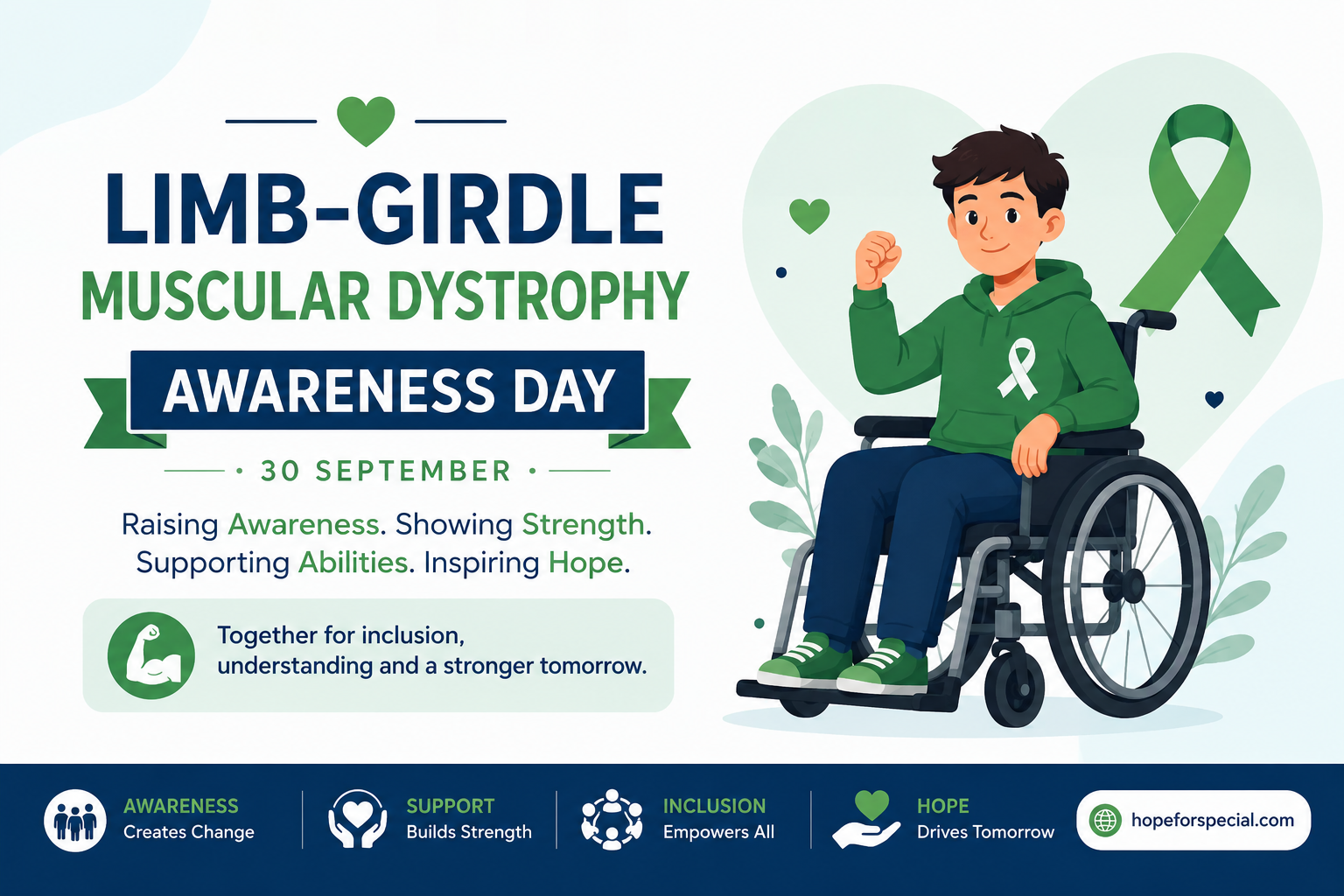
Limb-Girdle Muscular Dystrophy Awareness Day 2026 (September 30): The Complete Guide for Children and Special Needs Families
Limb-Girdle Muscular Dystrophy Awareness Day, observed annually on September 30, is a global initiative aimed at raising awareness about Limb-Girdle Muscular Dystrophy (LGMD). This day serves as a platform to educate the public, support those affected, and advocate for research and better care. LGMD Awareness Foundation.

- 🗓️ Limb-Girdle Muscular Dystrophy Awareness Day 2026 — Key Date and Milestone
- Understanding Limb-Girdle Muscular Dystrophy (LGMD)
- The Importance of LGMD Awareness
- LGMD Awareness Foundation: Championing the Cause
- How to Participate in LGMD Awareness Day
- 📊 Updated LGMD Statistics 2025–2026 — Verified Data
- 🧬 LGMD Subtypes — A Simple Parent’s Guide
- 💛 LGMD in Children — What Every Special Needs Parent Must Know
- ⚠️ Warning Signs of LGMD in Children — A Complete Parent’s Checklist
- 🔴 Early Warning Signs (Infants and Toddlers)
- 🟡 Signs in School-Age Children
- 🟠 Signs That Parents Often Miss
- 🔬 The Diagnosis Journey — Why LGMD Takes So Long to Identify
- 🧪 How LGMD Is Diagnosed — Tests Explained Simply
- 💊 LGMD Treatment and Management in 2025–2026 — A Complete Guide
- Current Treatment Approaches
- 🔬 The Gene Therapy Pipeline — Hope for the Future
- The Multidisciplinary Care Team
- ❤️ Cardiac and Respiratory Monitoring — Why It Matters for Children with LGMD
- 🏫 LGMD at School — IEP, 504 Plan, and Teacher Guide
- 🏠 Daily Life with LGMD — Practical Tips for Families
- 💜 Emotional Support for LGMD Families — You Are Not Alone
- Limb-Girdle Muscular Dystrophy Awareness Day: Voice Search
- ❓ FAQs — Limb-Girdle Muscular Dystrophy Awareness Day 2026
- Q1: When is LGMD Awareness Day 2026?
- Q2: Can children get LGMD?
- Q3: Does LGMD affect intelligence or cognitive ability?
- Q4: How many types of LGMD are there?
- Q5: Is there a cure for LGMD?
- Q6: Can LGMD affect the heart in children?
- Q7: How is LGMD different from Duchenne Muscular Dystrophy?
- Q8: What school accommodations does a child with LGMD need?
- Q9: How do I find out which LGMD subtype my child has?
- Q10: Where can I find LGMD clinical trials for children?
- Conclusion
🗓️ Limb-Girdle Muscular Dystrophy Awareness Day 2026 — Key Date and Milestone
Limb-Girdle Muscular Dystrophy Awareness Day 2026 falls on Wednesday, September 30, 2026.
And this year is especially significant. The 12th annual Global LGMD Awareness Day will be held on September 30, 2026 — organised by the LGMD Awareness Foundation. (Source: LGMD Awareness Foundation)
Twelve years of global advocacy. Twelve years of families, researchers, and clinicians standing together. And still, for far too long, limb-girdle muscular dystrophy has been an orphaned rare disease that has not gotten the attention of researchers, healthcare providers, or the general public that it deserves.
Even many patients living with LGMD have limited knowledge of their LGMD diagnosis and progressive disease process. (Source: LGMD Awareness Foundation)
That is why this day — and why the HopeForSpecial community covering it — matters so much.
Quick Reference: LGMD Awareness Day 2026
| Detail | Information |
|---|---|
| Date | Wednesday, September 30, 2026 |
| Edition | 12th Annual Global LGMD Awareness Day |
| Organised by | LGMD Awareness Foundation |
| Official website | lgmd-info.org |
| Key hashtags | #LGMDawareness #LimbGirdleMuscularDystrophyAwareness #LGMD |
| Awareness toolkit | Free download at lgmd-info.org/toolkit |
| Who it serves | Children and adults living with LGMD globally, in all ethnic groups |
Understanding Limb-Girdle Muscular Dystrophy (LGMD)
What is LGMD?
Limb-Girdle Muscular Dystrophy encompasses a group of genetic disorders characterized by progressive weakness and wasting of the muscles, particularly those around the hips and shoulders. Symptoms can manifest at any age and vary in severity. LGMD Awareness Foundation
Causes and Inheritance
LGMD is caused by mutations in specific genes responsible for muscle function. These mutations can be inherited in an autosomal dominant or recessive pattern. There are over 30 subtypes of LGMD, each associated with different genetic mutations. Verywell Health
The Importance of LGMD Awareness
Early Diagnosis and Intervention
Raising awareness leads to earlier diagnosis, which is crucial for managing symptoms and improving quality of life. Early intervention can slow disease progression and provide access to supportive therapies.

Research and Funding
Increased awareness drives funding for research into treatments and potential cures. Organizations like the LGMD Awareness Foundation play a pivotal role in advocating for research initiatives. LGMD Awareness Foundation
LGMD Awareness Foundation: Championing the Cause
The LGMD Awareness Foundation is dedicated to educating the public, supporting patients, and promoting research. Their initiatives include:
- Educational Resources: Providing comprehensive information about LGMD.
- Awareness Campaigns: Organizing events and campaigns to highlight LGMD.
- Support Networks: Connecting patients and families for mutual support.
For more information, visit their official website: LGMD Awareness Foundation
How to Participate in LGMD Awareness Day
Utilize the Awareness Toolkit
The LGMD Awareness Foundation offers a toolkit to help individuals and organizations participate in awareness activities. This includes social media graphics, informational brochures, and event planning guides. LGMD Awareness Foundation
Organize or Attend Events
Community events, both virtual and in-person, are organized worldwide. Participating in these events helps spread awareness and fosters community support.cureraredisease.org
Share on Social Media
Using hashtags like #LGMDawareness and #LimbGirdleMuscularDystrophyAwareness can amplify the message and reach a broader audience.
📊 Updated LGMD Statistics 2025–2026 — Verified Data
This table replaces the existing empty-source table with fully verified, linked data.
| Statistic | Data | Source |
|---|---|---|
| Global prevalence of LGMD | Approximately 2 in every 100,000 individuals are estimated to have LGMD | NeurologyLive |
| US prevalence range | 1 in 14,500 to 1 in 123,000 individuals — variation due to differences in subtype | NORD / NIH |
| Number of identified LGMD subtypes | Over 30 distinct subtypes, each caused by a mutation in a different gene | Cleveland Clinic |
| Most common worldwide subtype | LGMD2A (calpainopathy) — accounts for 15–40% of all LGMD cases | NORD |
| Age of onset range | Childhood through adulthood — varies by subtype | Sarepta Therapeutics |
| Cardiac involvement | Some subtypes cause cardiomyopathy — heart muscle weakness | Cleveland Clinic |
| Respiratory involvement | Respiratory insufficiency and restrictive lung disease occur in several subtypes | Cleveland Clinic |
| Inheritance patterns | Autosomal recessive (LGMD-R, most common) and autosomal dominant (LGMD-D) | NORD |
| Gene therapy trials active | Multiple subtypes in active clinical trials as of 2025–2026 | PubMed / Continuum, 2025 |
🧬 LGMD Subtypes — A Simple Parent’s Guide
One of the most confusing things families face after an LGMD diagnosis is the sheer number of subtypes. There are over 30 of them. Each is caused by a different gene mutation. And their names have recently been updated by the scientific community to a new naming system.
Here is a plain-language overview of the classification and most common types. You do not need to memorise all of them. But understanding how LGMD is classified helps you ask better questions at medical appointments.
How LGMD Is Classified
LGMD is divided into two main groups:
- LGMD-R (Recessive) — previously called “LGMD2” — the child inherits a faulty gene copy from both parents. This is the most common form.
- LGMD-D (Dominant) — previously called “LGMD1” — inheriting the faulty gene from just one parent is enough to cause the condition.
The Most Common and Clinically Significant Subtypes
| Subtype (New Name) | Old Name | Gene Affected | Age of Onset | Key Feature |
|---|---|---|---|---|
| LGMD-R1 (Calpainopathy) | LGMD2A | CAPN3 | Childhood to teens | Most common worldwide; affects hips and shoulders |
| LGMD-R2 (Dysferlinopathy) | LGMD2B | DYSF | Late teens to adult | Also causes Miyoshi myopathy; calf weakness early |
| LGMD-R5 (gamma-sarcoglycanopathy) | LGMD2C | SGCG | Childhood | Severe early-onset; cardiac involvement common |
| LGMD-R9 (FKRP-related) | LGMD2I | FKRP | Childhood to adult | Respiratory and cardiac monitoring essential |
| LGMD-R3, R4, R6 | LGMD2D, 2E, 2F | Alpha, beta, delta-sarcoglycan | Childhood | Sarcoglycanopathies — can be severe |
| LGMD-D1 (myotilinopathy) | LGMD1A | MYOT | Adult onset | Dominant form; usually milder |
(Source: NORD — Rare Diseases)
The key point for parents: The specific subtype your child has matters enormously for prognosis, cardiac and respiratory monitoring needs, and eligibility for clinical trials. Always ask your child’s neurologist which exact subtype has been genetically confirmed.
💛 LGMD in Children — What Every Special Needs Parent Must Know
LGMD is not just an adult disease. LGMD is a chronic, lifelong condition that affects people of all ages — including children. (Source: Cleveland Clinic) For children who develop symptoms early, the experience of growing up with LGMD is fundamentally different from adults who develop it later in life.
How LGMD Presents in Children
LGMD affects both boys and girls and can appear in childhood, adolescence, or adulthood, depending on the type. Early signs often include difficulty walking, frequent falls, trouble climbing stairs, or trouble getting up from the floor. (Source: 1mg)
Importantly, for children with early-onset subtypes: developmental delays in gross motor skills (like walking) and scoliosis are seen mainly in childhood-onset LGMDs. (Source: Cleveland Clinic) This means LGMD can be — and is — mistaken for other developmental conditions, including cerebral palsy, general developmental delay, or even autism-related motor differences.
Why LGMD Is Different in Childhood vs. Adulthood
| Feature | Childhood-Onset LGMD | Adult-Onset LGMD |
|---|---|---|
| Disease course | If symptoms arise in childhood, the progression is generally faster | Slower progression when onset is in adulthood (ANF) |
| Milestones affected | Walking, climbing, getting up from floor — delays often noticed in early childhood | Progressive loss of existing function |
| Scoliosis risk | Higher — spinal curvature common in childhood onset | Less common |
| Cognitive ability | LGMD does not impact cognitive ability — a crucial point for parents (MDA) | Same |
| Cardiac monitoring | Should begin at diagnosis regardless of symptoms | Same recommendation |
| Respiratory monitoring | Should begin at diagnosis regardless of symptoms | Same recommendation |
💬 A Parent’s Story
“When Riya started missing her motor milestones at 18 months, every doctor told us she was just ‘a late walker.’ By age three she was walking, but she fell constantly.
By age five she couldn’t climb the stairs at school. It took four more years — and three different neurologists — before someone finally ordered genetic testing and confirmed LGMD-R1. Nine years.
Nine years before we had a name. If someone had told me earlier what to look for, I would have pushed harder, faster. That is why I share our story.” — Deepika M., mother of a child with LGMD-R1 (calpainopathy), Pune, India
⚠️ Warning Signs of LGMD in Children — A Complete Parent’s Checklist
This is one of the most searched topics for parents of children with rare neuromuscular conditions — and it is completely absent from every competitor awareness post. Use this checklist to monitor your child and to help you have informed conversations with your paediatrician.
🔴 Early Warning Signs (Infants and Toddlers)
- ✅ Delayed walking — not walking independently by 18 months, or walking with an unusual pattern
- ✅ Hypotonia (low muscle tone) — baby feels unusually “floppy” when held
- ✅ Difficulty getting up from the floor — rolls to one side and uses hands to push up (this is called Gowers’ sign — a classic neuromuscular red flag)
- ✅ Waddling gait — walking with an exaggerated side-to-side swing of the hips
- ✅ Toe walking — consistently walking on tiptoe without a structural reason
- ✅ Frequent, unexplained falls — tripping over flat surfaces, especially when running
🟡 Signs in School-Age Children
- ✅ Difficulty climbing stairs — needs to hold the railing or pull up with arms; slows significantly on stairs
- ✅ Can’t keep up with peers during play — tires quickly; sits out or stops running
- ✅ Trouble rising from a chair — pushes up using hands on armrests or thighs
- ✅ Difficulty raising arms above the head — combing hair, reaching high shelves
- ✅ Enlarged calves — paradoxically large calf muscles in a child with leg weakness
- ✅ Progressive scoliosis — a curve developing in the spine as muscles weaken around it
- ✅ Unexplained elevation in creatine kinase (CK) — if your child has ever had a blood test showing high CK, this warrants neuromuscular follow-up
🟠 Signs That Parents Often Miss
- ✅ Muscle pain or aching after ordinary activity — not the normal soreness of sport
- ✅ Worsening handwriting — not a learning difficulty but a motor weakness sign
- ✅ Swallowing difficulties in specific subtypes — always worth reporting
- ✅ Your child avoids certain activities — may be self-protecting from tasks they find physically difficult
If you observe multiple signs from this list — especially in combination — speak to your paediatrician and ask specifically about a creatine kinase (CK) blood test and a referral to a paediatric neurologist. A high CK level is often the first biological signal that a muscle condition may be present. (Source: ANF)
🔬 The Diagnosis Journey — Why LGMD Takes So Long to Identify
This section is written for families who are in the exhausting middle of a diagnostic odyssey — or who have recently received their diagnosis after years of searching. You are not imagining things. The delay is real, documented, and understood.
LGMD is a rare disease. And rare diseases, by their nature, are hard to diagnose. Here is why the journey takes so long — and what you can do to shorten it.
The Common Diagnosis Path
Most children with LGMD go through some version of this journey:
- Parents notice something is different — usually motor difficulties like falls, slow walking, or difficulty with stairs
- Paediatrician attributes it to “just being a late developer” — common in the first year
- Referral to physiotherapy — helpful, but not diagnostic
- Further referral to paediatric neurology — often the turning point
- Blood test reveals elevated creatine kinase (CK) — the first biological red flag
- MRI of muscles and EMG testing — narrows the field
- Genetic panel testing — now the most direct route to diagnosis
- Confirmation of specific LGMD subtype — finally, a name
The good news is that this journey is shortening. Advances in molecular genetics and genetic therapies have revolutionised the diagnostic landscape of LGMDs and paved the way for future disease-specific treatments. (Source: PubMed / Continuum, 2025)
In practical terms, this means that comprehensive genetic panel testing — which screens for dozens of LGMD subtypes simultaneously — can now confirm a diagnosis in weeks, rather than the years-long journey that older diagnostic methods required.
🧪 How LGMD Is Diagnosed — Tests Explained Simply
If your child is being evaluated for a possible neuromuscular condition, your doctor may order several tests. Here is what each one means in plain language.
| Test | What It Is | What It Shows |
|---|---|---|
| Creatine Kinase (CK) Blood Test | A simple blood draw | Muscle damage releases CK into the blood — elevated CK is a strong first indicator of muscle disease |
| Genetic Panel Testing | A blood or saliva test analysing DNA | This test looks for specific gene mutations linked to different LGMD subtypes. It is one of the most accurate ways to diagnose LGMD (myTomorrows) |
| Muscle Biopsy | A small tissue sample from a muscle | If genetic testing doesn’t give clear answers, doctors may take a small sample of muscle tissue to examine under a microscope. This can help rule out other muscle conditions and support an LGMD diagnosis (myTomorrows) |
| Electromyography (EMG) | Electrodes placed on the skin measure electrical activity in muscles | Distinguishes between muscle disease (myopathy) and nerve disease (neuropathy) |
| MRI of muscles | Imaging showing muscle tissue patterns | Reveals which specific muscles are affected and helps narrow subtype |
| Echocardiogram | Ultrasound of the heart | Detects cardiomyopathy — essential at diagnosis for certain subtypes |
| Pulmonary Function Test (PFT) | Breathing measurement test | Assesses respiratory muscle strength — important for subtypes with lung involvement |
What to ask your doctor: “Has my child had comprehensive genetic panel testing for LGMD?” and “Do we need to establish a cardiac and respiratory baseline at this appointment?” These two questions can change the course of your child’s care. (Source: Lurie Children’s Hospital)
💊 LGMD Treatment and Management in 2025–2026 — A Complete Guide
There is currently no cure for LGMD. But “no cure” does not mean “nothing can be done.” On the contrary — modern management has transformed quality of life for people with LGMD, and the treatment pipeline is one of the most active in rare disease research.
Current Treatment Approaches
| Treatment | What It Does | Who It Helps |
|---|---|---|
| Physical Therapy | Maintains muscle strength and flexibility; prevents contractures | All LGMD patients — essential from diagnosis |
| Occupational Therapy | Adapts daily tasks; recommends assistive devices | Especially important as mobility changes |
| Orthotics (AFOs, spinal bracing) | Supports joints and spine; prevents falls; slows scoliosis | Children with early-onset; ambulatory patients |
| Cardiac medications | Protects the heart in subtypes with cardiomyopathy | LGMD-R9 (FKRP), sarcoglycanopathies especially |
| Respiratory support | Night ventilation, cough assist devices | Subtypes with respiratory muscle involvement |
| Mobility aids | Manual and powered wheelchairs, walkers | When ambulation becomes difficult |
| Nutritional support | Maintains healthy weight; reduces muscle strain | Throughout disease course |
🔬 The Gene Therapy Pipeline — Hope for the Future
This is where the genuine excitement in LGMD research lives in 2025–2026.
In the next 5 to 10 years, gene therapies for LGMD may reach commercialisation. Specialists anticipate additional gene therapy trials for other subtypes of limb-girdle muscular dystrophy — so there’s a lot to be excited about. (Source: NeurologyLive)
Currently, experimental approaches under investigation include:
- Gene therapy — delivers a working copy of the faulty gene directly into muscle cells. The ATA-100 trial by Atamyo Therapeutics is evaluating gene therapy specifically for LGMD-R9 (FKRP) in patients aged 16 and over. Clinical research into LGMD currently includes seven projects underway or in preparation in France alone. (Source: AFM-Téléthon)
- Exon skipping — “reads around” the faulty part of the gene to produce a shorter but partially functional protein
- RNA interference (RNAi) — silences the production of harmful proteins in dominant subtypes
- Ribitol supplementation — a naturally occurring sugar alcohol that may restore muscle function in LGMD-R9 (FKRP) patients
What this means for your child: If your child has a confirmed LGMD subtype diagnosis, ask their neurologist about current clinical trials for that specific subtype. Visit clinicaltrials.gov and search “Limb Girdle Muscular Dystrophy” to find active trials for which your child may be eligible.
The Multidisciplinary Care Team
Specialised LGMD clinics allow patients to see multiple specialists in one visit to create an individualised treatment plan. Specialists available include a neurologist, pulmonologist, cardiologist, genetic counsellor, physical and occupational therapists, a metabolic bone health paediatric nurse practitioner, a social worker, an orthotist, and a clinical nutritionist. (Source: Lurie Children’s Hospital)
If your child is being seen only by a single neurologist, it is worth asking whether an MDA-affiliated clinic or neuromuscular centre near you offers this kind of coordinated, multi-specialist approach.
❤️ Cardiac and Respiratory Monitoring — Why It Matters for Children with LGMD
This section could save a child’s life.
Several LGMD subtypes — particularly LGMD-R9 (FKRP), the sarcoglycanopathies, and others — are associated with cardiomyopathy (weakening of the heart muscle) and respiratory muscle weakness. The dangerous reality is that these complications can develop silently — with no obvious symptoms — before becoming life-threatening.
LGMD does not shorten one’s lifespan, however, problems can arise if the heart and lungs become weak. (Source: ANF)
This is why proactive monitoring is not optional — it is essential.
Cardiac Monitoring Recommendations for Children with LGMD
- Echocardiogram and ECG at diagnosis — to establish a baseline
- Annual cardiology review for subtypes known to affect the heart
- Watch for signs of cardiac involvement — unexplained breathlessness, fatigue far beyond what limb weakness explains, irregular heartbeat, ankle swelling
Respiratory Monitoring Recommendations
- Pulmonary Function Test (PFT) at diagnosis — baseline measurement
- Sleep study if your child snores or shows signs of disordered breathing during sleep
- Annual or biannual review — frequency depends on the specific subtype
- Cough assist devices may be recommended for children whose respiratory muscles are weakened — these help clear secretions and reduce pneumonia risk
Always ask your child’s neurologist: “Does my child’s specific LGMD subtype require cardiac and respiratory surveillance? How often, and who should coordinate it?” (Source: NORD)
🏫 LGMD at School — IEP, 504 Plan, and Teacher Guide
This is the section that HopeForSpecial does better than every other website covering LGMD. Because knowing your child’s medical diagnosis is only half the battle — making sure school works for them is the other half.
The Muscular Dystrophy Association (MDA) has published specific school accommodation recommendations for LGMD — and almost no parent website mentions them. Here is what the research and guidance say.
Does LGMD Qualify for a 504 Plan or IEP?
Yes. LGMD is a physical disability that substantially limits major life activities — including walking, climbing, and lifting. It therefore qualifies under Section 504 of the Rehabilitation Act and may qualify for an IEP under IDEA.
Importantly: LGMD is a progressive genetic disease that affects the muscles in the legs, arms, and pelvis — it does not impact cognitive ability. (Source: MDA School Accommodations Guide) This means your child’s intellectual potential is fully intact — what they need is physical access and support, not special instruction.
Many children with LGMD begin school with a 504 plan and transition to an IEP as their physical needs become more complex.
Essential Accommodations to Request for a Child with LGMD
Physical Access and Safety:
- [ ] Ground floor classroom placement or verified elevator access to all floors
- [ ] Early dismissal from class to avoid crowded hallways — falls risk in crowds
- [ ] Accessible restrooms with privacy support as needed
- [ ] Reserved drop-off and parking near the school entrance
- [ ] Field trips evaluated for wheelchair accessibility, lift on transport buses
Physical Education:
- [ ] Students with LGMD must be restricted from eccentric exercises (weight lifting). PE goals should focus on recreation rather than competition and increased strength and endurance (MDA)
- [ ] Modified PE participation in consultation with the child’s physical therapist
- [ ] Permission to rest when fatigued — without penalty
Academic Accommodations:
- [ ] Textbooks and materials provided in multiple locations — no carrying heavy bags
- [ ] Assistive technology for writing — keyboard access or voice-to-text software
- [ ] Extended time on all tests and written assignments
- [ ] Preferential seating — near the door; chair with armrests for ease of rising
- [ ] Rest breaks as needed throughout the day
Therapy Services:
- [ ] School-based physical therapy included in the IEP
- [ ] School-based occupational therapy for fine motor and daily task support
- [ ] Regular review of the plan as the child’s needs change — LGMD is progressive
Emergency Planning:
- [ ] All staff who work with the child trained on their specific needs
- [ ] School nurse has complete medical summary and emergency contact protocol
(Source: MDA School Accommodations Guide)
🏠 Daily Life with LGMD — Practical Tips for Families
Understanding LGMD medically is important. But parents also need to know what Tuesday afternoon looks like — and how to make it work.
Home Adaptations for Children with LGMD
As muscle weakness progresses, the home environment becomes increasingly important. Here are adaptations worth considering early — before they become urgent:
| Area | Adaptation | Why It Helps |
|---|---|---|
| Entryway | Step-free entry or small ramp | Reduces fall risk and energy expenditure |
| Bathroom | Non-slip flooring; grab bars; raised toilet seat | Prevents falls; preserves independence |
| Bedroom | Adjustable-height bed; bedside rail | Easier transfer in and out of bed |
| Stairs | Stair rail on both sides; stairlift if needed later | Safety during the ambulatory phase |
| General | Wider doorways for future wheelchair access | Planning ahead prevents costly renovations later |
| Flooring | Remove loose rugs; smooth transition strips | Reduces trip hazards |
Managing Fatigue in Children with LGMD
Fatigue is one of the most significant and least discussed aspects of living with LGMD — especially for children in school. Their muscles work much harder than those of their peers to perform the same tasks. By the end of a school day, a child with LGMD may be genuinely exhausted in a way that is hard for others to understand.
Practical fatigue management strategies:
- Plan the day around energy levels — schedule demanding tasks (PE, travel) for when the child is freshest
- Build in non-negotiable rest breaks at home and at school
- Never rush — allow extra time for transitions, dressing, and movement
- Use mobility aids proactively — a wheelchair for longer distances preserves energy for tasks that require standing and sitting
- Listen to your child — they know when they are approaching their limit
💜 Emotional Support for LGMD Families — You Are Not Alone
A rare disease diagnosis does not arrive in a vacuum. It lands in the middle of a family’s life — often after months or years of being told “there’s nothing wrong,” followed by the disorienting relief of finally having a name, followed almost immediately by fear of what comes next.
For parents of children with LGMD, the emotional journey is layered and ongoing.
You may feel:
- Grief — for the childhood you imagined, now being reshaped around a progressive condition
- Anger — at the years it took to get here; at the healthcare system that missed it
- Fear — of the wheelchair, the cardiac complications, the future
- Isolation — because very few people in your life understand what LGMD really means day to day
- And hope — because the gene therapy pipeline is genuinely moving, and the research community is paying attention to LGMD in ways it never did before
All of these feelings are valid. And each of them deserves space.
Support Resources for LGMD Families
- 🌐 LGMD Awareness Foundation — awareness toolkit, educational resources, community connections
- 🌐 Muscular Dystrophy Association (MDA) — clinics, support groups, school resources, research updates
- 🌐 NORD — National Organization for Rare Disorders — comprehensive clinical information and patient support
- 🌐 AFM-Téléthon — leading funder of LGMD research, including active gene therapy trials
- 🌐 myTomorrows — LGMD Clinical Trials — access to emerging treatments and clinical trial matching
- 🌐 ClinicalTrials.gov — search “Limb Girdle Muscular Dystrophy” for active trials worldwide
- 🌐 MDA School Accommodations Guide for LGMD — free download; give to your child’s school
Limb-Girdle Muscular Dystrophy Awareness Day: Voice Search
Q1: What are the early signs of LGMD?
A1: Early signs include difficulty walking, climbing stairs, and lifting objects. Muscle weakness typically starts in the hips and shoulders.sareptatherapeutics
Q2: Is there a cure for LGMD?
A2: Currently, there is no cure. However, treatments focus on managing symptoms and improving quality of life.
Q3: How is LGMD diagnosed?
A3: Diagnosis involves a combination of clinical evaluations, genetic testing, and muscle biopsies.
Q4: Can LGMD affect the heart and lungs?
A4: Yes, some forms of LGMD can impact cardiac and respiratory muscles, leading to complications.sareptatherapeutics
Q5: How can I support LGMD awareness?
A5: Support can be shown by participating in awareness events, donating to research foundations, and educating others about LGMD.LGMD Awareness Foundation
❓ FAQs — Limb-Girdle Muscular Dystrophy Awareness Day 2026
Q1: When is LGMD Awareness Day 2026?
Limb-Girdle Muscular Dystrophy Awareness Day 2026 is on Wednesday, September 30, 2026. This will be the 12th annual Global LGMD Awareness Day, organised by the LGMD Awareness Foundation. (Source: LGMD Awareness Foundation)
Q2: Can children get LGMD?
Yes. LGMD affects both boys and girls and can appear in childhood, adolescence, or adulthood, depending on the type. Early signs often include difficulty walking, frequent falls, trouble climbing stairs, or trouble getting up from the floor. (Source: 1mg) Some subtypes, including LGMD-R5 (gamma-sarcoglycanopathy) and LGMD-R1 (calpainopathy), typically begin in childhood.
Q3: Does LGMD affect intelligence or cognitive ability?
No. LGMD is a progressive genetic disease that affects the muscles — it does not impact cognitive ability. (Source: MDA) Children with LGMD have full intellectual capacity and thrive academically with appropriate physical accommodations.
Q4: How many types of LGMD are there?
There are over 30 identified subtypes of LGMD, each caused by a mutation in a different gene. They are classified as LGMD-R (recessive) and LGMD-D (dominant). LGMD-R1 (calpainopathy) is the most common worldwide, accounting for 15–40% of all LGMD cases. (Source: NeurologyLive)
Q5: Is there a cure for LGMD?
Not yet. However, the gene therapy pipeline is advancing rapidly. Specialists anticipate gene therapies for LGMD reaching commercialisation in the next 5 to 10 years, with multiple active trials underway for different subtypes. (Source: NeurologyLive) Current management focuses on physical therapy, cardiac and respiratory monitoring, mobility support, and symptom management.
Q6: Can LGMD affect the heart in children?
Yes — in certain subtypes. LGMD-R9 (FKRP) is associated with cardiomyopathy and respiratory abnormalities. (Source: NORD) Cardiomyopathy in LGMD can develop silently, making proactive monitoring with an echocardiogram essential from the time of diagnosis, even if the child has no cardiac symptoms.
Q7: How is LGMD different from Duchenne Muscular Dystrophy?
Both are forms of muscular dystrophy, but they differ in key ways. Duchenne MD affects primarily boys and is caused by mutations in the dystrophin gene. LGMD affects both sexes equally, involves over 30 different gene mutations, and varies widely in severity and progression rate. Some LGMD subtypes are mild and slowly progressive; others can be as severe as Duchenne MD.
Q8: What school accommodations does a child with LGMD need?
Key accommodations include elevator access, ground-floor classroom placement, modified PE (no eccentric exercises), physical and occupational therapy services, extended time on tasks, rest breaks, and an emergency evacuation plan. The MDA has published a free School Accommodations Guide for LGMD at mda.org.
Q9: How do I find out which LGMD subtype my child has?
Genetic panel testing looks for specific gene mutations linked to different LGMD subtypes and is one of the most accurate ways to diagnose LGMD. (Source: myTomorrows) Ask your child’s neurologist specifically for a comprehensive neuromuscular genetic panel. Knowing the exact subtype guides cardiac monitoring needs, prognosis discussions, and clinical trial eligibility.
Q10: Where can I find LGMD clinical trials for children?
Visit clinicaltrials.gov and search “Limb Girdle Muscular Dystrophy” filtered by your country. You can also visit lgmd-info.org for community-curated trial information, or ask your child’s specialist at an MDA-affiliated clinic about trials appropriate for your child’s specific subtype. Specialist clinics aim to provide families with information on the treatment landscape and available clinical trials for LGMD. (Source: Lurie Children’s Hospital)
Conclusion
Limb-Girdle Muscular Dystrophy Awareness Day serves as a vital reminder of the challenges faced by those living with LGMD. By increasing awareness, supporting research, and fostering community engagement, we can make strides toward better understanding and managing this group of disorders.


