
International Day of Sign Languages (September 23): Celebrating Expression Of Special People
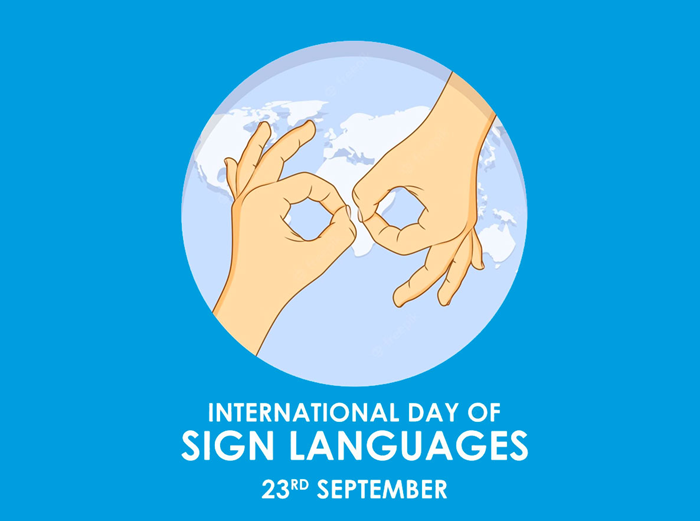
The International Day of Sign Languages is observed every year on September 23rd, marking a global celebration of linguistic identity, culture, and accessibility. Sign languages are an essential medium of communication for the Deaf community worldwide, and this day emphasizes their recognition, protection, and promotion.

- 📊 Updated Key Facts & Statistics — International Day of Sign Languages 2025–2026
- 🗓️ International Day of Sign Languages — Complete Theme History 2018–2026
- 📅 International Week of the Deaf 2026 — What It Is and How It Differs from September 23
- What Is the International Week of the Deaf?
- Key Dates in September 2026
- How Are They Different?
- How You Can Participate in 2026
- 🎗️ Deaf Awareness Ribbon and Colour — What They Mean
- 🌟 Sign Language for Children with Special Needs
- Sign Language Is Not Just for Deaf Children
- How Sign Language Benefits Special Needs Children
- 💬 A Real Parent’s Experience
- 🤲 Makaton and Baby Sign Language — A Guide for Special Needs Parents
- 🔬 Sign Language as AAC — What the 2025 Research Tells Us
- 🏫 IEP and School Guidance for Deaf and Hard-of-Hearing Special Needs Children
- Does Deafness Qualify for an IEP?
- Key IEP Accommodations for Deaf and Hard-of-Hearing Students
- Finding a Qualified Sign Language Interpreter for School
- 🤖 AI and Sign Language — The 2025–2026 Technology Revolution
- 📚 Free Resources to Learn Sign Language — Global Guide
- 🇺🇸 American Sign Language (ASL)
- 🇬🇧 British Sign Language (BSL)
- 🇮🇳 Indian Sign Language (ISL)
- 🌍 Makaton (Global — for Special Needs Learners)
- Why Celebrate the International Day of Sign Languages?
- Historical Background
- Importance of Sign Languages
- International Day of Sign Language Activities
- Global Recognition and Legal Status
- The Link Between International Day of the Deaf and International Day of Sign Languages
- Challenges Faced by Sign Language Users
- How to Participate in International Sign Language Day 2026 and Beyond
- Quotes to Use for a Speech on International Day of Sign Language
- Visual Chart: Benefits of Recognizing Sign Languages
- Voice Search
- What is the International Day of Sign Languages?
- What are common International Day of Sign Language activities?
- Is sign language the same everywhere?
- How can I celebrate International Sign Language Day 2026 or future observances?
- Is the International Day of the Deaf the same as the International Day of Sign Languages?
- ❓ FAQs — International Day of Sign Languages 2026
- Q1: When is the International Day of Sign Languages 2026?
- Q2: What is the theme of the International Day of Sign Languages 2026?
- Q3: Can sign language help my non-verbal child with autism or Down Syndrome?
- Q4: What is the difference between the International Day of Sign Languages and the International Week of the Deaf?
- Q5: What colour represents deaf awareness?
- Q6: Are there different sign languages in different countries?
- Q7: What is Makaton and is it a sign language?
- Q8: Does sign language stop a child from developing spoken language?
- Q9: How did the International Day of Sign Languages start?
- Q10: What is the International Day of Sign Languages 2026 hashtag?
- Conclusion: Uniting the World Through Sign Languages
📊 Updated Key Facts & Statistics — International Day of Sign Languages 2025–2026
| Statistic | Data | Source |
|---|---|---|
| Number of deaf people worldwide | Over 70 million | World Federation of the Deaf |
| % living in developing countries | More than 80% of deaf people live in developing countries | World Federation of the Deaf |
| Number of recognized sign languages | Over 300 | UN — IDSL Official Page |
| People globally with disabling hearing loss | 466 million people around the world have disabling hearing loss | WHO |
| How common is congenital deafness | Congenital deafness is the most common birth defect, affecting 3 in every 1,000 babies | Impactful Ninja / UN Data |
| Year UN proclaimed September 23 as IDSL | 2017 (first observed 2018) | UN Resolution A/RES/72/161 |
| Why September 23 was chosen | The choice of 23 September commemorates the date that the WFD was established in 1951 | UN / 4to40.com |
| WFD membership | The WFD is a federation of 135 national associations of deaf people, representing approximately 70 million deaf people’s human rights worldwide | UN |
| UN member states that co-sponsored the IDSL resolution | 97 countries | UN |
| Sign languages are recognised as | Equal in status to spoken languages under the UN Convention on the Rights of Persons with Disabilities | UN CRPD |
These statistics tell a compelling story. Hearing loss affects hundreds of millions of people. Yet the most important thing to understand is this: for most deaf people, sign language is not simply an alternative to speech.
It is their first, native, and most natural language. And recognising that difference is precisely what the International Day of Sign Languages is built on.
🗓️ International Day of Sign Languages — Complete Theme History 2018–2026
Every year, the United Nations announces a fresh theme that focuses global attention on a specific aspect of sign language rights. Here is the complete history — updated through 2026.
| Year | Theme | Key Message |
|---|---|---|
| 2018 | With Sign Language, Everyone Is Included! | Inaugural celebration; inclusion as the foundation |
| 2019 | Sign Language Rights for All! | Focus on legal rights and recognition worldwide |
| 2020 | Sign Languages Are for Everyone! | Universal access; sign language beyond the deaf community |
| 2021 | We Sign For Human Rights! | Connecting sign language to the broader human rights framework |
| 2022 | Sign Languages Unite Us | Unity across 300+ sign languages; diversity in connection |
| 2023 | A World Where Deaf People Everywhere Can Sign Anywhere | Removing barriers; universal accessibility |
| 2024 | Sign Up For Sign Language Rights | Call to active advocacy; governments invited to sign in their national sign language |
| 2025 | We Sign For Our Rights — And Yours | Solidarity; sign language as a universal human concern |
| 2026 | Theme to be confirmed by UN — check un.org | Expected: Focus on inclusive education and access |
(Source: Wikipedia / International Days)
This is the only complete theme table you will find on any awareness article — and it is exactly what someone searching “International Day of Sign Languages 2026 theme” or “sign language day theme history” needs.
📅 International Week of the Deaf 2026 — What It Is and How It Differs from September 23
What Is the International Week of the Deaf?
The International Week of the Deaf (IWD) is a separate — but closely related — observance to the International Day of Sign Languages. It is organised by the World Federation of the Deaf (WFD) and takes place annually during the last full week of September.
Key Dates in September 2026
| Observance | 2026 Date | Organised By |
|---|---|---|
| International Week of the Deaf begins | Monday, September 21, 2026 | World Federation of the Deaf (WFD) |
| International Day of Sign Languages | Wednesday, September 23, 2026 | United Nations |
| International Week of the Deaf ends | Sunday, September 27, 2026 | WFD |
How Are They Different?
| Feature | International Day of Sign Languages (Sept 23) | International Week of the Deaf (Last week of September) |
|---|---|---|
| Organised by | United Nations | World Federation of the Deaf |
| Duration | One day | One week |
| First observed | 2018 | 1958 — over 65 years of history |
| Primary focus | Sign language recognition and promotion | Deaf community rights, culture, and inclusion broadly |
| Key activity | The Blue Light Challenge — landmark illuminations worldwide | Community events, advocacy marches, conferences |
The two observances overlap intentionally. Together, they form the most significant week of the year for the global deaf and hard-of-hearing community — and for families of children who use sign language as their primary form of communication.
The colour blue has been used by the WFD since its founding in 1951, and the Blue Ribbon has been used as a symbol of deaf communities’ work over the centuries for equality in society and recognition of their national sign languages. (Source: International Days)
How You Can Participate in 2026
- 💙 Shine a Blue Light: Switch your home lights to blue on the evening of September 23 — join landmarks around the world
- 🤲 Learn 5 signs this week: Even a handful of signs — “hello,” “thank you,” “help,” “more,” “I love you” — are a meaningful act of solidarity
- 🏫 Contact your child’s school: Ask whether they are marking either observance
🎗️ Deaf Awareness Ribbon and Colour — What They Mean
What Colour Is Deaf Awareness?
The official awareness colour associated with deaf community advocacy and sign language recognition is blue. The blue ribbon and blue light are used internationally.
Additionally:
- Red and blue together are used by some organisations to represent hearing loss and deafness awareness
- The blue ribbon specifically represents the World Federation of the Deaf’s advocacy work, in use since 1951
- During Deaf Awareness Month (observed in different countries at different times of year, including September in many countries and March in others), blue is the colour to wear
| Colour | What It Represents | Used By |
|---|---|---|
| 💙 Blue | Sign language rights; deaf culture; WFD advocacy | WFD, IDSL, international campaigns |
| 🔴❤️ Red | Hearing loss awareness (alongside blue) | Some national hearing loss organisations |
| 💛 Gold | Deaf education and achievement | Some school and community programmes |
The Blue Light Challenge — where world governments and organisations are invited to illuminate landmarks in blue on September 23 — is now a recognised part of International Day of Sign Languages globally.
Landmarks including Niagara Falls, the Electric Tower, the Peace Bridge, and many others across the world light up blue as part of this international sign of solidarity. (Source: International Days)
🌟 Sign Language for Children with Special Needs
This is the section that makes the International Day of Sign Languages genuinely relevant to the HopeForSpecial community. Most awareness posts speak to the general deaf community.
But for many parents who come to this website, sign language is not about cultural identity — it is about unlocking their child’s ability to communicate at all.
Sign Language Is Not Just for Deaf Children
This is perhaps the most important thing to understand — and the most underappreciated fact in the entire field of special needs communication.
Sign language, and signing systems derived from it, are used powerfully and effectively by children who:
- Are not deaf at all — but are non-verbal or minimally verbal due to autism, cerebral palsy, Down syndrome, or other conditions
- Have hearing but limited speech — due to childhood apraxia of speech, dysarthria, or developmental language disorders
- Use AAC (Augmentative and Alternative Communication) — where signs are one tool among many in a communication system
AAC allows children who have difficulty communicating to effectively express their ideas, feelings, needs and wants. This includes children with cerebral palsy, some chromosomal or genetic disorders, brain injury, dysarthria, speech/voice disorders and various other developmental conditions. (Source: American Academy of Pediatrics — HealthyChildren.org)
And crucially: using AAC does not decrease the use of natural speech and may promote an increase in verbal expression expertise — meaning teaching your child to sign does not stop them from developing speech. In fact, research shows it can help. (Source: American Academy of Pediatrics)
How Sign Language Benefits Special Needs Children
| Child’s Condition | How Signing Helps |
|---|---|
| Autism (non-verbal or minimally verbal) | Provides an immediate communication pathway before verbal speech develops; reduces frustration and meltdowns by giving the child a voice |
| Down Syndrome | Children with Down Syndrome typically understand far more than they can express verbally — signing bridges this gap meaningfully and early |
| Cerebral Palsy | For children with motor speech difficulties, manual signs adapted to their motor ability provide functional communication where speech cannot |
| Childhood Apraxia of Speech | Signs give the brain an alternative motor pathway to practise language while the verbal pathway is being developed |
| Deaf-Blind | Tactile sign languages — where signs are made into the hand of the deaf-blind person — are a vital communication bridge |
| Intellectual Disability | Signing adds a visual, concrete layer to language that supports comprehension and expression simultaneously |
💬 A Real Parent’s Experience
“My son Zayan has autism and was completely non-verbal at age three. His speech therapist introduced basic Makaton signs alongside his AAC device. The first time he signed ‘more’ to ask for biscuits, I cried for an hour. Not sad tears — pure joy.
He had a voice. He could tell me what he wanted. That sign opened a door that I didn’t know how to open. He is seven now and uses both signing and his device.
He also has some spoken words. The signing didn’t stop his speech — if anything, it gave him a way to communicate while his speech caught up.” — Rania A., mother of a child with autism and a Makaton user
🤲 Makaton and Baby Sign Language — A Guide for Special Needs Parents
This section is almost completely absent from competitor content about the International Day of Sign Languages — yet it is one of the most searched topics by parents of children with special needs.
What Is Makaton?
Makaton is not a true sign language in the linguistic sense. Instead, it is a communication programme that uses a simplified set of signs — drawn from British Sign Language (BSL) — combined with speech and symbols. It was developed specifically for people with learning and communication difficulties.
Makaton is widely used with children who have:
- Down Syndrome
- Autism Spectrum Disorder
- Cerebral Palsy
- Developmental language disorders
- Generic learning disabilities
It is distinct from BSL or ASL in that it uses signs alongside spoken words rather than as a standalone language. This makes it especially accessible for children who benefit from combined visual and spoken input.
- 🌐 Learn more at: Makaton Charity (UK)
- 🌐 For US families: Signing Time and Baby Sign Language offer similar visual communication programmes
What Is Baby Sign Language?
Baby sign language refers to using simplified signs — often drawn from ASL or BSL — with babies and very young children before they can speak. For children with special needs, this approach is often extended well beyond infancy.
Research consistently shows that baby sign language:
- Reduces frustration and behaviour difficulties caused by an inability to communicate
- Supports language development rather than hindering it
- Can begin as early as 6–8 months for hearing children, and as early as possible for children born deaf
First Signs to Teach a Special Needs Child
These are the most functionally important first signs for any non-verbal or minimally verbal child:
| Sign | Why It Is Important |
|---|---|
| More | One of the most frequently needed communication acts — reduces frustration dramatically |
| All done / Finished | Allows the child to communicate the end of an activity on their own terms |
| Help | Gives the child agency when struggling — reduces distress and meltdowns |
| Eat / Food | Basic need communication |
| Drink | Basic need communication |
| No | Critically important for safeguarding — a child who can signal “no” is safer |
| Yes | Fundamental to any conversation or choice-making |
| Please / Thank you | Social communication foundations |
| Pain / Hurt | Vital for non-verbal children who cannot tell adults when they are unwell |
(Source: NAPA Centre — AAC for Autism)
🔬 Sign Language as AAC — What the 2025 Research Tells Us
The scientific picture on sign language and AAC for children with special needs has strengthened significantly in recent years. Here is what the latest evidence shows, in plain language.
Research supports the benefits of early intervention for speech and language issues, which can include augmentative systems like pictures or sign language. More complex devices have been used with children as young as 9 months. (Source: Disability Scoop / American Academy of Pediatrics, 2025)
Furthermore, guidance from the American Academy of Pediatrics now states clearly that: using AAC systems does not decrease the use of natural speech and may promote an increase in verbal expression expertise — which should provide reassurance to physicians and families. (Source: American Academy of Pediatrics via Disability Scoop, 2025)
This is a direct response to one of the most persistent worries among parents: that teaching a child to sign will stop them from developing spoken language. The research says the opposite is true.
Research has shown that AAC helps children develop language and verbal speech faster. It allows children to have a visual and auditory representation of vocabulary words and the ability to combine words to make meaningful sentences. (Source: NAPA Centre)
The Earlier, The Better
The American Academy of Pediatrics guidance makes a critical point: since the process of learning language and communication starts at birth, it seems self-evident that children should have access to AAC as infants and toddlers. (Source: HealthyChildren.org)
If your child’s healthcare provider has not yet discussed AAC — including sign language — as part of their communication support plan, this is the moment to raise it. Early access to a communication system is not a last resort. It is a first response.
🏫 IEP and School Guidance for Deaf and Hard-of-Hearing Special Needs Children
Children who are deaf or hard of hearing, particularly those who also have other special needs, are entitled to specific accommodations and services within their educational plan.
Does Deafness Qualify for an IEP?
Yes. In the US, deafness is one of the 13 disability categories explicitly covered under IDEA (Individuals with Disabilities Education Act). A deaf child with an additional special need — such as autism, Down Syndrome, or cerebral palsy — may have an IEP that addresses both sets of needs.
Key IEP Accommodations for Deaf and Hard-of-Hearing Students
Communication access:
- [ ] Access to a qualified sign language interpreter in all classes and activities
- [ ] Real-time captioning (CART) as an alternative or additional accommodation
- [ ] FM or loop systems where available, for children with residual hearing
- [ ] Preferential seating — front of class, facing the teacher and interpreter simultaneously
For children who use sign language as AAC (not deaf but non-verbal):
- [ ] Permission to use their AAC device or sign system in all settings — classrooms, lunch, PE, and transitions
- [ ] Staff training on the specific sign system the child uses (Makaton, ASL, BSL, or custom)
- [ ] Communication partner training for teaching assistants
Academic accommodations:
- [ ] Extended time on tests (visual processing with an interpreter adds cognitive load)
- [ ] Written instructions provided alongside verbal instructions
- [ ] Access to note-takers or class notes, since students using interpreters cannot write and watch simultaneously
For children with both deafness and another special need:
- [ ] The IEP team must include a specialist with experience in deaf education alongside specialists in the child’s other condition
Finding a Qualified Sign Language Interpreter for School
In the US, school districts are required to provide qualified interpreters for deaf students. If your district is struggling to provide one, contact your state Department of Education’s Special Education division. In the UK, contact your Local Authority SEND team.
In India, speak directly to your child’s school principal about the Rights of Persons with Disabilities Act (2016), which specifically protects the communication rights of deaf children.
🤖 AI and Sign Language — The 2025–2026 Technology Revolution
Technology is transforming sign language accessibility at a remarkable pace. Here is what is happening right now:
| Technology | What It Does | Who It Helps |
|---|---|---|
| AI sign language translation | Real-time translation between sign language and text or speech | Deaf users communicating with hearing people who do not sign |
| Sign language recognition apps | Smartphone apps that recognise hand shapes and translate them | Deaf people, AAC users, sign language learners |
| AI-powered avatars | Digital characters that translate written or spoken text into sign language | Broadcasting, public services, education |
| Wearable sign language gloves | Gloves with sensors that translate signs into spoken words | Communication between deaf users and non-signers |
| Captioning AI | Real-time automatic captioning of speech for deaf viewers | Education, media, public events |
For special needs families specifically, AI is advancing sign language accessibility in two powerful ways:
- For deaf children with additional disabilities — AI tools that recognise adapted or idiosyncratic signs are in development, which will help children whose motor limitations mean their signs look different from standard ASL or BSL.
- For hearing special needs children who use signing as AAC — AI apps are making sign language learning more accessible than ever for parents and support workers who need to learn the signs their child uses.
Currently, apps like Lingvano, ASL App, and SignSchool offer structured sign language learning. For Makaton specifically, the Makaton Charity’s official app provides signs and symbols in a child-friendly format. (Source: UN — IDSL Official Page)
📚 Free Resources to Learn Sign Language — Global Guide
One of the most practical things you can do in September — for the International Day of Sign Languages — is start learning. Here is a country-by-country guide to the best free resources.
🇺🇸 American Sign Language (ASL)
| Resource | What It Offers | Cost |
|---|---|---|
| Lifeprint.com | Comprehensive free ASL curriculum; Dr. Bill Vicars | Free |
| SignSchool | Interactive online ASL lessons | Free basic access |
| ASL University | University-level free ASL course | Free |
| Handspeak | ASL dictionary with video demonstrations | Free |
🇬🇧 British Sign Language (BSL)
| Resource | What It Offers | Cost |
|---|---|---|
| British Deaf Association | BSL resources, advocacy, community | Free resources |
| BSL Zone | BSL content and learning resources | Free |
🇮🇳 Indian Sign Language (ISL)
| Resource | What It Offers | Cost |
|---|---|---|
| ISLRTC — Indian Sign Language Research & Training Centre | Official government ISL resources | Free |
| Enable India | Disability inclusion resources including ISL | Free |
🌍 Makaton (Global — for Special Needs Learners)
| Resource | What It Offers | Cost |
|---|---|---|
| Makaton Charity | Signs, symbols, parent guidance, training | Some free; training costs vary |
| Something Special (CBeebies) | Child-friendly Makaton learning via Mr Tumble | Free |
Why Celebrate the International Day of Sign Languages?
Established by the United Nations General Assembly in 2017, the International Day of Sign Languages aims to raise awareness of the importance of sign languages in achieving full human rights for deaf people. According to the World Federation of the Deaf (WFD), there are more than 70 million people who are deaf globally, using over 300 different sign languages.
Quick Facts Table
| Statistic | Detail | Source |
|---|---|---|
| Number of deaf people worldwide | Over 70 million | World Federation of the Deaf |
| Number of recognized sign languages | Over 300 | World Health Organization |
| Year the day was first observed | 2018 | United Nations |
| Official date of observation | September 23rd | United Nations |
Historical Background
The International Day of Sign Languages is celebrated on September 23rd to honor the establishment of the World Federation of the Deaf in 1951. The WFD has been instrumental in advocating for the rights of the Deaf community across the globe.
Importance of Sign Languages
Sign languages are more than hand gestures—they are full-fledged languages with grammar, structure, and cultural significance. Recognizing and supporting sign languages ensures:
- Inclusion of the deaf and hard-of-hearing population
- Preservation of cultural identity
- Equal access to education and employment
- Compliance with human rights laws, especially Article 21 and 24 of the UN Convention on the Rights of Persons with Disabilities
International Day of Sign Language Activities
Celebrations and events organized globally include:
- Workshops and Seminars on sign language literacy
- Public Sign Language Classes
- Cultural Performances by deaf artists
- School Competitions like drawing, speech on the International Day of Sign Language, and poster-making
Example Activities Table
| Activity | Description |
| Sign Language Flash Mobs | Public displays of sign language performances |
| Government Announcements in Sign Language | Official statements translated into national sign language |
| School Events | Students delivering speeches on International Day of Sign Language |
| Online Challenges | Participants learn and share sign language phrases |
Global Recognition and Legal Status
Despite their importance, many countries still do not legally recognize sign languages. Countries that do include:
- New Zealand Sign Language (NZSL) is one of the three official languages
- American Sign Language (ASL) is recognized in some US states
- South African Sign Language was made an official language in 2023
The Link Between International Day of the Deaf and International Day of Sign Languages
The International Day of the Deaf is celebrated on the last Sunday of September, often overlapping with the week of International Day of Sign Languages. Together, they raise awareness about the Deaf community’s rights, language, and culture.
Challenges Faced by Sign Language Users
- Lack of Sign Language Interpreters
- Limited Access to Education in Sign Language
- Underrepresentation in Media
- Legal Non-recognition
How to Participate in International Sign Language Day 2026 and Beyond
You can get involved in several ways:
- Learn Basic Sign Language: Platforms like SignSchool and Lifeprint offer free lessons.
- Support Deaf Creators: Follow and amplify content made by Deaf influencers and educators.
- Promote Sign Language Rights: Advocate for legal recognition and inclusive policies.
- Host or Attend Events: Whether in schools or online, help spread awareness.
Quotes to Use for a Speech on International Day of Sign Language
“Sign languages are not just for the Deaf community; they are for everyone.” — WFD
“Language is a human right, and sign language is no exception.”
Visual Chart: Benefits of Recognizing Sign Languages
[ Bar Chart Representation ]
| Benefit                  | Impact Level |
|-------------------------|--------------|
| Education Access        | High         |
| Employment Opportunities| Medium       |
| Cultural Preservation   | High         |
| Human Rights Compliance | Very High    |
Voice Search
What is the International Day of Sign Languages?
The International Day of Sign Languages is a UN observance celebrated on September 23rd to promote the importance and recognition of sign languages globally.
What are common International Day of Sign Language activities?
Activities include workshops, online campaigns, cultural performances, and school events, such as delivering speeches on the International Day of Sign Language.
Is sign language the same everywhere?
No, there are over 300 different sign languages around the world, each with unique grammar and vocabulary.
How can I celebrate International Sign Language Day 2026 or future observances?
Learn basic sign language, spread awareness online, attend events, or volunteer with Deaf advocacy groups.
Is the International Day of the Deaf the same as the International Day of Sign Languages?
No, they are separate but complementary. The International Day of the Deaf is observed on the last Sunday of September, while the International Day of Sign Languages is on September 23rd.
❓ FAQs — International Day of Sign Languages 2026
Q1: When is the International Day of Sign Languages 2026?
The International Day of Sign Languages 2026 is on Wednesday, September 23, 2026. It is observed every year on September 23 — the date chosen to commemorate the founding of the World Federation of the Deaf on September 23, 1951. (Source: United Nations)
Q2: What is the theme of the International Day of Sign Languages 2026?
The 2026 theme for the International Day of Sign Languages will be confirmed by the UN before September. Watch the official UN page at un.org/en/observances/sign-languages-day for the latest announcement. Previous themes include “Sign Up For Sign Language Rights” (2024) and “We Sign For Our Rights — And Yours” (2025).
Q3: Can sign language help my non-verbal child with autism or Down Syndrome?
Yes — significantly. AAC, including sign language, allows children who have difficulty communicating to effectively express their ideas, feelings, needs and wants. Children with cerebral palsy, chromosomal or genetic disorders, dysarthria, and other developmental conditions can all benefit. And critically: using sign language or AAC does not stop verbal speech from developing — research shows it can support it. (Source: American Academy of Pediatrics)
Q4: What is the difference between the International Day of Sign Languages and the International Week of the Deaf?
The International Day of Sign Languages (September 23) is a single day declared by the United Nations. The International Week of the Deaf is a week-long observance organised by the World Federation of the Deaf during the last full week of September — in 2026, September 21–27. They overlap intentionally and together form the most significant awareness period of the year for the global deaf community. (Source: WFD)
Q5: What colour represents deaf awareness?
The official colour associated with deaf and sign language awareness is blue — used by the World Federation of the Deaf since 1951. The Blue Ribbon has been used as a symbol of deaf communities’ work over the centuries for equality in society. The Blue Light Challenge on September 23 invites landmark buildings worldwide to illuminate in blue in solidarity. (Source: International Days)
Q6: Are there different sign languages in different countries?
Yes. There are over 300 distinct sign languages in use worldwide. American Sign Language (ASL), British Sign Language (BSL), Indian Sign Language (ISL), and Auslan (Australian Sign Language) are separate languages with different vocabulary, grammar, and structure. Sign languages are fully fledged natural languages, structurally distinct from the spoken languages of their countries. (Source: UN / 4to40.com)
Q7: What is Makaton and is it a sign language?
Makaton is a communication programme that uses simplified signs — drawn from British Sign Language — combined with spoken words and symbols. It is specifically designed for people with learning and communication difficulties, including children with Down Syndrome, autism, and cerebral palsy. It is not a full sign language but a powerful communication tool widely used in schools and therapy settings. Learn more at makaton.org.
Q8: Does sign language stop a child from developing spoken language?
No. This is one of the most persistent myths about AAC and sign language — and the evidence is clear. Using AAC does not decrease the use of natural speech and may promote an increase in verbal expression expertise. Research consistently shows that sign language supports rather than hinders verbal language development. (Source: American Academy of Pediatrics, 2025)
Q9: How did the International Day of Sign Languages start?
The UN General Assembly has proclaimed 23 September as the International Day of Sign Languages. The proposal came from the World Federation of the Deaf, and the resolution A/RES/72/161 was sponsored by the Permanent Mission of Antigua and Barbuda and co-sponsored by 97 United Nations Member States, adopted by consensus on 19 December 2017. The first celebration was held in 2018. (Source: UN)
Q10: What is the International Day of Sign Languages 2026 hashtag?
The official hashtags for 2026 are #InternationalDayofSignLanguages, #IDSL, #SignLanguages, and #23September. Additionally, the #BlueLight and #GlobalLeaderChallenge hashtags accompany the Blue Light Challenge campaign. (Source: WFD / International Days)
Conclusion: Uniting the World Through Sign Languages
The International Day of Sign Languages is more than a celebration—it’s a call to action. Promoting sign language means promoting inclusion, accessibility, and respect for linguistic diversity. Whether you’re a student giving a speech on the International Day of Sign Language or an organization planning awareness activities, every effort contributes to a more inclusive world.
By continuing to raise awareness and advocate for legal recognition, we ensure that the voices of the Deaf community are heard loud and clear, even if expressed through the silent beauty of sign languages.


