

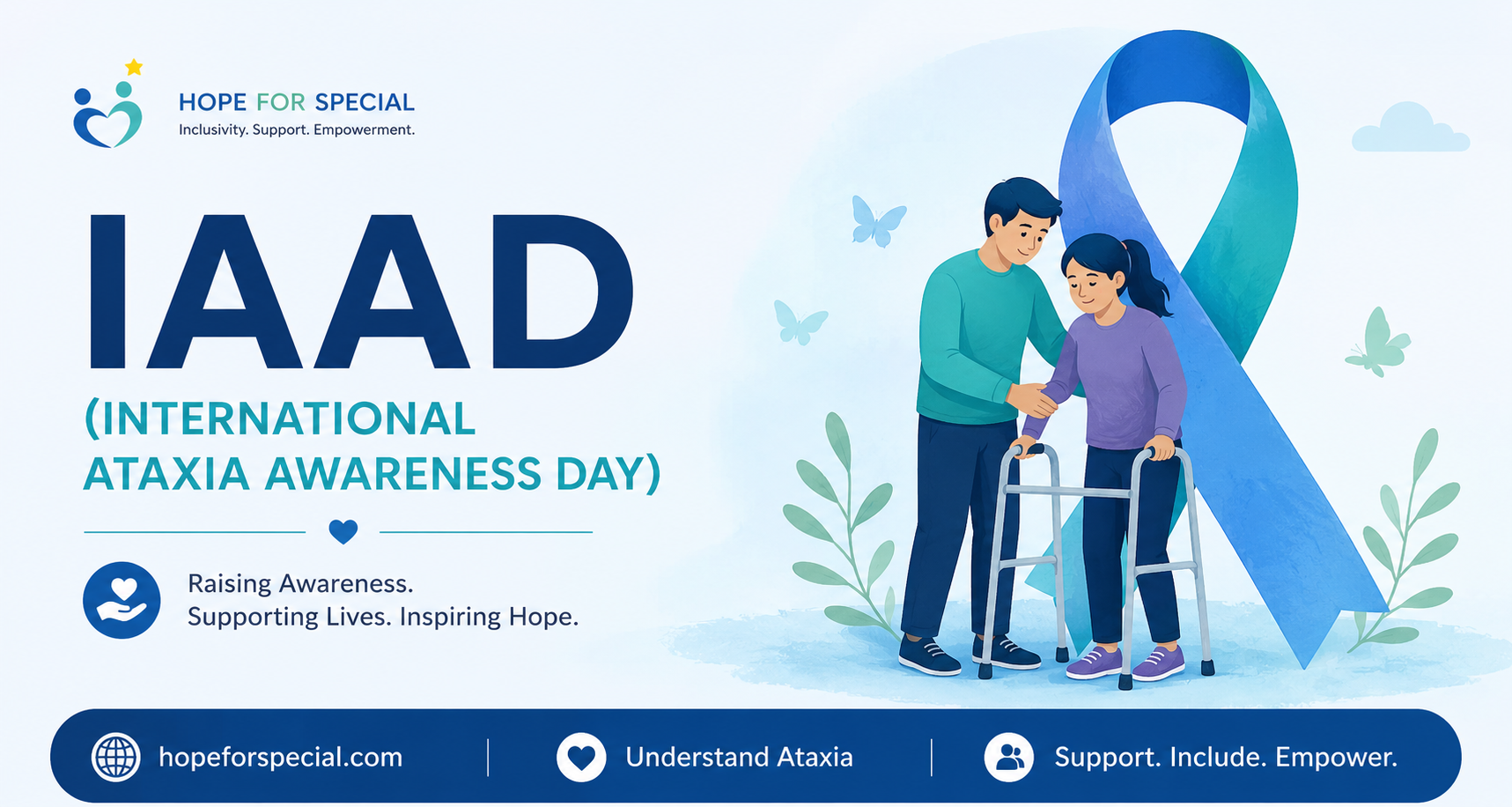
IAAD (International Ataxia Awareness Day): Breaking Silence & Changing Lives in 2026 🎗️
This guide gives you everything: what IAAD is, why ataxia matters so deeply, how families are living with it, what research is offering new hope in 2026, and exactly how you can make a difference this September 25 and beyond.

- ⚡ What Is IAAD? — Direct Answer
- 🧠 What Is Ataxia? — The Disease IAAD Fights
- 🧬 Types of Ataxia — What IAAD Advocates For
- 1. Hereditary Ataxias (Genetic)
- 2. Sporadic / Acquired Ataxias
- 3. Multiple System Atrophy — Cerebellar Type (MSA-C)
- 4. Episodic Ataxias
- 🩸 Symptoms of Ataxia — What IAAD Wants the World to Recognize
- Early Symptoms (Often Missed or Misattributed)
- Advanced Symptoms
- ⚠️ The Misdiagnosis Crisis — What IAAD Is Battling
- 🔬 How Is Ataxia Diagnosed?
- Step 1 — Neurological Examination
- Step 2 — Brain MRI
- Step 3 — Genetic Testing
- Step 4 — Blood Tests
- Step 5 — Additional Specialist Assessments
- 💊 Ataxia Treatment & Research in 2026 — Why IAAD’s Work Matters Now More Than Ever
- 📈 Key IAAD & Ataxia Statistics — With Source Links
- 🕰️ The History & Mission of IAAD
- 💛 A Family’s Real Story: “Nobody Knew What Was Happening to Our Son.”
- 🎯 How to Participate in IAAD 2026 — September 25
- 🟦 Wear the Ataxia Awareness Colors
- 📱 Share on Social Media
- 🏃 Join or Organize a Fundraising Event
- ✍️ Write to Your Elected Representatives
- 💰 Make a Research Donation
- 🏥 Educate Your Doctor
- 🎓 Request IAAD Recognition at Schools & Workplaces
- 🔍 What You Must Not Skip About IAAD — Expert Insights
- 1. 🌍 IAAD Is Bigger Than One Day
- 2. 🧬 The Genetic Counseling Gap in Ataxia Families
- 3. 🏋️ Exercise Is Emerging as Medicine for Ataxia
- 4. 💬 AAC Technology Is Transforming Communication in Ataxia
- 5. 🧠 The Mental Health Crisis in Ataxia Is Invisible
- 6. 🌐 Ataxia in Low-Income Countries — The Hidden Crisis
- ⏳ Timeline: IAAD & Ataxia Research Milestones
- ❓ FAQs
- When is IAAD celebrated in 2026?
- What is the theme of IAAD 2026?
- Is ataxia a terminal disease?
- Can ataxia be cured?
- What are the early warning signs of ataxia?
- How is IAAD different from other neurological disease awareness days?
- How can I help someone with ataxia on IAAD?
- Does ataxia only affect elderly people?
- Is there financial support available for ataxia patients?
- What is the difference between ataxia and multiple sclerosis?
- 🔗 Trusted Resources for IAAD & Ataxia Patients
- 🏥 Medical Authorities & Research Organizations
- 💛 Patient Support & Advocacy
- 🔬 Clinical Trials & Research
- ✨ Final Thoughts: Why IAAD 2026 Cannot Be Silent
⚡ What Is IAAD? — Direct Answer
IAAD — International Ataxia Awareness Day — is observed every year on September 25. It is a global campaign dedicated to raising awareness about ataxia, a group of neurological conditions causing progressive loss of coordination and balance. IAAD unites patients, families, researchers, and advocates worldwide to demand better care, faster diagnosis, and urgently needed research funding.
If you have never heard of ataxia, you are not alone. That is precisely the problem that IAAD exists to solve. 💙
Every September 25, thousands of people around the world wear the ataxia awareness ribbon, share their stories, light up landmarks, and reach out to legislators — all in service of a disease that affects an estimated 150,000 Americans and millions more globally, yet receives a fraction of the research funding and public attention it deserves.
🧠 What Is Ataxia? — The Disease IAAD Fights
To understand why IAAD matters so deeply, you first need to understand what ataxia actually is — because most people have never heard of it, and those who have often misunderstand it.
Ataxia is not a single disease. It is an umbrella term covering more than 50 distinct neurological conditions that share one defining feature: the progressive loss of coordination and balance caused by damage to or dysfunction of the cerebellum — the part of the brain that controls coordinated movement.
The cerebellum is sometimes called the brain’s “autopilot.” It handles the thousands of micro-adjustments that make walking, reaching, speaking, and swallowing feel effortless. When ataxia damages the cerebellum or its connections, these automatic corrections break down. Simple tasks — walking in a straight line, buttoning a shirt, lifting a cup — become enormously difficult.
The cruelest aspect of most ataxia types: the mind remains sharp while the body loses its ability to cooperate. Many ataxia patients are fully cognitively intact, watching their physical independence erode year by year.
This is the reality that IAAD brings into the global spotlight every September 25.
💡 Voice Search Answer — What does IAAD stand for? IAAD stands for International Ataxia Awareness Day. It is observed every year on September 25. It is a global campaign to raise awareness about ataxia — a group of neurological conditions causing progressive loss of coordination. IAAD is organized by the World Ataxia Alliance and supported by ataxia organizations in more than 60 countries.
🧬 Types of Ataxia — What IAAD Advocates For
One reason ataxia remains poorly understood is its enormous variety. IAAD advocates for all ataxia patients — regardless of type. Understanding the major categories helps explain why research and treatment development are so complex.
1. Hereditary Ataxias (Genetic)
These are caused by inherited gene mutations. They are passed from parent to child in different patterns.
Spinocerebellar Ataxias (SCAs)
- More than 48 distinct subtypes identified (SCA1 through SCA48 and beyond)
- Most are autosomal dominant — one copy of the mutated gene causes disease
- Progressive cerebellar degeneration
- Symptoms typically begin in adulthood (30s–50s) but can start earlier
Friedreich’s Ataxia (FA)
- The most common inherited ataxia — approximately 1 in 50,000 people worldwide
- Autosomal recessive — two copies of the mutated FXN gene required
- Causes degeneration of the spinal cord and cerebellum
- Also affects the heart (hypertrophic cardiomyopathy) and can cause diabetes
- Onset typically in childhood or adolescence (ages 5–15)
- FDA approved omaveloxolone (Skyclarys) in 2023 — the first drug specifically approved for Friedreich’s Ataxia
Ataxia-Telangiectasia (A-T)
- Rare autosomal recessive condition affecting children
- Caused by ATM gene mutation
- Features progressive ataxia, immune deficiency, and increased cancer risk
- Children are typically wheelchair-dependent by their teens
2. Sporadic / Acquired Ataxias
These develop without a family history due to external causes:
- 🍷 Alcoholic cerebellar degeneration — chronic alcohol abuse damages the cerebellum
- 🧫 Autoimmune ataxias — immune system attacks cerebellar tissue (anti-GAD, anti-gliadin, gluten ataxia)
- 💊 Drug-induced ataxia — certain medications (phenytoin, chemotherapy agents)
- 🩸 Vascular ataxia — from stroke or TIA affecting the cerebellum
3. Multiple System Atrophy — Cerebellar Type (MSA-C)
A progressive neurodegenerative disease affecting the cerebellum, autonomic nervous system, and other brain regions. Often misdiagnosed as Parkinson’s disease or other ataxia types in early stages.
4. Episodic Ataxias
Rare genetic conditions causing discrete episodes of ataxia rather than continuous progression. Episodes can last minutes to hours and may be triggered by stress, caffeine, or movement.
| Type | Cause | Key Feature |
|---|---|---|
| Friedreich’s Ataxia | FXN gene mutation | Most common; heart involvement |
| SCA (48+ types) | Various gene mutations | Dominant inheritance; adult onset |
| Ataxia-Telangiectasia | ATM gene mutation | Childhood; immune deficiency |
| Gluten Ataxia | Immune reaction to gluten | Often reversible with gluten-free diet |
| MSA-C | Neurodegeneration | Autonomic features; rapid progression |
| Episodic Ataxia | CACNA1A, KCNA1 genes | Discrete episodes; treatable with acetazolamide |
🩸 Symptoms of Ataxia — What IAAD Wants the World to Recognize
IAAD campaigns every year to help the public — and crucially, primary care physicians — recognize ataxia symptoms earlier. The average time from first symptom to correct ataxia diagnosis is 4–7 years. This is a devastating delay that IAAD works to reduce.
Early Symptoms (Often Missed or Misattributed)
- 🚶 Balance problems and frequent tripping — often attributed to “clumsiness” or inner ear issues
- ✍️ Deteriorating handwriting — one of the earliest and most overlooked signs
- 🗣️ Slurred or slow speech (dysarthria) — frequently mistaken for intoxication or stroke
- 👁️ Abnormal eye movements (nystagmus) — involuntary eye oscillation
- 😮💨 Fatigue with physical activity — disproportionate to effort
- 🦷 Swallowing difficulties (dysphagia) — in more advanced cases
Advanced Symptoms
- 🦽 Wheelchair dependence — common in progressive forms within 10–15 years of onset
- 🫁 Respiratory complications — in severe cases
- ❤️ Cardiac disease — particularly in Friedreich’s Ataxia
- 🧠 Cognitive changes — in some subtypes (particularly MSA-C)
- 💬 Complete loss of intelligible speech in advanced stages of some SCAs
- 👐 Tremor and involuntary movements in some types
⚠️ The Misdiagnosis Crisis — What IAAD Is Battling
Ataxia is routinely misdiagnosed as:
- Multiple sclerosis
- Parkinson’s disease
- Stroke effects
- Intoxication (especially in young people)
- Inner ear disorders
- Anxiety or conversion disorder (psychological)
- Cerebral palsy (in childhood-onset cases)
This misdiagnosis epidemic means patients spend years on wrong treatments, families lose precious time accessing appropriate support, and research opportunities — including clinical trial enrollment — are missed. IAAD’s annual campaign specifically targets primary care physician education as a priority action.
🔬 How Is Ataxia Diagnosed?
Diagnosis of ataxia requires a neurological specialist — ideally one with specific ataxia expertise. Here is the diagnostic pathway that IAAD advocates for all suspected ataxia patients:
Step 1 — Neurological Examination
A comprehensive neurological exam assesses coordination (finger-nose test, heel-shin test), gait, eye movements, speech, and reflexes. The Scale for the Assessment and Rating of Ataxia (SARA) is the gold standard clinical tool — scoring ataxia severity from 0 (normal) to 40 (most severe).
Step 2 — Brain MRI
MRI of the brain and spinal cord is essential. In cerebellar ataxias, characteristic cerebellar atrophy (shrinkage of the cerebellum) is often visible. Specific patterns help distinguish ataxia types. Spinal cord changes appear in Friedreich’s Ataxia.
Step 3 — Genetic Testing
For hereditary ataxias, genetic testing is now the definitive diagnostic tool. Advances in next-generation sequencing (NGS) and whole exome/genome sequencing have dramatically expanded the ability to identify causative mutations. Gene panel tests covering 50+ ataxia genes are now available from specialized laboratories.
Step 4 — Blood Tests
- Vitamin E levels (deficiency causes ataxia)
- Thyroid function tests
- Autoimmune antibody panels (anti-GAD65, anti-gliadin, anti-CASPR2)
- Vitamin B12
- Coenzyme Q10 levels
- Anti-tissue transglutaminase (for gluten ataxia)
Step 5 — Additional Specialist Assessments
- Echocardiogram — Essential in Friedreich’s Ataxia for cardiac assessment
- Electromyography (EMG) and nerve conduction studies — Assess peripheral nerve involvement
- Neuropsychological testing — Cognitive assessment in subtypes with cognitive involvement
- Speech and language assessment — For dysarthria and dysphagia management
💊 Ataxia Treatment & Research in 2026 — Why IAAD’s Work Matters Now More Than Ever
The treatment landscape for ataxia has changed significantly in recent years. IAAD advocacy has played a direct role in accelerating research funding and regulatory attention. Here is where things stand in 2026.
Approved Treatments
Omaveloxolone (Skyclarys) — FDA Approved February 2023
The first and only FDA-approved treatment specifically for Friedreich’s Ataxia. It activates the Nrf2 pathway, reducing oxidative stress and inflammation in nerve cells.
- Approved for patients 16 years and older with FA
- Clinical trial data showed significantly slower decline in neurological function versus placebo
- A landmark moment for the entire ataxia community — and a direct outcome of years of IAAD-supported advocacy and research funding
Acetazolamide
Approved for episodic ataxia types 1 and 2. Significantly reduces the frequency and severity of ataxia episodes in most patients.
Riluzole
Originally approved for ALS, riluzole has shown modest benefit in reducing ataxia severity across several types in clinical trials. Used off-label in some SCA subtypes.
4-Aminopyridine (4-AP)
Improves cerebellar function by blocking potassium channels. Evidence supports benefit in downbeat nystagmus and some episodic ataxias.
Symptomatic Management
Since disease-modifying treatments are limited for most ataxia types, symptomatic management remains central:
| Symptom | Management Approach |
|---|---|
| Balance & gait problems | Physiotherapy; gait training; walking aids; ankle-foot orthoses |
| Speech difficulties | Speech & language therapy; AAC (Augmentative & Alternative Communication) devices |
| Swallowing difficulties | SALT assessment; dietary modification; PEG feeding if severe |
| Tremor | Weighted utensils; occupational therapy; in some cases propranolol |
| Fatigue | Energy conservation strategies; graded exercise; sleep optimization |
| Cardiac disease (FA) | Cardiology follow-up; ACE inhibitors; in severe cases transplantation |
| Spasticity | Baclofen; physiotherapy; hydrotherapy |
| Depression/anxiety | Psychological support; CBT; medication when appropriate |
Exciting Research Pipeline in 2026 🚀
🧬 Gene therapy for Friedreich’s Ataxia — Multiple Phase I/II trials using AAV-mediated frataxin gene delivery are underway. Early results showing frataxin protein restoration in nerve cells — potentially the closest thing to a cure the FA community has ever seen.
🔬 Antisense oligonucleotides (ASOs) — Being developed for multiple SCA types. ASOs are designed to reduce production of the toxic proteins that damage cerebellar cells in dominant SCAs.
🧪 Stem cell therapy — Early-phase trials investigating the ability of neural stem cells to replace lost cerebellar neurons. Preclinical results have been promising.
💊 Vatiquinone (EPI-743) — A mitochondrial-targeted antioxidant in trials for Friedreich’s Ataxia. Targeting the same oxidative stress pathway as omaveloxolone with a complementary mechanism.
🤖 AI-assisted gait analysis — Machine learning tools that analyze movement patterns are being developed to detect ataxia progression earlier and more objectively than current clinical scales allow.
📈 Key IAAD & Ataxia Statistics — With Source Links
| Statistic | Figure | Source |
|---|---|---|
| Estimated ataxia patients in the United States | ~150,000 | National Ataxia Foundation |
| Global ataxia patient population (estimated) | ~500,000+ | World Ataxia Alliance |
| Most common inherited ataxia (Friedreich’s Ataxia) prevalence | 1 in 50,000 globally | Friedreich’s Ataxia Research Alliance |
| Number of distinct SCA subtypes identified | 48+ | National Ataxia Foundation |
| Average time from first symptom to correct ataxia diagnosis | 4–7 years | Ataxia UK |
| Countries participating in IAAD annually | 60+ | World Ataxia Alliance |
| IAAD observed annually on | September 25 | National Ataxia Foundation |
| Children with Ataxia-Telangiectasia life expectancy | Early adulthood (teens–30s) | Ataxia-Telangiectasia Society |
| Year Friedreich’s Ataxia first drug (omaveloxolone) was approved | 2023 | FDA Drug Approvals |
| Annual research investment needed (estimated) vs. current funding | 10x underfunded relative to comparable diseases | National Ataxia Foundation |
🕰️ The History & Mission of IAAD
IAAD — International Ataxia Awareness Day was established by the World Ataxia Alliance (WAA), a global coalition of national ataxia patient organizations, with the specific goal of creating a unified international moment of visibility for the ataxia community.

Why September 25?
September 25 was chosen to give the ataxia community a dedicated annual platform — a day when every national ataxia organization, every hospital neurology department, every ataxia family and patient could join a single, global voice. The choice of September (the beginning of autumn in the northern hemisphere) was symbolic — a season of change, paralleling the transformative change the community seeks.
The Core Mission of IAAD
IAAD exists to accomplish five specific goals:
✅ Raise public awareness — Most people have never heard of ataxia. IAAD changes that one conversation at a time.
✅ Accelerate diagnosis — By educating primary care physicians and the public about early ataxia signs, IAAD aims to cut the 4–7 year diagnostic delay.
✅ Drive research funding — IAAD advocacy directly influences government research budgets and pharmaceutical investment decisions.
✅ Support patients and families — IAAD connects newly diagnosed patients with support networks, specialist services, and community.
✅ Influence policy — IAAD campaigns have contributed to policy changes including expanded rare disease research funding and ataxia-specific disability accommodations in multiple countries.
IAAD 2026 — What to Expect
IAAD 2026 on September 25 is expected to be the largest awareness campaign in the event’s history, with:
- 🌍 Coordinated events in 60+ countries
- 🏛️ Landmark illuminations in ataxia awareness colors
- 🎤 Patient speaker programs at hospitals, schools, and community centers
- 🔬 Research symposia and public webinars
- 🏃 Fundraising walks, runs, and online challenges
💛 A Family’s Real Story: “Nobody Knew What Was Happening to Our Son.”
“My son, James, was eight years old when he started tripping. A lot. His teachers thought he was not paying attention. His pediatrician said he was just ‘going through a growth phase.’ We noticed his handwriting was getting worse. He started slurring words when he was tired. We thought it was fatigue.
By age ten, James was falling several times a day. A neurologist finally ordered a brain MRI. The cerebellum showed early atrophy. Genetic testing confirmed Spinocerebellar Ataxia Type 3 — he inherited it from my husband, who had been mildly symptomatic himself but had never been diagnosed.
The grief of that moment was immense. SCA3. Progressive. No cure at the time. We were given a pamphlet and a follow-up appointment in three months.
What saved us — truly — was finding the National Ataxia Foundation and discovering IAAD. We attended our first IAAD event in September that year. James stood on a stage and spoke about his diagnosis to a room full of strangers who cried with him because they understood. For the first time since diagnosis, he did not feel alone.
James is now seventeen. He uses a walker. His speech is affected. But he is studying. He has friends. He volunteers for IAAD every September. And there are clinical trials happening right now that could change his future. We hold onto that with everything we have.”
— Karen & James T., SCA3 family, IAAD advocates since 2017 💙
🎯 How to Participate in IAAD 2026 — September 25
IAAD is powered by ordinary people doing extraordinary things. You do not need a medical degree or a large platform to make a difference on September 25. Here is how:
🟦 Wear the Ataxia Awareness Colors
Wear blue and white — the international ataxia awareness colors — on September 25. Take a photo. Post it with the hashtag #IAAD2026 and #AtaxiaAwareness.
📱 Share on Social Media
One post can reach hundreds of people who have never heard of ataxia. Share the IAAD page from the National Ataxia Foundation. Share a patient story. Explain what ataxia is in plain language. Use the hashtags consistently.
🏃 Join or Organize a Fundraising Event
Local walks, virtual runs, bake sales, quiz nights — any fundraiser in September that directs proceeds to ataxia research is an IAAD contribution. The National Ataxia Foundation and Ataxia UK provide free event planning resources.
✍️ Write to Your Elected Representatives
IAAD has letter templates and policy briefings available through national ataxia organizations. A simple letter from a constituent asking a legislator to support rare neurological disease research funding takes five minutes — and collectively, these letters change budget priorities.
💰 Make a Research Donation
Every donation to ataxia research — however small — accelerates the work that brings treatments closer. Key research-focused organizations accepting donations:
- National Ataxia Foundation — Research Fund
- Friedreich’s Ataxia Research Alliance (FARA)
- Ataxia UK — Research
- CureFA Foundation
🏥 Educate Your Doctor
If you have a family member with ataxia, bring IAAD materials to your next appointment. Many primary care physicians have had limited exposure to ataxia. Sharing awareness materials directly with clinicians is one of the most impactful things families can do.
🎓 Request IAAD Recognition at Schools & Workplaces
Ask your child’s school, your employer, or your local council to recognize IAAD on September 25. A brief announcement, a fundraising coffee morning, or an information table makes ataxia visible in communities where it was previously unknown.
🔍 What You Must Not Skip About IAAD — Expert Insights
1. 🌍 IAAD Is Bigger Than One Day
Most coverage of IAAD focuses exclusively on September 25. But the most effective ataxia advocates know that IAAD is a catalyst for year-round work. September 25 creates momentum — but legislative meetings, research funding campaigns, school awareness programs, and clinical trial recruitment happen every month. The best IAAD participants use September 25 as a launch pad, not a finish line.
2. 🧬 The Genetic Counseling Gap in Ataxia Families
Hereditary ataxias have profound implications for entire family trees. A positive SCA or FA diagnosis in one family member means siblings, children, and cousins may carry the same mutation. Yet genetic counseling is dramatically underutilized in ataxia families. Many families are never offered predictive genetic testing. IAAD organizations increasingly include genetic counseling access as a core service — but awareness of this resource remains low. If your family has a hereditary ataxia, ask specifically about genetic counseling for all at-risk relatives.
3. 🏋️ Exercise Is Emerging as Medicine for Ataxia
The traditional view of ataxia management was largely passive — manage symptoms, prevent falls, accept decline. Emerging research is challenging this view powerfully. A growing body of evidence from 2020–2026 demonstrates that intensive, coordinated physiotherapy and exercise programs can meaningfully slow ataxia progression, improve balance scores, and maintain functional independence longer than previously thought possible.
The cerebellum retains a degree of neuroplasticity — the ability to adapt and compensate — that targeted exercise programs can harness. IAAD partner organizations increasingly fund and promote access to specialized ataxia physiotherapy.
4. 💬 AAC Technology Is Transforming Communication in Ataxia
For patients who lose intelligible speech — a devastating progression in some SCAs and MSA-C — Augmentative and Alternative Communication (AAC) technology has advanced dramatically. Eye-gaze communication devices, voice-banking programs (where patients record their voice before severe dysarthria for later synthesis), and AI-powered speech reconstruction tools are giving voice back to people who had lost it.
IAAD awareness campaigns rarely highlight these technologies — yet they represent some of the most meaningful quality-of-life improvements available to ataxia patients right now. Organizations like Communication Matters provide AAC support and resources.
5. 🧠 The Mental Health Crisis in Ataxia Is Invisible
Depression and anxiety are profoundly common in ataxia — with rates significantly higher than in the general population and even than in other neurological conditions. The combination of progressive physical dependence, social isolation, diagnostic delay trauma, uncertainty about disease progression, and watching cognitive functions remain intact while physical ones deteriorate creates an extraordinarily painful psychological burden.
Yet mental health support is consistently underfunded and under-provided in ataxia care. IAAD partner organizations are beginning to address this explicitly — but it remains one of the most underserved aspects of ataxia care.
6. 🌐 Ataxia in Low-Income Countries — The Hidden Crisis
In high-income countries, ataxia patients have access to specialist neurology clinics, MRI, genetic testing, physiotherapy, and support organizations. In many low- and middle-income countries, patients with ataxia receive no diagnosis, no genetic counseling, no specialist care, and no access to IAAD support networks.
The global ataxia burden is likely dramatically underestimated because of this diagnostic and data gap. IAAD’s international reach — through the World Ataxia Alliance’s 60+ country network — is slowly building capacity in underserved regions.
⏳ Timeline: IAAD & Ataxia Research Milestones
1957 — National Ataxia Foundation Founded
The NAF is established in the United States — one of the world’s first organizations dedicated specifically to ataxia research and patient support.
1987 — Friedreich’s Ataxia Gene Region Mapped
Researchers map the chromosomal region containing the FA gene — a crucial step toward eventual gene discovery.
1996 — FXN Gene Identified
The frataxin gene responsible for Friedreich’s Ataxia is discovered — opening the door to targeted treatment development.
2000s — IAAD Established
International Ataxia Awareness Day is officially established by the World Ataxia Alliance, creating the first unified global advocacy moment for the ataxia community.
2006 — First SCA Genetic Atlas Completed
Comprehensive genetic characterization of multiple SCA subtypes completed — transforming the diagnostic accuracy of genetic testing for spinocerebellar ataxias.
2020 — SARA Digital Monitoring Validated
Digital versions of the Scale for the Assessment and Rating of Ataxia are validated for remote monitoring — opening new possibilities for clinical trial participation without travel to specialist centers.
2023 — Omaveloxolone (Skyclarys) FDA Approved
The first disease-modifying treatment specifically approved for any ataxia type. A historic milestone for the entire community and a direct result of decades of IAAD-supported research advocacy.
2025–2026 — Gene Therapy Trials Accelerate
Multiple gene therapy programs for FA and SCA types enter Phase II trials. The most promising pipeline in ataxia research history.
❓ FAQs
When is IAAD celebrated in 2026?
IAAD — International Ataxia Awareness Day — is celebrated on September 25, 2026. It is observed every year on September 25 globally. Events, fundraisers, social media campaigns, and advocacy activities are organized by ataxia organizations in more than 60 countries in recognition of IAAD.
What is the theme of IAAD 2026?
The specific theme of IAAD 2026 will be announced by the World Ataxia Alliance and National Ataxia Foundation closer to September 25. Historically, IAAD themes have focused on pillars such as accelerating diagnosis, demanding research investment, and celebrating the resilience of ataxia patients and caregivers. Visit ataxia.org/iaad for the most current IAAD 2026 theme announcement.
Is ataxia a terminal disease?
Not all ataxia types are terminal. The prognosis varies significantly by type. Friedreich’s Ataxia is a life-shortening condition — primarily due to cardiac complications — with many patients living into their 30s–50s with appropriate cardiac management.
Many SCA types are progressive but not directly life-limiting, with patients living decades after diagnosis. Ataxia-Telangiectasia is more severe, with most patients surviving into early adulthood. Gluten ataxia, if caught early, can stabilize or even improve with a strict gluten-free diet. Each type has its own trajectory.
Can ataxia be cured?
Currently, no cure exists for most hereditary ataxia types. However, this is changing rapidly. Omaveloxolone (Skyclarys) is the first FDA-approved disease-modifying treatment for Friedreich’s Ataxia. Gene therapy trials in 2025–2026 represent the closest approach to a potential cure for FA.
For some acquired ataxias — gluten ataxia, vitamin deficiency ataxia, autoimmune ataxia — addressing the underlying cause can lead to significant improvement or stabilization. The goal of IAAD is to accelerate the research that turns “no cure” into a historical footnote.
What are the early warning signs of ataxia?
The earliest warning signs of ataxia include balance problems and frequent unexplained falls, deteriorating handwriting, slurred or slow speech that is not related to alcohol or stroke, abnormal eye movements (nystagmus), difficulty with fine motor tasks like buttoning or using cutlery, and progressive clumsiness.
In children, regression in motor milestones can signal ataxia. Anyone with these symptoms — especially with a family history of neurological disease — should be referred to a neurologist for evaluation.
How is IAAD different from other neurological disease awareness days?
IAAD is unique because it focuses specifically on the entire spectrum of ataxia diseases — more than 50 distinct conditions — under a single awareness umbrella. Unlike awareness days for single diseases (Parkinson’s, MS, ALS), IAAD serves a fragmented patient community spanning dozens of rare diagnoses.
This is both its challenge and its strength: IAAD creates collective visibility for patients who might otherwise be isolated within their individual rare diagnosis, giving the broader ataxia community a shared identity and a shared voice.
How can I help someone with ataxia on IAAD?
The most meaningful ways to help someone with ataxia on IAAD include: sharing their story on social media (with their permission), making a donation to an ataxia research organization in their honor, volunteering with a local IAAD event, learning enough about their specific ataxia type to have an informed conversation, and asking them directly what support they need. Sometimes the most powerful thing is simply sitting with someone and saying: “I see what you are going through, and I am not going anywhere.”
Does ataxia only affect elderly people?
No — ataxia affects people of all ages. Ataxia-Telangiectasia begins in early childhood. Friedreich’s Ataxia typically begins in adolescence. Many SCA types begin in young or middle adulthood (20s–40s). Acquired ataxias can occur at any age depending on the underlying cause. While some forms are more common in older adults, the assumption that ataxia is an “elderly disease” contributes to delayed diagnosis in younger patients and is one of the misconceptions IAAD actively works to correct.
Is there financial support available for ataxia patients?
Yes — though it varies by country. In the United States, ataxia patients may qualify for Social Security Disability Insurance (SSDI), Supplemental Security Income (SSI), and state-level disability programs. The National Ataxia Foundation offers limited financial assistance grants through its Patient Assistance Program.
Friedreich’s Ataxia patients may qualify for pharmaceutical company patient assistance programs for omaveloxolone. Ataxia UK offers similar support in the United Kingdom. IAAD events also raise funds that are directed to patient support programs.
What is the difference between ataxia and multiple sclerosis?
Both ataxia and multiple sclerosis (MS) can cause coordination problems, speech difficulties, and balance issues — which is why they are sometimes confused. However, they are fundamentally different diseases. MS is an autoimmune disease that attacks the myelin sheath of nerve fibers throughout the brain and spinal cord, often with a relapsing-remitting course and multiple different neurological symptoms.
Most hereditary ataxias are genetic diseases causing progressive cerebellar degeneration without the immune-mediated demyelination of MS. MS has multiple approved disease-modifying therapies; most hereditary ataxias currently do not (with the exception of Friedreich’s Ataxia).
🔗 Trusted Resources for IAAD & Ataxia Patients
🏥 Medical Authorities & Research Organizations
- National Ataxia Foundation — IAAD Page
- World Ataxia Alliance
- Friedreich’s Ataxia Research Alliance (FARA)
- Ataxia UK
- National Institute of Neurological Disorders and Stroke — Ataxia
- Mayo Clinic — Ataxia
💛 Patient Support & Advocacy
- National Ataxia Foundation — Patient Support
- Ataxia-Telangiectasia Society
- CureFA Foundation
- Euro Ataxia
- Communication Matters — AAC Resources
🔬 Clinical Trials & Research
✨ Final Thoughts: Why IAAD 2026 Cannot Be Silent
IAAD is not just a date on a calendar. It is a lifeline for 150,000 Americans and millions more worldwide who are living with a disease most people cannot pronounce, let alone understand.
It is the moment when a ten-year-old boy with SCA3 stands on a stage and realizes he is not alone. 💙
It is the moment when a newly diagnosed adult with Friedreich’s Ataxia finds an online community at midnight when the fear is loudest.
It is the moment when a legislator’s assistant reads a letter about ataxia research funding and schedules a meeting that changes a budget line.
It is the moment when a primary care physician attends an IAAD webinar and — three months later — diagnoses a patient in four weeks rather than four years.
September 25 matters. Your voice on that day matters. Your share, your donation, your letter, your conversation — they all add up to something that changes lives.
The science in 2026 has never been more promising. Gene therapy is no longer science fiction for ataxia. The first disease-modifying drug has been approved. Clinical trials are enrolling. Researchers are closer than they have ever been.
But research does not fund itself. Awareness does not spread itself. Diagnosis does not accelerate without education.
That is what IAAD is for. And that is why September 25, 2026 is a day worth showing up for. 🎗️
⚠️ Disclaimer: This article is written for educational and informational purposes only. It does not constitute medical advice. Always consult a licensed neurologist or specialist for diagnosis and treatment decisions related to ataxia or any neurological condition.


