

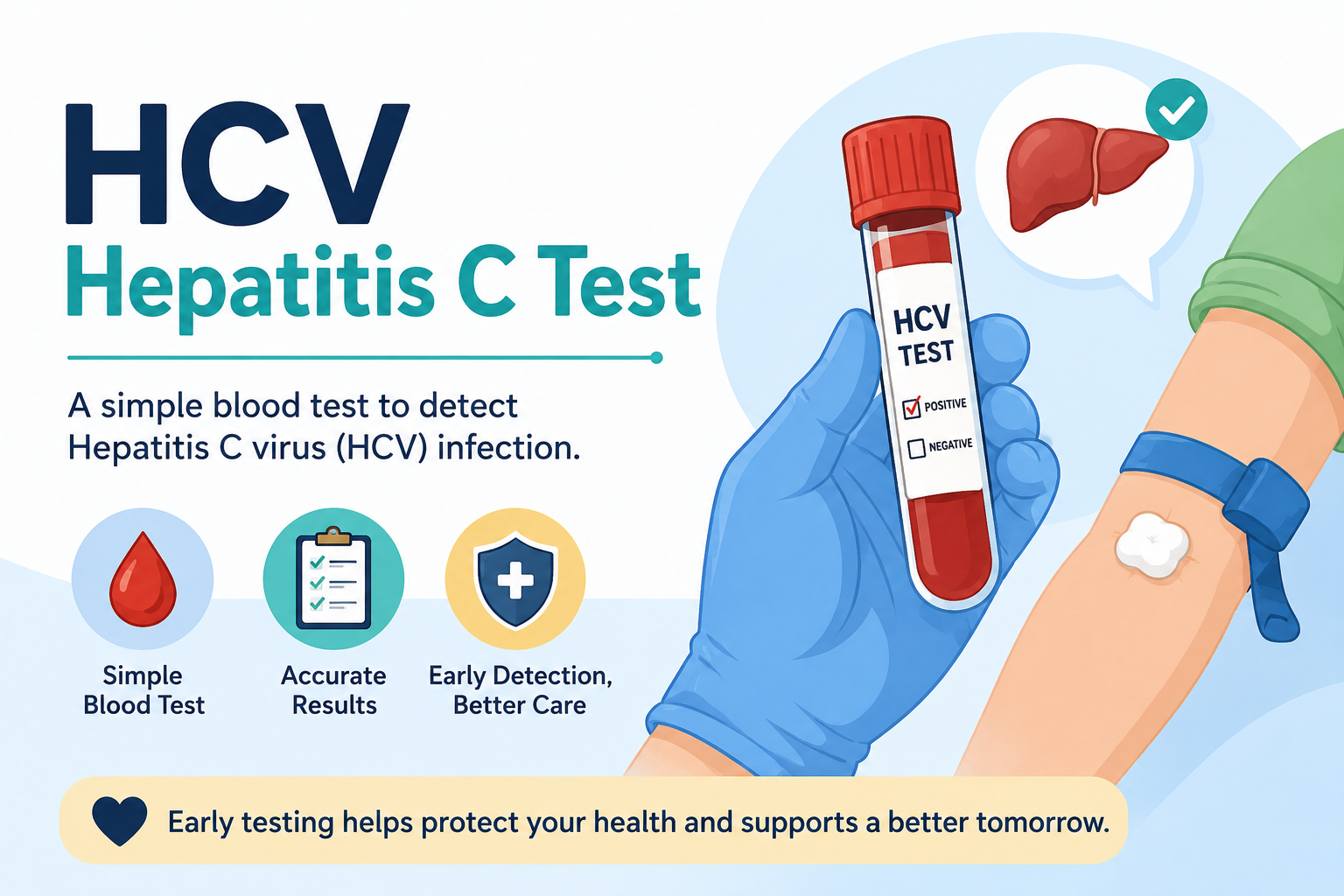
🔬 HCV Hepatitis C Test 2026: The Truth That Could Change — and Save — Your Life Forever
The HCV hepatitis C test is a life-changing blood test that detects the hepatitis C virus — a dangerous, often completely silent infection that destroys the liver over decades. What does this test involve? The HCV hepatitis C test checks your blood for either HCV antibodies or the virus itself. It is fast, widely available, and in 2026 is recommended for every adult between 18 and 79 years of age.
Yet millions of people — including parents and caregivers of children with special needs — have never taken it.
That matters enormously. Because hepatitis C causes no noticeable symptoms for 20 to 30 years in most people. There is no pain. No warning. Just silent, progressive liver damage — until one day there is.
Understanding the HCV hepatitis C test completely — what it involves, what the results mean, and what happens next — could genuinely be one of the most important things you do this year. 🔬

- 📖 What Is the HCV Hepatitis C Test?
- 🔵 Test 1 — HCV Antibody Test (Anti-HCV Test)
- 🔴 Test 2 — HCV RNA Test (Polymerase Chain Reaction / PCR Test)
- 🟡 Additional Tests After a Positive Diagnosis:
- 🧬 The Science Behind the HCV Hepatitis C Test — Simply Explained
- 💔 A Caregiver’s Story: “I Almost Didn’t Get Tested Because I Was Too Focused on My Son”
- 📊 HCV Hepatitis C Test: Statistics You Cannot Ignore
- 🗂️ The Complete Guide to Every Type of HCV Hepatitis C Test
- 🧪 Understanding Your HCV Hepatitis C Test Results: A Complete Guide
- ✅ Result 1: Negative Antibody Test
- 🟡 Result 2: Positive Antibody Test + Negative RNA Test
- 🔴 Result 3: Positive Antibody Test + Positive RNA Test
- 🚨 Result 4: Indeterminate / Reactive Antibody Result
- ⏱️ The HCV Window Period: What It Is and Why It Matters
- 🏠 At-Home HCV Hepatitis C Test: Is It Right for You?
- 👨⚕️ HCV Hepatitis C Test in Special Needs Populations
- 🧩 1: Non-Verbal Individuals Cannot Report Symptoms
- 🏥 2: Institutional Care History
- 👶 3: Children Born to HCV-Positive Mothers
- 🧠 Gap 4: Medication Interactions in Disability Management
- 🌍 HCV Hepatitis C Test Access Around the World in 2026
- ✅ Step-by-Step: What to Expect During Your HCV Hepatitis C Test Appointment
- Step 1: 📋 Request the Test
- Step 2: 🩸 The Blood Draw
- Step 3: 🧪 Sample Processing
- Step 4: 📱 Receiving Your Results
- Step 5: 🏥 If Confirmed Positive — What Happens Next
- 💊 From HCV Hepatitis C Test to Cure: The 2026 Treatment Landscape
- 🤝 Authoritative Resources for HCV Hepatitis C Test Information
- ❓ FAQs About the HCV Hepatitis C Test
- 🔹 Q1: What does the HCV hepatitis C test check for?
- 🔹 Q2: How long does it take to get HCV hepatitis C test results?
- 🔹 Q3: What is the window period for the HCV hepatitis C test?
- 🔹 Q4: Can an HCV hepatitis C test give a false positive?
- 🔹 Q5: Do I need to fast before an HCV hepatitis C test?
- 🔹 Q6: Is the HCV hepatitis C test painful?
- 🔹 Q7: How often should I get an HCV hepatitis C test?
- 🔹 Q8: Can children get an HCV hepatitis C test?
- 🔹 Q9: Is the HCV hepatitis C test free?
- 🔹 Q10: What does a positive HCV hepatitis C test mean for my liver?
- 🔹 Q11: What is the difference between an HCV antibody test and an HCV RNA test?
- 🔹 Q12: Can HCV hepatitis C be detected in a urine or saliva test?
- 🌈 Conclusion: The Most Important Two Minutes of Your Health Journey
📖 What Is the HCV Hepatitis C Test?
The HCV hepatitis C test is not a single test. It is actually a structured, two-step testing process designed to first detect exposure and then confirm active infection.
Here is exactly what that means:
🔵 Test 1 — HCV Antibody Test (Anti-HCV Test)
This is the entry point of all hepatitis C testing. It looks for antibodies — proteins your immune system produces when it detects the hepatitis C virus. A positive antibody test means your body has encountered HCV at some point. However, it does not confirm you currently have an active infection.
🔴 Test 2 — HCV RNA Test (Polymerase Chain Reaction / PCR Test)
This is the confirmatory test. It detects the actual genetic material of the hepatitis C virus in your blood. A positive RNA result confirms you have active, ongoing hepatitis C infection. A negative RNA result after a positive antibody test means your body successfully cleared the virus on its own — which occurs in approximately 15–25% of people who are infected.
🟡 Additional Tests After a Positive Diagnosis:
Once active infection is confirmed, further HCV hepatitis C tests are ordered to guide treatment:
- HCV Genotype Test — Identifies which of the 7 known HCV strains you carry
- Liver Function Tests (LFTs) — Assesses ALT, AST, and bilirubin levels to evaluate liver damage
- FibroScan — A non-invasive ultrasound-based test measuring liver stiffness and scarring
- Liver Biopsy — Reserved for complex cases; physically samples liver tissue
🎙️ Voice Search Answer (Siri, Alexa, Google, ChatGPT, Gemini, Copilot): “The HCV hepatitis C test is a two-step blood test. The first test checks for HCV antibodies. If positive, a second test called an HCV RNA test confirms whether the infection is currently active. The CDC recommends this test for all adults aged 18 to 79.”
🧬 The Science Behind the HCV Hepatitis C Test — Simply Explained
The hepatitis C virus enters the bloodstream. Within 2 to 26 weeks, your immune system responds by producing antibodies. These antibodies are what the first test detects.
Here is the critical nuance that most people do not know:
Antibodies stay in your blood permanently — even after you recover.
This is why the antibody test alone is not enough. If you were infected 10 years ago and your body cleared the virus naturally, your antibody test will still come back positive. Only the HCV RNA test can tell you whether the virus itself is still present right now.
Think of it this way:
🔑 The antibody test says: “Your immune system has met this virus.” 🔑 The RNA test says: “Is the virus still here right now?”
Understanding this distinction removes enormous confusion — and unnecessary fear — when a first positive HCV hepatitis C test result comes back.
💔 A Caregiver’s Story: “I Almost Didn’t Get Tested Because I Was Too Focused on My Son”
Meet Harpreet — a 44-year-old mother from Amritsar, raising her 15-year-old son Gurkirat, who has severe autism and is non-verbal.
Harpreet had not had a full medical check-up in over four years. Every appointment, every medical conversation in her household — it was always about Gurkirat. His sensory needs. His therapy sessions. His medication reviews. His school placements.
“I genuinely forgot I had a body too,” Harpreet said in an online caregiver support community.
Then Gurkirat’s pediatrician — during a routine review — asked Harpreet directly: “When did you last have bloodwork done for yourself?” The honest answer was 2020.
The pediatrician printed a referral on the spot. One of the tests ordered was an HCV hepatitis C test — standard protocol for adults in her age group.
Harpreet’s antibody test came back positive.
She panicked. She cried for two nights.
Then the RNA test came back. Negative. Her body had cleared the infection — likely years ago — without her ever knowing she had been exposed. She was fine.
“
But here is what stays with me,” Harpreet shared. “What if the RNA had been positive? What if I had kept skipping my own health for another five years? Who would have cared for Gurkirat if my liver had given out?”
The HCV hepatitis C test did not just screen Harpreet. It reminded her that her own health is inseparable from her ability to show up for her son. 🔬
📊 HCV Hepatitis C Test: Statistics You Cannot Ignore
| 📌 Statistic | 🔢 Figure | 🔗 Source |
|---|---|---|
| People globally with chronic HCV infection | ~58 million | WHO — who.int |
| People in the U.S. living with HCV | ~2.4 million | CDC — cdc.gov |
| People with HCV who do not know they are infected | Approximately 40% | CDC — cdc.gov |
| People who naturally clear HCV without treatment | 15–25% | NIDDK — niddk.nih.gov |
| Window period for HCV antibody detection | 8–11 weeks (up to 6 months in rare cases) | CDC — cdc.gov |
| Sensitivity of modern HCV antibody tests | Over 99% | USPSTF — uspreventiveservicestaskforce.org |
| HCV cure rate with current direct-acting antivirals | Over 95% | NIH — nih.gov |
| Annual HCV-related deaths globally | ~290,000 | WHO — who.int |
| Adults the CDC recommends for at least one HCV test | All adults aged 18–79 | CDC — cdc.gov |
| Pregnant women recommended for HCV testing | Every pregnancy | ACOG — acog.org |
⚠️ The Number That Should Alarm You: Approximately 40% of people with hepatitis C in the U.S. do not know they are infected. That is nearly 1 million people silently carrying a curable infection — many of whom will not discover it until their liver has been significantly damaged. The HCV hepatitis C test is the only way to change that statistic.
🗂️ The Complete Guide to Every Type of HCV Hepatitis C Test
This is the most comprehensive breakdown you will find anywhere. Each test serves a specific and distinct purpose.

📋 Table: All HCV Hepatitis C Tests Explained
| 🔬 Test Name | 🎯 Purpose | ⏱️ When It Is Used | ✅ What a Positive Result Means |
|---|---|---|---|
| HCV Antibody Test (Anti-HCV) | Detects immune response to HCV | First-line screening for all adults 18–79 | Past or present HCV exposure — confirmatory test needed |
| HCV RNA Qualitative Test | Detects presence of HCV virus | After positive antibody test | Active HCV infection is confirmed |
| HCV RNA Quantitative Test (Viral Load) | Measures amount of virus in blood | At diagnosis; during and after treatment | Monitors treatment response; confirms cure (undetectable = cured) |
| HCV Genotype Test | Identifies HCV strain (1–7) | After active infection confirmed | Guides choice of antiviral medication and duration |
| HCV Core Antigen Test | Detects HCV protein directly | Alternative when RNA test not available | Active infection present; shorter window period than antibody test |
| Liver Function Tests (ALT/AST) | Assesses liver enzyme levels | Part of full diagnostic workup | Elevated levels suggest liver inflammation |
| FibroScan (Elastography) | Measures liver stiffness/scarring | After HCV diagnosis to stage liver damage | Higher stiffness score = more advanced fibrosis |
| Liver Biopsy | Directly samples liver tissue | Complex or uncertain staging cases | Gold standard for fibrosis staging; rarely needed now with FibroScan |
| At-Home HCV Antibody Test | Self-collected finger-prick test | Convenience screening at home | Positive result requires laboratory confirmation |
🧪 Understanding Your HCV Hepatitis C Test Results: A Complete Guide
Getting a result — any result — can feel overwhelming without context. Here is exactly what every possible outcome means:
✅ Result 1: Negative Antibody Test
What it means: No HCV antibodies were detected in your blood.
What to do: You are very likely not infected. If you have ongoing risk factors (active drug use, recent potential exposure), retest in 6 months to account for the window period. Otherwise, no further action is needed at this time.
🟡 Result 2: Positive Antibody Test + Negative RNA Test
What it means: Your immune system was exposed to HCV at some point — but the virus is not currently active in your blood. Your body either cleared the infection naturally or you were successfully treated previously.
What to do: No treatment is needed. Document the result. Inform your doctor so it is on record. If you have ongoing risk factors, continue annual monitoring.
🔴 Result 3: Positive Antibody Test + Positive RNA Test
What it means: You have an active hepatitis C infection that is currently replicating in your body. Your liver is being affected right now.
What to do: This is not a crisis — it is a curable diagnosis. Your doctor will order a genotype test and viral load, assess your liver health, and refer you to a hepatologist or gastroenterologist to begin treatment. Modern treatment cures HCV in over 95% of cases in just 8–12 weeks.
🚨 Result 4: Indeterminate / Reactive Antibody Result
What it means: The test produced an unclear result. This can happen due to a very early infection (window period), certain autoimmune conditions, or a laboratory technical issue.
What to do: Retest. Your doctor will repeat the antibody test and may proceed directly to an RNA test for clarity.
💡 Expert Tip: Never interpret your HCV hepatitis C test results alone. Always discuss them with your doctor or a liver specialist. A positive antibody result — even without active infection — can generate significant anxiety that deserves proper, informed clinical context.
⏱️ The HCV Window Period: What It Is and Why It Matters
The window period is one of the most misunderstood aspects of the HCV hepatitis C test — and it causes enormous unnecessary worry.
Here is a clear explanation:
After exposure to the hepatitis C virus, your immune system takes time to produce antibodies. During this window period, the antibody test may come back negative — even if you are actually infected.
| 🔬 Test Type | ⏱️ Window Period (Detection Threshold) |
|---|---|
| HCV Antibody Test | 8–11 weeks after exposure (up to 6 months in rare immunocompromised cases) |
| HCV RNA Test | 1–2 weeks after exposure (the earliest detectable marker) |
| HCV Core Antigen Test | Approximately 2–3 weeks after exposure |
🛡️ What This Means Practically:
- If you had a potential HCV exposure less than 8 weeks ago, an antibody test may give a false negative
- For the most accurate early result, an HCV RNA test can detect infection as early as 1–2 weeks after exposure
- If you test negative but had a recent potential exposure, retest at 6 months for definitive peace of mind
- If you believe you have had a very recent high-risk exposure, go to your doctor or emergency clinic immediately — do not wait for the antibody window to close
🏠 At-Home HCV Hepatitis C Test: Is It Right for You?
One of the most significant developments in HCV hepatitis C test access in recent years is the availability of FDA-cleared at-home testing kits.
Here is a complete comparison:
| 🔍 Feature | 🏥 Lab-Based HCV Test | 🏠 At-Home HCV Test |
|---|---|---|
| Sample Type | Blood drawn from vein | Finger-prick blood spot |
| Where | Hospital, clinic, pharmacy | Your home |
| Result Speed | 1–3 business days | 2–5 business days (mailed to lab) |
| Accuracy | 99%+ | 97–99% (varies by brand) |
| Cost (U.S.) | Often free under ACA preventive care | $49–$149 |
| Privacy | Doctor receives results | Results via secure online portal only |
| Follow-up | Doctor manages next steps | You initiate follow-up |
| Confirmatory Test | Ordered by doctor if positive | Must arrange separately |
| Best For | Most people; ensures complete care pathway | People with privacy concerns or no doctor access |
💡 Important Note: At-home HCV hepatitis C test kits test for antibodies only. A positive result still requires a laboratory RNA confirmatory test — which you will need to arrange with a doctor or clinic. Never treat a positive at-home result as a final diagnosis.
Trusted At-Home Options in 2026:
- myLAB Box HCV Test — FDA-registered, results in 5 days
- LetsGetChecked Hepatitis C Test — At-home collection, certified lab processing
- Everlywell Hepatitis C Test — CLIA-certified labs, physician-reviewed results
👨⚕️ HCV Hepatitis C Test in Special Needs Populations
🧩 1: Non-Verbal Individuals Cannot Report Symptoms
Children and adults with severe autism, cerebral palsy, or intellectual disabilities who are non-verbal face a unique medical vulnerability:
They cannot tell you that they feel tired. They cannot describe abdominal discomfort. They cannot say that their skin looks yellow.
Hepatitis C progresses silently in everyone. But in non-verbal individuals, even the eventual symptoms of liver damage may go unrecognized for longer — because behavioral changes (increased irritability, sleep disruption, reduced activity) are often attributed to the primary disability rather than investigated for a medical cause.
The HCV hepatitis C test should be part of routine annual blood panels for adults with disabilities — not a reactive test ordered only when symptoms appear.
🏥 2: Institutional Care History
Adults with intellectual disabilities who lived in residential care institutions before the 1990s — especially in countries with limited infection control resources — face significantly elevated HCV risk from shared medical equipment and inadequate sterilization practices.
Their testing histories are often incomplete, undocumented, or entirely absent.
Ask your loved one’s doctor directly: “Has an HCV hepatitis C test ever been performed for this patient?”
👶 3: Children Born to HCV-Positive Mothers
The vertical transmission rate of hepatitis C from mother to child is approximately 5–6%. Importantly:
- Antibody testing is not reliable before 18 months because maternal antibodies persist in the infant’s blood
- The HCV RNA test can be performed as early as 2–6 months for earlier detection
- Children with complex needs who were born abroad or adopted internationally may have unknown maternal HCV status — making baseline HCV hepatitis C test even more important
🧠 Gap 4: Medication Interactions in Disability Management
Many individuals with special needs take long-term medications — antiepileptics, atypical antipsychotics, mood stabilizers — that are hepatically metabolized (processed by the liver).
Undetected chronic HCV causing progressive liver damage will progressively impair the liver’s ability to metabolize these medications safely and effectively. This can lead to unexpected side effects, toxicity, or treatment failures that no one connects to an underlying, untested HCV infection.
🛡️ Action Point for Special Needs Families: Request that HCV hepatitis C test results be clearly documented in your loved one’s permanent medical records. Ask for it to be included in their annual health review — just like blood pressure, weight, and medication review.
🌍 HCV Hepatitis C Test Access Around the World in 2026
| 🌍 Country | 🆓 Free Testing Available | 🏥 Where to Get Tested | 🔗 Resource |
|---|---|---|---|
| 🇺🇸 United States | Yes (ACA preventive care; ages 18–79) | Doctor, FQHC, pharmacy clinic | cdc.gov/hepatitis/hcv |
| 🇬🇧 United Kingdom | Yes (NHS, no referral needed) | GP surgery, sexual health clinic | nhs.uk/conditions/hepatitis-c |
| 🇮🇳 India | Yes (NVHCP government programme) | Government hospitals, PHCs | mohfw.gov.in |
| 🇦🇺 Australia | Yes (Medicare-covered) | GP, community health centre | hepatitisaustralia.com |
| 🇨🇦 Canada | Yes (provincial health coverage) | Family doctor, public health unit | hepccommunity.org |
| 🇪🇺 European Union | Varies by country | National health services | ecdc.europa.eu |
✅ Step-by-Step: What to Expect During Your HCV Hepatitis C Test Appointment
Many people delay the HCV hepatitis C test simply because they are unsure what to expect. Here is the complete, reassuring step-by-step process:
Step 1: 📋 Request the Test
Tell your doctor you would like an HCV hepatitis C test. You do not need to give a specific reason — it is a recommended screening for all adults. Simply say: “I’d like to be screened for hepatitis C today.”
Step 2: 🩸 The Blood Draw
A small blood sample is taken — usually from a vein inside your elbow. It takes less than 2 minutes. You do not need to fast beforehand. There is no special preparation required.
Step 3: 🧪 Sample Processing
Your blood sample goes to a certified clinical laboratory. Standard processing takes 1 to 3 business days. Rapid point-of-care tests can deliver a preliminary result in 20 minutes at some locations.
Step 4: 📱 Receiving Your Results
Results are communicated via your patient portal, a phone call, or a follow-up appointment. If your result is negative — great. If your antibody test is positive, your doctor will immediately order the HCV RNA confirmatory test — which takes another 1 to 3 days.
Step 5: 🏥 If Confirmed Positive — What Happens Next
Your doctor will:
- Arrange liver health assessment (LFTs, FibroScan)
- Refer you to a hepatologist or gastroenterologist
- Discuss a treatment plan — typically 8–12 weeks of once-daily oral medication
- Screen your close household members and regular sexual partner
💊 From HCV Hepatitis C Test to Cure: The 2026 Treatment Landscape
A positive HCV hepatitis C test result is not a death sentence. In 2026, it is an early warning system — one that leads directly to a cure.
Modern direct-acting antiviral (DAA) therapy has transformed hepatitis C from a chronic, life-limiting disease to a short-course, highly curable infection.
📋 2026 Treatment Overview:
| 💊 Medication | ⏱️ Duration | 🎯 Cure Rate | 📝 Key Feature |
|---|---|---|---|
| Glecaprevir + Pibrentasvir (Mavyret) | 8 weeks | >97% | Works on all 7 genotypes; most common first-line |
| Sofosbuvir + Velpatasvir (Epclusa) | 12 weeks | >95% | Pan-genotypic; excellent tolerability |
| Ledipasvir + Sofosbuvir (Harvoni) | 8–12 weeks | >95% | Especially effective for genotype 1 |
| Sofosbuvir + Velpatasvir + Voxilaprevir (Vosevi) | 12 weeks | >96% | For treatment-experienced patients |
🎯 What “Cured” Means After the HCV Hepatitis C Test Process:
After completing treatment, a final HCV RNA test is performed at 12 weeks post-treatment. If the virus is undetectable at this point — called a Sustained Virologic Response (SVR12) — you are considered cured of hepatitis C.
Your antibodies will remain positive on future antibody tests for life. That is normal and expected. But the virus itself will be gone.
💡 Important Note for Special Needs Families: Even after an HCV cure, individuals who developed liver scarring (fibrosis or cirrhosis) during their infection require ongoing liver monitoring — typically every 6 months via ultrasound and blood tests — because their liver cancer risk remains elevated.
🤝 Authoritative Resources for HCV Hepatitis C Test Information
- 🌍 WHO Hepatitis C: www.who.int/news-room/fact-sheets/detail/hepatitis-c
- 🇺🇸 CDC HCV Testing: www.cdc.gov/hepatitis/hcv
- 💜 American Liver Foundation: www.liverfoundation.org — Helpline: 1-800-465-4837
- 📋 USPSTF HCV Screening Recommendation: www.uspreventiveservicestaskforce.org/uspstf/recommendation/hepatitis-c-screening-in-adults
- 🇬🇧 NHS Hepatitis C: www.nhs.uk/conditions/hepatitis-c
- 🇮🇳 NVHCP India: www.mohfw.gov.in
- 🌐 Hepatitis C Trust: www.hepctrust.org.uk
- 🌏 Hepatitis Australia: www.hepatitisaustralia.com
❓ FAQs About the HCV Hepatitis C Test
🔹 Q1: What does the HCV hepatitis C test check for?
A: The HCV hepatitis C test checks your blood for signs of the hepatitis C virus. The first step is an antibody test that detects whether your immune system has ever responded to HCV. If positive, a second RNA test confirms whether the virus is currently active in your body. Together, these two tests give a complete picture of your HCV status.
🔹 Q2: How long does it take to get HCV hepatitis C test results?
A: Standard HCV hepatitis C test results from a laboratory take 1 to 3 business days. Rapid point-of-care antibody tests available at some clinics and pharmacies can deliver a preliminary result in 20 minutes. If a confirmatory RNA test is needed after a positive antibody result, that typically takes an additional 1 to 3 days.
🔹 Q3: What is the window period for the HCV hepatitis C test?
A: The window period for the HCV antibody test is 8 to 11 weeks after exposure — the time needed for your immune system to produce detectable antibodies. In rare cases, particularly in immunocompromised individuals, it can take up to 6 months. The HCV RNA test has a much shorter window of just 1 to 2 weeks after exposure and is the best option for early detection.
🔹 Q4: Can an HCV hepatitis C test give a false positive?
A: Yes, false positives on the antibody test are possible — particularly in people with certain autoimmune conditions, those who have been vaccinated for other diseases, or in cases of laboratory error. This is exactly why a positive antibody result always requires an HCV RNA confirmatory test before any diagnosis is made. The RNA test is highly specific and dramatically reduces the likelihood of a false positive diagnosis.
🔹 Q5: Do I need to fast before an HCV hepatitis C test?
A: No. You do not need to fast before an HCV hepatitis C test. There is no dietary preparation required. However, if your doctor is ordering a broader panel of blood tests alongside the HCV test — such as cholesterol or blood glucose — fasting may be required for those specific tests. Always ask your doctor when your appointment is scheduled.
🔹 Q6: Is the HCV hepatitis C test painful?
A: The HCV hepatitis C test involves a standard blood draw from your arm — the same as any routine blood test. Most people experience a brief, mild pinch when the needle is inserted. The entire blood draw takes less than 2 minutes. At-home testing kits use a finger-prick method, which most people find even less uncomfortable than a venipuncture draw.
🔹 Q7: How often should I get an HCV hepatitis C test?
A: The CDC recommends that all adults aged 18 to 79 be tested at least once in their lifetime. All pregnant women should be tested during every pregnancy. People with ongoing risk factors — including active or past injection drug use, HIV infection, or a history of receiving blood products before 1992 — should be screened annually. Ask your doctor what frequency is right for your personal risk profile.
🔹 Q8: Can children get an HCV hepatitis C test?
A: Yes. Children born to HCV-positive mothers should be tested. Current guidance recommends an HCV RNA test at 2 to 6 months of age for the earliest detection, or an antibody test after 18 months once maternal antibodies have cleared. Children with complex medical histories involving blood transfusions, major surgery, or international medical care should also be discussed with their pediatrician for HCV hepatitis C test consideration.
🔹 Q9: Is the HCV hepatitis C test free?
A: In the United States, the HCV hepatitis C test is classified as preventive care and is covered at zero cost to patients under the Affordable Care Act for adults aged 18 to 79 and all pregnant women. Medicare Part B and many Medicaid programs also cover it. In the UK, it is available free through the NHS. In India, free testing is available under the National Viral Hepatitis Control Programme (NVHCP) at government health facilities.
🔹 Q10: What does a positive HCV hepatitis C test mean for my liver?
A: A confirmed positive HCV hepatitis C test (positive antibody + positive RNA) means the hepatitis C virus is actively replicating and causing ongoing inflammation in your liver. The extent of any liver damage depends on how long the infection has been present and your individual biology. Your doctor will assess this through liver enzyme tests and a FibroScan. The critical message: the earlier a positive test is found and treated, the less liver damage occurs — and the better the long-term outcome.
🔹 Q11: What is the difference between an HCV antibody test and an HCV RNA test?
A: The HCV antibody test looks for immune proteins your body made in response to HCV — it shows exposure but not necessarily active infection. The HCV RNA test looks for the actual virus genetic material in your blood — it confirms whether the infection is currently active. Both tests are part of the complete HCV hepatitis C test process. A positive diagnosis requires both tests together.
🔹 Q12: Can HCV hepatitis C be detected in a urine or saliva test?
A: Not reliably in standard clinical practice. The HCV hepatitis C test is a blood-based test. While experimental research has explored saliva and urine-based HCV detection, no such test has received widespread clinical validation or regulatory approval as of 2026. Blood testing — via venipuncture or finger-prick — remains the gold standard for accurate HCV detection and diagnosis.
🌈 Conclusion: The Most Important Two Minutes of Your Health Journey
The HCV hepatitis C test takes less time than making a cup of tea.
It requires no fasting, no preparation, and — in most countries — no out-of-pocket cost.
What it does require is a decision. The decision to prioritize your health. The decision to stop putting yourself last.
For parents and caregivers of children with special needs — this decision is never just about you. It is about the person who depends on you most. It is about still being here in 20 years. About not becoming a statistic in a disease that is now, in 2026, entirely curable with an 8-week course of pills.
Hepatitis C is silent. The HCV hepatitis C test is not. 🔬
It speaks clearly. It gives answers. And in the vast majority of cases — it gives hope.
Ask for your HCV hepatitis C test today. You deserve that two minutes.
⚕️ Medical Disclaimer: This article is written for educational and awareness purposes only. It does not constitute medical advice or replace the guidance of a qualified healthcare provider. Always consult your doctor for personal health decisions and medical testing recommendations.


