

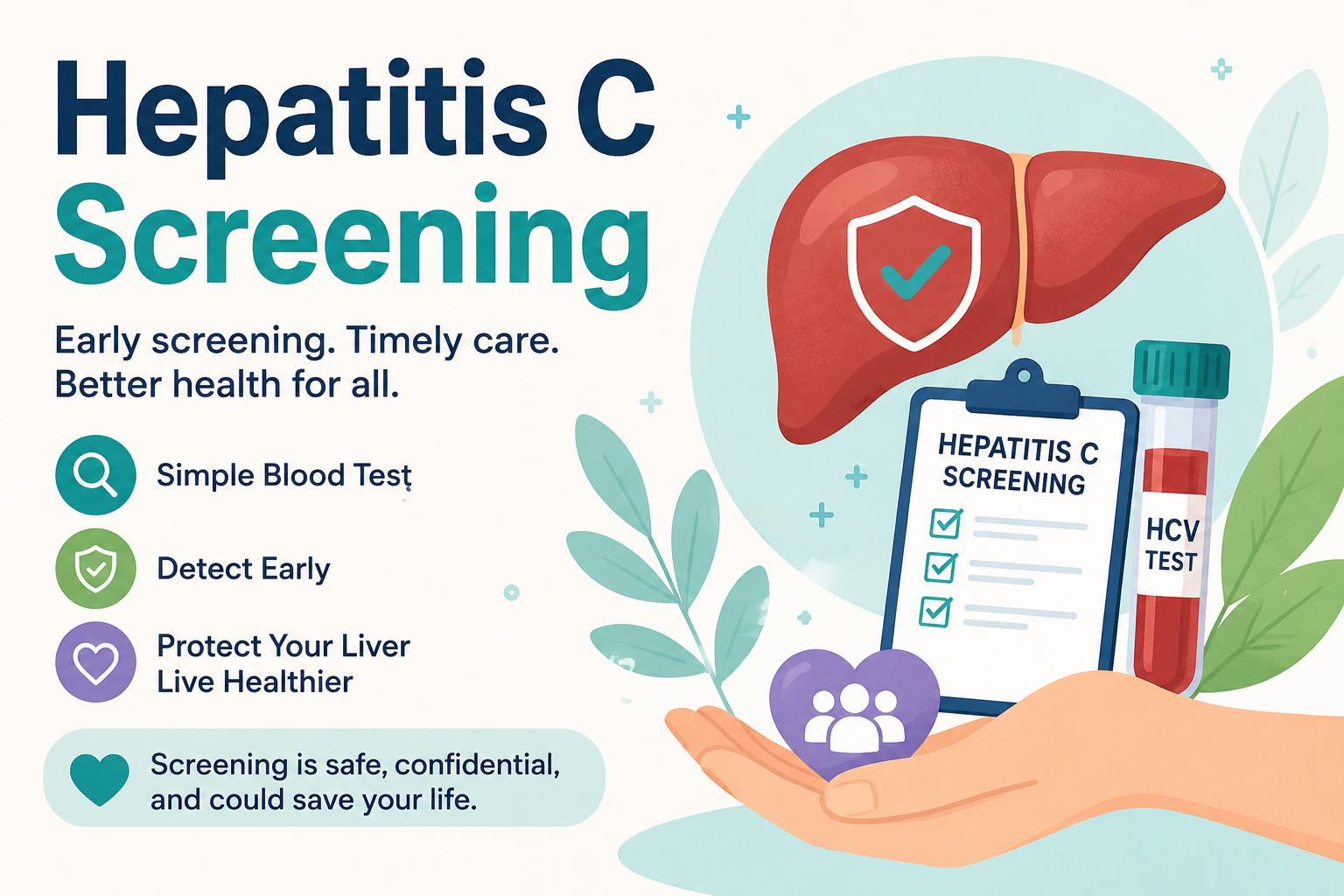
🔴 Hepatitis C Screening 2026: The Silent Killer Test That Could Save Your Life Today
Hepatitis C screening is a simple blood test that can detect a dangerous — and often completely silent — virus living inside your body for decades without a single symptom. So what exactly is it? Hepatitis C screening checks your blood for the hepatitis C virus (HCV). It takes just minutes. It is widely available, often free, and in 2026 it remains one of the most important and most overlooked medical tests an adult can take.
Yet millions of people — including parents of children with special needs — have never had it done.
That gap in awareness is not just a missed appointment. For some people, it is a missed chance at life. 🔴
Because untreated hepatitis C quietly destroys the liver over 20 to 30 years. And by the time symptoms appear, serious — sometimes irreversible — damage may already be done.
This article covers everything you need to know about hepatitis C screening in 2026 — from who needs it, to what happens during the test, to what a positive result actually means for you and your family.

- 📖 What Is Hepatitis C Screening?
- 🧬 Why Hepatitis C Is Called “The Silent Killer”
- 💔 A Parent’s Story: “I Had No Idea Until My Routine Check-Up”
- 📊 Hepatitis C Screening: Statistics That Demand Your Attention
- 👥 Who Should Get Hepatitis C Screening in 2026?
- 🧩 Hepatitis C Screening and Special Needs
- 1. 🩸 Children Who Received Early Medical Interventions
- 2. 👶 Vertical Transmission at Birth
- 3. 🏥 Institutionalized or Formerly Institutionalized Individuals
- 4. 🧠 Cognitive Barriers to Reporting Symptoms
- 5. 💊 Medication Interactions
- 🗓️ What Happens During a Hepatitis C Screening Test?
- Step 1: 📋 Request or Receive the Test
- Step 2: 🩸 The Blood Draw
- Step 3: ⏱️ Waiting for Results
- Step 4: 📊 Understanding Your Result
- Step 5: 🏥 If Positive — Next Steps
- 💊 Hepatitis C Treatment in 2026: Why Early Screening Changes Everything
- 🔍 How to Get Hepatitis C Screening in 2026: Your Options
- 🏥 Option 1: Your Primary Care Doctor
- 🧪 Option 2: Community Health Clinics
- 💉 Option 3: Pharmacies and Rapid Testing Centers
- 🏠 Option 4: At-Home HCV Testing Kits
- 🌐 Option 5: Online Telehealth Services
- 💡 The Hepatitis C Screening in Disability and Special Needs Communities
- 🔴 Gap 1: Intellectual Disability and Institutional HCV Exposure
- 🟠 Gap 2: Children with Complex Medical Histories
- 🟡 Gap 3: Non-Verbal Individuals Cannot Self-Report Symptoms
- 🟢 Gap 4: Caregivers of Special Needs Individuals Are Often Unscreened Too
- 🤝 Trusted Resources for Hepatitis C Screening
- 🌍 Hepatitis C Awareness: Key Dates to Know in 2026
- ❓ FAQs About Hepatitis C Screening
- 🔹 Q1: What is hepatitis C screening and why is it important?
- 🔹 Q2: Who should get hepatitis C screening in 2026?
- 🔹 Q3: Is hepatitis C screening covered by insurance?
- 🔹 Q4: How accurate is the hepatitis C screening test?
- 🔹 Q5: Can children be screened for hepatitis C?
- 🔹 Q6: How long does hepatitis C screening take?
- 🔹 Q7: What happens if my hepatitis C screening test is positive?
- 🔹 Q8: Is hepatitis C curable in 2026?
- 🔹 Q9: Can you get hepatitis C from a tattoo?
- 🔹 Q10: What is the difference between hepatitis A, B, and C?
- 🔹 Q11: Can hepatitis C be transmitted sexually?
- 🔹 Q12: What does hepatitis C do to the liver over time?
- 🔹 Q13: Where can I get a free hepatitis C screening test near me?
- 🌈 Conclusion: One Blood Test. Decades of Life.
📖 What Is Hepatitis C Screening?
Hepatitis C screening is a blood test that looks for signs of infection with the hepatitis C virus (HCV) — a blood-borne virus that attacks and slowly damages the liver.
There are two key stages:
🔬 Stage 1 — The Antibody Test (HCV Ab Test):
This is the first and most common hepatitis C screening test. It checks whether your immune system has ever produced antibodies in response to the hepatitis C virus. A positive result means you were exposed to HCV at some point — but it does not confirm you currently have an active infection.
🔬 Stage 2 — The HCV RNA Test (Confirmatory Test):
If your antibody test is positive, your doctor will order an HCV RNA test (also called a PCR test). This test detects the actual virus in your blood. A positive RNA test confirms you have an active hepatitis C infection that needs treatment.
🎙️ Voice Search Answer : “Hepatitis C screening is a blood test that checks for infection with the hepatitis C virus. The first test looks for antibodies. If positive, a second test called an HCV RNA test confirms whether the infection is active. The CDC recommends that all adults aged 18 to 79 be screened at least once.”
🧬 Why Hepatitis C Is Called “The Silent Killer”
Most people with hepatitis C have no symptoms at all — sometimes for 20 to 30 years.
No fever. No jaundice. No pain. Nothing.
This is what makes hepatitis C so dangerous — and hepatitis C screening so essential. By the time the liver finally signals distress — through fatigue, jaundice, swelling, or bleeding — significant liver damage is often already present.
Consider this progression:
| 🕐 Stage | 📋 What Is Happening in the Body | 😶 Typical Symptoms |
|---|---|---|
| Acute HCV (0–6 months) | Initial infection; immune response | Usually none; mild flu-like symptoms in 20–30% |
| Chronic HCV (6 months+) | Ongoing viral replication; liver inflammation | Still usually none for years or decades |
| Early Fibrosis | Scar tissue begins forming in liver | Mild fatigue; usually unnoticed |
| Cirrhosis | Severe scarring; liver function declining | Fatigue, jaundice, swelling, easy bruising |
| Liver Failure / Cancer | End-stage liver disease | Severe symptoms; medical emergency |
⚠️ The Chilling Reality: A person can move from initial HCV infection to cirrhosis over 20–30 years — never feeling sick enough to visit a doctor. Hepatitis C screening at the right time interrupts this silent journey before it reaches the point of no return.
💔 A Parent’s Story: “I Had No Idea Until My Routine Check-Up”
Meet Sandeep — a 47-year-old father from Ludhiana, Punjab, raising his teenage son Rohan, who has cerebral palsy.
Sandeep was the picture of health. He worked long hours. He never drank heavily. He had no reason to worry about his liver.
Then his doctor — during a routine annual check-up — suggested a hepatitis C screening test. “Just a routine blood draw,” the doctor said. “We’re doing it for everyone between 18 and 79.”
Three days later, the call came. Sandeep’s antibody test was positive. The confirmatory RNA test confirmed active hepatitis C infection.
“I felt the floor go out from under me,” Sandeep said in a community health forum. “I had been carrying this virus for — according to the doctor — possibly 20 years or more. Twenty years. And I felt completely fine the whole time.”
Sandeep received an 8-week course of direct-acting antiviral medication. His viral load became undetectable. At his 12-week post-treatment check, he was declared cured.
“If my doctor had not recommended that screening, I would have kept going — feeling fine — until my liver gave out,” he said. “And then who would have cared for Rohan?”
One blood test. One early catch. One father still here for his son. 🔴
📊 Hepatitis C Screening: Statistics That Demand Your Attention
These numbers are not abstractions. They represent real people — many of whom do not yet know they are infected.
| 📌 Statistic | 🔢 Figure | 🔗 Source |
|---|---|---|
| People globally living with chronic HCV | ~58 million | WHO — who.int |
| People in the U.S. living with HCV | ~2.4 million | CDC — cdc.gov |
| People with HCV who are unaware of their infection | Approx. 40% | CDC — cdc.gov |
| Annual HCV-related deaths globally | ~290,000 | WHO — who.int |
| HCV cure rate with modern direct-acting antivirals (DAAs) | Over 95% | NIH — nih.gov |
| Adults the CDC recommends screening at least once | All adults aged 18–79 | CDC — cdc.gov |
| Risk of mother-to-child HCV transmission during birth | Approx. 5–6% | CDC — cdc.gov |
| HCV patients with cirrhosis who develop liver cancer per year | 1–5% annually | NIDDK — niddk.nih.gov |
| People cured of HCV who still face liver cancer risk (if cirrhosis present) | Remains elevated even after cure | American Liver Foundation — liverfoundation.org |
| Average treatment duration with modern DAAs | 8–12 weeks | NIH — nih.gov |
👥 Who Should Get Hepatitis C Screening in 2026?
This is one of the most important questions surrounding hepatitis C screening — and the answer has expanded significantly in recent years.
✅ Universal Screening Recommendations:
According to the CDC and the U.S. Preventive Services Task Force (USPSTF):
- 🔵 All adults aged 18–79 should be screened at least once in their lifetime
- 🔵 All pregnant women should be screened during every pregnancy
- 🔵 Anyone with ongoing risk factors should be screened annually
⚠️ Higher-Risk Groups Who Need Priority Screening:
| 🔴 Risk Group | 📋 Why the Risk Is Elevated |
|---|---|
| People who have ever injected drugs (even once) | Sharing needles is the most common HCV transmission route |
| Adults born between 1945–1965 (Baby Boomers) | Highest HCV prevalence of any age group in the U.S. |
| Anyone who received blood transfusions before 1992 | Blood supply was not screened for HCV before 1992 |
| Dialysis patients (current or past) | Equipment exposure risk in early dialysis era |
| HIV-positive individuals | Shared transmission routes; co-infection is common |
| Children born to HCV-positive mothers | 5–6% vertical transmission risk during birth |
| Healthcare workers with needle-stick exposures | Occupational exposure risk |
| People who have had tattoos or piercings with unsterile equipment | Contaminated ink or needles can transmit HCV |
| Incarcerated individuals (current or formerly) | Significantly elevated HCV prevalence in prison populations |
| People with abnormal liver enzyme tests (ALT/AST) | May indicate undetected liver inflammation from HCV |
💡 Special Needs Families — Read This Carefully: Children and adults with disabilities who have undergone multiple medical procedures, surgeries, or blood transfusions — particularly in countries with limited medical resource controls — may face elevated HCV risk. If your child has had any such medical history, discuss hepatitis C screening with their pediatrician or specialist.
🧩 Hepatitis C Screening and Special Needs
Here are the specific connections:
1. 🩸 Children Who Received Early Medical Interventions
Children with complex medical histories — premature births, NICU stays, surgeries, cardiac procedures, or blood transfusions — may have received blood products in regions or time periods where HCV screening of the blood supply was inadequate.
2. 👶 Vertical Transmission at Birth
If a mother has hepatitis C, there is approximately a 5–6% chance of transmitting the virus to her baby during delivery. Children born to HCV-positive mothers should be screened at 18 months of age (earlier testing may show false positives due to maternal antibodies). In 2026, the updated guidance allows RNA testing as early as 2–6 months for faster diagnosis.
3. 🏥 Institutionalized or Formerly Institutionalized Individuals
People with intellectual disabilities who spent time in residential institutions — particularly in the pre-1990s era — may have been exposed to unsterile medical equipment. Their hepatitis C screening history is often incomplete or undocumented.
4. 🧠 Cognitive Barriers to Reporting Symptoms
Individuals with intellectual disabilities, autism, or communication challenges may be unable to report fatigue, discomfort, or early liver-related symptoms. This makes proactive, routine hepatitis C screening even more critical for this population — because symptom-based identification will not work.
5. 💊 Medication Interactions
Some medications commonly used in special needs management (antiepileptics, behavioral medications) are metabolized by the liver. Undetected chronic HCV affecting liver function could influence medication efficacy and safety.
🛡️ Recommendation for Special Needs Caregivers: If your child or adult family member has a complex medical history, ask their physician directly: “Has hepatitis C screening ever been performed?” If the answer is no — request it today.
🗓️ What Happens During a Hepatitis C Screening Test?
Many people avoid hepatitis C screening simply because they do not know what to expect.

Here is the complete, simple process:
Step 1: 📋 Request or Receive the Test
Your doctor may recommend it during a routine visit. You can also request it specifically. In many countries, including the U.S., it is covered under preventive care at no cost under the Affordable Care Act.
Step 2: 🩸 The Blood Draw
A small amount of blood is drawn from your arm — usually from the inside of your elbow. It takes less than 2 minutes. There is no special preparation required. You do not need to fast.
Step 3: ⏱️ Waiting for Results
Standard lab results return within 1 to 3 business days. Rapid point-of-care tests can provide a preliminary result in as little as 20 minutes at some clinics.
Step 4: 📊 Understanding Your Result
| 🔬 Result | ✅ What It Means | ➡️ Next Step |
|---|---|---|
| Negative antibody test | No HCV antibodies detected | No further testing needed (unless ongoing risk) |
| Positive antibody test | Antibodies detected — past or present exposure | Proceed to HCV RNA confirmatory test |
| Positive RNA test | Active HCV infection confirmed | Begin evaluation for treatment; specialist referral |
| Negative RNA test (after positive antibody) | Past infection; body cleared the virus naturally | Monitoring; no treatment needed; document for records |
Step 5: 🏥 If Positive — Next Steps
A positive confirmatory RNA test does not mean your life is over. Far from it. It means you have found something that is now — in 2026 — highly curable. Your doctor will:
- Order a genotype test (to identify which strain of HCV you have)
- Assess your liver health via blood tests and possibly a FibroScan or liver biopsy
- Refer you to a hepatologist or gastroenterologist
- Discuss your treatment plan — typically an 8–12 week course of oral medications
💊 Hepatitis C Treatment in 2026: Why Early Screening Changes Everything
This is where the story of hepatitis C becomes genuinely remarkable.
Twenty years ago, HCV treatment involved injected interferon — a grueling, year-long therapy with severe side effects and only a 40–50% cure rate. Many patients chose not to treat because the medicine felt almost as bad as the disease.
Today, in 2026, that world no longer exists.
🌟 Modern Direct-Acting Antiviral (DAA) Treatment:
| 💊 Medication | ✅ Brand Name | ⏱️ Duration | 🎯 Cure Rate | 📝 Notes |
|---|---|---|---|---|
| Glecaprevir + Pibrentasvir | Mavyret | 8 weeks (most patients) | >97% | Pan-genotypic; suitable for most adults |
| Sofosbuvir + Velpatasvir | Epclusa | 12 weeks | >95% | Pan-genotypic; works across all HCV types |
| Ledipasvir + Sofosbuvir | Harvoni | 8–12 weeks | >95% | Primarily for genotype 1 |
| Sofosbuvir + Velpatasvir + Voxilaprevir | Vosevi | 12 weeks | >96% | For treatment-experienced patients |
💡 The Bottom Line: Modern hepatitis C treatment is a short course of oral pills taken once daily. It has minimal side effects for most patients. And it cures hepatitis C in over 95% of cases — including genetically complex cases. The earlier it is started — before liver damage progresses — the better the long-term outcome.
This is precisely why hepatitis C screening is not optional. It is urgent.
🔍 How to Get Hepatitis C Screening in 2026: Your Options
Access to hepatitis C screening has never been better. Here is how to get tested:
🏥 Option 1: Your Primary Care Doctor
Simply ask at your next routine appointment: “Can I have a hepatitis C screening today?” In most countries, a doctor’s referral results in a covered lab test.
🧪 Option 2: Community Health Clinics
Many community health centers offer free or low-cost hepatitis C screening — especially during July (Hepatitis Awareness Month) and during routine public health campaigns.
💉 Option 3: Pharmacies and Rapid Testing Centers
In the U.S., many CVS, Walgreens, and independent pharmacy clinics now offer rapid HCV antibody testing. Some provide results in 20 minutes.
🏠 Option 4: At-Home HCV Testing Kits
FDA-cleared at-home hepatitis C test kits are available online and in pharmacies. You collect a finger-prick blood sample and mail it to a certified lab. Results are typically available within 2–5 business days via a secure online portal.
🌐 Option 5: Online Telehealth Services
Telehealth platforms can order hepatitis C screening lab work digitally. You visit a local lab at your convenience with no in-person doctor appointment required.
💡 The Hepatitis C Screening in Disability and Special Needs Communities
Most hepatitis C articles focus exclusively on IV drug users and Baby Boomers. And while those are genuinely high-risk populations — they are not the whole story.
Here are the specific things you must know:
🔴 Gap 1: Intellectual Disability and Institutional HCV Exposure
Studies in several countries have found significantly elevated HCV rates among adults with intellectual disabilities who lived in institutional settings before the 1990s. The cause: shared medical equipment, inadequate infection control, and no routine screening.
Yet most current HCV screening guidelines do not list intellectual disability as a specific risk factor. This is a systemic oversight.
🟠 Gap 2: Children with Complex Medical Histories
Children who have had multiple surgeries, prolonged NICU stays, organ transplants, or dialysis — many of whom are now adults — may have received blood products in countries or time periods with inadequate HCV blood supply screening. Their hepatitis C screening histories are often incomplete.
🟡 Gap 3: Non-Verbal Individuals Cannot Self-Report Symptoms
A non-verbal adult with autism, cerebral palsy, or an intellectual disability cannot tell their caregiver that they feel persistently fatigued, that their abdomen feels uncomfortable, or that their skin looks faintly yellow.
By the time HCV-related liver damage shows visible external signs in a non-verbal individual, the disease is often advanced. Routine, proactive hepatitis C screening — not symptom-based screening — is the only appropriate approach for this population.
🟢 Gap 4: Caregivers of Special Needs Individuals Are Often Unscreened Too
Parents and full-time caregivers of children and adults with special needs frequently skip their own preventive health care. They are focused entirely on their dependent’s needs.
Yet a caregiver with undetected hepatitis C — like Sandeep in our story above — is also a caregiver at risk of eventually being unavailable to provide that care.
Hepatitis C screening for caregivers is not selfish. It is essential.
🤝 Trusted Resources for Hepatitis C Screening
🏛️ National and International Organizations:
- 🌍 World Health Organization (HCV): www.who.int/news-room/fact-sheets/detail/hepatitis-c
- 🇺🇸 CDC Hepatitis C: www.cdc.gov/hepatitis/hcv
- 💜 American Liver Foundation: www.liverfoundation.org — Helpline: 1-800-465-4837
- 🏥 Hepatitis C Association: www.hepcassoc.org
- 🌐 Hepatitis C Trust (UK): www.hepctrust.org.uk — Helpline: 0845 223 4424
- 🧬 U.S. Preventive Services Task Force (USPSTF) — Screening Guidelines: www.uspreventiveservicestaskforce.org
🌍 Hepatitis C Awareness: Key Dates to Know in 2026
| 📅 Date | 🏥 Event |
|---|---|
| May 19 | World Hepatitis Testing Day 🌍 |
| July 28 | World Hepatitis Day 🔴 — The most important global HCV awareness date |
| Throughout July | Hepatitis Awareness Month (U.S.) |
| October | Liver Cancer Awareness Month (HCV is the leading cause) |
❓ FAQs About Hepatitis C Screening
🔹 Q1: What is hepatitis C screening and why is it important?
A: Hepatitis C screening is a blood test that detects the hepatitis C virus (HCV) in your body. It is important because HCV causes no symptoms for years or decades — silently damaging the liver. Early hepatitis C screening catches the infection before serious liver damage occurs, allowing treatment that cures HCV in over 95% of people.
🔹 Q2: Who should get hepatitis C screening in 2026?
A: The CDC recommends hepatitis C screening at least once for all adults aged 18 to 79. Pregnant women should be screened during every pregnancy. People with ongoing risk factors — including a history of injecting drugs, blood transfusions before 1992, or being born to an HCV-positive mother — should be screened annually.
🔹 Q3: Is hepatitis C screening covered by insurance?
A: In the United States, hepatitis C screening is classified as preventive care and is covered at no cost to patients under the Affordable Care Act for adults aged 18–79 and all pregnant women. Medicare and Medicaid also cover HCV screening. Outside the U.S., coverage varies by country — check with your local health authority.
🔹 Q4: How accurate is the hepatitis C screening test?
A: The HCV antibody test used in hepatitis C screening has a sensitivity and specificity of over 99% in modern clinical laboratory settings. However, it requires a confirmatory HCV RNA test if the antibody result is positive, since antibodies can remain even after the body has cleared the virus naturally.
🔹 Q5: Can children be screened for hepatitis C?
A: Yes. Children born to HCV-positive mothers should be screened. Current U.S. guidance recommends an HCV RNA test at 2–6 months of age, or an antibody test at 18 months (after maternal antibodies have cleared). Children with complex medical histories involving blood products, transplants, or dialysis should also be discussed with their pediatrician for hepatitis C screening.
🔹 Q6: How long does hepatitis C screening take?
A: The blood draw for hepatitis C screening takes less than 2 minutes. Standard lab results are typically returned within 1 to 3 business days. Rapid point-of-care tests available at some clinics and pharmacies can provide a preliminary antibody result in as little as 20 minutes.
🔹 Q7: What happens if my hepatitis C screening test is positive?
A: A positive antibody result is followed by a confirmatory HCV RNA test. If the RNA test is also positive, you have an active hepatitis C infection. Your doctor will then assess your liver health, identify the HCV genotype, and discuss treatment — typically an 8–12 week course of highly effective oral medications that cure HCV in over 95% of cases.
🔹 Q8: Is hepatitis C curable in 2026?
A: Yes — absolutely. As of 2026, hepatitis C is curable in over 95% of cases using modern direct-acting antiviral (DAA) medications. Treatment involves taking oral pills once daily for 8–12 weeks. Side effects are minimal for most patients. This is one of the most remarkable medical achievements of the past two decades.
🔹 Q9: Can you get hepatitis C from a tattoo?
A: Yes — potentially. Hepatitis C can be transmitted through tattooing or body piercing if unsterile equipment or contaminated ink is used. The risk is highest in informal or unregulated tattooing environments. If you have ever had a tattoo or piercing in an unregulated setting, hepatitis C screening is recommended.
🔹 Q10: What is the difference between hepatitis A, B, and C?
A: All three are liver infections but they are caused by different viruses and spread differently. Hepatitis A spreads through contaminated food and water and usually resolves on its own. Hepatitis B spreads through blood and sexual contact and has an effective vaccine. Hepatitis C spreads primarily through blood contact, has no vaccine, but is now curable with medication. Hepatitis C screening specifically targets the HCV virus.
🔹 Q11: Can hepatitis C be transmitted sexually?
A: Sexual transmission of HCV is possible but considered low risk in monogamous relationships. The risk increases with multiple sexual partners, concurrent STIs (especially HIV), and sexual practices that may involve blood contact. People with HIV and multiple sexual partners are recommended to undergo routine hepatitis C screening regardless of other risk factors.
🔹 Q12: What does hepatitis C do to the liver over time?
A: Chronic hepatitis C causes ongoing inflammation of the liver. Over 20 to 30 years, this inflammation leads to fibrosis (scarring), which can progress to cirrhosis (severe scarring), liver failure, and hepatocellular carcinoma (liver cancer). Approximately 15–30% of people with untreated chronic HCV develop cirrhosis within 20 years. This silent progression is the central reason hepatitis C screening before symptoms is so critical.
🔹 Q13: Where can I get a free hepatitis C screening test near me?
A: In the U.S., free hepatitis C screening is available at community health centers, federally qualified health centers (FQHCs), county health departments, and during World Hepatitis Day events in July. Visit findahealthcenter.hrsa.gov to locate a free clinic near you. In India, free testing is available at government hospitals under the National Viral Hepatitis Control Programme.
🌈 Conclusion: One Blood Test. Decades of Life.
Hepatitis C screening is not a scary test. It is not a test reserved for people with “risky” lives.
It is a test for every adult. Every parent. Every caregiver. Every person who matters to someone else.
Because hepatitis C does not announce itself. It does not cause pain in its early years. It does not give you a warning before it has done serious harm. It simply waits — silently — while life keeps moving around it.
But here is the extraordinary part of this story in 2026:
If you find it early, you can cure it. 🔴
Eight weeks of oral medication. Over 95% cure rate. A completely different future for your liver — and for the people who depend on you.
For parents of children with special needs — who are already carrying so much — this test is not one more burden. It is one act of self-preservation that protects everything you have built and everyone you love.
Ask for your hepatitis C screening today. It takes two minutes. It could give you decades.
⚕️ Medical Disclaimer: This article is written for informational and awareness purposes only. It does not constitute medical advice or replace professional medical consultation. Always consult your doctor or healthcare provider for personal screening recommendations and medical decisions.


