

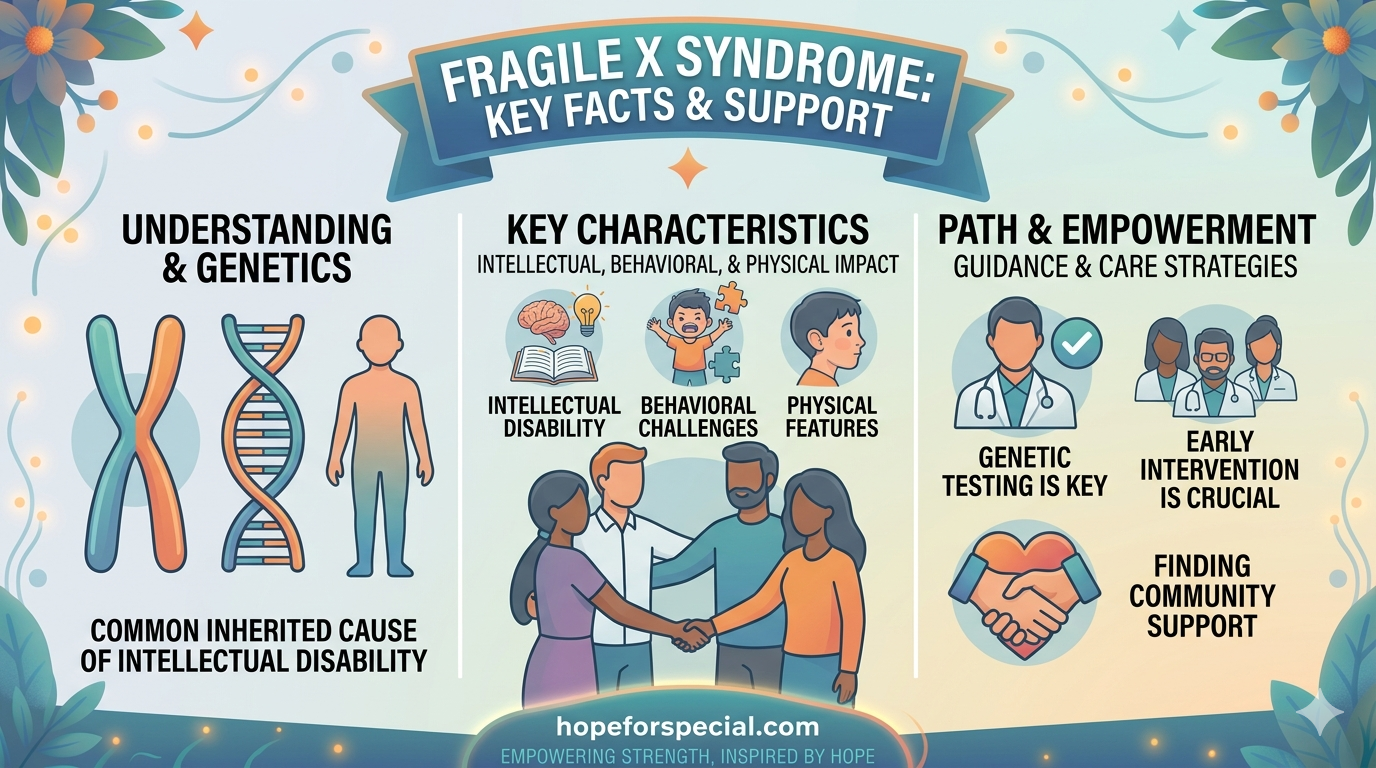
🧬 Fragile X Syndrome 2026: The Heartbreaking Truth Every Parent Deserves to Know
Fragile X Syndrome is a genetic condition that causes a range of developmental problems, including learning disabilities and cognitive impairment. In this discussion, we will explore the underlying genetic causes of the syndrome, specifically focusing on the FMR1 gene mutation.
Furthermore, we will examine the common physical, behavioral, and cognitive symptoms that individuals may experience. Finally, the overview will cover modern diagnostic methods and available management strategies that help improve quality of life.
By understanding these key areas, you will gain a comprehensive insight into how the condition impacts individuals and families alike.

- 🔬 What Is Fragile X Syndrome — and Why Does Every Parent Need to Know About It?
- 📊 Fragile X Syndrome Statistics 2026: The Numbers That Tell the Whole Story
- 🧬 What Causes Fragile X Syndrome? The Genetics Explained Simply
- 🚨 Fragile X Syndrome Symptoms: What to Watch for in Your Child
- 🧒 Symptoms in Males (More Severe)
- 👧 Symptoms in Females (Often Milder)
- ⚠️ Co-occurring Conditions in Fragile X Syndrome
- ⏱️ The Diagnosis Crisis: Why Families Wait Too Long for Answers
- A Story Parents Will Recognise
- Why Is Fragile X Syndrome Missed So Often?
- When Should You Ask for Fragile X Testing?
- 🩺 How Is Fragile X Syndrome Diagnosed?
- 💊 Fragile X Syndrome Treatment 2026: What Is Available Right Now
- 🏥 Early Intervention: The Most Powerful Tool Available
- 🩺 Therapeutic Interventions for Fragile X Syndrome
- 💊 Medications Used in Fragile X Syndrome (Off-Label)
- 🔬 Fragile X Syndrome Research 2025–2026: Breakthroughs That Are Changing the Future
- 🌟 Breakthrough 1: FMR1 Gene Reactivation at Harvard
- 🌟 Breakthrough 2: RNA-Based Nanoparticle Gene Therapy
- 🌟 Breakthrough 3: Zatolmilast — The Phase 3 Clinical Trial
- 🌟 Breakthrough 4: RNA Therapy Licensing
- 💔 The Hidden Weight: How Fragile X Syndrome Affects the Whole Family
- 🛡️ About Fragile X Syndrome
- 📣 Fragile X Syndrome Resources: Bookmark These Now
- ❓ FAQs: Fragile X Syndrome
- Q: What is Fragile X Syndrome in simple terms?
- Q: What are the first signs of Fragile X Syndrome in babies?
- Q: How common is Fragile X Syndrome?
- Q: Can girls have Fragile X Syndrome?
- Q: Is there a cure for Fragile X Syndrome?
- Q: What therapies help children with Fragile X Syndrome?
- Q: How is Fragile X Syndrome diagnosed?
- Q: Does Fragile X Syndrome affect the whole family?
- Q: What is the difference between Fragile X Syndrome and autism?
- 💙 A Final Word — Because Your Child Deserves Every Chance
🔬 What Is Fragile X Syndrome — and Why Does Every Parent Need to Know About It?
Fragile X Syndrome (FXS) is the most common inherited cause of intellectual disability in the world. It is a genetic condition caused by a mutation in the FMR1 gene on the X chromosome. In simple words: a tiny section of DNA repeats too many times — and this stops the brain from producing a protein it needs to develop and function properly.
FXS is characterized by intellectual disability, behavior challenges, and distinct physical features. It remains the most common inherited cause of intellectual disability and the most common known single-gene cause of autism spectrum disorder. (Source: PMC / NCBI, 2025)
📊 Fragile X Syndrome Statistics 2026: The Numbers That Tell the Whole Story
Understanding how common Fragile X Syndrome is helps explain why awareness matters so much — especially for families in the special needs community.
| Statistic | Figure | Source |
|---|---|---|
| Global prevalence in males | ~1 in 4,000 males | PMC / NCBI, 2025 |
| Global prevalence in females | ~1 in 8,000 females | PMC / NCBI, 2025 |
| Overall global prevalence estimate | 1 in 2,400 to 1 in 6,000 | Orphanet |
| US new cases identified per year | Fewer than 200,000 | CDC |
| FXS + Autism Spectrum Disorder co-occurrence | Just over 4 in 10 people with FXS | CDC |
| Families visiting 10+ doctors before diagnosis | About 4 in 10 families | CDC |
| FXS + ASD: risk of seizures | 3x higher than FXS alone | CDC |
| FXS + ASD: sleep problems requiring treatment | ~4 in 10 people | CDC |
| FXS alone: sleep problems requiring treatment | ~3 in 10 people | CDC |
| FMR1 premutation in females (carrier risk) | ~1 in 150 women | NFXF |
| Top family concerns in FXS | Anxiety, behaviour, learning difficulties | PMC / NCBI (Survey, 467 families) |
FXS is rare — with fewer than 200,000 newly identified cases per year in the United States. There are still many unanswered questions about the effects of FXS on the day-to-day lives of people living with it and their families. (Source: CDC)
🧬 What Causes Fragile X Syndrome? The Genetics Explained Simply
The science behind Fragile X Syndrome can feel overwhelming. But it does not need to be. Here is a simple, clear explanation every parent can understand.
Every human has chromosomes — structures in our cells that carry our genetic information. The X chromosome contains a gene called FMR1 (Fragile X Messenger Ribonucleoprotein 1). This gene makes a protein called FMRP, which the brain needs to develop properly — especially for learning and memory.
In Fragile X Syndrome, a section of the FMR1 gene called the CGG repeat section copies itself too many times. When this happens:
- More than 200 CGG repeats = Full Fragile X Syndrome mutation
- Under 44 repeats = Normal range
A definitive diagnosis of FXS typically requires more than 200 CGG repeats. In contrast, FXTAS and FXPOI are usually associated with repeat sizes ranging from 50 to 200 CGG repeats. (Source: NORD)
When there are too many repeats, the FMR1 gene gets switched off. No FMRP protein is made. And without FMRP, the brain’s connections — especially the ones involved in learning, language, and social skills — do not develop the way they should.
How Is Fragile X Syndrome Inherited?
This is one of the most important things families need to understand — because Fragile X Syndrome runs in families in a very specific way.
| Inheritance Pattern | What It Means |
|---|---|
| Carried on the X chromosome | Both males and females can carry the mutation |
| Males with full mutation | Almost always fully affected (only one X chromosome) |
| Females with full mutation | Often less severely affected (have a second X chromosome as backup) |
| Premutation carrier mothers | Can pass the mutation to children; risk of expansion with each generation |
| Premutation carrier fathers | Pass the premutation to all daughters but no sons |
| Associated conditions in carriers | FXTAS (tremor/ataxia in older men) and FXPOI (early menopause in women) |
Fragile X-associated primary ovarian insufficiency (FXPOI) is defined as menopause before age 40 in women who carry a premutation in the FMR1 gene. The risk of FXPOI in premutation carriers is approximately 21%. (Source: NORD)
This is why a diagnosis in one family member should trigger genetic counselling for the whole family.
🚨 Fragile X Syndrome Symptoms: What to Watch for in Your Child
One of the most difficult aspects of Fragile X Syndrome is that symptoms are often subtle in early childhood. They overlap with other conditions. And they look different in boys versus girls.
🧒 Symptoms in Males (More Severe)
Developmental Signs:
- Delayed sitting, walking, or talking (milestones missed or late)
- Speech that is repetitive, fast, or cluttered
- Significant language delay — sometimes non-verbal
- Difficulty with abstract thinking and problem-solving
- Short attention span; easily distracted
Behavioural Signs:
- Anxiety — often severe and a top concern for families
- Hyperactivity; difficulty sitting still
- Hand-flapping, biting, or other repetitive movements
- Aggression, especially when overwhelmed
- Sensory sensitivities — sounds, textures, and lights feel intense
Physical Signs:
- Long, narrow face
- Large or prominent ears
- Flexible joints (especially in fingers)
- Flat feet
- Macroorchidism (enlarged testicles) — typically noticeable after puberty
- Soft, velvety skin
👧 Symptoms in Females (Often Milder)
Because females have two X chromosomes, one functioning copy of FMR1 often partially compensates. As a result:
- Intellectual disability may be mild or absent
- Learning difficulties — especially in maths and executive function
- Subtle behavioural differences that are often attributed to other conditions
- Carriers may have no visible symptoms at all
FXS presents with a variable clinical phenotype. Behavioral anomalies can be mild (e.g., anxiety, mood instability) to severe (e.g., aggressive behavior, autism). (Source: Orphanet)
⚠️ Co-occurring Conditions in Fragile X Syndrome
Fragile X Syndrome rarely comes alone. Most children with FXS have one or more co-occurring conditions that need their own attention and treatment.
| Co-occurring Condition | Prevalence in FXS | Notes |
|---|---|---|
| Autism Spectrum Disorder (ASD) | ~40% of people with FXS | Males more commonly affected |
| ADHD | Very common | Hyperactivity and attention difficulties prominent |
| Anxiety disorders | Extremely common; top concern | Social anxiety especially marked |
| Seizure disorder | ~15% overall; ~45% with FXS+ASD | Requires neurological management |
| Sleep disorders | 30–40% | More common with co-occurring ASD |
| Sensory Processing Disorder | Very common | Auditory and tactile hypersensitivity |
| Mood instability | Common | Includes explosive outbursts |
Just over 4 in 10 people had both FXS and autism spectrum disorder (ASD). People with both FXS and ASD were about 3 times more likely to experience seizures than people with FXS alone. (Source: CDC)
⏱️ The Diagnosis Crisis: Why Families Wait Too Long for Answers
Here is the statistic that should make every paediatrician sit up: About 4 in 10 families reported that they visited a health professional at least 10 times before their child was diagnosed with FXS. (Source: CDC)
Ten visits. Ten appointments. Ten times being told “let’s wait and see.”
For a condition where early intervention is one of the strongest predictors of outcome — that delay costs children months or years of support they should have already been receiving.
A Story Parents Will Recognise
Meet Ananya. She noticed something was different about her son Rohan when he was 18 months old. He wasn’t babbling much. He avoided eye contact.
He would cover his ears when sounds got too loud.
At their first paediatrician visit, she was told: “Boys develop slower. Let’s check again in six months.”
Six months later, same answer.
By the time Rohan was 4 years old and finally received his Fragile X Syndrome diagnosis, Ananya felt two things at once: grief — and relief. Grief for the years without answers. Relief for finally knowing.
“I just wish someone had mentioned Fragile X earlier,” she says. “I wish any of those ten doctors had said the words.”
Why Is Fragile X Syndrome Missed So Often?
- Symptoms overlap heavily with autism, ADHD, and developmental delay
- Many healthcare providers have limited training in recognising FXS
- Girls are particularly under-diagnosed due to milder presentations
- There is no routine newborn screening for FXS in most countries
- The genetic test required for diagnosis is not always ordered promptly
When Should You Ask for Fragile X Testing?
Ask your doctor specifically about FMR1 DNA testing if your child shows:
- ✅ Unexplained intellectual disability or developmental delay
- ✅ Autism diagnosis or autistic traits — especially in males
- ✅ Family history of intellectual disability, autism, or early menopause
- ✅ Combination of delayed speech, anxiety, and sensory sensitivities
- ✅ Physical features including large ears, flexible joints, or soft skin
Early identification and intervention are crucial for optimal outcomes in Fragile X Syndrome.
Parents and caregivers should seek medical evaluation if they notice multiple symptoms, particularly if there is a family history of intellectual disability, autism, or developmental delays. (Source: Disability Resources)
🩺 How Is Fragile X Syndrome Diagnosed?
Fragile X Syndrome is diagnosed through a specialised blood test called FMR1 DNA analysis (also called CGG repeat sizing). This is NOT a routine blood test. You must specifically ask for it.
The test looks at the FMR1 gene and counts the number of CGG repeats:
| CGG Repeat Count | Classification | What It Means |
|---|---|---|
| Less than 44 repeats | Normal | No FXS; not a carrier |
| 45–54 repeats | Intermediate | Rarely causes problems; monitor |
| 55–200 repeats | Premutation | Carrier; risk of FXTAS and FXPOI |
| More than 200 repeats | Full Mutation | Fragile X Syndrome diagnosis |
(Source: NORD | National Fragile X Foundation)
The test is accurate, reliable, and available through most genetic testing laboratories.
If your child is already diagnosed with autism or an intellectual disability but has never been tested for FXS, it is worth discussing this test with your doctor — because FXS changes the treatment approach, the genetic counselling, and the whole-family implications.
💊 Fragile X Syndrome Treatment 2026: What Is Available Right Now
There is currently no FDA-approved cure for Fragile X Syndrome. However, that does not mean there is nothing to be done. Quite the opposite. A strong, multi-disciplinary approach — started as early as possible — can dramatically improve outcomes.
🏥 Early Intervention: The Most Powerful Tool Available
Early intervention services help children from birth to 3 years old learn important skills. These services may improve a child’s development. Even if the child has not been diagnosed with FXS, they may be eligible for services.
Treatment for particular symptoms, such as speech therapy for language delays, often does not need to wait for a formal diagnosis. (Source: CDC)
This is critical. You do not need to wait for a confirmed FXS diagnosis to begin therapy. If your child is showing developmental delays, start services now.
🩺 Therapeutic Interventions for Fragile X Syndrome
| Therapy Type | What It Targets | Benefits |
|---|---|---|
| Speech-Language Therapy | Language delays, communication | Improves expressive and receptive language |
| Occupational Therapy (OT) | Sensory processing, fine motor skills | Reduces sensory overload; builds independence |
| Behavioural Therapy (ABA) | Behaviour management, social skills | Reduces challenging behaviours |
| Physical Therapy | Motor coordination, low muscle tone | Improves gross motor skills |
| Cognitive Behavioural Therapy (CBT) | Anxiety (especially in teens/adults) | Reduces anxiety significantly |
| Special Education Support | Learning adaptations at school | Tailored IEP with FXS-specific strategies |
| Social Skills Groups | Peer interaction and relationships | Improves social confidence over time |
To develop the best treatment plan, people with FXS, parents, and healthcare providers should work closely with one another, and with everyone involved in treatment and support — which may include teachers, child care providers, coaches, therapists, and other family members. (Source: CDC)
💊 Medications Used in Fragile X Syndrome (Off-Label)
There are no FDA-approved medications specifically for FXS. However, several medications are used to manage specific symptoms:
| Medication | What It Manages |
|---|---|
| SSRIs (e.g., Sertraline, Fluoxetine) | Anxiety, obsessive behaviours, mood |
| Stimulants (e.g., Methylphenidate) | ADHD symptoms, attention |
| Antipsychotics (e.g., Aripiprazole) | Severe aggression and behavioural outbursts |
| Anticonvulsants | Seizures (when present) |
| Metformin | Under investigation; some pilot trial improvement in cognition |
| Cannabidiol (CBD) | Under investigation for anxiety and behaviour |
(Source: Journal of Gene Medicine / PMC, 2025)
🔬 Fragile X Syndrome Research 2025–2026: Breakthroughs That Are Changing the Future
The pace of Fragile X Syndrome research in 2025 and 2026 is faster than at any point in history.
🌟 Breakthrough 1: FMR1 Gene Reactivation at Harvard
With FRAXA funding, Dr. Jeannie Lee and Dr. Hungoo Lee at Harvard Medical School and Massachusetts General Hospital are developing two methods to reactivate FMR1, the gene which fails to produce its protein in FXS.
Repeat contraction was found to be specific to FMR1 and fully restored production of FMRP protein. A new 2025–2026 FRAXA grant is funding further work toward human clinical trials. (Source: FRAXA Research Foundation)
In plain language: researchers at Harvard have found a way to switch the FMR1 gene back on — and fully restore the missing protein in patient-derived cells. This is not a downstream fix. This is targeting the root cause of FXS.
🌟 Breakthrough 2: RNA-Based Nanoparticle Gene Therapy
A team at the University of Texas at San Antonio is pioneering a new gene therapy for FXS using mRNA-loaded nanoparticles (ADP-LNPs). These tiny lipid spheres deliver healthy mRNA into brain cells, restoring the missing Fragile X protein.
In early studies, ADP-LNPs were 7 times more effective than traditional delivery methods — an unprecedented breakthrough for brain therapeutics. (Source: FRAXA Research Foundation, 2026)
Seven times more effective than previous methods. That is not incremental progress. That is a leap.
🌟 Breakthrough 3: Zatolmilast — The Phase 3 Clinical Trial
Shionogi’s EXPERIENCE Phase 3 clinical trial of Zatolmilast (formerly BPN14770) has completed enrollment. If the new trials are successful, the community could see the first approved treatment for Fragile X Syndrome on the market.
Preliminary outcomes showed statistically significant improvement in Fragile X subjects on a wide range of outcome measures — behaviour improved, quality of life improved, and electrophysiology improved. (Source: FRAXA Research Foundation)
This is the closest FXS has ever been to having an approved drug treatment. Results from the completed Phase 3 trial are being eagerly awaited by the global FXS community.
🌟 Breakthrough 4: RNA Therapy Licensing
UMass Chan Medical School has licensed an RNA-based Fragile X treatment approach using antisense oligonucleotides (ASOs) to QurAlis, moving gene-targeted therapy closer to clinical trials. (Source: FRAXA Research Foundation, 2025)
Together, these breakthroughs represent something genuinely unprecedented: multiple parallel pathways toward treating or potentially curing Fragile X Syndrome at its genetic root. For families navigating FXS today, this is real, measurable hope.
💔 The Hidden Weight: How Fragile X Syndrome Affects the Whole Family
A Fragile X Syndrome diagnosis does not land on just one person. It lands on the entire family system. And the research tells a sobering story about what caregivers experience.

Family caregivers of individuals with FXS experience anxiety, depression, neglect of personal health care needs, employment difficulties, and loss of social support, leading to isolation and further psychiatric consequences.
Complex caregiving issues occur in multigenerational families carrying the Fragile X mutation, where the same family members may care for children with FXS and for elderly parents with FXTAS. (Source: PMC / NCBI — Caregiver Burden in Fragile X Families)
Furthermore, caregivers may face stigma and social isolation due to neglect of other relationships outside their families. There is growing awareness of caregiver burden with regard to parents of children with FXS, but much less is known about the needs of informal caregivers. (Source: PMC / NCBI)
What Families Told Researchers — In Their Own Words
A 2025 caregiver survey on gene therapy perspectives gathered powerful, raw responses from FXS families. Their words capture what no statistic can:
“I want to live in a world where everyone is valued. However, I see my son struggle daily with anxiety, sensory needs, and communication issues — so the thought of him being free from all this would be amazing.”
“Desperate for something that could profoundly help ease all my daughter’s anxiety and behavioural issues.”
“They deserve a chance of alleviating their anxieties, behaviours, and general lack of understanding of the world and the people in it.”
(Source: PMC / J Neurodev Disord, 2025)
These are not abstract concerns. They are the daily reality of FXS families — and the reason research matters so deeply.
What the Three Biggest FXS Family Concerns Are
A national survey of 467 FXS families identified the top three areas of concern:
- 🔴 Anxiety — the single most reported challenge
- 🔴 Behavioural problems — aggression, impulsivity, self-injury
- 🔴 Learning difficulties — across all ages
(Source: PMC / NCBI — Voice of People with FXS, 467 families)
🛡️ About Fragile X Syndrome
Here is what special needs families truly need to know about FX syndrome.
🔸 FXS and the IEP: What to request at school.
Children with Fragile X Syndrome have specific learning profiles — strong visual memory, difficulty with abstract concepts, sensory sensitivities, and pronounced anxiety. An IEP built for autism without FXS-specific modifications may miss the mark entirely. Request modifications for: reduced auditory stimulation, visual schedules, predictable routines, and extended time.
🔸 The whole-family genetic impact is rarely discussed.
A child’s FXS diagnosis means the mother is at minimum a premutation carrier. That carries its own health risks — including FXPOI (early menopause risk of ~21%) and elevated anxiety and mood disorder rates. Siblings need genetic counselling. Grandparents may be affected by FXTAS. FXS is never just one person’s diagnosis.
🔸 Anxiety in FXS is different from general anxiety.
It is neurologically driven — a direct result of FMRP deficiency affecting the amygdala (the brain’s fear centre). This means standard anxiety management strategies may need adaptation. Sensory-based anxiety management (weighted blankets, noise-cancelling headphones, predictable environments) is often more effective than verbal reassurance alone.
🔸 Girls are routinely missed and misdiagnosed.
Female FXS carriers with the full mutation often receive diagnoses of ADHD, anxiety disorder, learning disability, or social anxiety disorder — without anyone testing for FXS. If your daughter has any of these diagnoses alongside a family history of intellectual disability or autism, ask specifically for FMR1 testing.
🔸 There is no approved cure — yet. But “yet” is doing a lot of work in 2026.
The research pipeline for FXS in 2025–2026 is more advanced than at any point in history. Three parallel pathways — gene reactivation, mRNA nanoparticle delivery, and a Phase 3 clinical drug trial — are all progressing simultaneously.
📣 Fragile X Syndrome Resources: Bookmark These Now
- 🌐 National Fragile X Foundation (NFXF) — Treatment recommendations, clinic finder, and family education
- 🌐 FRAXA Research Foundation — Research updates, grant funding, and clinical trial information
- 🌐 NORD — Fragile X Syndrome — Rare disease medical reference for families
- 🌐 Cleveland Clinic — FXS — Evidence-based patient education
- 🌐 NFXF Clinic Finder — Find a specialist clinic near you
- 🌐 Early Intervention Services (USA) — Access early intervention services by state
❓ FAQs: Fragile X Syndrome
Q: What is Fragile X Syndrome in simple terms?
Fragile X Syndrome is an inherited genetic condition caused by a mutation in the FMR1 gene on the X chromosome. This mutation prevents the brain from making a protein called FMRP, which is needed for brain development and function. It is the most common inherited cause of intellectual disability and the most common known single-gene cause of autism spectrum disorder. (Source: PMC / NCBI)
Q: What are the first signs of Fragile X Syndrome in babies?
The earliest indicators of FXS often appear during infancy and toddlerhood. Parents typically first notice developmental delays, particularly in speech and language development. (Source: Disability Resources) Other early signs include delayed sitting or walking, reduced eye contact, and heightened sensitivity to sounds or textures.
Q: How common is Fragile X Syndrome?
Global prevalence is approximately 1 in 4,000 males and 1 in 8,000 females. (Source: PMC / NCBI, 2025) It is rare but significant — making it one of the most important genetic conditions for families and healthcare providers to know about.
Q: Can girls have Fragile X Syndrome?
Yes. Girls can have both the full mutation and the premutation. However, because they have two X chromosomes, the effects are often milder. Many girls with FXS are diagnosed with anxiety, ADHD, or learning disabilities without anyone testing for the underlying genetic cause. If your daughter has unexplained learning or emotional difficulties and a family history of intellectual disability, request FMR1 testing.
Q: Is there a cure for Fragile X Syndrome?
There is currently no approved cure. However, the research landscape in 2025–2026 is more hopeful than ever. If Shionogi’s EXPERIENCE Phase 3 clinical trial of Zatolmilast is successful, the FXS community could see the first approved treatment on the market. (Source: FRAXA Research Foundation) Alongside this, Harvard’s gene reactivation research and UT San Antonio’s nanoparticle therapy represent genuine curative pathways.
Q: What therapies help children with Fragile X Syndrome?
Early intervention services help children from birth to 3 years old learn important skills, and treatment for particular symptoms such as speech therapy for language delays often does not need to wait for a formal diagnosis. (Source: CDC) Speech therapy, occupational therapy, ABA, CBT for anxiety, and special education support are the pillars of FXS care.
Q: How is Fragile X Syndrome diagnosed?
Through a specialised blood test called FMR1 DNA analysis that counts CGG repeats. A definitive diagnosis typically requires more than 200 CGG repeats. (Source: NORD) This test must be specifically ordered — it is not part of standard developmental or autism screening.
Q: Does Fragile X Syndrome affect the whole family?
Yes — in multiple ways. Complex caregiving issues occur in multigenerational families carrying the Fragile X mutation. The same family members may care for children with FXS and for elderly parents with FXTAS. Family caregivers experience anxiety, depression, employment difficulties, and social isolation. (Source: PMC / NCBI) Genetic counselling for the extended family is always recommended following an FXS diagnosis.
Q: What is the difference between Fragile X Syndrome and autism?
They are separate conditions — but they frequently co-occur. Just over 4 in 10 people with FXS also have autism spectrum disorder (ASD). (Source: CDC) FXS is a genetic cause with a known gene mutation (FMR1); autism is a neurodevelopmental diagnosis based on behaviour. A child can have both — and their treatment plans need to address both.
💙 A Final Word — Because Your Child Deserves Every Chance
If you have read this far, you are already doing the most important thing a parent can do: you are learning. You are refusing to accept “wait and see” as an answer. You are advocating.
Fragile X Syndrome is not a life sentence. With early diagnosis, the right therapies, a supportive school team, and a family that refuses to stop fighting — children with FXS make real, measurable progress. They learn. They grow. They surprise everyone.
And with the research advances happening right now — in 2025 and 2026 — the children being diagnosed today may be the last generation to grow up without an approved treatment.
That is not false hope. That is the science. 💙
📌 If you suspect your child may have Fragile X Syndrome, ask your doctor specifically for FMR1 DNA testing. You can also use the NFXF Clinic Finder to locate a specialist near you.


