

🎗️ Sarcoma 2026: The Devastating Cancer That Hides in Plain Sight
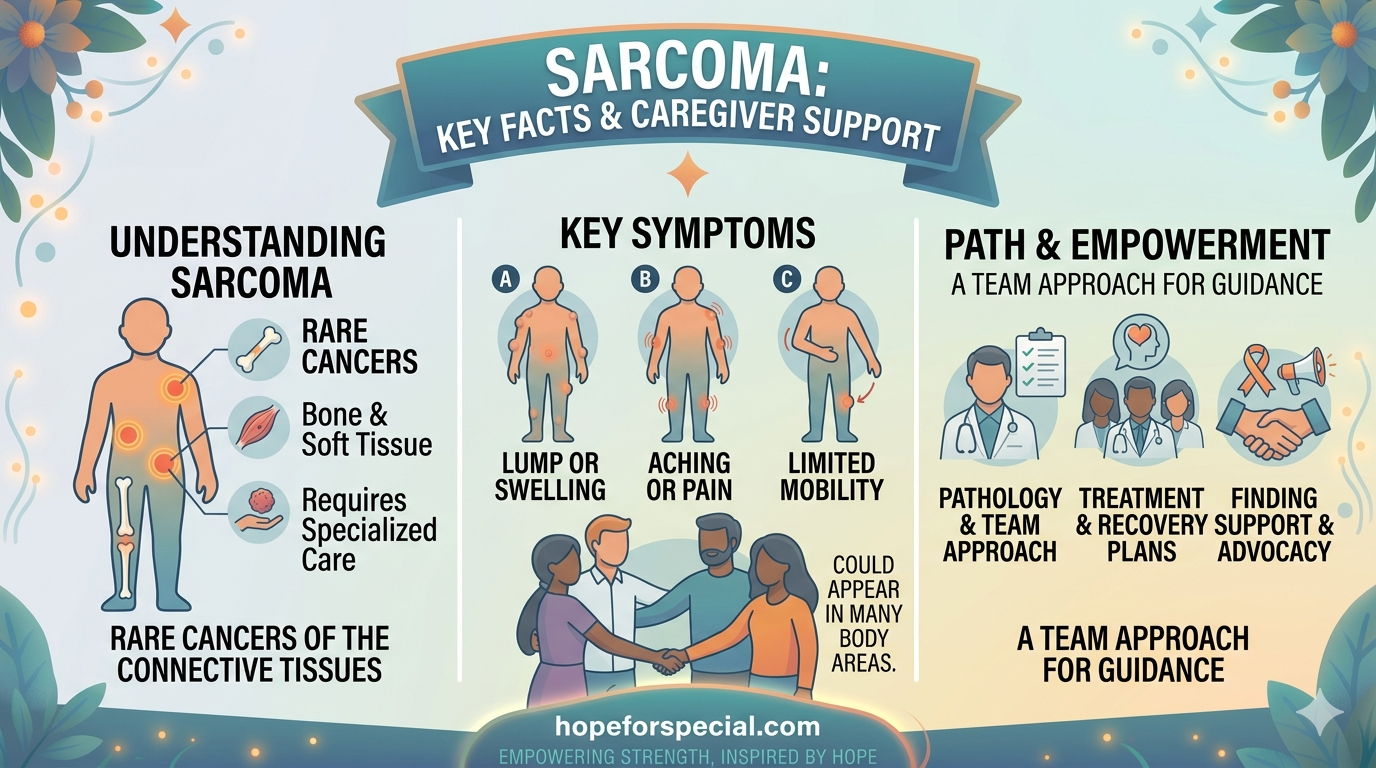
Sarcoma is a rare and complex type of cancer that originates in the body’s connective tissues, such as bones, muscles, fat, blood vessels, and cartilage. Because these tissues exist throughout the entire body, this disease can develop virtually anywhere, presenting unique challenges for diagnosis and treatment.
To help navigate this condition, this guide will provide a comprehensive overview of its primary forms. Specifically, we will explore the crucial differences between bone sarcomas and soft tissue sarcomas. Additionally, we will examine the common symptoms to watch for, the essential diagnostic tests used by medical professionals, and the latest advanced treatment options available today.
Ultimately, understanding the fundamentals of this disease is the first and most important step toward early detection and effective management. By breaking down the complexities of the illness, this overview aims to empower patients, caregivers, and readers with clear, actionable knowledge.

- 🔬 What Is Sarcoma — and Why Does Every Parent Need to Understand It?
- 📊 Sarcoma Statistics 2026: The Numbers That Tell the Real Story
- 🧬 What Causes Sarcoma? Risk Factors Every Parent Should Know
- 🧩 Types of Sarcoma in Children: A Complete Guide
- 🦴 1. Osteosarcoma — The Most Common Bone Cancer in Children
- 🦴 2. Ewing Sarcoma — The Second Most Common Bone Cancer in Children
- 💪 3. Rhabdomyosarcoma — The Most Common Soft Tissue Sarcoma in Children
- 📊 Childhood Sarcoma Type Comparison Table
- 🚨 Sarcoma Warning Signs in Children: What Parents Must Never Ignore
- 🩺 How Is Sarcoma Diagnosed? The Road Every Family Must Know
- 💊 Sarcoma Treatment 2026: What Options Exist for Children
- 💔 The Emotional Reality: What Sarcoma Does to Families
- 🧩 What Special Needs Families Need to Know About Sarcoma
- 🛡️ How to Advocate for Your Child: A Practical Guide for Special Needs Parents
- ❓ FAQs: Sarcoma
- Q: What is sarcoma in simple terms?
- Q: How common is sarcoma in children?
- Q: What is the most common sarcoma in children?
- Q: What are the first signs of sarcoma in a child?
- Q: What is the survival rate for sarcoma in children?
- Q: Is sarcoma curable in children?
- Q: What are the new treatments for sarcoma in 2025 and 2026?
- Q: Can children with special needs get sarcoma?
- Q: How is sarcoma different from other childhood cancers like leukemia?
- 💙 A Final Word — Because No Parent Should Have to Search This Alone
🔬 What Is Sarcoma — and Why Does Every Parent Need to Understand It?
Sarcoma is a type of cancer that develops in the bones, muscles, and soft connective tissues of the body. It is relatively rare in adults but disproportionately common in children. In simple terms: it is cancer that grows in the structural tissues that hold the body together — bones, muscles, fat, tendons, blood vessels, and cartilage.
Sarcomas are cancers that start in bones, muscles, connective tissues, blood vessels or fat, and can be found anywhere in the body. There are more than 50 different types of sarcoma, which fall into two main categories: bone cancers and soft tissue cancers. (Source: National Foundation for Cancer Research)
For families navigating special needs parenting, understanding sarcoma matters deeply. Why? Because children with certain genetic conditions face higher sarcoma risks. And because the signs of sarcoma — bone pain, swelling, fatigue — can be subtle and easy to miss, especially in a child who may already have complex health needs.
📊 Sarcoma Statistics 2026: The Numbers That Tell the Real Story
Sarcomas are rare in adults and make up approximately 1% of all adult cancer diagnoses. Between 1,500 and 1,700 children are diagnosed with bone or soft tissue sarcoma in the US each year.
This makes up about 15% of cancers in children under the age of 20. (Source: NFCR)
| Statistic | Figure | Source |
|---|---|---|
| US new soft tissue sarcoma cases (annually) | ~13,590 | NFCR, 2024 |
| US new bone sarcoma cases (annually) | ~3,970 | NFCR, 2024 |
| Sarcoma deaths expected annually (US) | ~7,250 | NFCR, 2024 |
| Children diagnosed with sarcoma annually (US) | 1,500–1,700 | NFCR |
| Sarcoma as % of childhood cancers (under 20) | ~15% | NFCR |
| Overall pediatric sarcoma 5-year survival rate | 65% | Solving Kids’ Cancer |
| 5-year survival — localized sarcoma (soft tissue) | 83.1% | Sarcoma Foundation of America |
| 5-year survival — regional sarcoma | 59.9% | SFA |
| 5-year survival — metastatic sarcoma | 16.7% | SFA |
| Osteosarcoma — US children affected annually | ~400 | Children’s Health |
| Ewing sarcoma — US children affected annually | ~200 | Children’s Health |
| Rhabdomyosarcoma — US children diagnosed annually | 400–600 | Children’s Health |
| Ewing sarcoma 5-year survival (localized) | 70–80% | PMC / NCBI |
| Ewing sarcoma 5-year survival (metastatic) | 20–30% | PMC / NCBI |
Long-term survival in children diagnosed with sarcomas has remained disproportionately poor compared to other childhood cancers. Sarcomas are one of the most life-threatening cancers children may experience.
Despite significant improvements in outcomes for some pediatric cancers like acute lymphoblastic leukemia, survival rates in metastatic sarcomas have not improved. (Source: Children with Cancer UK)
These numbers demand attention. And they demand action. That starts with awareness — and awareness starts here.
🧬 What Causes Sarcoma? Risk Factors Every Parent Should Know
Sarcoma does not have one single cause. In most cases, it develops without a clear reason. However, research has identified several risk factors — some of which are especially relevant for children with special needs or genetic conditions.
🔴 Key Sarcoma Risk Factors
| Risk Factor | Details |
|---|---|
| Genetic conditions | Li-Fraumeni syndrome, neurofibromatosis type 1 (NF1), retinoblastoma gene mutations significantly increase risk |
| Previous radiation therapy | Children who received radiation for other cancers face a higher risk of sarcoma as a secondary cancer |
| Age | Osteosarcoma peaks in the teenage growth spurt years; Ewing sarcoma peaks in adolescence |
| Inherited DNA changes | Mutations in TP53, RB1, and BRCA2 genes linked to increased sarcoma risk |
| Chemical exposure | Long-term exposure to certain industrial chemicals (vinyl chloride, arsenic) |
| Lymphedema | Chronic arm/leg swelling increases soft tissue sarcoma risk |
| Viral infections | HHV-8 virus linked to Kaposi’s sarcoma |
Most known risk factors for bone cancer (such as age and certain bone diseases and inherited conditions) cannot be changed. At this time, there is no known way to prevent most cases, primarily because many cases develop in individuals without clear risk factors. (Source: NFCR)
This is critically important for HopeForSpecial readers. Children with neurofibromatosis type 1 (NF1) — a genetic condition that causes nerve tumors — have a significantly elevated risk of developing malignant peripheral nerve sheath tumours (MPNSTs), a type of soft tissue sarcoma. Similarly, children with Li-Fraumeni syndrome (affecting the TP53 gene) are at very high lifetime risk of sarcoma.
If your child has a genetic condition, ask their specialist whether their condition carries an elevated sarcoma risk — and what monitoring is recommended.
🧩 Types of Sarcoma in Children: A Complete Guide
Sarcoma is not one disease. It is a family of more than 50 different cancer types.

However, three main types account for the vast majority of childhood sarcoma cases. Understanding each one is essential for every parent.
🦴 1. Osteosarcoma — The Most Common Bone Cancer in Children
Osteosarcoma is the most common type of bone cancer in children and young adults. It typically occurs around the time of growth spurts. Osteosarcomas typically occur in the “long bones,” the large bones of the arms and legs. (Source: NYU Langone Health)
Osteosarcoma is the most common pediatric bone cancer, affecting about 400 kids in the US every year. It typically develops in areas where bone is growing quickly, such as the knee or upper arm. (Source: Children’s Health)
Key symptoms:
- Persistent, worsening bone pain — often worse at night
- Swelling or a lump over a bone
- Redness or warmth over the affected area
- Bone fracture with minimal trauma (“pathological fracture”)
- Limping (if the leg is affected)
What makes it especially dangerous: Osteosarcoma can spread to the lungs. This is why early diagnosis — before spread — dramatically improves outcomes.
🦴 2. Ewing Sarcoma — The Second Most Common Bone Cancer in Children
Ewing sarcoma is a type of bone cancer that mainly affects the legs, pelvis, arms, and ribs. Symptoms include bone pain, swelling, fever, and bone fracture. (Source: Children with Cancer UK)
Most Ewing sarcoma cases occur in the second decade of life (85%). The clinical presentation is often non-specific, with the most common symptoms being pain, swelling, and general discomfort. The tumour is mainly caused by chromosomal translocation of EWSR1 on chromosome 22. (Source: PMC / NCBI)
Five-year survival rates for children with Ewing sarcoma have increased since 1975 from 59% to 78% for children younger than 15 years. For young adults, the 5-year survival rate is 60%. (Source: Children’s Cancer Research Fund)
The unique challenge: Ewing sarcoma symptoms — particularly fever, fatigue, and bone pain — can mimic infections, growing pains, or other common childhood conditions. This leads to diagnostic delays that cost critical time.
💪 3. Rhabdomyosarcoma — The Most Common Soft Tissue Sarcoma in Children
Rhabdomyosarcoma (RMS) is the most common type of soft tissue sarcoma to occur in childhood, accounting for 53% of soft tissue sarcoma cases. It arises in muscle or fibrous tissue and can occur in almost any part of the body. The most common sites are around the head and neck, the bladder, or the testes. (Source: Children with Cancer UK)
Most people diagnosed with rhabdomyosarcoma are under age 25. Two-thirds are younger than age 10 at the time of diagnosis. Symptoms vary and depend on the location of the tumour but it often appears as a painless lump. (Source: NYU Langone Health)
The 5-year survival rate for rhabdomyosarcoma in children younger than age 15 is 67%. For young adults ages 15–19, the survival rate is 51%. (Source: Children’s Cancer Research Fund)
📊 Childhood Sarcoma Type Comparison Table
| Sarcoma Type | Category | Most Common Age | Most Common Location | 5-Year Survival |
|---|---|---|---|---|
| Osteosarcoma | Bone | Adolescence (growth spurts) | Knee, upper arm | ~70% localized |
| Ewing Sarcoma | Bone/Soft tissue | 10–20 years | Legs, pelvis, ribs, arms | 70–80% localized; 20–30% metastatic |
| Rhabdomyosarcoma | Soft tissue | Under 10 years | Head/neck, bladder, muscles | 67% (under 15) |
| Non-RMS Soft Tissue Sarcoma | Soft tissue | Varies | Extremities, trunk | Varies by subtype |
(Sources: Children’s Health | Children’s Cancer Research Fund | PMC / NCBI)
🚨 Sarcoma Warning Signs in Children: What Parents Must Never Ignore
This is the section that can save a life. Sarcoma is frequently misdiagnosed — especially in children — because its early symptoms overlap with far more common, benign conditions like growing pains, sports injuries, or muscle strains.
Signs That Should Prompt Urgent Medical Attention
- 🔴 Persistent bone pain — especially if it does not improve with rest and worsens at night
- 🔴 Unexplained swelling or lump — a firm, fixed lump on a limb, near a joint, in the abdomen, or on the head or neck
- 🔴 Limp or difficulty using a limb — with no clear injury as the cause
- 🔴 Unexplained bone fracture — breaking a bone from a minor fall or knock
- 🔴 Persistent, unexplained fever — especially alongside bone pain or swelling
- 🔴 Unexplained fatigue and weight loss — especially in combination with other symptoms
- 🔴 A lump that grows over time — any soft tissue mass that increases in size
The Rule Every Parent Needs to Know 📌
If your child has bone pain or a swelling that has persisted for more than 2 weeks without explanation — see a doctor. Do not accept “growing pains” as an explanation without proper investigation.
Growing pains are real — but they do not cause localised swelling, visible lumps, fever, or pain that is consistently worse at night. If any of those elements are present alongside the pain, push for imaging.
🩺 How Is Sarcoma Diagnosed? The Road Every Family Must Know
Diagnosis of sarcoma in children involves several steps. Knowing what to expect helps families advocate effectively and avoid delays.
Sarcoma Diagnosis: Step by Step
| Step | What Happens |
|---|---|
| 1. Physical examination | Doctor examines the swelling/lump and assesses range of motion |
| 2. X-ray | First imaging — can show bone destruction or abnormal mass |
| 3. MRI scan | Detailed imaging of soft tissue extent; essential for soft tissue sarcoma |
| 4. CT scan | Checks for spread to lungs or other organs |
| 5. Bone scan | Looks for spread to other bones (especially for osteosarcoma) |
| 6. Biopsy | Tissue sample taken and examined — this confirms the diagnosis |
| 7. Pathology/Molecular testing | Identifies the exact sarcoma subtype; guides treatment choices |
⚠️ Critical note for parents: The biopsy must be performed by an experienced sarcoma specialist — ideally at a specialist sarcoma centre. An incorrectly performed biopsy can compromise the ability to perform limb-salvage surgery later. Always insist on specialist referral before biopsy.
💊 Sarcoma Treatment 2026: What Options Exist for Children
The treatment of childhood sarcoma depends on the type, location, size, and stage of the tumour. A multidisciplinary team — including a sarcoma oncologist, surgeon, radiation oncologist, and paediatric specialist — is always the best approach.
🏥 Core Sarcoma Treatment Approaches
| Treatment | What It Does | Used For |
|---|---|---|
| Surgery | Removes the tumour; limb-salvage surgery preferred over amputation | Osteosarcoma, Ewing, soft tissue sarcoma |
| Chemotherapy | Kills cancer cells; used before surgery (neoadjuvant) and after (adjuvant) | All major childhood sarcoma types |
| Radiation therapy | Targets and kills cancer cells with high-energy X-rays | Ewing sarcoma; RMS; some soft tissue sarcomas |
| Targeted therapy | Drugs targeting specific mutations in tumour cells | NTRK-rearranged sarcomas; specific subtypes |
| Immunotherapy | Harnesses the immune system to fight cancer | Growing role in sarcoma treatment (see below) |
| Stem cell rescue | High-dose chemotherapy followed by stem cell transplant | Relapsed/refractory Ewing sarcoma |
Standard treatment for Ewing sarcoma includes chemotherapy, radiation, surgery, targeted therapy, and high-dose chemotherapy with stem cell rescue. New types of treatments include immunotherapy and a variety of clinical trials. (Source: Children with Cancer UK)
🔬 Groundbreaking Sarcoma Treatments in 2025–2026
The sarcoma research landscape has shifted dramatically in the past two years. Here are the most significant developments.
🌟 Breakthrough 1: FDA-Approved T Cell Therapy for Synovial Sarcoma
The US Food and Drug Administration has granted accelerated approval for afamitresgene autoleucel (Tecelra®, also known as afami-cel) for the treatment of adults with synovial sarcoma.
Afami-cel is the first engineered T cell therapy to receive FDA approval for a solid tumour cancer. The clinical trial that resulted in the drug’s approval was led by Memorial Sloan Kettering Cancer Center sarcoma specialist Sandra D’Angelo, MD. (Source: Memorial Sloan Kettering Cancer Center)
This is historic. For the first time, a cell-based immunotherapy has been approved for a solid tumour — and that tumour is a sarcoma. It opens the door for similar approaches to other sarcoma subtypes.
🌟 Breakthrough 2: Immunotherapy Before Surgery Improves Survival
New research led by Christina Roland, MD and Neeta Somaiah, MD at MD Anderson Cancer Center has found that immunotherapy before surgery leads to promising long-term survival in sarcoma patients.
The sarcoma department has moved toward leading multi-centre clinical trials and incorporating immunotherapy into treatments, with the goal of eventually replacing some traditional therapies. (Source: MD Anderson Cancer Center)
🌟 Breakthrough 3: Gene Therapy Innovation at Nationwide Children’s Hospital
At Nationwide Children’s Hospital, researchers have developed a technology that produces an off-the-shelf, single-dose treatment designed to address the shortcomings of current immunotherapies.
“Our approach merges immunology and gene therapy in a way that has not been done before,” says Timothy P. Cripe, MD, PhD. “Gene therapy is most often used to correct genetic disorders, but here we’re taking a different path to deliver safer, more efficient and patient-friendly cancer care.” (Source: Pediatrics Nationwide, 2025)
🌟 Breakthrough 4: Genetically Modified Adenovirus + Immunotherapy Combination
Research from MD Anderson’s Sarcoma Medical Oncology team involves a multicenter clinical trial using a genetically modified adenovirus called AdAPT-001 combined with an immune checkpoint inhibitor to treat sarcoma that did not respond to immunotherapy alone.
The virus is engineered to introduce TGF-β trap — soaking up forms of TGF-β to change the tumour environment and make it more responsive to immunotherapy. (Source: MD Anderson Cancer Center)
Innovations such as NTRK inhibitors for NTRK-rearranged sarcomas and gamma-secretase inhibitors for desmoid tumours are changing clinical practices.
The rise of immunotherapy, including novel agents like LAG-3 inhibitors and bifunctional proteins that target both TGF-β and PD-L1, offers new avenues for treatment, particularly when combined with traditional therapies like chemotherapy. (Source: PMC / NIH)
💔 The Emotional Reality: What Sarcoma Does to Families
A sarcoma diagnosis does not land on just one person. It falls on the entire family. And for families in the special needs community — who are already managing complex daily caregiving — the impact can be overwhelming.
A Story That Deserves to Be Told
Meet Bethan. She is 12 years old. She has Down syndrome. Her parents noticed she was limping and complaining about pain in her leg. They assumed it was related to her hypermobile joints — a known feature of Down syndrome.
Six weeks later, after three GP visits, an MRI finally confirmed what they feared: Ewing sarcoma.
Her mother’s words, shared with Children with Cancer UK, capture what thousands of families feel:
“Ewing’s has changed our lives so much. We are thankful each and every day for our daughter. We’ve learnt to build a new life and we appreciate every little thing. We live our lives to the full and Bethan won’t let the cancer take anything from her.” (Source: Children with Cancer UK)
For families of children with special needs, there is an additional layer of complexity. Symptoms of sarcoma can overlap with existing conditions or be attributed to them. Pain may be difficult to communicate for children with limited verbal skills.
Swellings may be harder to notice in children who have joint hypermobility or differences in how they move their bodies.
This is not a reason to panic. It is a reason to stay vigilant. To trust your instincts. To push for answers.
The Late Effects That Families Are Not Warned About
Treatment works — but it leaves marks. Children who survive sarcoma face real challenges that continue long after the last chemotherapy cycle.
Children and teens who undergo treatment for Ewing sarcoma may suffer from a variety of late effects that affect their organs, growth, development, mental health, and more. They also have a higher chance of getting a secondary cancer.
Children and young adults treated for rhabdomyosarcoma may suffer from late effects including infertility, radiated bone or tissue that may not grow as well, stiffening of the lungs, poor vision or cataracts, and cognitive delays. (Source: Children’s Cancer Research Fund)
Late effects that sarcoma survivors and their families should be aware of include:
| Late Effect | Associated Treatment | What It Means for Daily Life |
|---|---|---|
| Cognitive delays | Cranial radiation, certain chemotherapy agents | Difficulty with attention, memory, learning |
| Infertility | Certain chemotherapy agents | May affect future family planning |
| Bone growth problems | Radiation to growing bones | Limb length differences, joint problems |
| Heart and lung toxicity | Anthracycline chemotherapy | Increased risk of cardiac and respiratory issues |
| Secondary cancers | Radiation; certain chemotherapy | Higher lifetime cancer risk |
| Mental health challenges | Treatment trauma, isolation, body image | Anxiety, depression, PTSD — in child AND family |
| Hearing loss | Cisplatin chemotherapy | Can affect communication and learning |
For children already receiving special needs support — especially those with IEPs or therapy programmes — sarcoma treatment and its aftermath should be factored into their educational and developmental plans. Long-term multidisciplinary support is not optional. It is essential.
🧩 What Special Needs Families Need to Know About Sarcoma
For families in the special needs community, there are some specific things that they they truly need to know about this condition:
🔸 Children with NF1 need specific sarcoma surveillance.
Neurofibromatosis type 1 (NF1) significantly increases the risk of malignant peripheral nerve sheath tumours (MPNSTs) — a highly aggressive soft tissue sarcoma. If your child has NF1, ask their specialist specifically about sarcoma screening and what symptoms to watch for.
🔸 Cognitive late effects from sarcoma treatment matter enormously for children with existing neurodevelopmental conditions.
A child with autism, Down syndrome, or an intellectual disability who also undergoes cranial radiation or high-dose chemotherapy faces compounding cognitive impacts. Their IEP and educational support plan must be updated to reflect post-treatment changes.
🔸 Sarcoma can be a secondary cancer after childhood cancer treatment.
Survivors of childhood cancer were found to be 22 times more likely to be diagnosed with a subsequent primary bone cancer than expected in the general population. The bone cancers were most common after retinoblastoma and sarcoma. (Source: PMC / NCBI) If your child has previously had cancer treatment, regular follow-up that includes awareness of sarcoma signs is critical.
🔸 Non-verbal children cannot reliably report bone pain.
Children who are non-verbal or have limited communication — those with autism, cerebral palsy, or intellectual disabilities — may show signs of pain differently. Watch for changes in behaviour, unusual posturing, guarding a limb, or refusing to use an arm or leg they previously used normally.
🔸 Limb-salvage surgery has transformed osteosarcoma outcomes — but it requires specialist centres.
Most children with osteosarcoma can now keep their limb through advanced reconstructive surgery. But this outcome depends entirely on being treated at an experienced specialist centre. Always ask for referral before biopsy.
🔸 Treatment available has not changed much for decades — but 2025 is different.
The available treatments for rhabdomyosarcoma have remained largely unchanged for 20 years and, although they are effective for children, can cause long-term side effects that affect their normal development. (Source: Children with Cancer UK) However, the approvals and advances of 2024–2026 are beginning to change this — and families deserve to know it.
🛡️ How to Advocate for Your Child: A Practical Guide for Special Needs Parents
Advocacy is not aggressive. It is informed, persistent, and loving. Here is how to advocate effectively if you suspect sarcoma in your child:
The SCAN Framework for Parent Advocacy 💙
| Letter | Action | What It Looks Like |
|---|---|---|
| S | Seek specific answers | “Can you rule out a bone tumour?” — not just “Is this serious?” |
| C | Challenge “growing pains” | Ask what imaging has been done to confirm it is NOT a tumour |
| A | Ask for specialist referral | Request referral to a paediatric oncology or bone tumour unit |
| N | Note and document | Keep a dated symptom diary — when pain started, how it has changed, what makes it worse |
🔗 Trusted Sarcoma Resources for Families
- 🌐 Sarcoma Foundation of America — Education, research, and patient support
- 🌐 American Cancer Society — Sarcoma — Survival rates, treatment guides, staging
- 🌐 Children with Cancer UK — UK-specific guidance for childhood sarcoma
- 🌐 Children’s Cancer Research Fund — Sarcoma — Childhood-specific sarcoma education
- 🌐 Solving Kids’ Cancer — Advocacy and research funding for paediatric sarcoma
- 🌐 MD Anderson Sarcoma Centre — Leading US specialist centre for sarcoma treatment
- 🌐 FRAXA (for families of childhood cancer survivors) — Late effects resources
❓ FAQs: Sarcoma
Q: What is sarcoma in simple terms?
Sarcomas are cancers that start in bones, muscles, connective tissues, blood vessels, or fat, and can be found anywhere in the body. There are more than 50 different types of sarcoma, which fall into two main categories: bone cancers and soft tissue cancers. (Source: NFCR) It is different from most common adult cancers, which start in organs like the breast, colon, or lung.
Q: How common is sarcoma in children?
Between 1,500 and 1,700 children are diagnosed with bone or soft tissue sarcoma in the US each year. This makes up about 15% of cancers in children under the age of 20. (Source: NFCR) While rare overall, sarcoma is one of the most significant childhood cancers by proportion.
Q: What is the most common sarcoma in children?
Rhabdomyosarcoma is the most common type of soft tissue sarcoma to occur in childhood, accounting for 53% of childhood soft tissue sarcoma cases. Osteosarcoma is the most common type of bone cancer in children. (Source: Children with Cancer UK) Ewing sarcoma is the second most common bone sarcoma in children and adolescents.
Q: What are the first signs of sarcoma in a child?
The earliest signs of sarcoma in a child include persistent bone pain that does not improve with rest and worsens at night, unexplained swelling or a firm lump near a bone or joint, and limping or reduced use of a limb without a clear injury. Unexplained fever alongside bone pain or swelling is also a warning sign that requires urgent investigation.
Q: What is the survival rate for sarcoma in children?
The overall five-year survival rate for pediatric sarcoma is 65%. Localized sarcoma has an 81% five-year survival rate, regional spread gives a 57% survival rate, and distant spread results in a 16% five-year survival rate. (Source: Solving Kids’ Cancer) Early detection is by far the strongest predictor of better outcomes.
Q: Is sarcoma curable in children?
Yes — especially when caught early. Children with sarcoma cancer often respond better to treatment than adults and thus have a better prognosis. (Source: Solving Kids’ Cancer) Localised osteosarcoma and Ewing sarcoma carry 5-year survival rates of 70–84% with modern treatment. The challenge remains metastatic sarcoma, where outcomes are significantly poorer.
Q: What are the new treatments for sarcoma in 2025 and 2026?
The FDA granted accelerated approval for afamitresgene autoleucel (Tecelra®), the first engineered T cell therapy approved for a solid tumour cancer, specifically for synovial sarcoma. (Source: Memorial Sloan Kettering Cancer Center) Additionally, gene therapy combining immunology with targeted delivery, pre-surgical immunotherapy protocols, and modified adenovirus combinations are all producing promising results in clinical trials.
Q: Can children with special needs get sarcoma?
Yes. Children with special needs can develop sarcoma just like any other child. Moreover, children with certain genetic conditions — particularly NF1 (neurofibromatosis type 1), Li-Fraumeni syndrome, and hereditary retinoblastoma — face elevated sarcoma risk. The challenge is that symptoms of sarcoma may be harder to detect in children who have difficulty communicating pain or who have existing conditions that can produce similar symptoms.
Q: How is sarcoma different from other childhood cancers like leukemia?
Leukemia is a cancer of the blood and bone marrow. Sarcoma is a cancer of structural tissues — bones, muscles, and connective tissue. They have different symptoms, different treatments, and different outcomes. Despite significant improvements in outcomes for some pediatric cancers like acute lymphoblastic leukemia, survival rates in metastatic sarcomas have not improved at the same rate — highlighting the urgent need for more research. (Source: Children with Cancer UK)
💙 A Final Word — Because No Parent Should Have to Search This Alone
If you have read this far — perhaps because your child has been diagnosed, or because something they said made you worry, or because you simply believe that knowledge is the greatest form of protection — then you are already doing the most important thing.
You are paying attention.
Sarcoma is rare. But it is not invisible. The pain that doesn’t go away. The lump that wasn’t there last month. The limp your child has developed. These things matter. Your instinct matters.
For families in the special needs community — where complexity is already your daily language — adding the word “sarcoma” to your vocabulary is not something anyone wanted. But knowing what it looks like, what the warning signs are, and what to demand from healthcare providers can make the difference between a diagnosis at a curable stage and one that comes too late.
You are your child’s first and most powerful advocate. Trust that. Use it.
And know this: the research is advancing faster than ever. The first T cell therapy for a solid tumour has been approved. Gene therapy is entering clinical trials. Immunotherapy is reshaping the treatment landscape. The children diagnosed today will benefit from breakthroughs unimaginable a decade ago.
There is reason for hope. And there is power in knowledge. 💙
📌 If you suspect your child may have sarcoma symptoms, seek urgent medical evaluation and request imaging. Ask for referral to a paediatric oncology or specialist bone tumour unit. You can find specialist centres through the National Cancer Institute or Sarcoma Foundation of America.


