

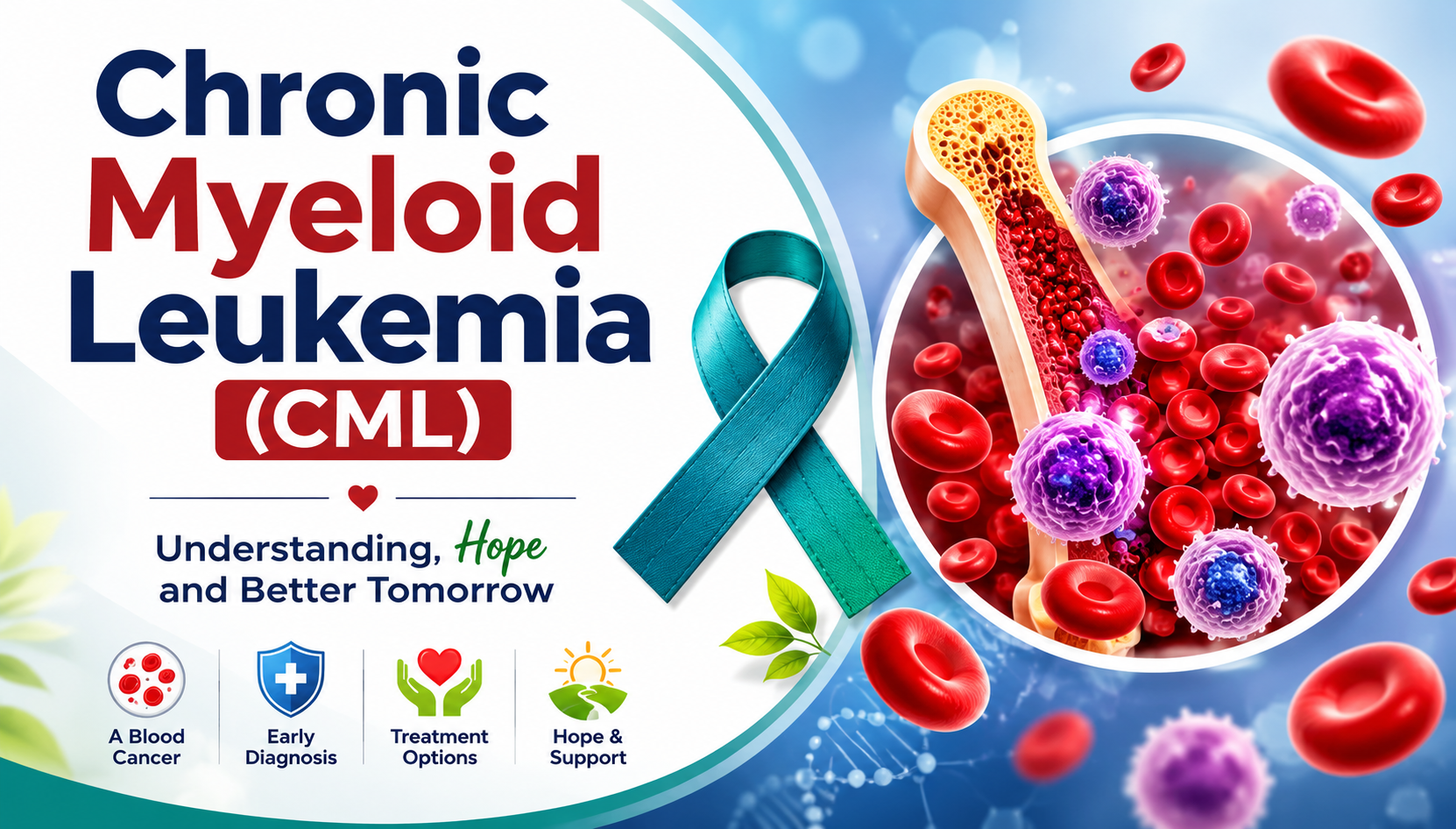
Chronic Myeloid Leukemia (CML): Complete Survival Guide 2026 🎗️
A generation ago, a Chronic Myeloid Leukemia (CML) diagnosis felt like an absolute countdown. Today? It is a battle being won. Thanks to groundbreaking 2026 targeted therapies like next-gen TKIs, survival rates have soared to a near-normal life expectancy, with 10-year relative survival passing 90%. But behind the raw statistics are real, breathing stories of human resilience.
Discover how everyday patients are beating the odds, achieving complete remission, and finding a profound sense of hope. Read on to explore the newest treatments changing the face of cancer care and the emotional journeys of those who refused to give up.

- ⚡ What Is Chronic Myeloid Leukemia? — Direct Answer
- 🔬 Understanding Chronic Myeloid Leukemia More Deeply
- 🧬 What Causes Chronic Myeloid Leukemia?
- 🩸 Symptoms of Chronic Myeloid Leukemia — What to Watch For
- 📊 The 3 Phases of Chronic Myeloid Leukemia
- 🔬 How Is Chronic Myeloid Leukemia Diagnosed?
- Step 1 — Complete Blood Count (CBC)
- Step 2 — Peripheral Blood Smear
- Step 3 — Bone Marrow Biopsy
- Step 4 — Cytogenetic & Molecular Testing
- Step 5 — Risk Stratification
- 💊 Chronic Myeloid Leukemia Treatment Options in 2026
- Tyrosine Kinase Inhibitors (TKIs) — The Backbone of CML Treatment
- Treatment-Free Remission (TFR) — The New Goal 🎯
- Other Treatment Approaches
- 📈 Key Chronic Myeloid Leukemia Statistics
- 🌿 Survival Rates & Prognosis for Chronic Myeloid Leukemia
- ⏳ Milestones in Chronic Myeloid Leukemia Research
- 💛 A Parent’s Real Story: “I Thought I Was Dying. Then Everything Changed.”
- 🔄 Can Chronic Myeloid Leukemia Go Into Remission?
- 🔍 What You Must Not Miss About CML — Expert Insights
- 1. 📱 The Adherence Crisis Is Silent But Deadly
- 2. 🧠 The Emotional Burden Is Deeply Underreported
- 3. 👶 CML in Children and Young Adults
- 4. 💰 The Financial Toxicity of TKIs
- 5. 🥗 Nutrition, Exercise & Drug Interactions During TKI Therapy
- 6. 🌍 Global Access to CML Treatment Is Deeply Unequal
- ❓ FAQs
- Can you live a normal life with Chronic Myeloid Leukemia?
- Is Chronic Myeloid Leukemia hereditary or genetic?
- What is the life expectancy for someone with CML in 2026?
- What are the early signs of Chronic Myeloid Leukemia in children?
- How is Chronic Myeloid Leukemia different from Acute Myeloid Leukemia (AML)?
- Can CML come back after stopping treatment during TFR?
- What foods should I avoid while taking Gleevec (imatinib)?
- Is Chronic Myeloid Leukemia curable?
- How often do CML patients need blood tests and monitoring?
- 🔗 Trusted Resources for CML Patients & Families
- ✨ Final Thoughts: Hope Is Not Just a Word in CML
⚡ What Is Chronic Myeloid Leukemia? — Direct Answer
Chronic Myeloid Leukemia (CML) is a type of blood cancer that starts in the bone marrow. It causes the body to make too many abnormal white blood cells. It is driven by a genetic mutation called the Philadelphia chromosome. Today, most patients live near-normal lives thanks to targeted oral drugs called Tyrosine Kinase Inhibitors (TKIs).
A diagnosis of Chronic Myeloid Leukemia can feel like the ground has disappeared beneath your feet. One moment you are living your normal life. The next, a doctor says words you never expected to hear.
Yet here is the truth : CML is one of the most treatable blood cancers known to medicine today. 💙
Thanks to a revolution in targeted therapy that began in the early 2000s, the story of Chronic Myeloid Leukemia has shifted from tragedy to one of the greatest success stories in modern oncology. In this guide, you will get the full picture — the science, the emotional reality, the real statistics, and the strategies that help patients thrive.
🔬 Understanding Chronic Myeloid Leukemia More Deeply
Chronic Myeloid Leukemia is a cancer of the blood and bone marrow. The word “chronic” means it progresses slowly — unlike acute leukemia, which develops very rapidly. The word “myeloid” refers to the type of cell affected: myeloid cells, which normally mature into red blood cells, white blood cells, and platelets.
In CML, this maturation process goes wrong. The bone marrow produces enormous numbers of abnormal white blood cells (called granulocytes) that crowd out healthy cells and accumulate in the blood, bone marrow, and spleen.
The result? A body that cannot fight infection properly, cannot carry oxygen efficiently, and cannot clot blood normally.
But here is what makes CML special among blood cancers: we know the exact molecular switch that causes it. And we have drugs designed to turn that switch off.

🧬 What Causes Chronic Myeloid Leukemia?
Chronic Myeloid Leukemia is not passed from parent to child in the usual way. It is not truly hereditary. Instead, it results from an acquired genetic change that happens during a person’s lifetime — an accidental swap of genetic material between two chromosomes.
The Philadelphia Chromosome — The Culprit Behind CML
In approximately 95% of all CML cases, two chromosomes — chromosome 9 and chromosome 22 — swap pieces of their DNA with each other. Scientists call this a translocation. This error creates a new, shorter, abnormal chromosome known as the Philadelphia chromosome (Ph+).
The Ph chromosome produces a rogue protein called BCR-ABL1. This protein acts like a jammed accelerator pedal. It tells bone marrow stem cells to keep dividing uncontrollably — without ever stopping. The result is an uncontrolled flood of abnormal white blood cells pouring into the bloodstream.
💡 Voice Search Answer — What causes CML? CML is caused by a genetic swap between chromosome 9 and chromosome 22. This creates the Philadelphia chromosome, which produces a protein called BCR-ABL1. That protein drives uncontrolled growth of white blood cells. This mistake happens randomly — not because of anything the patient did or did not do.
Known Risk Factors for Chronic Myeloid Leukemia
⚠️ Radiation exposure — High doses of ionizing radiation (atomic bomb survivors, prior radiation therapy for other cancers) significantly increase CML risk.
⚠️ Age — CML becomes more common with age. The median diagnosis age is around 64 years. However, CML can occur at any age.
⚠️ Male sex — Men are slightly more likely to develop CML than women, though the reasons are not fully understood.
✅ No known lifestyle link — Unlike many other cancers, smoking, diet, alcohol, and obesity do not appear to directly cause CML.
✅ Not hereditary — Having CML does not increase your children’s risk of developing it.
🩸 Symptoms of Chronic Myeloid Leukemia — What to Watch For
One of the most challenging aspects of Chronic Myeloid Leukemia is that it can be completely silent for months or even years. Many patients feel perfectly well. In fact, 40–50% of CML cases are discovered accidentally during a routine blood test ordered for an unrelated reason.
Still, when symptoms do appear, they typically include:
Early Warning Signs of CML
- 😓 Unusual, persistent fatigue or weakness
- ⚖️ Unexplained weight loss without dieting
- 🌙 Drenching night sweats without any illness
- 🫄 Feeling full very quickly after eating (caused by an enlarged spleen pressing on the stomach)
- 🌡️ Mild, low-grade fever with no obvious infection
Advanced Phase Symptoms
- 🦴 Bone pain or joint aches, especially in the ribs and sternum
- 🩹 Easy bruising or bleeding that takes longer to stop
- 💧 Swollen lymph nodes in the neck, armpits, or groin
- 🦠 Frequent infections that do not resolve easily
- 😣 Severe left-side abdominal pain (enlarged spleen)
⚠️ Do Not Ignore These Warning Signs
Left-side abdominal fullness or pain is a major red flag for splenomegaly (an enlarged spleen) — one of the hallmark physical signs of CML. If you experience unexplained fatigue combined with a persistently full feeling on your left side, request a complete blood count (CBC) from your doctor immediately.
Early detection transforms outcomes in Chronic Myeloid Leukemia.
📊 The 3 Phases of Chronic Myeloid Leukemia
Chronic Myeloid Leukemia progresses through three recognized phases. The phase at diagnosis is one of the most important factors in determining treatment and prognosis.
Phase 1 — Chronic Phase 🟢
- Blast cells in bone marrow: Less than 10%
- Most common phase at diagnosis — approximately 85–90% of patients are diagnosed here
- Patients often feel well or have only mild symptoms
- TKIs work most effectively in this phase
- 5-year survival rate: 90–95%
Phase 2 — Accelerated Phase 🟡
- Blast cells: 10–19%
- The disease is progressing and becoming harder to control
- Symptoms become more pronounced
- Treatment becomes more complex; bone marrow transplant may be considered
- 5-year survival rate: 60–80%
Phase 3 — Blast Crisis 🔴
- Blast cells: 20% or more
- The disease now behaves similarly to acute leukemia
- Urgent and aggressive treatment is required
- The most serious stage with the most challenging prognosis
- 5-year survival rate: 20–30%
💡 What are “blasts” in CML? Blasts are immature blood cells that have not developed properly. In a healthy person, blasts make up less than 5% of bone marrow cells. In Chronic Myeloid Leukemia, the blast percentage rises as the disease progresses — and this percentage defines the phase.
🔬 How Is Chronic Myeloid Leukemia Diagnosed?
Diagnosis of CML combines standard blood work, bone marrow analysis, and highly precise genetic testing. Here is a step-by-step look at the typical diagnostic process:
Step 1 — Complete Blood Count (CBC)
An elevated white blood cell count — often 100,000+ cells per microliter versus the normal range of 4,000–11,000 — raises the first red flag. Doctors also look for thrombocytosis (high platelet count) and anemia (low red blood cells).
Step 2 — Peripheral Blood Smear
A lab technician examines blood under a microscope. In CML, they see a characteristic “left shift” — many immature white blood cells at various stages of development that should not be present in the bloodstream.
Step 3 — Bone Marrow Biopsy
A small needle removes a sample of bone marrow, usually from the back of the hip bone. This confirms the percentage of blast cells and determines the stage. It is briefly uncomfortable but provides critical information.
Step 4 — Cytogenetic & Molecular Testing
- FISH (Fluorescence In Situ Hybridization) — Detects the Philadelphia chromosome directly
- Quantitative PCR (qPCR) — Measures BCR-ABL1 gene levels with extraordinary sensitivity. It can detect 1 CML cell among 1 million healthy ones. This test is crucial for ongoing treatment monitoring.
Step 5 — Risk Stratification
Doctors calculate a risk score — using tools like the Sokal Score or EUTOS Score — based on age, spleen size, platelet count, and blast percentage. This score predicts how the disease will likely respond to treatment and guides which TKI to start with.
💊 Chronic Myeloid Leukemia Treatment Options in 2026
The treatment of Chronic Myeloid Leukemia was revolutionized in 2001 with the FDA approval of imatinib (Gleevec) — widely described as oncology’s first “magic bullet.” It targets the BCR-ABL1 protein specifically while leaving most healthy cells unharmed. Today, even more powerful options exist.
Tyrosine Kinase Inhibitors (TKIs) — The Backbone of CML Treatment
| Drug (Generic) | Brand Name | Generation | Key Advantage |
|---|---|---|---|
| Imatinib | Gleevec | 1st | Well-studied; generic available (lower cost) |
| Dasatinib | Sprycel | 2nd | Faster response; penetrates the brain barrier |
| Nilotinib | Tasigna | 2nd | Deeper molecular responses; faster remission |
| Bosutinib | Bosulif | 2nd | Good option for imatinib-intolerant patients |
| Ponatinib | Iclusig | 3rd | Active against the T315I “gatekeeper” mutation |
| Asciminib | Scemblix | 3rd (STAMP) | Novel mechanism; fewer resistance issues |
Reference: National Cancer Institute — CML Treatment (PDQ)
Treatment-Free Remission (TFR) — The New Goal 🎯
Here is something remarkable that even many healthcare providers do not explain clearly enough to patients: a growing number of CML patients who achieve deep molecular remission can safely stop taking TKIs entirely — and remain disease-free for years.
This is called Treatment-Free Remission (TFR).
Studies such as the STIM and EURO-SKI trials show that approximately 40–60% of patients who achieve a sustained deep molecular response (DMR) can remain in remission after stopping TKIs. Those who relapse can almost always restart TKIs and regain remission successfully. Monthly PCR monitoring is essential after stopping.
This is a potential path to a life free of daily cancer medication. 🌟
Other Treatment Approaches
🔬 Allogeneic Stem Cell Transplant (Allo-SCT) — Used mainly in accelerated or blast crisis phase, or when multiple TKIs have failed. It is the only widely accepted curative approach but carries significant risks including graft-versus-host disease.
💉 Interferon-alfa — An older therapy now largely replaced by TKIs but occasionally combined with them in clinical trials.
🧪 Clinical Trials (2025–2026) — Combination TKI + immunotherapy trials and early CAR-T cell research for CML are actively enrolling patients. Visit ClinicalTrials.gov for current studies.
📈 Key Chronic Myeloid Leukemia Statistics
| Statistic | Figure | Source |
|---|---|---|
| Estimated new CML cases in the US (2025) | ~9,280 | American Cancer Society |
| 5-year survival rate (chronic phase, modern TKI) | 90–95% | NCI SEER Database |
| Patients achieving complete cytogenetic response with imatinib at 12 months | ~69% | IRIS Trial — NEJM |
| Percentage of CML patients with Philadelphia chromosome | ~95% | National Cancer Institute |
| TFR success rate in patients with sustained deep molecular remission | 40–60% | European LeukemiaNet (ELN) |
| Global CML incidence per 100,000 people per year | 1–2 per 100,000 | World Health Organization |
| Median age at CML diagnosis | 64 years | NCI SEER Database |
| Patients achieving major molecular response with nilotinib at 12 months | ~44% | ENESTnd Trial — NEJM |
🌿 Survival Rates & Prognosis for Chronic Myeloid Leukemia
Prognosis in Chronic Myeloid Leukemia depends heavily on the phase at diagnosis, the risk score, and treatment response. Here is a clear breakdown:
| Phase at Diagnosis | 5-Year Survival | 10-Year Survival | TFR Possible? |
|---|---|---|---|
| 🟢 Chronic Phase | 90–95% | 80–90% | Yes (40–60%) |
| 🟡 Accelerated Phase | 60–80% | 50–70% | Possible in some |
| 🔴 Blast Crisis | 20–30% | 15–25% | Rarely |
Survival Then vs. Now — How Far We Have Come
- Before TKIs (1990s): 5-year survival ~30%
- Imatinib era (2001+): 5-year survival ~70%
- 2nd generation TKIs (2010+): 5-year survival ~85%
- Current era (2026): 5-year survival 90%+ in chronic phase
🎯 The Key Message on Prognosis: Research published in the journal Blood (Hochhaus et al.) showed that CML patients diagnosed in chronic phase who achieve an optimal treatment response now have a life expectancy approaching that of the general population of similar age. This was unimaginable 30 years ago. Read more at ASH Publications.
⏳ Milestones in Chronic Myeloid Leukemia Research
1960 — Philadelphia Chromosome Discovered
Drs. Nowell and Hungerford at the University of Pennsylvania identify an abnormally small chromosome 22 in CML patients — the first chromosomal abnormality ever linked to a human cancer.
1973 — Translocation Identified
Dr. Janet Rowley discovers the Philadelphia chromosome results from a translocation between chromosomes 9 and 22 — a foundational moment in all of cancer genetics.
1984 — BCR-ABL1 Gene Identified
Researchers identify the specific fusion gene responsible for CML, giving scientists a precise molecular target to attack for the first time.
2001 — Imatinib (Gleevec) FDA Approved 🎉
Approved in a record 2.5 months — the fastest FDA approval at the time. Survival rates began their dramatic upward trajectory. CML became the global model for precision oncology.
2010–2012 — Second-Generation TKIs Approved
Dasatinib, nilotinib, and bosutinib approved as first-line and second-line options — offering stronger responses and alternatives for imatinib-resistant patients.
2021 — Asciminib (Scemblix) Approved
A first-in-class STAMP inhibitor with a novel mechanism, offering real hope for patients who have failed two or more prior TKIs.
2025–2026 — Combination & Immunotherapy Trials Ongoing
Research into TKI + PD-1 inhibitor combinations and CAR-T cell therapy for CML blast crisis continues. The goal: achieve true cure without stem cell transplant.
💛 A Parent’s Real Story: “I Thought I Was Dying. Then Everything Changed.”
“My name is Priya. I was 44 years old when my world stopped. I had gone in for a routine check-up — just a little tired, nothing dramatic. My GP called the next morning and said my white cell count was severely elevated. I remember sitting in my car outside the hospital, not knowing what BCR-ABL even meant.
My hematologist put me on dasatinib within two weeks. Six months later, my PCR showed a major molecular response. At twelve months, I was in deep molecular remission. My doctors are now discussing whether I qualify for a TFR attempt.
The hardest part was not the pills. It was not the fatigue during those first few weeks. It was the fear of not knowing. What I wish someone had told me on Day One: this disease, if caught in the chronic phase, is very manageable. You can live. You can work. You can watch your children grow up. I am proof of that.”
— Priya S., CML patient since 2021, currently in deep molecular remission ✨
Priya’s experience reflects exactly what the medical data confirms: for the majority of patients diagnosed in the chronic phase, life does not end with a CML diagnosis. With consistent treatment and close monitoring, it continues — often richly and fully.
🔄 Can Chronic Myeloid Leukemia Go Into Remission?
Yes — and for many patients, it does. CML has multiple layers of remission that doctors track with increasing precision:
| Remission Type | What It Means | How It Is Measured |
|---|---|---|
| Complete Hematologic Remission (CHR) | Blood counts return to normal range | Complete Blood Count (CBC) |
| Complete Cytogenetic Remission (CCyR) | No Philadelphia chromosome found in bone marrow cells | FISH / Cytogenetics |
| Major Molecular Response (MMR) | BCR-ABL1 levels drop to ≤0.1% (MR3.0) | Quantitative PCR (qPCR) |
| Deep Molecular Response (DMR) | BCR-ABL1 drops below 0.01% (MR4.0) or 0.0032% (MR4.5) | Highly sensitive qPCR |
| Treatment-Free Remission (TFR) | Sustained remission after stopping TKI medication entirely | Monthly PCR monitoring |
The deeper the remission achieved — and the longer it is sustained — the better the long-term outlook for each patient with Chronic Myeloid Leukemia.
🔍 What You Must Not Miss About CML — Expert Insights
1. 📱 The Adherence Crisis Is Silent But Deadly
Most CML content focuses on which drug to take. Very few sources discuss the fact that non-adherence to TKIs is a leading cause of treatment failure. Studies show that patients who take their TKI less than 90% of the time have significantly lower rates of molecular response.
Pill fatigue is real. Taking a daily medication for a disease you cannot see or feel is psychologically challenging. Strategies like pill reminders, routine linking, and regular pharmacist check-ins improve adherence measurably.
2. 🧠 The Emotional Burden Is Deeply Underreported
Anxiety, fear of relapse, and depression are far more common in CML patients than published statistics suggest. A 2024 survey published in Leukemia & Lymphoma found that over 60% of CML patients reported persistent anxiety about their disease even while in molecular remission.
Integrating psychological support into CML care is not optional — it is essential. Ask your care team about oncology social workers and mental health support.
3. 👶 CML in Children and Young Adults
While CML predominantly affects older adults, it does occur in children and adolescents — representing about 2–3% of childhood leukemias. Pediatric CML is biologically similar to adult CML but requires careful TKI dose adjustments due to growth and development concerns.
Fertility preservation discussions should happen early for young patients placed on nilotinib or ponatinib.
4. 💰 The Financial Toxicity of TKIs
Brand-name TKIs can cost $10,000–$15,000 USD per month without insurance coverage. Generic imatinib, available since 2016, has reduced this burden significantly. Patient assistance programs from manufacturers like Novartis and Bristol-Myers Squibb exist but are often difficult for patients to navigate alone. Organizations like the Leukemia & Lymphoma Society and Patient Advocate Foundation provide co-pay assistance and expert navigation support.
5. 🥗 Nutrition, Exercise & Drug Interactions During TKI Therapy
Dasatinib and nilotinib interact with grapefruit and other foods. Nilotinib must be taken on an empty stomach — food increases drug absorption unpredictably and raises side effect risk. Grapefruit must be avoided entirely with most TKIs. St. John’s Wort significantly reduces imatinib blood levels and is strictly contraindicated.
Moderate aerobic exercise — 30 minutes, five days per week — has been shown in multiple studies to reduce TKI-related fatigue in CML patients and may improve cardiovascular health, which is particularly important because ponatinib and nilotinib carry known cardiovascular risk.
6. 🌍 Global Access to CML Treatment Is Deeply Unequal
The Glivec International Patient Assistance Program (GIPAP) and the Max Access Program have historically provided imatinib free of charge to patients in 80+ countries. However, access to 2nd and 3rd generation TKIs remains profoundly unequal worldwide. Organizations like The Max Foundation and CML Advocates Network offer referral pathways for patients in low- and middle-income countries.
❓ FAQs
Can you live a normal life with Chronic Myeloid Leukemia?
Yes. The majority of people diagnosed with CML in the chronic phase go on to live near-normal lives with modern TKI therapy. Many continue working, traveling, raising families, and maintaining active social lives. Regular monitoring and consistent medication adherence are the two most important pillars of long-term quality of life with Chronic Myeloid Leukemia.
Is Chronic Myeloid Leukemia hereditary or genetic?
CML is genetic but not hereditary — and this distinction matters enormously. The Philadelphia chromosome mutation happens during a person’s lifetime by random genetic accident. It is not passed from parent to child through inheritance. Your children are not at elevated risk of CML simply because you have it.
What is the life expectancy for someone with CML in 2026?
For patients diagnosed in the chronic phase who respond well to TKI therapy, life expectancy now approaches that of the general population of the same age — a remarkable medical achievement.
The 10-year survival rate exceeds 80% in most studies. Patients who achieve deep molecular remission and qualify for TFR may live indefinitely without detectable disease.
What are the early signs of Chronic Myeloid Leukemia in children?
CML in children may present as fatigue, unexplained weight loss, night sweats, abdominal fullness from spleen enlargement, and pale skin from anemia. Because CML is rare in children, it is often diagnosed later than in adults.
Any child with a persistently elevated white blood cell count on a CBC should be evaluated by a pediatric hematologist without delay.
How is Chronic Myeloid Leukemia different from Acute Myeloid Leukemia (AML)?
CML progresses slowly and is driven by the BCR-ABL1 mutation, which responds well to oral targeted therapy. AML is aggressive, fast-progressing, and typically requires intensive chemotherapy and often a stem cell transplant.
Both affect myeloid cells, but they have very different biology, treatment approaches, and long-term outlooks. CML, with current treatment, is far more manageable over the long term than most forms of AML.
Can CML come back after stopping treatment during TFR?
Yes — approximately 40–60% of patients who attempt TFR will see their BCR-ABL1 levels rise again within the first 6–12 months. This is called molecular relapse. However, nearly all of these patients successfully regain deep molecular response when TKI therapy is restarted promptly.
Molecular relapse after TFR does not mean the disease has become harder to treat. This is why monthly PCR monitoring is non-negotiable during a TFR attempt.
What foods should I avoid while taking Gleevec (imatinib)?
Imatinib should be taken with food and a large glass of water to reduce stomach upset. Grapefruit and grapefruit juice interfere with how imatinib is processed in the liver (via the CYP3A4 enzyme pathway) and should be avoided.
St. John’s Wort significantly reduces imatinib blood levels and must be avoided entirely. Always consult your hematologist or pharmacist before adding any new supplements, herbal products, or over-the-counter medications.
Is Chronic Myeloid Leukemia curable?
The word “cure” is used carefully in CML. Allogeneic stem cell transplant is the only widely accepted curative treatment, but it carries significant risks. TKIs do not cure CML in the traditional sense — they control it very effectively.
However, Treatment-Free Remission offers some patients sustained remission without medication, which in practical terms represents a functional cure for those who maintain it. Research into immune-based therapies that might achieve true biological cure without transplant is one of the most exciting frontiers in CML science today.
How often do CML patients need blood tests and monitoring?
In the first year of TKI therapy, most guidelines recommend quantitative PCR testing every 3 months to assess molecular response. Once a stable deep molecular response is achieved, monitoring may shift to every 6 months.
During a TFR attempt, monthly PCR testing is essential, typically for the first 2 years, then every 3 months thereafter. Your hematologist will set your individual monitoring schedule based on your response pattern. European LeukemiaNet guidelines provide detailed monitoring recommendations.
🔗 Trusted Resources for CML Patients & Families
🏥 Medical Authorities
- National Cancer Institute — CML Treatment Guide
- American Cancer Society — CML
- European LeukemiaNet (ELN)
- Mayo Clinic — CML
- ASH (American Society of Hematology)
💛 Patient Support Organizations
- Leukemia & Lymphoma Society
- Patient Advocate Foundation
- CML Advocates Network
- The Max Foundation (Global Access)
🔬 Research & Clinical Trials
✨ Final Thoughts: Hope Is Not Just a Word in CML
Chronic Myeloid Leukemia, once a death sentence measured in months, is now a condition that most patients manage long-term with a daily pill — and some leave behind entirely through Treatment-Free Remission.
That is not a small thing. That is one of the greatest victories in the entire history of cancer medicine. 💙
If you or someone you love has just been diagnosed, know this: the fear is real, and it is valid. And so is the hope. The science has never been better. The support networks have never been stronger. And the future for people living with Chronic Myeloid Leukemia has never looked brighter.
Talk to a specialized hematologist. Stay consistent with your treatment. Monitor regularly. And reach out to patient communities who truly understand what you are walking through.
You are not alone. And with Chronic Myeloid Leukemia in 2026, there is every reason to look forward. 🎗️
⚠️ Disclaimer: This article is for educational and informational purposes only. It does not constitute medical advice. Always consult a licensed hematologist or oncologist for diagnosis and treatment decisions related to Chronic Myeloid Leukemia or any medical condition.


