

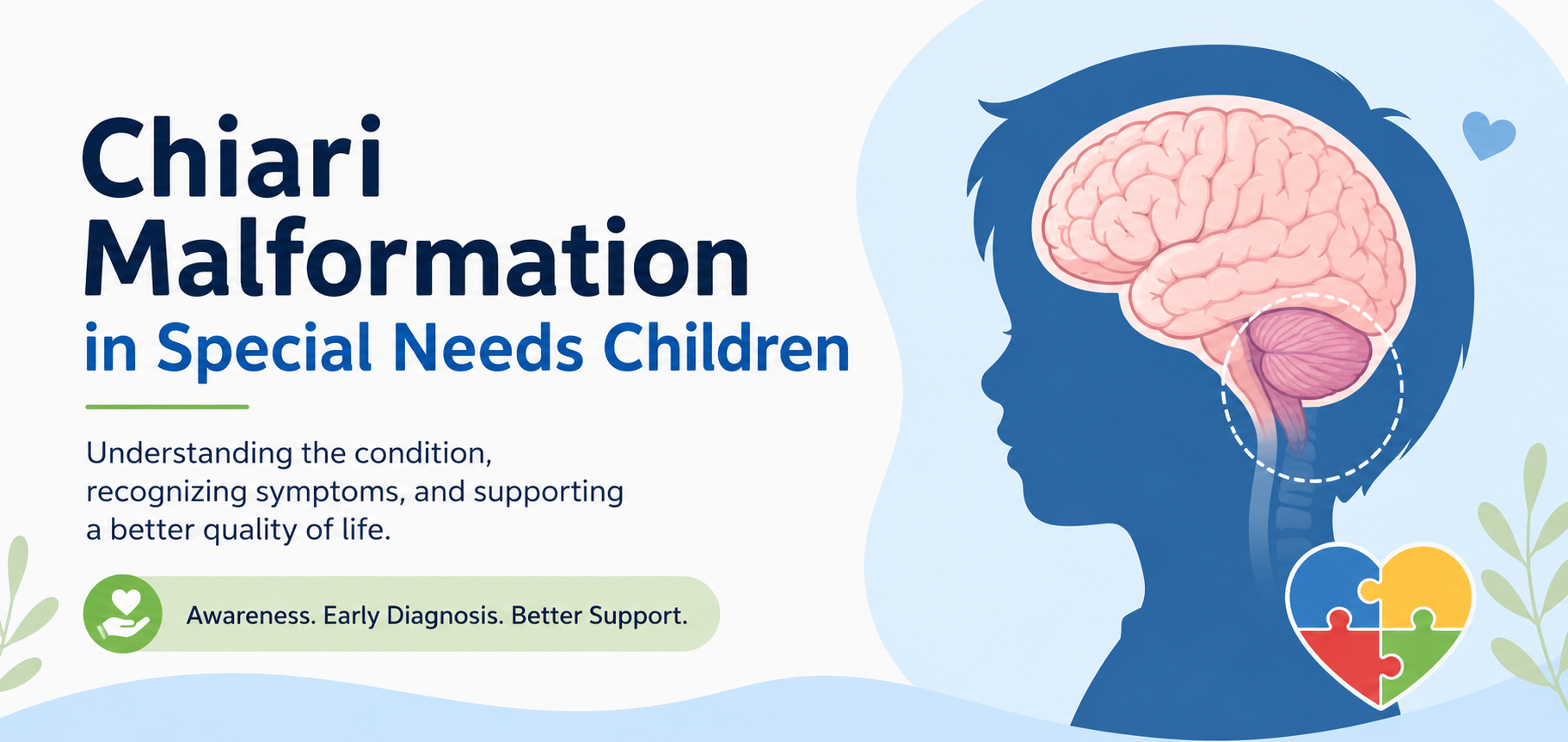
🧠 Chiari Malformation 2026: Life-Changing Brain Condition Truths Every Special Needs Parent Must Know
Did you know Chiari Malformation affects up to 1 in 100 people on MRI — yet most go years without a correct diagnosis? 😔 This devastating brain condition is linked to autism, ADHD, Down syndrome, and Ehlers-Danlos Syndrome. Discover the shocking symptoms most doctors miss, the surgery that changes lives, and what every special needs parent absolutely must know. Don’t miss this.

- 🔬 What Is Chiari Malformation — and Why Does Every Special Needs Parent Need to Understand It?
- 📊 Chiari Malformation Statistics 2026: The Numbers Behind This Condition
- 🧬 Types of Chiari Malformation: A Complete Guide
- 🚨 Chiari Malformation Symptoms: What Parents Must Never Dismiss
- Symptoms in Infants and Toddlers (0–5 Years)
- Symptoms in Older Children (6–17 Years)
- The Valsalva Headache: The Most Specific Chiari Warning Sign
- 🧩 Chiari Malformation and Special Needs: The Critical Connections
- Chiari Malformation and Autism Spectrum Disorder (ASD)
- Chiari Malformation and Ehlers-Danlos Syndrome (EDS)
- Chiari Malformation and Neurodevelopmental Conditions: The Family Pattern
- 💔 A Story That Every Special Needs Family Will Recognise
- 🩺 How Is Chiari Malformation Diagnosed?
- 💊 Chiari Malformation Treatment 2026: What Is Available
- 🏥 Conservative Management (When Surgery Is Not Immediately Needed)
- 🔪 Surgery: Posterior Fossa Decompression (PFD)
- Surgical Options Explained
- Surgical Outcomes in Children
- What About Revision Surgery?
- 🌟 What Special Needs Families Needs to Know About Chiari Malformation
- 🛡️ The Special Needs Parent’s Advocacy Framework for Chiari Malformation
- 🔗 Trusted Resources for Chiari Malformation Families
- ❓ FAQs: Chiari Malformation
- Q: What is Chiari Malformation in simple terms?
- Q: How common is Chiari Malformation in children?
- Q: Can autism and Chiari Malformation coexist?
- Q: What are the first signs of Chiari Malformation in a child?
- Q: Is surgery always needed for Chiari Malformation?
- Q: What does Chiari Malformation surgery involve?
- Q: Is Chiari Malformation linked to Ehlers-Danlos Syndrome?
- Q: Can Chiari Malformation get worse without surgery?
- 💙 A Final Word — Because Your Child’s Headache Deserves to Be Taken Seriously
🔬 What Is Chiari Malformation — and Why Does Every Special Needs Parent Need to Understand It?
Chiari Malformation is a structural brain abnormality in which brain tissue — specifically the lower part of the cerebellum called the cerebellar tonsils — extends beyond the skull and pushes down into the spinal canal.
In simple terms: the brain is too large for the space at the base of the skull, and part of it gets pushed downward, disrupting the flow of cerebrospinal fluid and compressing critical brain and spinal structures.
Chiari malformation type 1 features caudal descent of the cerebellar tonsils of at least 5 mm and presents with symptoms ranging from tussive headaches and sleep-disordered breathing to scoliosis and focal neurological deficits, although many patients remain asymptomatic. (Source: NCBI StatPearls — Chiari Malformation Type 1, December 2025)
For families in the special needs community — especially those raising children with autism, ADHD, Ehlers-Danlos Syndrome, or Down syndrome — understanding Chiari Malformation is critically important. Research increasingly shows that these conditions coexist more often than chance alone would predict.
📊 Chiari Malformation Statistics 2026: The Numbers Behind This Condition
| Statistic | Figure | Source |
|---|---|---|
| Radiological prevalence (seen on MRI) | 1 in 100 people (1–3.6%) | ScienceDirect — Prevalence and Impact |
| Symptomatic prevalence | ~1 in 1,000 people | ScienceDirect |
| Syringomyelia in all CM1 patients | ~25% develop it | ScienceDirect |
| Syringomyelia in surgical CM1 cases | Up to 75% of surgical patients | ScienceDirect |
| Scoliosis prevalence in CM1 | 20–30% of patients | PMC — Pediatric Surgical Outcomes |
| Headache prevalence in paediatric CM1 | 69% of surgical patients | PMC — Giannina Gaslini Study |
| Oropharyngeal dysfunction in infants (0–2 yrs) | 77.8% of cases | PubMed — CM1 under Age 6 |
| Syringomyelia in children aged 3–5 | 85.7% of this age group | PubMed |
| Female predominance (adult patients) | 78% female | Springer — Pediatric vs Adult CM1 |
| CM1 + ASD/ADHD coexistence | Documented; increasingly recognised | SJMCR — ASD, ADHD and CM1, 2025 |
Chiari malformation type 1 affects approximately one in 1,000 people symptomatically, although one in 100 meet radiological criteria, making it a common neurological disorder.
Approximately 25% of patients with CM1 develop syringomyelia, a fluid-filled cyst in the spinal cord that can result in motor and sensory deficits and urinary incontinence. (Source: ScienceDirect)
🧬 Types of Chiari Malformation: A Complete Guide
Chiari Malformation is not a single condition. It exists across a spectrum of types, each with different causes, severity levels, and clinical implications.
| Type | Definition | Who It Affects | Key Features |
|---|---|---|---|
| CM Type 0.5 | Ventral brainstem compression without tonsillar descent | Very young children | Respiratory problems; feeding difficulties |
| CM Type 1 (CM1) | Cerebellar tonsils descend ≥5 mm below foramen magnum | Most common; children and adults | Headaches, neck pain, syringomyelia, scoliosis |
| CM Type 1.5 (CM1.5) | Both cerebellar tonsils AND brainstem herniate | Children; more severe | More complex symptoms; higher revision surgery rate |
| CM Type 2 | Herniation of cerebellum, brainstem, and fourth ventricle; almost always with spina bifida | Newborns; associated with spina bifida | More severe; hydrocephalus common |
| CM Type 3 | Most of the cerebellum and brainstem extend outside skull | Very rare; neonates | Severe; high mortality |
| CM Type 4 | Cerebellar hypoplasia; cerebellum underdeveloped | Rare | Poor prognosis |
(Source: NCBI StatPearls, 2026 | Karger — Revision Chiari Surgery)
CM1.5 involves herniation of both the tonsils and brainstem, and CM0.5 involves ventral brainstem compression often seen in young children.
The main surgical treatments for CM0.5, 1, and 1.5 include some version of a posterior fossa decompression (PFD). (Source: Karger — Revision Surgery in Young Children)
🚨 Chiari Malformation Symptoms: What Parents Must Never Dismiss
Chiari Malformation is notorious for its wide and variable symptom profile. This variability is one of the primary reasons it is so frequently missed or misdiagnosed — particularly in children who may already have a primary neurodevelopmental diagnosis.
Symptoms in Infants and Toddlers (0–5 Years)
Children aged 0–2 years with Chiari Malformation Type 1 commonly presented with oropharyngeal dysfunction (77.8%). Children aged 3–5 years more frequently presented with syringomyelia (85.7%), scoliosis (38.1%), and/or headache (57.1%). (Source: PubMed — CM1 in Children Under Age 6)
Specific warning signs in very young children include:
- 🔴 Feeding and swallowing difficulties — choking, gagging, slow feeding
- 🔴 Apnoea or breathing pauses — especially during sleep
- 🔴 Stridor — noisy, high-pitched breathing
- 🔴 Developmental delays — motor milestones not being met
- 🔴 Hypotonia — unusually “floppy” muscle tone
Symptoms in Older Children (6–17 Years)
Headaches specifically attributed to CM1 are due to the disruption of the normal CSF flow at the foramen magnum. They are typically of short duration, occur at the back of the head, and are provoked by Valsalva maneuvers.
Compression exerted on the cerebellum and brainstem can result in ataxia (20–40%), nystagmus (23–70%), dysfunction of lower cranial nerves (15–26%), sensory losses (30–92%), motor deficits, and signs of upper motor neuron lesions. (Source: PMC — Pediatric Surgical Management)
| Symptom Category | Specific Symptoms | Prevalence |
|---|---|---|
| Headache | Occipital (back of head); worse with coughing/straining; Valsalva-triggered | 57–69% of paediatric cases |
| Balance and coordination | Ataxia; clumsiness; unsteady gait | 20–40% |
| Eye symptoms | Nystagmus (involuntary eye movement); blurred or double vision | 23–70% |
| Swallowing | Dysphagia; choking; hoarse voice | 15–26% |
| Sensory changes | Numbness; tingling in arms, legs, or face | 30–92% |
| Sleep problems | Sleep apnoea; snoring; disturbed sleep | More common in children than adults |
| Scoliosis | Progressive spinal curvature | 20–30% |
| Neck and shoulder pain | Stiffness; pain radiating down arms | More common in adults |
| Cognitive symptoms | Brain fog; difficulty concentrating | Less studied; increasingly recognised |
The Valsalva Headache: The Most Specific Chiari Warning Sign
The most characteristic symptom of Chiari Malformation is a headache that:
- Starts or worsens with coughing, sneezing, straining, or exercise
- Is located at the back of the head (occipital)
- Is usually brief but intense — lasting seconds to minutes
- Is reproduced predictably by Valsalva-type manoeuvres
If your child describes this specific pattern — a sudden, sharp headache at the back of the head triggered by coughing or physical effort — request a brain MRI specifically to assess for Chiari Malformation.
🧩 Chiari Malformation and Special Needs: The Critical Connections
This is the most important section for the HopeForSpecial community.
Chiari Malformation and Autism Spectrum Disorder (ASD)
Autism spectrum disorder (ASD) and attention deficit hyperactivity disorder (ADHD) can coexist with structural anomalies such as Chiari malformation type 1 (CM-I). A case of a 6-year-old boy followed in child psychiatry since the age of 3 for ASD was found to also have CM1. This co-occurrence raises important questions about pathophysiological mechanisms, diagnostic challenges, and therapeutic approaches. (Source: SJMCR — Coexistence of Neurodevelopmental Disorders and CM1, 2025)
Furthermore, data from case reports associate Chiari I malformation with a variability of psychiatric symptoms including autism spectrum disorder, bipolar disorder, and seizures. Chiari malformation I has been described infrequently in association with defined psychiatric syndromes, and co-occurrence is likely under-recognised. (Source: ResearchGate — Chiari Malformation I and ASD: An Underrecognized Coexistence)
What this means for parents of autistic children: If your autistic child has unexplained occipital headaches, balance difficulties, swallowing issues, or progressive scoliosis — a targeted MRI to assess for Chiari Malformation is warranted.
The two conditions are not mutually exclusive, and treating the Chiari in some cases has led to improvements in neurological symptoms that were previously attributed entirely to autism.
Chiari Malformation and Ehlers-Danlos Syndrome (EDS)
The connection between Chiari Malformation and Ehlers-Danlos Syndrome — a connective tissue disorder characterised by joint hypermobility — is one of the most clinically important associations in Chiari care.
Intrafamilial similarities in Chiari malformation were identified for connective tissue disorders such as Ehlers-Danlos syndrome (p < 0.0001), suggesting that CM1 and its associated clinical phenotypes including connective tissue disorders are genetically influenced. (Source: ResearchGate — Familial CM1 Genetics)
Patients with Ehlers-Danlos Syndrome often experience a range of symptoms that may mask or mimic those of Chiari malformation. This can lead to misdiagnosis or an underestimation of the severity of comorbid conditions.
A thorough clinical assessment is required to differentiate between the hypermobility and connective tissue abnormalities inherent to EDS and the neurological manifestations that suggest the presence of Chiari malformation. (Source: JSFNP — EDS and Chiari Malformation)
For special needs families who have a child with hypermobile joints, frequent joint dislocations, and unexplained neurological symptoms — Chiari Malformation should always be in the differential diagnosis.
Chiari Malformation and Neurodevelopmental Conditions: The Family Pattern
Although most Chiari malformation type 1 cases are nonsyndromic, clinical evaluation of growth parameters, scoliosis, and joint hypermobility should be routine for all patients as they are useful to determine syringomyelia risk and may impact treatment decisions. (Source: ScienceDirect — Prevalence and Impact of Comorbidities in CM1)
Furthermore, familial patterns of Chiari Malformation are increasingly recognised:
Intrafamilial similarities were identified for neurodevelopmental conditions such as dyslexia (p < 0.0001), suggesting that neurodevelopmental comorbidities in CM1 are genetically influenced. (Source: ResearchGate)
💔 A Story That Every Special Needs Family Will Recognise
Meet Aisha. She is 9 years old. She has autism, hypermobile joints, and has always complained of headaches — particularly when she coughs or runs. Her parents always attributed the headaches to sensory overload or anxiety.
For three years, every specialist Aisha saw focused on her autism. Nobody looked further.
Then, during a routine MRI for a sinus issue, the radiologist noted an incidental finding: cerebellar tonsil herniation of 7mm below the foramen magnum. Aisha had Chiari Malformation Type 1.
After posterior fossa decompression surgery, Aisha’s cough-induced headaches resolved completely. Her sleep apnoea — which everyone had attributed to sensory issues — also improved. Her occupational therapist noted she was more engaged in sessions.
Her mother’s words: “Three years. Three years of her telling us her head hurt when she ran. Nobody put it together. The Chiari was there the whole time.”
Aisha’s story is not unusual. It is the pattern — and why awareness of Chiari Malformation in the special needs community matters enormously.
🩺 How Is Chiari Malformation Diagnosed?
Diagnosing Chiari Malformation requires specific imaging — it cannot be identified from a clinical examination alone. Here is what the diagnostic process involves:
| Diagnostic Step | What It Reveals |
|---|---|
| MRI of the brain and cervical spine | Gold standard — shows extent of tonsillar herniation and associated syringomyelia |
| Measurement of tonsil descent | ≥5 mm below foramen magnum = diagnostic; 3–5 mm = borderline requiring clinical correlation |
| Syrinx assessment on spine MRI | Identifies fluid-filled cavities in the spinal cord |
| Cine MRI (flow study) | Assesses cerebrospinal fluid (CSF) flow dynamics at the foramen magnum |
| Timed barium swallow | For children with swallowing difficulties |
| Sleep study (polysomnography) | For children with suspected sleep apnoea |
| Scoliosis X-ray | Assessment of spinal curvature in patients with CM1 |
(Source: NCBI StatPearls, 2026 | PMC — Pediatric Surgical Management)
Critical advocacy point for parents: If your child has unexplained occipital headaches, swallowing difficulties, balance problems, or progressive scoliosis — ask specifically for an MRI of the brain including the craniocervical junction and cervical spine. A standard brain MRI may not capture the full extent of the herniation without this specification.
💊 Chiari Malformation Treatment 2026: What Is Available
🏥 Conservative Management (When Surgery Is Not Immediately Needed)
Not every child with Chiari Malformation on MRI requires immediate surgery. Many patients with incidental findings and no symptoms can be monitored carefully.
Conservative management includes:
- Regular MRI monitoring (every 1–2 years or as symptoms change)
- Pain management for headaches — avoiding NSAIDs that affect CSF pressure
- Physical therapy — adapted to avoid high-impact activities that worsen symptoms
- Sleep support — CPAP or BiPAP for sleep apnoea if present
- Scoliosis bracing if curve is mild to moderate
- Multidisciplinary clinic review including neurosurgery, neurology, physiotherapy
Chiari 1 malformation is a common MRI finding and a frequent reason for neurosurgical consultation.
Although many studies have investigated surgical outcomes for patients with CM1, outcomes for those treated without surgery have been less frequently reported, highlighting the importance of conservative management pathways. (Source: Neurosurgery — UK Chiari 1 Study, September 2025)
🔪 Surgery: Posterior Fossa Decompression (PFD)
When surgery is needed, the primary surgical treatment for Chiari Malformation is Posterior Fossa Decompression (PFD). This procedure creates more space for the cerebellum and restores normal cerebrospinal fluid flow.
In the most recent guidelines endorsed by the American Association of Neurological Surgeons (AANS), the Congress of Neurological Surgeons (CNS), and the Bobby Jones Chiari and Syringomyelia Foundation, the recommendation for symptomatic CM-1 patients was that either posterior fossa decompression or posterior fossa decompression with duraplasty may be utilised as a first-line treatment to improve preoperative symptoms. (Source: PMC — Posterior Fossa Reconstruction, 110 Pediatric Cases)
Surgical Options Explained
| Procedure | What It Does | When Used |
|---|---|---|
| PFD without duraplasty | Removes a small portion of bone at the back of the skull to enlarge the space | Mild to moderate cases; lower complication risk |
| PFD with duraplasty | Bone removal PLUS opening and expanding the covering membrane (dura) using a patch | More severe cases; syringomyelia; recurrence risk |
| Cervical laminectomy | Removal of bone at the top of the spine to further enlarge the space | When brainstem or upper cord compression is significant |
| Posterior Fossa Reconstruction (PFR) | More extensive reconstruction of the posterior fossa | Complex or recurrent cases; high success rate reported |
(Source: PMC — Posterior Fossa Reconstruction | PubMed — CM1 Under Age 6)
Surgical Outcomes in Children
The outcomes for paediatric Chiari surgery are generally encouraging — particularly for younger children treated early:
Out of 211 paediatric patients who underwent surgery, headaches were prevalent in 69% and cerebellar signs were noted in 29% of patients. Syringomyelia and hydrocephalus were present in 28.4% and 8% of cases respectively. (Source: PMC — Giannina Gaslini Hospital Study)
In a comparative analysis of paediatric and adult CM1 patients, scoliosis (p = 0.000) and sleep apnoea (p = 0.015) were significantly more common in paediatric patients. Children showed distinct clinical presentations from adults, with implications for surgical decision-making. (Source: Springer — Pediatric vs Adult CM1, 2025)
What About Revision Surgery?
Some children — particularly the very youngest — require more than one surgery:
In children aged 0–6 years, the most common presenting symptoms were headache, dysphagia, and respiratory problems. Eight patients out of forty required one or more revision surgeries an average of 11.6 months after their initial surgery. (Source: Karger — Revision Chiari Surgery in Young Children)
This is why long-term neurosurgical follow-up after Chiari decompression is essential — not optional.
🌟 What Special Needs Families Needs to Know About Chiari Malformation
For families navigating special needs alongside Chiari, here is what the internet rarely tells you:

🔸 Chiari Malformation can be misidentified as autism or vice versa.
Published 2025 case reports confirm that children with ASD and Chiari Malformation can have both conditions simultaneously. The neurological symptoms of Chiari — balance problems, sensory sensitivities, sleep apnoea, cognitive fog — overlap significantly with autistic presentations.
🔸 Sleep apnoea in children with Chiari is critically important and under-recognised.
Sleep apnoea was significantly more common in paediatric CM1 patients than in adult patients. (Source: Springer, 2025) For special needs children already managing sleep difficulties, an unrecognised Chiari-related sleep apnoea adds a compounding medical burden.
🔸 Scoliosis in a child with special needs should trigger Chiari investigation.
Scoliosis occurs in 20–30% of CM1 patients and is often the presenting feature in younger children. A child with unexplained or rapidly progressive scoliosis — especially one already diagnosed with a connective tissue condition — should have a brain MRI.
🔸 The EDS-Chiari connection is life-changing information for families.
Many families spend years managing EDS symptoms before realising that Chiari Malformation — often present alongside EDS — is driving additional neurological symptoms. The Ehlers-Danlos Society is an excellent starting point for families navigating this overlap.
🔸 Chiari Malformation is often incidentally discovered.
Many children are found to have CM1 on an MRI performed for a completely different reason — a headache investigation, a sinus study, or after a head injury. This “incidental” Chiari still requires proper neurosurgical evaluation, even if it is initially asymptomatic.
🔸 Neuroimaging prevalence is much higher than symptomatic prevalence.
Neuroimaging studies estimate the prevalence of CM-I to be about 4% in the general population. (Source: SJMCR, 2025) Most of those people will never become symptomatic. The challenge is identifying which patients need close monitoring or intervention.
🛡️ The Special Needs Parent’s Advocacy Framework for Chiari Malformation
The CHIARI Framework for Families 💙
| Letter | Action | What It Means Practically |
|---|---|---|
| C | Connect symptoms to the condition | Learn the Valsalva headache pattern; document symptom timing |
| H | Highlight patterns to your doctor | Bring a symptom diary to every appointment |
| I | Insist on targeted MRI | Ask specifically for brain + cervical spine MRI with craniocervical junction views |
| A | Ask about associated conditions | Request scoliosis assessment and sleep study if relevant |
| R | Refer to a specialist | Request a paediatric neurosurgical consultation — not just neurology |
| I | Investigate family history | Chiari has familial patterns; check if other family members have similar symptoms |
🔗 Trusted Resources for Chiari Malformation Families
- 🌐 Bobby Jones Chiari & Syringomyelia Foundation — Education, advocacy, and research funding
- 🌐 NORD — Chiari Malformation — Rare disease reference and support
- 🌐 American Association of Neurological Surgeons — Chiari — Surgical guideline information
- 🌐 ClinicalTrials.gov — Chiari — Open clinical trials for children with Chiari
❓ FAQs: Chiari Malformation
Q: What is Chiari Malformation in simple terms?
Chiari malformation type 1 features caudal descent of the cerebellar tonsils of at least 5 mm below the foramen magnum and presents with symptoms ranging from tussive headaches and sleep-disordered breathing to scoliosis and focal neurological deficits. (Source: NCBI StatPearls, 2026) In plain language: part of the brain is pushed into the spinal canal through a tight skull opening, blocking normal fluid flow and pressing on critical brain and nerve structures.
Q: How common is Chiari Malformation in children?
Chiari malformation type 1 affects approximately one in 1,000 people symptomatically, although one in 100 meet radiological criteria — making it a common neurological disorder. (Source: ScienceDirect) It is seen across all ages, including infants and toddlers.
Q: Can autism and Chiari Malformation coexist?
Yes. ASD and ADHD can coexist with structural anomalies such as Chiari Malformation Type 1. A 2025 published case report described a 6-year-old boy diagnosed with ASD at age 3 who was subsequently found to have CM1. This co-occurrence is considered under-recognised. (Source: SJMCR, 2025)
Q: What are the first signs of Chiari Malformation in a child?
In very young children (0–2), the most common early sign is oropharyngeal dysfunction — difficulty feeding, swallowing, or choking. In older children, the most characteristic sign is a headache at the back of the head that worsens with coughing, sneezing, or straining. Children aged 3–5 more frequently presented with syringomyelia (85.7%), scoliosis (38.1%), and headache (57.1%). (Source: PubMed)
Q: Is surgery always needed for Chiari Malformation?
Although many patients remain asymptomatic, the presence of syringomyelia represents an indication for surgery. Surgical treatment is not performed in asymptomatic patients. (Source: NCBI StatPearls) The decision to operate depends on symptom severity, the presence of syringomyelia, and the degree of neurological compromise.
Q: What does Chiari Malformation surgery involve?
The primary surgery is Posterior Fossa Decompression — removal of a small portion of the bone at the base of the skull to create more space. The AANS guideline recommends that either posterior fossa decompression or posterior fossa decompression with duraplasty may be utilised as a first-line treatment to improve preoperative symptoms in symptomatic CM-1 patients. (Source: PMC — 110 Pediatric Cases)
Q: Is Chiari Malformation linked to Ehlers-Danlos Syndrome?
Yes — this is one of the most important connections in Chiari care. Intrafamilial patterns in CM1 included Ehlers-Danlos syndrome (p < 0.0001), suggesting that CM1 and connective tissue disorders are genetically related. (Source: ResearchGate — Familial CM1 Study) Families with both EDS and Chiari need specialist centres experienced in managing this complex overlap.
Q: Can Chiari Malformation get worse without surgery?
Yes — particularly when syringomyelia is present. Syringomyelia is a fluid-filled cyst in the spinal cord that can result in progressive motor and sensory deficits and urinary incontinence if untreated. (Source: ScienceDirect) Regular monitoring is essential, even for children currently managed conservatively.
💙 A Final Word — Because Your Child’s Headache Deserves to Be Taken Seriously
If your child with autism, ADHD, Ehlers-Danlos Syndrome, or any other special needs condition complains of headaches at the back of their head when they cough, run, or strain — please take it seriously.
If your special needs child has unexplained scoliosis, feeding difficulties in infancy, poor balance, or sleep apnoea that doesn’t fully explain itself — please take it seriously.
Chiari Malformation is not always obvious. It hides behind other diagnoses. It overlaps with conditions your child may already have. And for too many families, the diagnosis comes years later than it should.
But when it is found — and when it is treated — the difference in a child’s life can be profound.
Your instinct as a parent is a clinical tool. Trust it. Use it. And never stop asking questions. 💙
📌 If you suspect Chiari Malformation, ask your child’s paediatrician for a referral to a paediatric neurosurgeon and request an MRI of the brain and cervical spine including the craniocervical junction. For specialist resources, visit the Bobby Jones Chiari & Syringomyelia Foundation.


