

What Is Sensory Overload in Autism? (With Real-Life Examples & Simple Guide)
Many children with autism experience the world differently. Sounds may feel louder. Lights may seem brighter. Touch may feel uncomfortable.
This can lead to something called sensory overload.
But what exactly does that mean?
👉 In this guide, you will learn what is sensory overload in autism examples, its causes, signs, and how to manage it effectively.

- What Is Sensory Overload in Autism?
- Why Does Sensory Overload Happen in Autism?
- Common Triggers of Sensory Overload
- What Is Sensory Overload in Autism Examples (Real-Life)
- Example 1: School Assembly
- Example 2: Grocery Store
- Example 3: Wearing New Clothes
- Example 4: Birthday Party
- Example 5: Classroom Noise
- Signs of Sensory Overload in Autism
- Sensory Overload vs Tantrum: What’s the Difference?
- How Sensory Overload Affects Daily Life
- How to Prevent Sensory Overload
- 1. Identify Triggers
- 2. Create a Calm Environment
- 3. Use Sensory Tools
- 4. Follow a Routine
- 5. Prepare in Advance
- How to Manage Sensory Overload (When It Happens)
- Sensory Diet: A Helpful Strategy
- Tips for Parents
- Tips for Teachers
- Real-Life Parent Story
- Expert Insights
- FAQs: What Is Sensory Overload in Autism Examples
- 1. Is sensory overload common in autism?
- 2. Can sensory overload be prevented?
- 3. How long does it last?
- 4. What is the best tool to manage overload?
- 5. Can adults with autism experience sensory overload?
- Final Thoughts
What Is Sensory Overload in Autism?
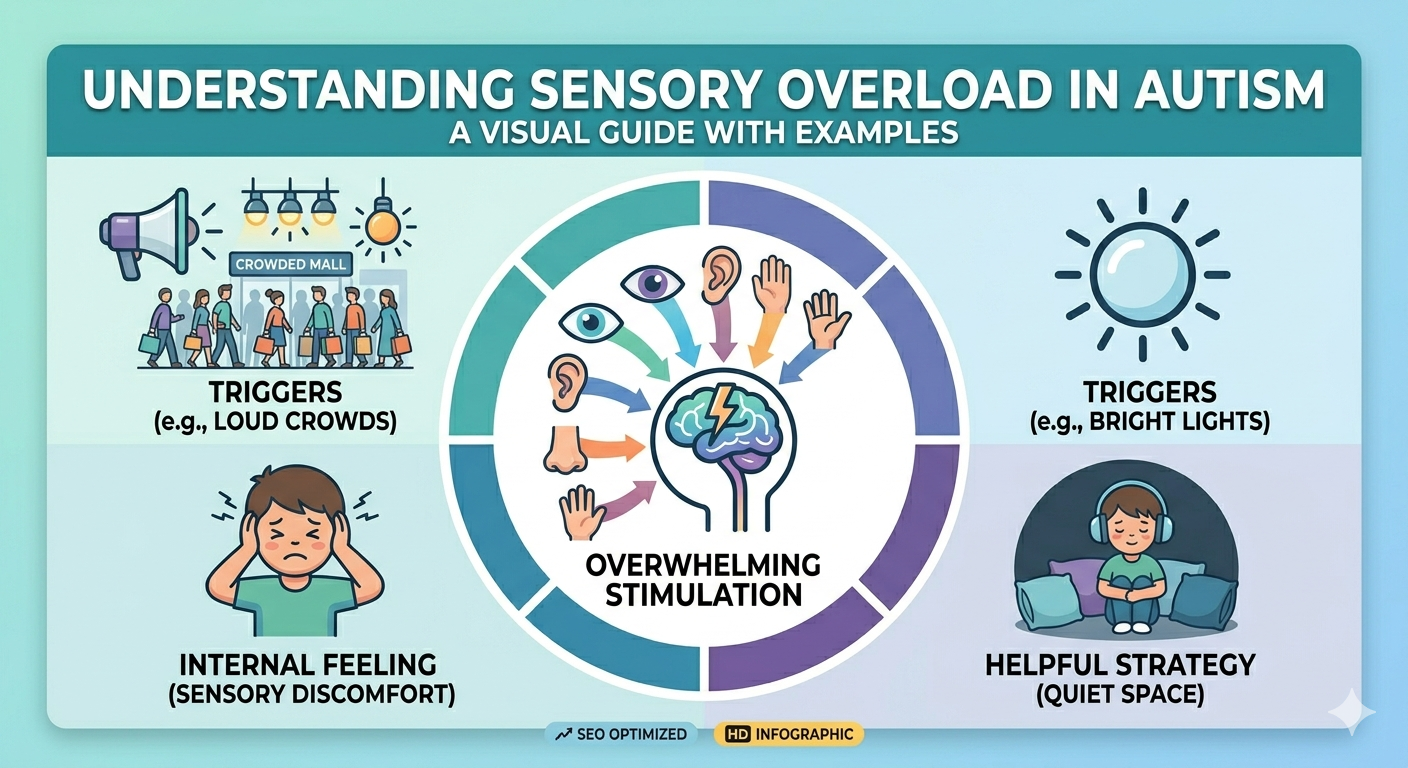
Sensory overload happens when the brain receives too much sensory information at once.
This includes:
- Sounds
- Lights
- Smells
- Touch
- Movement
When this happens, the brain struggles to process everything. As a result, the child may feel overwhelmed.

According to the National Autistic Society, sensory differences are a core part of autism, and many individuals may be over- or under-sensitive to sensory input.
https://www.autism.org.uk/advice-and-guidance/topics/sensory-differences
Why Does Sensory Overload Happen in Autism?
Children with autism often process sensory input differently.
Some may be:
- Hypersensitive (too sensitive)
- Hyposensitive (less sensitive)
Because of this, everyday environments can feel intense.
Research shows that sensory processing differences are common in autism and can affect daily functioning.
https://www.ncbi.nlm.nih.gov/pmc/articles/PMC3086654/
Common Triggers of Sensory Overload
Understanding triggers is important.
Here are some common ones:
🔊 Loud Sounds
- School bells
- Traffic noise
- Crowds
💡 Bright Lights
- Fluorescent lights
- Flashing screens
👕 Touch Sensitivity
- Certain fabrics
👃 Strong Smells
- Perfume
- Cleaning products
🧍 Crowded Spaces
- Shopping malls
- Classrooms
What Is Sensory Overload in Autism Examples (Real-Life)
Now let’s look at real-life situations.
These examples will help you understand better.
Example 1: School Assembly
A child attends a school assembly.
- Loud microphones
- Bright lights
- Many students
👉 Result: The child covers ears and starts crying.
Example 2: Grocery Store
A child visits a supermarket.
- Bright lights
- Loud announcements
- Busy environment
👉 Result: The child has a meltdown.
Example 3: Wearing New Clothes
A child wears a new shirt.
- Fabric feels itchy
👉 Result: The child refuses to wear it.
Example 4: Birthday Party
A party includes:
- Loud music
- Balloons popping
- Many people
👉 Result: The child becomes anxious and withdrawn.
Example 5: Classroom Noise
During class:
- Students talking
- Chairs moving
👉 Result: The child struggles to focus.
Signs of Sensory Overload in Autism
Recognizing signs early can help prevent meltdowns.
Physical Signs
- Covering ears or eyes
- Restlessness
- Increased heart rate
Emotional Signs
- Anxiety
- Irritability
- Fear
Behavioral Signs
- Crying
- Screaming
- Running away
- Meltdowns
According to Autism Speaks, children may react to sensory overload with behaviors like withdrawal, distress, or agitation.
https://www.autismspeaks.org/sensory-issues
Sensory Overload vs Tantrum: What’s the Difference?
This is important to understand.
| Sensory Overload | Tantrum |
|---|---|
| Caused by sensory input | Caused by frustration |
| Not under control | Often goal-driven |
| Needs calming support | Needs behavioral guidance |
👉 Sensory overload is not a choice.
How Sensory Overload Affects Daily Life
Sensory overload can impact:
School
- Difficulty focusing
- Avoiding activities
Social Life
- Avoiding groups
- Difficulty making friends
Home Life
- Stress during routines
- Sleep problems
How to Prevent Sensory Overload
Prevention is key.
1. Identify Triggers
Observe what causes overload.
Keep a simple record.
2. Create a Calm Environment
Reduce:
- Noise
- Bright lights
3. Use Sensory Tools
Helpful tools include:
- Noise-canceling headphones
- Sunglasses
- Fidget toys
4. Follow a Routine
Predictable routines reduce anxiety.
5. Prepare in Advance
Before going out:
- Explain what will happen
- Carry comfort items
How to Manage Sensory Overload (When It Happens)
Even with planning, overload can happen.
Here’s what to do:
1. Stay Calm
Your reaction matters.
Stay patient and calm.
2. Move to a Quiet Space
Remove the child from the trigger.
3. Reduce Stimuli
Turn off lights or noise.
4. Use Comfort Techniques
Try:
- Deep pressure (hug)
- Breathing exercises
5. Give Time
Do not rush recovery.
Sensory Diet: A Helpful Strategy
A sensory diet is a set of activities that help regulate sensory input.
Examples:
- Swinging
- Jumping
- Deep pressure activities
Experts suggest sensory diets improve regulation and reduce overload.
https://www.understood.org/en/articles/sensory-diet
Tips for Parents
✔ Learn your child’s needs
✔ Communicate with teachers
✔ Use visual supports
✔ Practice patience
Tips for Teachers
✔ Reduce classroom noise
✔ Allow breaks
✔ Use flexible seating
✔ Provide quiet corners
Real-Life Parent Story
Neha noticed her son struggled in crowded places.
He would:
- Cry
- Cover his ears
After identifying triggers, she:
- Used headphones
- Avoided peak hours
- Created a routine
Result?
✔ Fewer meltdowns
✔ More confidence
Expert Insights
Experts agree that:
👉 Sensory processing differences are a key part of autism.
Managing sensory input improves:
- Behavior
- Learning
- Emotional well-being
FAQs: What Is Sensory Overload in Autism Examples
1. Is sensory overload common in autism?
Yes. Many individuals with autism experience it.
2. Can sensory overload be prevented?
It can be reduced with planning and support.
3. How long does it last?
It varies. It may last minutes to hours.
4. What is the best tool to manage overload?
It depends on the child. Common tools include headphones and sensory breaks.
5. Can adults with autism experience sensory overload?
Yes. It affects both children and adults.
Final Thoughts
Now you understand what is sensory overload in autism examples.
Remember:
👉 Every child is different
👉 Triggers vary
👉 Support makes a big difference
With the right strategies, you can help your child feel safe and comfortable.


