

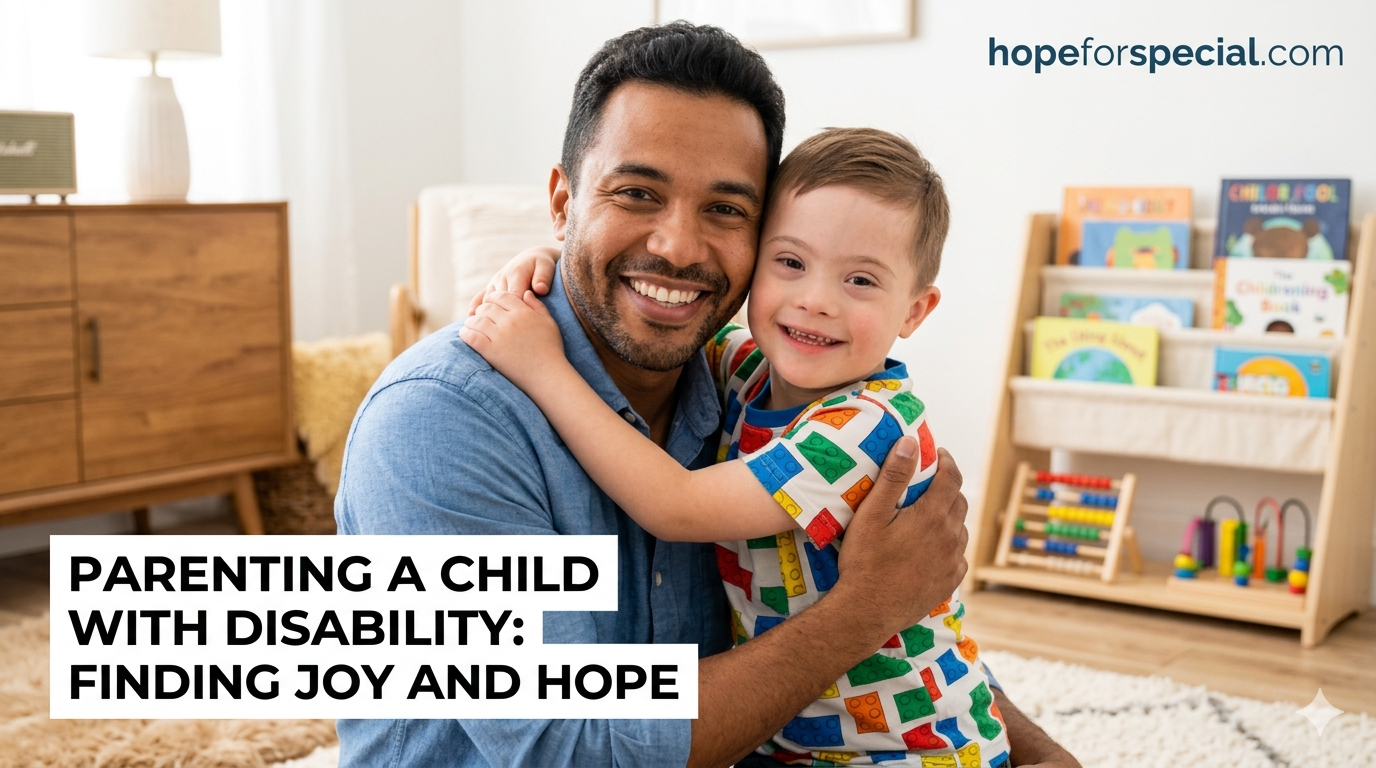
👉 Parenting a Child with Disability: Emotional Strength Guide 2026 | Build Confidence & Joy
Parenting is never easy. But parenting a child with disability brings a unique mix of love, challenges, growth, and deep emotional learning.
You may feel:
- Confused at times
- Emotionally drained
- Worried about the future
👉 Yet, you are also stronger than you think.
This guide will help you understand how to navigate this journey with clarity, confidence, and compassion.

- 🌱 Understanding Parenting a Child with Disability
- 💡 A Real Parent Story (Deep Emotional Insight)
- 📊 Real Statistics About Disability & Parenting
- 🧠 Step-by-Step Guide to Parenting a Child with Disability
- 1. ❤️ Accept First, Then Act
- 2. 📅 Build Structure and Routine
- 3. 🗣️ Strengthen Communication
- 4. 🎯 Focus on Small Wins
- 5. 🤝 Seek Professional Support
- 6. 🧘 Take Care of Yourself Too
- ⚠️ Common Mistakes in Parenting a Child with Disability
- 📈 Weekly Progress Tracking Chart
- 🏡 Practical Daily Tips for Parenting a Child with Disability
- 🌟 Emotional Challenges Parents Face (And Solutions)
- 🧠 Expert Insights Backed by Research
- 💡 What Most Websites Don’t Tell You
- 🧩 Real-Life Example of Progress
- 📣 Voice Search Friendly Answers
- ❓What is parenting a child with disability like?
- ❓How do parents cope with a disabled child?
- ❓Is parenting a child with disability stressful?
- 🌈 Daily Affirmations for Parents
- ❓ FAQs
- How to manage stress while parenting a child with disability?
- How to support learning in children with disabilities at home?
- How to handle behavior issues in disabled children?
- How to build confidence in a child with disability?
- How to create routine for children with disabilities?
- 💙 Final Thoughts
- ✨ Quick Summary
- 📚 Sources
🌱 Understanding Parenting a Child with Disability
Parenting a child with disability means raising a child who may have:
- Physical disabilities
- Developmental delays
- Autism or sensory differences
- Learning disabilities
- Emotional or behavioral challenges
👉 But remember:
Your child is not defined by their condition.
They are defined by:
- Their personality
- Their strengths
- Their potential
💡 A Real Parent Story (Deep Emotional Insight)
Anjali, a mother from India, shares:
“When my son was diagnosed, I felt lost. I kept asking—why us? But slowly, I realized I needed to stop asking ‘why’ and start asking ‘how can I help him grow?’”
She began:
- Learning about his needs
- Building small routines
- Celebrating small wins
Within one year:
- His communication improved
- His behavior became calmer
- Their bond became stronger
👉 This is the heart of parenting a child with disability:
Shift from fear to understanding.
📊 Real Statistics About Disability & Parenting
| Key Insight | Data | Source |
|---|---|---|
| Children living with disabilities globally | ~240 million | https://www.unicef.org/disabilities |
| Parents experiencing high stress | Over 70% | https://www.ncbi.nlm.nih.gov |
| Early intervention improves outcomes | Up to 60% better development | https://www.who.int |
| Inclusive education benefits children | 40–50% improvement | https://nces.ed.gov |
| Autism prevalence | 1 in 36 children | https://www.cdc.gov/autism |
👉 These numbers confirm one truth:
Support and early action make a real difference.
🧠 Step-by-Step Guide to Parenting a Child with Disability
1. ❤️ Accept First, Then Act
Acceptance does not mean giving up.
It means understanding reality and moving forward.
What acceptance looks like:
- No comparison with other children
- No guilt or blame
- Focus on growth, not perfection
👉 Acceptance creates emotional safety.
2. 📅 Build Structure and Routine
Children feel safe in predictable environments.
Example Daily Routine:
| Time | Activity |
|---|---|
| Morning | Wake up + hygiene |
| Midday | Learning / therapy |
| Afternoon | Rest + play |
| Evening | Family time |
| Night | Calm bedtime routine |
👉 Routine reduces anxiety and improves behavior.
3. 🗣️ Strengthen Communication
Communication is the foundation of connection.
Even if your child is non-verbal, try:
- Visual cards
- Gestures
- Simple language
- Assistive communication tools
👉 Better communication = fewer frustrations.

4. 🎯 Focus on Small Wins
Big goals can feel overwhelming.
Instead:
- Celebrate small progress
- Track improvements weekly
- Encourage effort, not perfection
👉 Small wins build confidence—for both child and parent.
5. 🤝 Seek Professional Support
You don’t have to do everything alone.
Experts who can help:
- Speech therapists
- Occupational therapists
- Special educators
- Pediatric specialists
👉 Professional guidance accelerates development.
6. 🧘 Take Care of Yourself Too
This is often ignored.
But your mental health matters.
Simple self-care ideas:
- Take short breaks
- Talk to support groups
- Practice breathing exercises
👉 A calm parent creates a calm environment.
⚠️ Common Mistakes in Parenting a Child with Disability
| Mistake | Better Approach |
|---|---|
| Comparing with other kids | Track your child’s progress |
| Forcing learning | Make it playful |
| Ignoring emotions | Focus on connection |
| Overprotecting | Encourage independence |
| Expecting quick results | Be patient and consistent |
📈 Weekly Progress Tracking Chart
| Skill Area | Week 1 | Week 2 | Week 3 |
|---|---|---|---|
| Communication | Low | Medium | Improved |
| Social Interaction | Minimal | Better | Stable |
| Behavior | Frequent issues | Reduced | Controlled |
👉 Tracking helps you see real progress.
🏡 Practical Daily Tips for Parenting a Child with Disability
- Use simple instructions
- Keep routines consistent
- Reduce noise and distractions
- Encourage sensory play
- Give choices instead of commands
👉 Example:
Instead of saying “Do this now,”
Say: “Do you want to do this first or later?”
🌟 Emotional Challenges Parents Face (And Solutions)
💔 Challenge: Feeling Guilty
👉 Solution: Focus on what you can do today.
😞 Challenge: Feeling Isolated
👉 Solution: Join support groups or online communities.
😰 Challenge: Fear of Future
👉 Solution: Plan step by step, not all at once.
🧠 Expert Insights Backed by Research
Research consistently shows:
- Early intervention improves brain development
- Parent involvement boosts therapy success
- Structured environments reduce behavioral challenges
👉 This means:
You are the most important support system for your child.
💡 What Most Websites Don’t Tell You
1. Progress Is Not Linear
Some days will be harder than others.
2. Emotional Connection Matters More Than Techniques
Children learn better when they feel safe.
3. You Will Grow Too
Parenting a child with disability transforms you.
🧩 Real-Life Example of Progress
A child with speech delay:
Before:
- No communication
- Frequent meltdowns
After 6 months:
- Uses gestures
- Reduced frustration
- Better bonding
👉 Consistency created change—not perfection.
📣 Voice Search Friendly Answers
❓What is parenting a child with disability like?
It is a journey of patience, learning, and emotional growth. It requires understanding, structure, and consistent support.
❓How do parents cope with a disabled child?
Parents cope by building routines, seeking support, and focusing on small progress.
❓Is parenting a child with disability stressful?
Yes, but with the right strategies and support, it becomes manageable and meaningful.
🌈 Daily Affirmations for Parents
- “I am doing my best.”
- “My child is unique and valuable.”
- “Progress matters more than perfection.”
❓ FAQs
How to manage stress while parenting a child with disability?
Take breaks, seek support, and focus on small achievements.
How to support learning in children with disabilities at home?
Use simple activities, visual aids, and consistent routines.
How to handle behavior issues in disabled children?
Stay calm, identify triggers, and use positive reinforcement.
How to build confidence in a child with disability?
Encourage effort, celebrate small wins, and avoid comparisons.
How to create routine for children with disabilities?
Keep schedules simple, consistent, and predictable.
💙 Final Thoughts
Parenting a child with disability is not about being perfect.
It is about:
- Showing up every day
- Learning continuously
- Loving unconditionally
👉 Your child does not need a perfect parent.
They need you—present, patient, and strong.
✨ Quick Summary
- Accept your child
- Build routines
- Focus on communication
- Celebrate small wins
- Take care of yourself
📚 Sources
- WHO Disability Info: https://www.who.int/health-topics/disability
- UNICEF Parenting Support: https://www.unicef.org/parenting
- CDC Developmental Milestones: https://www.cdc.gov/ncbddd/childdevelopment


