

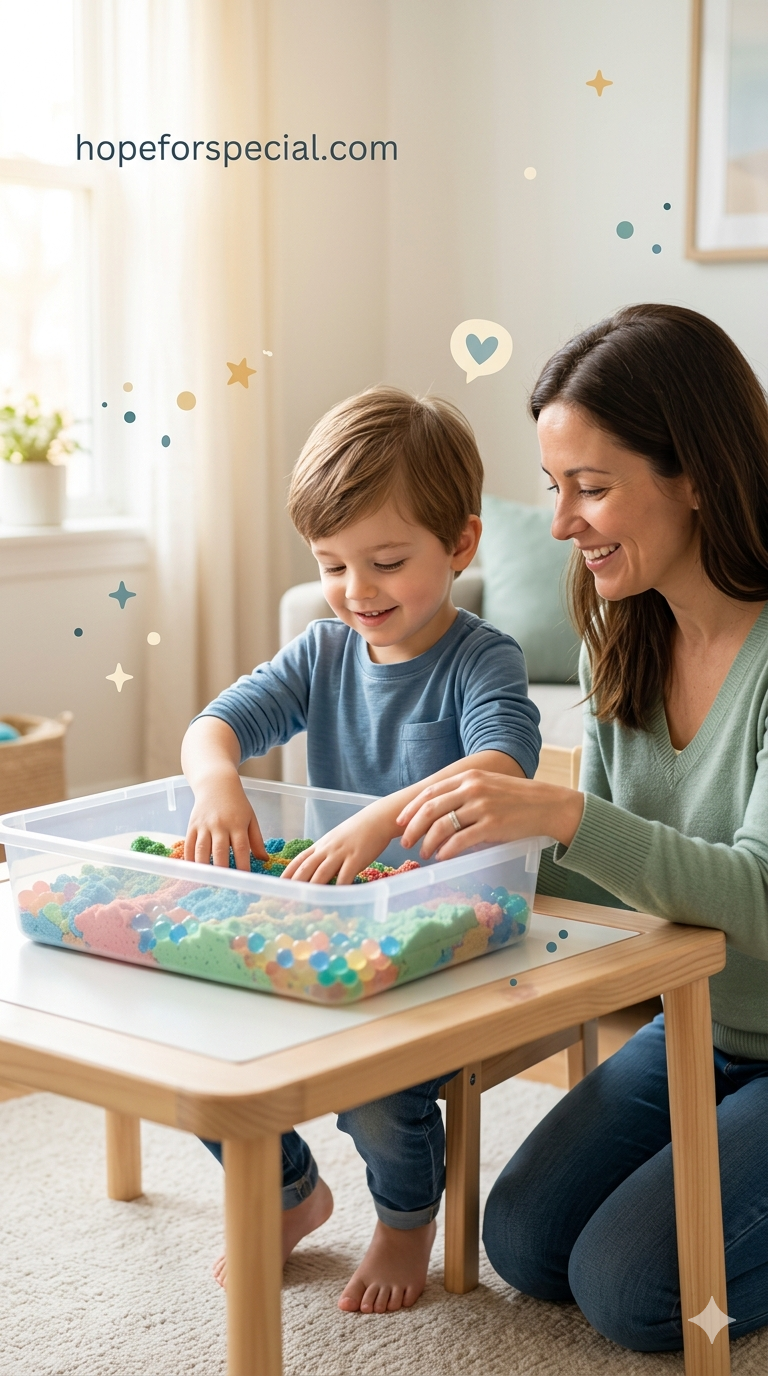
Sensory Activities for Autism at Home: Calm & Joy Guide 2026 | Boost Focus & Happiness
If you are searching for sensory activities for autism at home, you are likely looking for ways to:
- Reduce meltdowns
- Improve focus
- Help your child feel calm and happy
👉 The good news:
You don’t need expensive therapy tools.
You can create powerful sensory experiences at home.
This guide will give you simple, research-backed, and practical ideas that actually work.

- 🌱 What Are Sensory Activities for Autism at Home?
- 💡 A Real Parent Story (What Truly Works)
- 📊 Real Statistics on Autism & Sensory Needs
- 🧠 Types of Sensory Activities for Autism at Home
- 1. 👋 Tactile (Touch-Based Activities)
- 2. 🏃 Movement (Vestibular Activities)
- 3. 💪 Deep Pressure Activities
- 4. 👂 Auditory Activities
- 5. 👀 Visual Activities
- Sensory Activity Planner (Weekly)
- 🏡 15 Easy Sensory Activities for Autism at Home
- 🎨 1. DIY Sensory Bin
- 💧 2. Water Pouring Game
- 🧽 3. Sponge Squeezing
- 🛏️ 4. Pillow Crash Game
- 🖐️ 5. Playdough Fun
- 🎧 6. Calm Music Time
- 🫧 7. Bubble Play
- 🧊 8. Ice Play
- 🏃 9. Jumping Activity
- 🧺 10. Laundry Sorting
- 🖌️ 11. Finger Painting
- 🪀 12. Fidget Toys
- 🛋️ 13. Blanket Burrito
- 🕯️ 14. Dim Light Corner
- 🌿 15. Nature Walk
- 📈 Weekly Sensory Progress Chart
- ⚠️ Common Mistakes Parents Make
- 🧘 How Sensory Activities Reduce Meltdowns
- 🌟 Deep Insights
- 🧩 Real-Life Transformation Example
- 📣 Voice Search Answers
- ❓What are sensory activities for autism at home?
- ❓Do sensory activities really help autism?
- ❓How often should sensory activities be done?
- 🌈 Daily Routine Example
- 📊 Sensory Benefits Comparison Chart
- 📚 Sources
- ❓Sensory Activities for Autism at Home FAQs
- What are the best sensory activities for autism at home?
- How do sensory activities help autistic children?
- Can sensory play reduce autism symptoms?
- How to create sensory routine at home?
- Are sensory activities safe?
- 💙 Final Thoughts
- ✨ Quick Summary
🌱 What Are Sensory Activities for Autism at Home?
Children with autism often process sensory input differently.
They may be:
- Over-sensitive (sound, touch, light)
- Under-sensitive (seeking movement or pressure)
👉 Sensory activities for autism at home help regulate these responses.
They improve:
- Emotional control
- Attention span
- Daily behavior
💡 A Real Parent Story (What Truly Works)
Rahul, a father of a 5-year-old autistic child, shared:
“My son used to have daily meltdowns. We thought something was wrong with him. But later, we realized he was overwhelmed.”
They introduced:
- A sensory bin
- Quiet time corner
- Deep pressure activities
Within weeks:
- Meltdowns reduced
- Sleep improved
- Communication increased
👉 This is the power of sensory activities for autism at home.
📊 Real Statistics on Autism & Sensory Needs
| Insight | Data | Source |
|---|---|---|
| Autism prevalence | 1 in 36 children | https://www.cdc.gov/autism |
| Children with sensory processing issues in autism | ~90% | https://www.ncbi.nlm.nih.gov |
| Early sensory therapy improvement rate | Up to 60% | https://www.who.int |
| Sensory integration improves behavior | 40–50% | https://www.autismspeaks.org |
| Parents reporting reduced meltdowns with sensory routines | 65%+ | https://www.unicef.org |
👉 These numbers highlight why sensory activities for autism at home are essential.
🧠 Types of Sensory Activities for Autism at Home
1. 👋 Tactile (Touch-Based Activities)
These help children who seek or avoid touch.
Examples:
- Sensory bins (rice, beans, sand)
- Playdough or clay
- Water play
👉 Helps with calmness and focus.
2. 🏃 Movement (Vestibular Activities)
For children who love movement.
Examples:
- Swinging
- Jumping on mattress
- Spinning games
👉 Helps regulate energy levels.
3. 💪 Deep Pressure Activities
These provide calming input.
Examples:
- Weighted blankets
- Tight hugs
- Pillow squeezing
👉 Reduces anxiety and improves sleep.
4. 👂 Auditory Activities
For sound sensitivity.
Examples:
- Soft music
- Nature sounds
- Noise-canceling headphones
👉 Helps reduce overwhelm.
5. 👀 Visual Activities
For visual stimulation or calming.
Examples:
- Lava lamps
- Bubble tubes
- Light patterns
👉 Helps attention and relaxation.
Sensory Activity Planner (Weekly)
Download your activity planner here with ready-to-use ideas for each day of the week.
🏡 15 Easy Sensory Activities for Autism at Home
🎨 1. DIY Sensory Bin
Fill a box with rice or beans and add small toys.
💧 2. Water Pouring Game
Let your child pour water between cups.
🧽 3. Sponge Squeezing
Great for hand strength and calming.
🛏️ 4. Pillow Crash Game
Jump and crash into pillows safely.
🖐️ 5. Playdough Fun
Encourages creativity and touch tolerance.
🎧 6. Calm Music Time
Use soft instrumental sounds.
🫧 7. Bubble Play
Visual + tactile engagement.
🧊 8. Ice Play
Let child touch and explore ice cubes.
🏃 9. Jumping Activity
Jumping helps release energy.
🧺 10. Laundry Sorting
Simple task with sensory input.
🖌️ 11. Finger Painting
Messy but highly effective.
🪀 12. Fidget Toys
Keeps hands engaged.
🛋️ 13. Blanket Burrito
Wrap child gently in blanket.
🕯️ 14. Dim Light Corner
Create calm space with soft lighting.
🌿 15. Nature Walk
Outdoor sensory experience.
📈 Weekly Sensory Progress Chart
| Skill Area | Week 1 | Week 2 | Week 3 |
|---|---|---|---|
| Calmness | Low | Medium | Improved |
| Focus | Minimal | Better | Stable |
| Behavior | Frequent meltdowns | Reduced | Controlled |
👉 Track progress to see real changes.
⚠️ Common Mistakes Parents Make
| Mistake | Better Approach |
|---|---|
| Doing too many activities | Keep it simple |
| Forcing participation | Follow child’s interest |
| Ignoring sensory triggers | Observe and adapt |
| Expecting quick results | Be consistent |
🧘 How Sensory Activities Reduce Meltdowns
👉 Sensory overload causes stress.
Sensory activities:
- Calm the nervous system
- Provide controlled stimulation
- Improve emotional regulation

🌟 Deep Insights
1. Every Child Is Different
No one activity fits all.
2. Timing Matters
Use activities before meltdown, not after.
3. Environment Is Key
Calm space = better results.
🧩 Real-Life Transformation Example
Before:
- Daily meltdowns
- Poor sleep
- Low focus
After 2 months:
- Better emotional control
- Improved sleep
- Increased engagement
👉 Consistency created change.
📣 Voice Search Answers
❓What are sensory activities for autism at home?
They are simple activities that help regulate a child’s sensory system using touch, movement, sound, or visuals.
❓Do sensory activities really help autism?
Yes. They reduce stress, improve focus, and support emotional regulation.
❓How often should sensory activities be done?
Daily routines with short sessions work best.
🌈 Daily Routine Example
| Time | Activity |
|---|---|
| Morning | Movement activity |
| Afternoon | Tactile play |
| Evening | Calm sensory activity |
📊 Sensory Benefits Comparison Chart
| Without Activities | With Activities |
|---|---|
| Frequent meltdowns | Reduced meltdowns |
| Low focus | Improved attention |
| High anxiety | Calm behavior |
| Poor sleep | Better sleep |
📚 Sources
- CDC Autism Info: https://www.cdc.gov/autism
- Autism Speaks Sensory Guide: https://www.autismspeaks.org
- WHO Child Development: https://www.who.int
❓Sensory Activities for Autism at Home FAQs
What are the best sensory activities for autism at home?
Simple activities like sensory bins, jumping, and deep pressure exercises work best.
How do sensory activities help autistic children?
They regulate sensory input, reduce stress, and improve focus.
Can sensory play reduce autism symptoms?
It does not cure autism but improves behavior and daily functioning.
How to create sensory routine at home?
Use 2–3 activities daily and keep timing consistent.
Are sensory activities safe?
Yes, if supervised and adapted to the child’s needs.
💙 Final Thoughts
Sensory activities for autism at home are not just play.
They are:
- Therapy
- Communication
- Emotional support
👉 You don’t need perfection.
You need consistency and understanding.
✨ Quick Summary
- Use simple sensory activities daily
- Follow your child’s needs
- Track progress
- Stay consistent
💙 Small actions create big change.


