

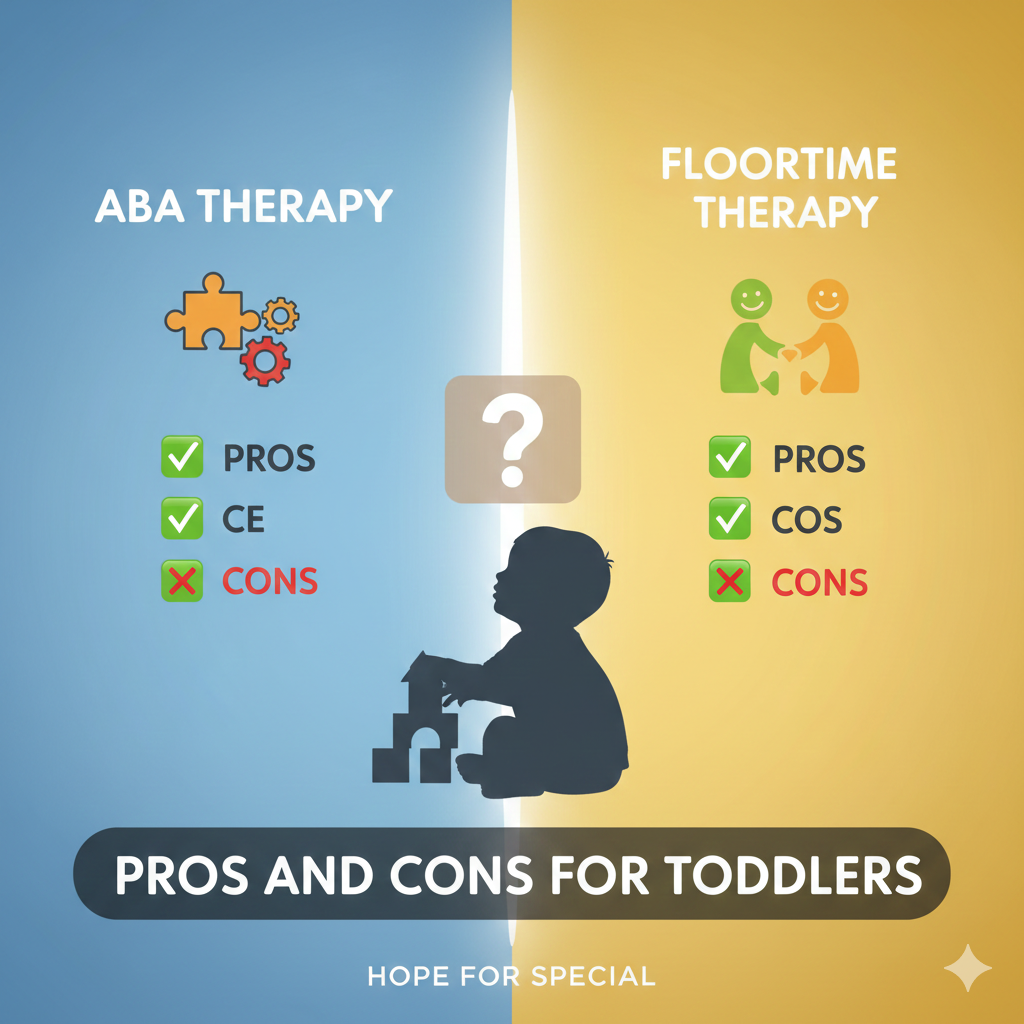
🧠 ABA Therapy vs Floortime Therapy: Which Is Better for Your Child? (2026 Guide)
This guide will help you clearly understand ABA therapy vs Floortime therapy, so you can make the right choice for your child.
When your child is diagnosed with autism, one big question comes up:
👉 Which therapy is better—ABA or Floortime?
This decision can feel overwhelming.
You may hear:
- Conflicting advice
- Different opinions
- Confusing terms
In my experience working with parents, one thing becomes clear:
There is no “one-size-fits-all” answer.
Both therapies can help—but in different ways.

- 🧩 What Is ABA Therapy?
- 🧩 What Is Floortime Therapy?
- 🧠 Deep Insight
- 🏠 Real Parent Experience
- ⚖️ ABA Therapy vs Floortime: Key Differences
- 📊 Comparison Table
- 🧠 Benefits of ABA Therapy
- 🧠 Benefits of Floortime Therapy
- ⚠️ Limitations of Each Therapy
- 🧠 Which Therapy Is Better?
- 🧠 Can You Combine ABA and Floortime?
- 🧠 Role of Parents
- 🏫 Role of Therapists and Schools
- 📱 Technology in Therapy (2026)
- 📊 Daily Routine Example
- 🤖 Voice Search Section
- ❤️ Final Thoughts
- ❓ ABA Therapy vs Floortime FAQs
- 1. What is ABA therapy vs Floortime therapy?
- 2. Which therapy is better for autism?
- 3. Can ABA and Floortime be combined?
- 4. Is ABA therapy effective?
- 5. Is Floortime therapy effective?
- 6. Which therapy is more structured?
- 7. Which therapy focuses on emotions?
- 8. How do I choose the right therapy?
- 9. Can therapy be done at home?
- 10. What is the goal of autism therapy?
- 🌐 Sources
🧩 What Is ABA Therapy?
Applied Behavior Analysis (ABA) is a structured therapy.
👉 It focuses on:
- Improving behavior
- Teaching skills
- Reducing harmful actions
According to the
Centers for Disease Control and Prevention (CDC)
https://www.cdc.gov/autism/treatment/index.html
ABA is one of the most widely used therapies for autism.

🛠️ How ABA Works
- Breaks tasks into small steps
- Uses rewards to encourage behavior
- Tracks progress
👉 Example: Teaching a child to say “hello” step-by-step.
🧩 What Is Floortime Therapy?
Floortime (DIR/Floortime) is a relationship-based approach.
👉 It focuses on:
- Emotional connection
- Play-based learning
- Child-led interaction
Developed by Stanley Greenspan
More info:
https://www.icdl.com/dir-floortime
🛠️ How Floortime Works
- Follow the child’s interests
- Join their play
- Build emotional connection
👉 Example: Playing with toys the child chooses and expanding interaction.
🧠 Deep Insight
Many articles compare features.
But they miss this key truth:
👉 The best therapy depends on your child’s personality, not just diagnosis
Some children need:
- Structure and repetition (ABA)
Others need:
- Emotional connection and flexibility (Floortime)
👉 Matching therapy to the child is critical.
🏠 Real Parent Experience
A parent shared:
“ABA helped my child learn basic skills. Floortime helped him connect with us emotionally.”
👉 This shows both therapies can complement each other.
⚖️ ABA Therapy vs Floortime: Key Differences
📊 Comparison Table
| Feature | ABA Therapy | Floortime Therapy |
|---|---|---|
| Approach | Structured | Child-led |
| Focus | Behavior | Emotional growth |
| Method | Rewards | Play |
| Role of child | Follows instructions | Leads interaction |
| Flexibility | Low | High |
| Evidence | Strong research | Growing support |
🧠 Benefits of ABA Therapy
✅ Skill Development
- Communication
- Daily living skills
✅ Behavior Improvement
- Reduces harmful behaviors
- Encourages positive actions
✅ Structured Learning
- Clear goals
- Measurable progress
👉 Strong evidence supports ABA effectiveness.
https://www.cdc.gov/autism/treatment/index.html
🧠 Benefits of Floortime Therapy
✅ Emotional Connection
- Builds relationships
- Encourages bonding
✅ Natural Learning
- Learning through play
- Child-driven interaction
✅ Flexibility
- Adapts to child’s needs
👉 Supports emotional and social growth.
https://www.icdl.com/dir-floortime
⚠️ Limitations of Each Therapy
❌ ABA Therapy
- Can feel repetitive
- May not focus enough on emotions
❌ Floortime Therapy
- Less structured
- Progress may be slower
🧠 Which Therapy Is Better?
There is no single answer.
👉 It depends on:
- Child’s needs
- Development level
- Personality
📊 Decision Guide
| Child Needs | Best Option |
|---|---|
| Structure | ABA |
| Emotional bonding | Floortime |
| Behavior issues | ABA |
| Social interaction | Floortime |
🧠 Can You Combine ABA and Floortime?
Yes—and often this works best.
👉 Combination approach:
- Use ABA for skill-building
- Use Floortime for emotional growth
👉 This balanced method is often most effective.
🧠 Role of Parents
Parents play a major role.
You can:
- Practice therapy at home
- Stay consistent
- Observe what works
👉 Parent involvement improves results.
🏫 Role of Therapists and Schools
Professionals help:
- Design therapy plans
- Monitor progress
- Adjust strategies
👉 Collaboration is key.
📱 Technology in Therapy (2026)
Modern tools include:
- AI-based learning apps
- Communication tools
- Visual schedule apps
👉 These support both ABA and Floortime.
📊 Daily Routine Example
| Time | Activity | Therapy Type |
|---|---|---|
| Morning | Structured learning | ABA |
| Afternoon | Play interaction | Floortime |
| Evening | Family bonding | Floortime |
The 2026 “Hybrid” Secret: Why Choose? 💡
One thing many websites miss is that you don’t always have to choose. In 2026, the trend in pediatric care is the Hybrid Model.
Many families use ABA for “Safety and Skills” (e.g., toilet training, reducing self-injury) while using Floortime for “Relationship and Joy” (e.g., learning to play together at home).
A Mom’s Story: “When my son Leo was 3, we felt trapped by the pros and cons of ABA therapy vs Floortime for toddlers. We chose 15 hours of play-based ABA and did ‘Floortime’ sessions ourselves every evening. The ABA gave him the words, but Floortime gave him the desire to use them with me.” — Sarah, Hope for Special Community Member.
🤖 Voice Search Section
What is the difference between ABA and Floortime therapy?
ABA focuses on behavior and structured learning, while Floortime focuses on emotional connection and play-based interaction.
Which therapy is better for autism?
It depends on the child. Some benefit more from ABA, while others respond better to Floortime.
Can ABA and Floortime be used together?
Yes, combining both can provide balanced development.
❤️ Final Thoughts
Choosing between ABA and Floortime is not easy.
But remember:
👉 There is no perfect therapy
👉 There is only the right therapy for your child
Focus on:
- Progress
- Comfort
- Connection
👉 Your child’s growth matters most.
❓ ABA Therapy vs Floortime FAQs
1. What is ABA therapy vs Floortime therapy?
ABA is a structured therapy focused on behavior, while Floortime is a play-based therapy focused on emotional connection.
2. Which therapy is better for autism?
It depends on the child’s needs. Some children benefit more from ABA, while others do better with Floortime.
3. Can ABA and Floortime be combined?
Yes. Many experts recommend combining both for better results.
4. Is ABA therapy effective?
Yes. It is one of the most evidence-based autism treatments.
5. Is Floortime therapy effective?
Yes. It helps improve emotional and social development.
6. Which therapy is more structured?
ABA therapy is more structured than Floortime.
7. Which therapy focuses on emotions?
Floortime focuses more on emotional connection.
8. How do I choose the right therapy?
Consult professionals and observe your child’s response.
9. Can therapy be done at home?
Yes. Both therapies can be practiced at home with guidance.
10. What is the goal of autism therapy?
To improve communication, behavior, and independence.
🌐 Sources
- https://www.cdc.gov/autism/treatment/index.html
- https://www.icdl.com/dir-floortime
- https://www.autismspeaks.org/applied-behavior-analysis
- https://www.childmind.org/article/dir-floortime-therapy/
👉 These provide expert-backed insights.


