

🦽Locomotor Disability: Types, Causes, Symptoms & Complete Support Guide (2026)
Imagine not being able to walk freely, climb stairs, or even hold objects easily. For many individuals, this is a daily reality. Locomotor disability affects how a person moves. It can impact independence, education, and daily life.
But here’s what many people miss:
👉 Locomotor disability is not just about physical limitations.
👉 It is also about accessibility, support, and inclusion.
In my experience working with families, the biggest change comes when people shift from “What is wrong?” to “What support is needed?”
“Real-Life Insight: A Meeting with Sam”
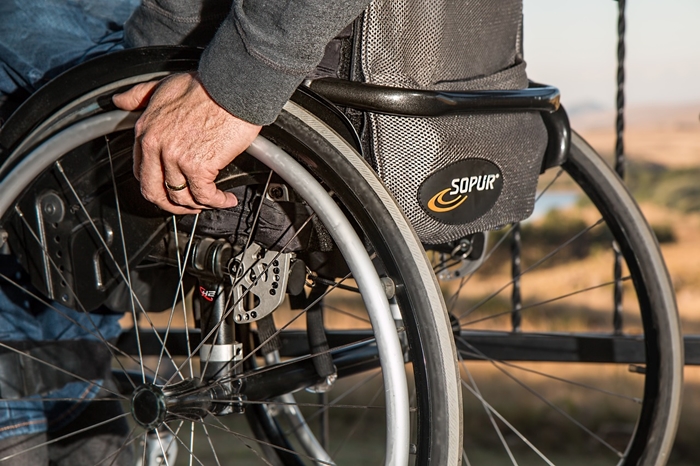
I still remember the day when I first met Sam (name changed for privacy). We were at a weekend community-meetup and Sam rolled into the circle smiling broadly, arms spread as if to say, “I’m right here!” At first glance, you’d notice the wheels of his wheelchair, but what stuck with me more was his genuine warmth and eagerness to join in.Sam was born with a congenital condition affecting his lower limbs. Over the years, he’s learned to use specially designed assistive equipment, modified vehicles, and an adapted workspace to lead his daily life with autonomy.
During our conversation over chai, Sam told me how people would often stare or ask, “What happened?” rather than “How are you?” — and how that shift in language made all the difference for him.
He said: “For me, locomotor disability is not just about how I move — it’s about how the world moves with me.” He highlighted how knowing whether a disability is neuromuscular (like muscular dystrophy), orthopaedic (like limb amputation) or neurological (like spinal cord injury) helps him explain his needs clearly:
“When I say I’m managing a locomotor disability of the orthopaedic type, people finally understand the kind of support I need — ramps, hand-rails, accessible washrooms — rather than generic pity.”
That day, I realised how our language and awareness around locomotor disabilities shapes everyday inclusion. When we recognise the type — and more importantly, the person behind it — we open pathways to dignity, respect and accessibility.
Sam’s story reminds us: “Understanding locomotor disability” isn’t only about medical categorisation — it’s about connecting, supporting, and ensuring everyone can move through life with choice and confidence.
- 🧩 What Is Locomotor Disability?
- 📊 Quick Facts
- 🧠 Types of Locomotor Disability
- 1. 🦴 Musculoskeletal Disabilities
- 2. 🧠 Neurological Disabilities
- 3. 🧬 Congenital Disabilities
- 4. 🚑 Acquired Disabilities
- 📊 Types Summary Table
- 📐 What Is Locomotor Disability Percentage? How Is It Assessed?
- What Does the Disability Percentage Mean?
- What Is “Benchmark Disability” in Simple Words?
- Disability Percentage and What It Unlocks
- How Is the Percentage Calculated?
- Examples of Disability Percentage by Condition
- Where to Get Your Child Assessed
- 📄 Disability Certificate and UDID Card — Everything Parents Need to Know
- What Is the UDID Card?
- Who Is Eligible for a Disability Certificate?
- Documents Required to Apply
- How to Apply — Step by Step
- How Long Is the Certificate Valid?
- What Benefits Does the Certificate Unlock?
- 🏛️ Government Schemes and Benefits for Locomotor Disability in India
- 1. ADIP Scheme — Assistive Device Support
- 2. IGNDPS — Monthly Disability Pension
- 3. National Scholarship for Students with Disabilities
- 4. NHFDC — Loans for Economic Independence
- 5. Free Education (6–18 Years)
- Quick Reference: Government Benefits at a Glance
- 🏫 How Locomotor Disability Affects Children at School — And What Parents Can Do
- Physical Challenges at School
- The Hidden Mental Load of Moving
- What the School Is Required to Provide
- Practical Tips for Parents: Supporting Your Child at School
- ❤️🩹 Mental Health and the Emotional Impact of Locomotor Disability
- How Locomotor Disability Can Affect a Child’s Mental Health
- How Locomotor Disability Affects Parents and Caregivers
- Simple Ways to Support Your Child’s Emotional Wellbeing
- When to Seek Professional Mental Health Support for Your Child
- 🏠 Creating an Accessible Home Environment — A Practical Checklist for Parents
- 🔍 Symptoms
- 🧠 Causes of Locomotor Disability
- 🏠 Real-Life Experience
- 🛠️ Treatment and Support
- 📱 Technology Support (2026 Update)
- ⚠️ Challenges Faced
- 🤖 Voice Search Section
- ❤️ Final Thoughts
- ❓ FAQs
- 1. What is locomotor disability in simple terms?
- 2. What are the main types of locomotor disability?
- 3. What causes locomotor disability?
- 4. Can locomotor disability be cured?
- 5. What are common symptoms?
- 6. Is locomotor disability permanent?
- 7. How can parents help a child?
- 8. What challenges do people face?
- 9. What treatment works best?
- 10. Can people live independently?
🧩 What Is Locomotor Disability?
Locomotor disability refers to a condition that affects movement due to problems in:
- Bones
- Joints
- Muscles
- Nervous system

According to
👉 https://www.lawinsider.com/dictionary/locomotor-disability
it is a disability that restricts limb movement due to issues in bones, joints, or muscles. (Law Insider)
👉 In simple words:
It means difficulty in moving from one place to another.

📊 Quick Facts
| Fact | Details | Source |
|---|---|---|
| Affects movement | Bones, muscles, nerves | https://www.lawinsider.com |
| Includes many conditions | CP, paralysis, amputation | https://www.nurturers.in |
| Can be congenital or acquired | Birth or later life | https://www.aaziban.com |
| Impacts daily life | Mobility & independence | https://teachers.institute |
👉 Locomotor disability is one of the most common physical disabilities worldwide. (What nature can’t, Nurture will!)
Expert Insights
“Major types of locomotor disability include spinal-cord injury, polio and post-polio paralysis, congenital deformities, muscular dystrophy, cerebral palsy and amputations. Early diagnosis, aids & appliances, and inclusive environments are critical to maintain mobility and participation.” — Nurturers blog (2025) What nature can’t, Nurture will!+1
Statistics Table: Key Data
The following figures provide a snapshot of the prevalence, risk-factors and scope of locomotor disability in India.”
Bar Charts


🧠 Types of Locomotor Disability
Locomotor disability is not one condition. It includes many types.
1. 🦴 Musculoskeletal Disabilities
These affect bones, joints, and muscles.
Examples:
- Arthritis
- Muscular dystrophy
- Bone deformities
- Fractures
👉 These conditions limit movement and flexibility.
2. 🧠 Neurological Disabilities
These affect the brain and nervous system.
Examples:
- Cerebral palsy
- Multiple sclerosis
- Parkinson’s disease
👉 These conditions affect coordination and muscle control. (What nature can’t, Nurture will!)
3. 🧬 Congenital Disabilities
These are present at birth.
Examples:
- Spina bifida
- Dwarfism
- Clubfoot
👉 These affect physical development from early life. (What nature can’t, Nurture will!)
4. 🚑 Acquired Disabilities
These develop later in life.
Examples:
- Accidents
- Spinal cord injury
- Stroke
- Amputation
👉 These are often caused by trauma or illness. (Aaziban)

📊 Types Summary Table
| Type | Cause | Examples | Impact |
|---|---|---|---|
| Musculoskeletal | Bones & joints | Arthritis, fractures | Reduced mobility |
| Neurological | Brain/nerves | Cerebral palsy | Poor coordination |
| Congenital | Birth defects | Spina bifida | Developmental issues |
| Acquired | Injury/disease | Paralysis, amputation | Loss of function |
📐 What Is Locomotor Disability Percentage? How Is It Assessed?
One of the most important — but least explained — aspects of locomotor disability is the disability percentage. If you or your child has been evaluated by a doctor, you may have been told a number like “40% locomotor disability.” But what does that actually mean, and why does it matter so much?
Let us break it down in the simplest way possible.
What Does the Disability Percentage Mean?
The locomotor disability percentage is a number that reflects how much a person’s physical movement is impaired in daily life. It is not just a medical measurement — it is also a legal number that determines what government benefits, reservations, and support a person is eligible to receive.
In simple terms:
- A higher percentage means more severe impairment
- A lower percentage means the condition has less impact on daily functioning
According to India’s Rights of Persons with Disabilities (RPwD) Act, 2016, the key legal threshold is 40% or more, which qualifies a person as having a “Benchmark Disability.” This matters enormously because only those with 40% or above are eligible for the full range of government reservations and benefits. (Teachers Institute)
What Is “Benchmark Disability” in Simple Words?
According to Section 2(r) of the RPwD Act, a “Person with Benchmark Disability” is someone with not less than 40% of a specified disability, certified by a government-authorized medical authority. (WeCapable)
Think of the benchmark disability as a legal gateway. Cross that threshold, and a whole range of protections and benefits become available.
Disability Percentage and What It Unlocks
| Disability Percentage | Classification | Key Benefits Unlocked |
|---|---|---|
| Below 40% | Recognized as person with disability, but NOT benchmark | General non-discrimination protections apply, but reservations do not |
| 40% and above | Benchmark Disability | Reservations in government jobs, education, housing; free education for children; assistive device support |
| 80% and above | Severe / High Support Needs | Additional support and pension schemes may apply |
How Is the Percentage Calculated?
The disability percentage is assessed by an authorized medical board — usually a team of specialist doctors including physiatrists, orthopaedic surgeons, neurologists, or paediatricians depending on the condition.
The assessment looks at factors like:
- Range of motion in affected joints
- Muscle strength and coordination
- Functional impact on daily activities (walking, climbing stairs, using hands)
- Pain levels and fatigue that affect movement
According to a study published in the Indian Journal of Physical Medicine and Rehabilitation, India’s first standardized disability evaluation guidelines were published in 1981, with updated guidelines issued in 2001 and again in 2018 under the RPwD Act — making the system more comprehensive than ever before.
Examples of Disability Percentage by Condition
| Condition / Impairment | Approximate Disability Percentage |
|---|---|
| Below-knee amputation | 60–70% (Nurturers) |
| Above-knee amputation | 70–80% |
| Severe cerebral palsy (non-ambulatory) | 80–100% |
| Moderate cerebral palsy (some walking) | 40–60% |
| Post-polio paralysis (one limb) | 50–70% |
| Severe arthritis limiting daily function | 40–60% |
Note: These are indicative ranges only. Actual percentages must be certified by an authorized medical board.
Where to Get Your Child Assessed
If you believe your child has locomotor disability and needs formal certification, the process starts with your child’s doctor. Assessments are conducted at:
- Government hospitals and medical colleges
- Specialty rehabilitation centers empaneled under the state government
The assessment is free at government facilities, and the resulting Disability Certificate is valid across all of India. (RPwD Act Manual — AIF)
📄 Disability Certificate and UDID Card — Everything Parents Need to Know
If your child has been diagnosed with locomotor disability, one of the most important steps you can take is getting them a Disability Certificate and a UDID (Unique Disability ID) Card.
These two documents are the foundation for accessing almost every government benefit, scheme, scholarship, and reservation available to persons with disabilities in India.
Yet many families do not have them — simply because no one explained how to apply.
Let us fix that right now.
What Is the UDID Card?
The UDID Card is India’s official national disability identity card. It is issued through the Swavlamban Card portal (swavlambancard.gov.in) and serves as proof of your child’s disability across all government departments and states.
According to the UDID portal, the UDID project was created to:
- Build a national database of persons with disabilities
- Eliminate duplicate or fraudulent claims
- Enable transparent delivery of government benefits
- Make it easier for families to access schemes without carrying multiple documents
Important Update (2025): Aadhaar-based e-KYC has been mandatory since June 6, 2025, for all UDID applications and updates. Make sure your child’s Aadhaar is linked before applying. (UDID Portal)
Who Is Eligible for a Disability Certificate?
To be eligible, your child must meet the following criteria:
- Must be an Indian citizen
- Must have one of the 21 recognized categories of disability under the RPwD Act, 2016
Locomotor disability is explicitly listed as one of the 21 recognized disability categories under the RPwD Act, which also includes cerebral palsy, muscular dystrophy, dwarfism, and acid attack victims as sub-categories within the physical disability group. (Teachers Institute)
Documents Required to Apply
Before visiting the hospital or applying online, gather these documents:
| Document | Purpose |
|---|---|
| Aadhaar card of the child (and parent if child is a minor) | Identity and e-KYC verification |
| Recent passport-size photographs | For the certificate and UDID card |
| Proof of residence (utility bill, ration card, or school enrollment) | Address verification |
| Medical reports / diagnosis documents from the treating doctor | To support the disability assessment |
| Birth certificate (for children) | Age verification |
How to Apply — Step by Step
Option 1: Online (Recommended)
- Visit swavlambancard.gov.in
- Click on “Apply for Disability Certificate / UDID Card”
- Fill in the applicant’s personal details
- Upload the required documents
- Select your nearest empaneled government hospital for the medical assessment
- Attend the assessment at the selected hospital
- Once certified, the UDID card is mailed to your address
Option 2: Offline (Through the Hospital)
- Visit your nearest government hospital or district hospital with a PMR (Physical Medicine and Rehabilitation) department
- Submit your documents and request a disability assessment
- The medical board will evaluate and certify the percentage of disability
- The UDID card and certificate are processed through the hospital
How Long Is the Certificate Valid?
| Type of Disability | Certificate Validity |
|---|---|
| Permanent disability (e.g., limb amputation, congenital conditions) | Lifetime — no renewal needed |
| Temporary or progressive disability | Up to 5 years — review required |
What Benefits Does the Certificate Unlock?
Once your child has a valid Disability Certificate and UDID Card, they become eligible for:
- Free education (for children aged 6–18 with benchmark disability) under the RPwD Act
- Reservation in government schools and colleges (5% in higher education)
- Financial assistance for assistive devices (wheelchairs, prosthetics, crutches) through government schemes
- Travel concessions on Indian Railways and state transport
- Disability pension if the family meets income criteria
- Tax benefits for parents/guardians
- Subsidized housing under state government schemes
🏛️ Government Schemes and Benefits for Locomotor Disability in India
Many families with a child who has locomotor disability do not realize how many government schemes are available to them — completely free of charge. These are not charity programs. They are legal rights under the RPwD Act, 2016.
Here is a clear breakdown of the most important schemes, explained simply:
1. ADIP Scheme — Assistive Device Support
Full Name: Assistance to Disabled Persons for Purchase / Fitting of Aids and Appliances
This scheme provides financial assistance for buying assistive devices — including wheelchairs, prosthetics, orthotic devices, crutches, and surgical footwear for persons with locomotor disability.
| Feature | Details |
|---|---|
| Who Can Apply | Indian citizen of any age with a 40% disability certificate; monthly income from all sources ≤ ₹30,000 |
| What It Covers | Full assistance for devices costing up to ₹15,000; partial assistance for devices up to ₹30,000 |
| How to Apply | Through ALIMCO (Artificial Limbs Manufacturing Corporation of India) or registered NGOs |
Source: Psychology Town — Government Schemes for Persons with Disabilities
2. IGNDPS — Monthly Disability Pension
Full Name: Indira Gandhi National Disability Pension Scheme
This scheme provides a monthly pension to severely disabled people living below the poverty line who are unable to work.
- Provides a basic financial safety net for those with severe disability and low income
- Administered by the Ministry of Rural Development
Contact your local Panchayat office or Block Development Office to apply. (Psychology Town)
3. National Scholarship for Students with Disabilities
Students with locomotor disability pursuing graduate or postgraduate education can access a central government scholarship with these eligibility conditions:
- 40% or above disability as per the RPwD Act
- Pursuing a degree or diploma at a recognized institution (including IITs, central universities, national institutes)
- Total annual family income of ₹6 lakh or less
The scholarship is available through the National Scholarship Portal at scholarships.gov.in. (Psychology Town)
4. NHFDC — Loans for Economic Independence
Full Name: National Handicapped Finance and Development Corporation
The NHFDC provides low-interest loans and financial support to help persons with disabilities start businesses, pursue self-employment, and achieve economic independence. This is especially relevant for teenagers and young adults with locomotor disability who are transitioning into adult life.
Contact your state’s Nodal Agency for NHFDC or visit nhfdc.nic.in.
5. Free Education (6–18 Years)
Under the RPwD Act 2016, every child with benchmark disability between the ages of 6 and 18 has the legal right to free education. This is not limited to government schools — it extends to privately managed aided schools as well.
Additionally, under the Right to Education Act, children with disabilities have the right to an inclusive education in a regular school environment. This includes modifications to the classroom, curriculum adaptations, and access to assistive technology. (Teachers Institute — RPwD Act)
Quick Reference: Government Benefits at a Glance
| Benefit | Who It Helps | How to Access |
|---|---|---|
| Free assistive devices (ADIP) | Any age; income ≤ ₹30,000/month | Through ALIMCO or registered NGOs |
| Monthly pension (IGNDPS) | Severely disabled, BPL families | Block Development Office / Panchayat |
| Scholarship (higher education) | Students with 40%+ disability | scholarships.gov.in |
| Business loans (NHFDC) | Adults seeking employment/business | State Nodal Agency for NHFDC |
| Free education (6–18 years) | Children with benchmark disability | Nearest government or aided school |
| Railway and bus concessions | All persons with disability certificate | Show UDID card at booking counter |
| Tax exemptions | Parents/guardians of children with disability | File ITR with disability certificate copy |
🏫 How Locomotor Disability Affects Children at School — And What Parents Can Do
For a child with locomotor disability, going to school involves far more than just learning. It involves navigating a world of physical barriers, social dynamics, and academic demands that most children never have to think about.
Understanding these challenges is the first step to addressing them effectively.
Physical Challenges at School
Children with locomotor disability may face barriers that are invisible to teachers and administrators who have not been trained to notice them. According to research by Teachers Institute, these include:
| Challenge | How It Shows Up in School |
|---|---|
| Inaccessible classrooms | Stairs without ramps, narrow doorways that block wheelchairs |
| Inaccessible toilets | No disabled-friendly washrooms; child avoids drinking water to avoid going |
| Distance between buildings | Long walks between classrooms exhaust children who use mobility aids |
| Furniture not adapted | Standard desks too high or too low for a child in a wheelchair |
| Playground barriers | Steps, rough surfaces, and equipment designed only for able-bodied children |
The Hidden Mental Load of Moving
Here is something that most people — even parents — do not realize. For children with locomotor disability, movement is not automatic.
According to A Day in Our Shoes, things that other children do without thinking — jumping off a curb, running across the playground, climbing stairs — may require real concentration and deliberate planning for a child with locomotor disability.
This extra mental load makes movement slower, harder, and significantly more tiring. It is one of the reasons some children with locomotor disability avoid playground activities — not because they do not want to join in, but because their brain and body are working much harder just to complete movements that come naturally to others.
Understanding this can help parents and teachers respond with patience and practical support, rather than frustration or misplaced concern.
What the School Is Required to Provide
Under both the RPwD Act 2016 and the Right to Education Act, schools must:
- Provide a barrier-free physical environment (ramps, accessible toilets, elevators if needed)
- Make reasonable accommodations in seating, testing, and curriculum delivery
- Consider the child’s need for assistive technology during annual IEP or planning reviews
If the school has not yet put any of these in place for your child, you have the right to raise a formal complaint with the District Education Officer or the State Commissioner for Persons with Disabilities.
Practical Tips for Parents: Supporting Your Child at School
Here are simple, actionable steps you can take right now:
Before the School Year Starts:
- Meet with the class teacher, principal, and school counselor together — not separately
- Request a physical walkthrough of the school to identify and address barriers
- Ask whether the school has a ramp, accessible toilet, and lift (if applicable)
During the School Year:
- Visit the school regularly and observe how your child is managing, not just academically but physically
- Encourage your child to speak up when they face a barrier — and validate that speaking up is the right thing to do
If Your Child Is Falling Behind Academically:
- Request a formal assessment — sometimes academic difficulty is directly linked to physical fatigue, not cognitive ability
- Ask the school to consider flexible seating, shorter homework assignments during high-fatigue periods, or oral instead of written assessments
❤️🩹 Mental Health and the Emotional Impact of Locomotor Disability
When we talk about locomotor disability, we almost always focus on the physical side — the bones, muscles, devices, and therapies. But there is a whole other dimension that we miss entirely: the emotional and mental health impact, both on the child and on the family.
This matters deeply. And it deserves to be talked about openly.
How Locomotor Disability Can Affect a Child’s Mental Health
Children with locomotor disability often face emotional challenges that are invisible to the eye. These can include:
| Emotional Challenge | How It May Show Up |
|---|---|
| Low self-esteem | Feeling “different” or “less capable” than peers; avoiding social situations |
| Anxiety | Fear of falling, being stared at in public, or being unable to keep up with others |
| Frustration and anger | Difficulty expressing the exhaustion and limitations that others cannot see |
| Social withdrawal | Avoiding activities where they cannot fully participate |
| School avoidance | Anxiety about accessibility, bullying, or falling behind academically |
| Grief | In acquired disabilities, grief over loss of previous physical abilities |
Research consistently shows that the social barriers around disability — the stares, the inaccessible spaces, the low expectations — often cause more distress than the physical condition itself. This is exactly the insight Sam shared at the beginning of this article: “My disability is not the problem. The environment is.”
How Locomotor Disability Affects Parents and Caregivers
Parents of children with locomotor disability often carry an enormous emotional burden — one they rarely have space to acknowledge.
Common experiences include:
- Grief and mourning — especially at diagnosis or when a condition worsens
- Guilt — even when there is nothing the parent could have done differently
- Burnout — from the demands of daily caregiving, therapy appointments, and advocacy
- Isolation — feeling that friends and family do not fully understand
- Fear about the future — education, employment, relationships, and independent living
These are completely normal responses to an extraordinarily challenging situation. Acknowledging them — rather than pushing them aside — is the first step to managing them. (NCBI — Treatment Seeking Patterns in Parents of Children with Locomotor Disability)
Simple Ways to Support Your Child’s Emotional Wellbeing
- Use empowering language — focus on what your child can do, not what they cannot. Words matter enormously to a developing child’s self-image.
- Connect with other families — peer support groups for parents of children with locomotor disability reduce isolation and provide practical wisdom
- Celebrate non-physical achievements — art, music, storytelling, problem-solving, kindness — abilities that have nothing to do with movement
- Talk openly about the disability — children who grow up knowing they can talk freely about their condition show better emotional resilience than those who feel it is a subject to be avoided
- Seek professional support early — a child psychologist or counselor experienced in disability can be transformative
When to Seek Professional Mental Health Support for Your Child
Consider reaching out to a mental health professional if your child:
- Shows persistent sadness, withdrawal, or loss of interest in activities they previously enjoyed
- Expresses hopelessness about their future
- Becomes increasingly aggressive or shows sudden behavioral changes
- Develops anxiety around going to school or leaving the home
- Talks about feeling like a burden to the family
For parental support, contact organizations like iCall India (icallhelpline.org) or reach out to a counselor through your child’s hospital’s social work department.
🏠 Creating an Accessible Home Environment — A Practical Checklist for Parents
One of the most powerful things you can do for a child with locomotor disability costs nothing and starts immediately: examine your home through their eyes.
Many homes have small barriers that create big daily struggles — a step at the front door, a bathroom without grab bars, furniture arranged in a way that blocks a wheelchair or walker. Removing these barriers significantly improves your child’s independence, safety, and dignity.
Here is a room-by-room checklist:
🚪 Entrances and Movement Around the Home
- Is there a ramp or level entry at the main entrance? (Even a portable ramp helps)
- Are doorways at least 80–90 cm wide to allow wheelchair or walker access?
- Are door handles lever-style (easier to use than round knobs for limited grip strength)?
- Are there no loose rugs or mats that could cause slipping or tripping?
- Is there good lighting in all corridors and stairways?
🛁 Bathroom
- Is there a grab bar beside the toilet?
- Is there a grab bar in the shower or bath area?
- Is there a shower chair or bath seat available?
- Is the floor non-slip, even when wet?
- Can the child reach the sink and taps without needing to stretch uncomfortably?
🛏️ Bedroom
- Is the bed at a height that allows easy transfer in and out, especially for wheelchair users?
- Is frequently used clothing stored where the child can reach it independently?
- Is there space beside the bed for a wheelchair or walker?
- Are light switches accessible from a seated or lower position?
🍽️ Kitchen and Dining Area
- Is the dining table at the right height for the child’s wheelchair or seating device?
- Can the child safely reach water and basic food items without needing to climb or stretch?
- Are frequently used cups, plates, and utensils stored within the child’s reach?
📚 Study / Homework Area
- Is the desk height adjustable or appropriate for the child’s seated position?
- Is the chair providing proper postural support?
- Is the child’s computer or tablet positioned so they do not need to twist or stretch?
💡 Tip: Occupational therapists (OTs) specialize in exactly this kind of home modification planning. A single session with an OT at home can identify changes you may never have noticed — and many government hospitals offer OT consultations free of charge for persons with disabilities.
🔍 Symptoms
Symptoms vary depending on the type.
Common Symptoms:
- Difficulty walking
- Poor balance
- Muscle weakness
- Limited movement
- Pain in joints
👉 Some people may need assistive devices like wheelchairs or crutches.
🧠 Causes of Locomotor Disability
There is no single cause.
1. Genetic Causes
Inherited conditions.
2. Birth Conditions
- Premature birth
- Lack of oxygen
3. Infections
- Polio
- Tuberculosis
4. Injuries
- Road accidents
- Falls
5. Diseases
- Arthritis
- Stroke
👉 These causes affect the body’s movement system. (Aaziban)
🏠 Real-Life Experience
I once met a young adult who used a wheelchair after a spinal injury.
What stood out was not the disability—but the barriers:
- No ramps
- No accessible toilets
- Limited transport
He said:
“My disability is not the problem. The environment is.”
🩺 How Is Locomotor Disability Diagnosed? A Step-by-Step Guide for Parents
If you suspect your child may have locomotor disability — or if your child has already been diagnosed and you want to understand what that process looked like — here is a plain-language walk-through of how diagnosis typically works.
Step 1: First Visit to a Paediatrician or General Physician
Most diagnoses begin with a visit to a general paediatrician or family doctor who notices delays or difficulties in movement. They will observe:
- Whether the child walks, stands, or uses their arms and hands within the expected age range
- Whether muscle tone appears unusually stiff or floppy
- Whether the child shows signs of pain, imbalance, or abnormal gait (walking pattern)
At this stage, the doctor may refer you to a specialist.
Step 2: Specialist Assessment
Depending on the suspected cause, your child may be referred to one or more specialists:
| Specialist | What They Assess |
|---|---|
| Paediatric Orthopaedic Surgeon | Bone, joint, and limb conditions |
| Paediatric Neurologist | Brain and nervous system conditions (e.g., cerebral palsy) |
| Physiatrist (PMR Specialist) | Overall physical function and rehabilitation planning |
| Developmental Paediatrician | Overall developmental delays including motor development |
| Genetic Counselor | For congenital or hereditary conditions like muscular dystrophy |
Step 3: Investigations and Tests
The specialist may order one or more of the following:
- X-rays or MRI scans — to check bones, joints, and spine
- Nerve conduction studies — to assess nerve function
- Genetic testing — for conditions like muscular dystrophy or spina bifida
- Muscle biopsy — in rare cases to confirm muscular conditions
- Standardized motor assessment — to measure muscle strength, coordination, and range of motion
Step 4: Diagnosis and Classification
After gathering all the information, the specialist makes a formal diagnosis and typically explains:
- The type of locomotor disability present
- The likely cause
- The expected progression (whether the condition is stable, improving, or may worsen over time)
- Recommended therapies and interventions
- Whether formal disability certification is appropriate
Step 5: Referral for Disability Certification
If the diagnosis confirms locomotor disability at 40% or above, you will be referred — or you can self-refer — to the authorized medical board at your nearest government hospital for formal disability certification and the UDID card application.
What to Bring to Every Specialist Appointment
- A written log of all the symptoms you have observed (with dates)
- Videos on your phone of the child walking, running, or performing activities that show the challenge — videos are enormously helpful for specialists who only see the child for 20 minutes
- A list of all medications the child is currently taking
- Previous reports from any earlier evaluations
🛠️ Treatment and Support
There is no single treatment.
✅ Medical Treatment
- Surgery
- Medication
✅ Therapy
- Physiotherapy
- Occupational therapy
✅ Assistive Devices
- Wheelchairs
- Prosthetics
- Walkers
👉 Early intervention improves mobility.
📱 Technology Support (2026 Update)
Modern tools include:
- Smart prosthetics
- Mobility apps
- Assistive robotics
👉 Technology is improving independence.
⚠️ Challenges Faced
People may face:
- Limited mobility
- Education barriers
- Employment challenges
👉 According to research, mobility limitations directly affect daily functioning and independence. (Teachers Institute)
🤖 Voice Search Section
What is locomotor disability in simple words?
It is a condition that makes movement difficult due to problems in bones, muscles, or nerves.
What are types of locomotor disability?
The main types are musculoskeletal, neurological, congenital, and acquired disabilities.
Can locomotor disability be treated?
It cannot always be cured, but therapy and support can improve mobility.
❤️ Final Thoughts
Locomotor disability is not a limitation. It is a different way of moving.
With the right support, accessibility, and awareness, individuals can live independent and fulfilling lives.
👉 Focus on ability, not disability.
❓ FAQs
1. What is locomotor disability in simple terms?
Locomotor disability is a condition where a person has difficulty moving due to problems in bones, muscles, or nerves.
It can affect walking, standing, or using hands.
2. What are the main types of locomotor disability?
The main types include:
- Musculoskeletal
- Neurological
- Congenital
- Acquired
Each type affects movement differently.
3. What causes locomotor disability?
Causes include:
- Birth defects
- Injuries
- Diseases
- Infections
Sometimes, the exact cause is unknown.
4. Can locomotor disability be cured?
No, it cannot always be cured.
However, it can be managed with:
- Therapy
- Assistive devices
- Medical treatment
5. What are common symptoms?
Common symptoms include:
- Difficulty walking
- Muscle weakness
- Poor coordination
- Pain
6. Is locomotor disability permanent?
In many cases, it is permanent.
However, treatment can improve quality of life.
7. How can parents help a child?
Parents can help by:
- Encouraging therapy
- Providing support
- Using assistive tools
8. What challenges do people face?
Challenges include:
- Accessibility issues
- Limited independence
9. What treatment works best?
The best treatment includes:
- Physiotherapy
- Occupational therapy
- Assistive devices
10. Can people live independently?
Yes, many people live independently with proper support and tools.


