

👉 Borderline Personality Disorder: The Heartbreaking Truth Every Parent Needs to Know in 2026
⚠️ Important note before reading: This article discusses borderline personality disorder, which involves topics like self-harm and suicidal ideation. If you or someone you love is in crisis, please contact the 988 Suicide & Crisis Lifeline by calling or texting 988, or chat at 988lifeline.org. Help is always available.
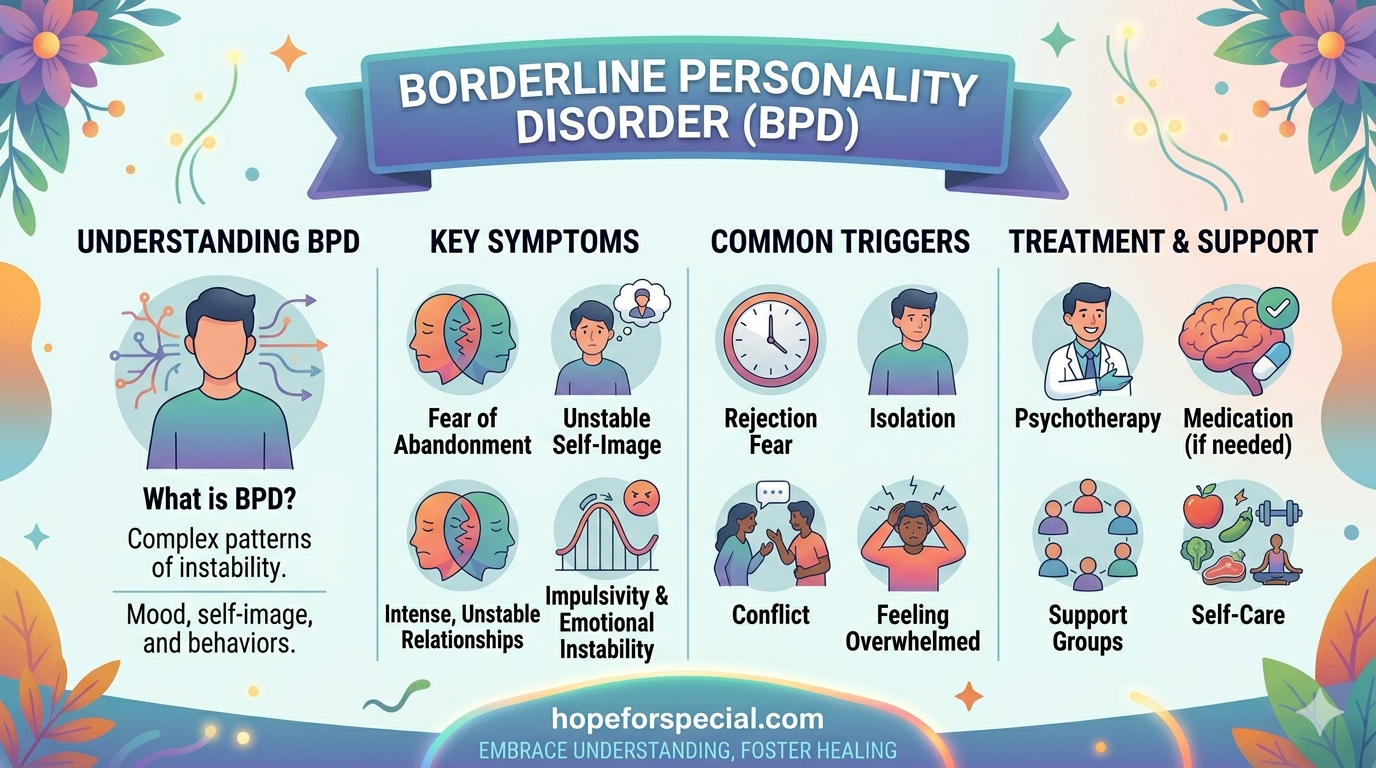
Borderline personality disorder (BPD) is one of the most misunderstood, misdiagnosed, and emotionally painful mental health conditions affecting families today. It is a condition marked by extreme emotional swings, fear of abandonment, unstable relationships, and impulsive behavior. For parents of children with special needs, understanding BPD is not just important — it can be life-changing.
This article gives you everything you need. The real signs. The statistics that matter. The treatments that work. And the honest conversation that most websites are too cautious to have.

- 🧠 What Is Borderline Personality Disorder?
- 📊 Borderline Personality Disorder Statistics: The Numbers That Demand Attention
- 👦👧 Borderline Personality Disorder in Children and Teens: The Conversation No One Is Having
- ❗ Why Borderline Personality Disorder Is So Often Misdiagnosed
- 💙 BPD and the Special Needs Family
- 🩺 How Is Borderline Personality Disorder Diagnosed?
- 💊 Treatment for Borderline Personality Disorder: What Actually Works
- 🟢 Dialectical Behavior Therapy (DBT) — The Gold Standard
- 🟡 Cognitive Behavioral Therapy (CBT)
- 🔵 Mentalization-Based Treatment (MBT)
- 🟠 Schema Therapy
- 💊 Medication
- 👨👩👧 Practical Tips for Parents: How to Support a Child or Teen with BPD
- 🌐 Borderline Personality Disorder and Stigma: The Barrier That Kills
- 💚 Hope and Recovery: Real Outcomes for People with BPD
- ❓ Frequently Asked Questions About Borderline Personality Disorder
- Q: What is borderline personality disorder in simple words?
- Q: Can children be diagnosed with borderline personality disorder?
- Q: What is the best treatment for borderline personality disorder?
- Q: Is borderline personality disorder the same as bipolar disorder?
- Q: What causes borderline personality disorder?
- Q: How do you talk to a child or teen with BPD during a crisis?
- Q: Can someone with BPD be a good parent?
- Q: What should I do if I think my child has borderline personality disorder?
- 📚 Trusted Resources for Borderline Personality Disorder
- 🌟 Conclusion: Borderline Personality Disorder Is Not a Life Sentence
🧠 What Is Borderline Personality Disorder?
Borderline personality disorder is a serious mental health condition. It affects the way a person thinks, feels, and relates to others. People with BPD experience emotions more intensely than most people. Their emotions shift rapidly. And their relationships tend to swing between extreme idealization and extreme disappointment.
Think of it this way. Most people experience emotions like waves — rising and falling gradually. For someone with borderline personality disorder, those waves are more like tsunamis. Fast, overwhelming, and hard to survive without the right tools.
The Diagnostic and Statistical Manual of Mental Disorders (DSM-5) outlines nine criteria for borderline personality disorder, with a diagnosis usually requiring someone to display five or more of these symptoms.
The 9 DSM-5 Criteria for BPD:
| # | Symptom | What It Looks Like in Real Life |
|---|---|---|
| 1 | Frantic efforts to avoid abandonment | Panic when someone is late, clinging, threatening when relationships feel threatened |
| 2 | Unstable, intense relationships | Idolizing someone one day, despising them the next (“splitting”) |
| 3 | Unstable self-image | Not knowing who they are, what they value, or what they want |
| 4 | Impulsive, self-damaging behaviors | Reckless spending, binge eating, substance use, risky sexual behavior |
| 5 | Suicidal behavior or self-harm | Self-cutting, burning, threats — often used to manage emotional pain |
| 6 | Extreme emotional mood swings | Intense sadness, irritability, or anxiety lasting hours to days |
| 7 | Chronic feelings of emptiness | A persistent sense of hollowness or numbness inside |
| 8 | Intense, inappropriate anger | Explosive rage that feels disproportionate to the situation |
| 9 | Dissociation or paranoia under stress | Feeling detached from reality or suspicious of others when stressed |
Not everyone with borderline personality disorder experiences all nine. The condition looks different in every person. This is also why it is so often misdiagnosed.
📊 Borderline Personality Disorder Statistics: The Numbers That Demand Attention
| Statistic | Figure | Source |
|---|---|---|
| U.S. adults diagnosed with BPD | ~4 million (1.6% of adults) | eCare Behavioral Health Institute |
| Possible true U.S. prevalence (underdiagnosed) | Up to 5.9% | eCare Behavioral Health Institute |
| Global BPD prevalence | ~1.8% of the global population | Springer Nature / Palgrave Encyclopedia of Disability, 2026 |
| BPD adults who are parents | 23% to 59% | Springer Nature, 2026 |
| Share of BPD diagnoses that are female | ~75% | eCare Behavioral Health Institute |
| BPD remission rate (over 5 years with treatment) | 50–70% | Wikipedia / peer-reviewed sources |
| Most commonly diagnosed personality disorder | Yes — in clinical populations | American Psychological Association, 2025 |
| Psychotherapy response rate | Less than 50% respond sufficiently to any single method | eCare Behavioral Health Institute |
One statistic deserves special attention. BPD is prevalent in approximately 1.8% of the global population and stems from a complex interplay of genetic, neurobiological, and environmental factors, particularly involving childhood trauma. An estimated 23% to 59% of adults with BPD are parents.
That means millions of children around the world are currently growing up with a parent who has BPD — often without any support or even awareness of what is happening.
👦👧 Borderline Personality Disorder in Children and Teens: The Conversation No One Is Having
Most articles about borderline personality disorder focus on adults. But the reality is that BPD begins much earlier than most people realise.
The onset of BPD symptoms typically occurs during adolescence or early adulthood, with possible early signs in childhood. Predictive symptoms in adolescents include body image issues, extreme sensitivity to rejection, behavioral challenges, non-suicidal self-injury, seeking exclusive relationships, and profound shame.
Furthermore, borderline personality disorder in adolescents is a complex, often under-recognized psychiatric condition characterized by emotional dysregulation, impulsivity, unstable self-image, and difficulties in relationships.
For parents of children with special needs — including autism, ADHD, anxiety disorders, or trauma histories — this is critically important. Many of these conditions share overlapping symptoms with BPD. As a result, children who actually have borderline personality disorder may be receiving the wrong diagnosis and the wrong treatment for years.
Early warning signs of BPD in children and teens:
- 😰 Extreme fear of being left alone or abandoned by parents or friends
- 🔄 Rapidly shifting feelings about loved ones — adoring then despising, sometimes within hours
- 🪞 Unstable sense of self — unsure of who they are, what they like, or what they believe
- 💢 Explosive anger that seems out of proportion
- ✂️ Self-harming behaviors as a way to cope with emotional pain
- 😶 Feeling “empty” or numb inside most of the time
- 🎭 Black-and-white thinking (also called “splitting”) — everything is either perfect or terrible
Research suggests that teens as young as 11 can receive a reliable diagnosis of BPD. Today, it is generally accepted that the evidence for BPD in teens is strong enough to justify its diagnosis.
💬 A Parent’s Story — Priya’s Experience: “My daughter was 14 when things spiraled. She would tell me I was her best friend in the morning and scream that she hated me by dinner. We spent three years cycling through ADHD, depression, and anxiety diagnoses before someone finally mentioned BPD. Once we had the right diagnosis, we finally had the right treatment. DBT changed everything for us. I just wish we had found it sooner.” — Priya, mother of a teenager with BPD and sensory processing differences
❗ Why Borderline Personality Disorder Is So Often Misdiagnosed
Individuals with BPD are subject to misdiagnosis due to various factors, such as the overlap (comorbidity) of BPD symptoms with those of other disorders such as depression, psychotic disorders, PTSD, and bipolar disorder.
Misdiagnosis of BPD can lead to a range of adverse consequences. It may deprive individuals of access to suitable psychiatric medications or evidence-based psychological interventions tailored to their specific disorder.
Conditions BPD is most commonly confused with:
| Condition | Why It’s Confused With BPD | Key Difference |
|---|---|---|
| Bipolar Disorder | Both involve mood swings | BPD mood shifts happen in hours; bipolar cycles last days to weeks |
| Depression | Both involve sadness, emptiness, self-harm | BPD has relational instability as a central feature |
| PTSD | Both linked to trauma; both involve emotional dysregulation | BPD includes chronic identity disturbance; PTSD is event-linked |
| ADHD | Both involve impulsivity | BPD has fear of abandonment and identity instability at its core |
| Autism (in females) | Both involve social difficulties | BPD features intense relationships; autism may involve social indifference |
| Anxiety disorders | Both involve intense emotional reactivity | BPD’s anxiety is relationship-driven and identity-linked |
For parents whose children carry complex, co-occurring diagnoses, this matters enormously. Among men especially, BPD is often misdiagnosed with other conditions such as depression or PTSD — meaning gender differences in diagnosis may obscure the true prevalence of the disorder.
Additionally, BPD often goes unrecognized or misdiagnosed since its signs can resemble typical teen behavior or other mental health issues, making early specialist evaluation crucial.
What to ask your doctor or mental health professional:
- “Could this be BPD rather than — or alongside — the current diagnosis?”
- “Has a comprehensive personality assessment been done?”
- “What tools are you using to rule out BPD?”
- “Are you familiar with DBT-based approaches for young people?”
💙 BPD and the Special Needs Family
1. When a child has both BPD and a neurodevelopmental condition
Children with autism, ADHD, or learning disabilities are not immune to developing borderline personality disorder. In fact, the emotional regulation challenges, social difficulties, and frequent experiences of rejection that come with these conditions can create a fertile environment for BPD features to develop — especially when combined with adverse childhood experiences.
For these children, the picture is complex. Their BPD-like symptoms may be explained away as “just autism” or “just ADHD” for years. Parents must advocate specifically for comprehensive personality assessment if they notice:
- Intense, rapidly shifting emotional states beyond what their primary diagnosis explains
- Self-harm behaviors that function as emotional regulation tools
- A deeply unstable sense of self
2. When a parent has BPD
BPD is a severe and chronic mental health condition involving marked emotional dysregulation that may impair parenting, parent-child relationships, and child development through pervasive and chaotic instabilities. The accompanying instability and impulsivity that exacerbates parenting-related stress in BPD may negatively impact children across a host of domains. The traits and behaviors associated with BPD may distort parent-child dynamics and often lead to the reversal of roles, wherein children assume the parent’s caregiving responsibilities.
This is not about blame. It is about awareness. A parent with undiagnosed or untreated BPD who is also raising a child with special needs faces one of the most difficult situations in mental health. They are often trying to regulate another person’s nervous system while their own is in constant crisis.
Parenting while living with BPD is associated with high levels of parental distress. Emotional dysregulation, impulsivity, and interpersonal difficulties are among the most severe and debilitating symptoms of BPD that affect the parenting experience.
The answer is not judgment. The answer is treatment, support, and community — all of which exist and all of which work.
3. The intergenerational cycle — and how to break it
The children of parents with BPD are at risk of poorer outcomes in terms of their own mental health, educational outcomes, and wellbeing. The challenges of being a parent can also exacerbate the symptoms of those with BPD traits.
However — and this is vital — this cycle is not inevitable. Parenting interventions specifically designed for parents with BPD can prevent intergenerational transmission of psychopathology and support clinicians to provide care within a personality disorder framework.
In other words: treatment works. Parenting support works. And children of parents with BPD who receive early help can and do thrive.
🩺 How Is Borderline Personality Disorder Diagnosed?
Diagnosis requires a thorough evaluation by a qualified mental health professional — ideally a psychiatrist or clinical psychologist with specific experience in personality disorders.
The diagnostic process typically includes:
- A structured clinical interview covering all nine DSM-5 criteria
- Assessment of symptom duration (must be present for more than one year in adolescents)
- Ruling out other conditions that might better explain symptoms
- Collateral information from family members or caregivers
- Standardized assessment tools (such as the McLean Screening Instrument for BPD or the ZAN-BPD scale)
There is no blood test. No brain scan. Diagnosis is clinical and requires time, patience, and a skilled evaluator.
Who can diagnose BPD?
- Psychiatrists
- Licensed clinical psychologists
Who cannot reliably diagnose BPD alone:
- General practitioners / family doctors
- School counselors
- Pediatricians (without mental health specialization)
If you believe your child or teenager may have borderline personality disorder, start with your family doctor for a referral, then seek a specialist in adolescent mental health or personality disorders specifically.
💊 Treatment for Borderline Personality Disorder: What Actually Works
This is where hope lives. Borderline personality disorder is highly treatable. Not curable — but absolutely treatable. And with the right support, people with BPD can and do build stable, meaningful lives.

With treatment, the majority of people with BPD can find relief from distressing symptoms and achieve remission, defined as a consistent relief from symptoms for at least two years. Remission rates are about 50–70% over five years.
🟢 Dialectical Behavior Therapy (DBT) — The Gold Standard
Dialectical behavior therapy (DBT) was developed specifically for people with borderline personality disorder. DBT uses concepts of mindfulness or awareness of one’s present situation and emotional state. It also teaches skills to help people control intense emotions, reduce self-destructive behaviors, and improve relationships.
DBT is built on four core skill modules:
| Module | What It Teaches |
|---|---|
| Mindfulness | Staying present; observing thoughts without reacting |
| Distress Tolerance | Surviving crisis moments without making things worse |
| Emotion Regulation | Understanding, naming, and shifting intense emotions |
| Interpersonal Effectiveness | Building healthy relationships; setting boundaries |
For teenagers, DBT is typically delivered in both individual therapy sessions and skills groups. Parents are often included in a parallel skills group — and for good reason. The more a family speaks the same DBT language, the faster progress happens.
🟡 Cognitive Behavioral Therapy (CBT)
CBT helps people identify and change core beliefs and behaviors that come from inaccurate perceptions of themselves and others. It can help reduce mood swings, anxiety symptoms, and self-harming or suicidal behaviors.
CBT is particularly useful for the distorted thinking patterns common in BPD — including black-and-white thinking and catastrophising.
🔵 Mentalization-Based Treatment (MBT)
Mentalization-based treatment focuses on understanding emotional states and relationships. Research has shown particular effectiveness for patients with low reflective functioning — the ability to understand one’s own and others’ mental states.
MBT teaches people to slow down and think about what they and others are feeling and thinking — rather than reacting from raw emotion alone. For children with both BPD and neurodevelopmental differences, this approach can be especially powerful.
🟠 Schema Therapy
Schema therapy targets deep-seated emotional patterns (called “schemas”) formed in childhood. It is particularly useful for people with BPD who have significant childhood trauma histories — which is common, given that BPD stems from a complex interplay of genetic, neurobiological, and environmental factors, particularly involving childhood trauma.
💊 Medication
Medication alone does not treat borderline personality disorder. However, it can help manage specific symptoms. Commonly used medications include:
- Antidepressants (SSRIs) — for mood stability and depression
- Mood stabilisers — for emotional dysregulation
- Low-dose antipsychotics — for dissociation, paranoia, or severe emotional instability during crisis periods
Always work with a psychiatrist experienced in personality disorders for medication management.
👨👩👧 Practical Tips for Parents: How to Support a Child or Teen with BPD
If your child has borderline personality disorder or is showing signs of it, the way you respond matters enormously. Here is what research and clinical experience tell us works:
✅ DO:
- Validate first, problem-solve second. Say “That sounds really painful” before “Let’s think about what you could have done differently.”
- Learn DBT skills yourself. The more fluent you are in DBT language, the more effective you become as a co-regulator.
- Create predictability. Consistent routines, predictable responses, and clear (but warm) boundaries reduce BPD distress significantly.
- Separate the behaviour from the child. Your child is not their worst moment. BPD behaviours come from emotional pain, not malice.
- Seek your own support. Parent support groups, therapy, and respite care are not luxuries — they are necessities.
❌ AVOID:
- Threatening abandonment — even casually (“Fine, I’m leaving!”). This is the most triggering thing for a person with BPD.
- Black-and-white thinking yourself — “You always do this” / “You never listen.” Model the nuanced thinking you want to see.
- Dismissing emotional pain — “You’re being dramatic” or “It’s not that bad” can deepen shame and worsen symptoms.
- Engaging in crisis at the height of emotion — Wait until both of you are calmer before having important conversations.
- Walking on eggshells forever — This is unsustainable. Get professional support so you can be consistent without losing yourself.
💬 A Caregiver’s Reflection: “I used to think that if I could just stay calm enough, say the right thing at the right moment, she would be okay. But BPD doesn’t work like that. What helped us most was getting into family DBT together. We both learned the skills. And now — two years later — we have a relationship I thought was impossible.” — Father of a 17-year-old with BPD and autism
🌐 Borderline Personality Disorder and Stigma: The Barrier That Kills
Let’s be honest about something. Borderline personality disorder carries one of the heaviest stigmas in mental health. People with BPD are sometimes described as “manipulative,” “difficult,” or “treatment-resistant.” Even within the mental health profession, BPD has historically been met with reluctance and frustration.
This stigma is not just unkind. It is dangerous.
“We need to move past the stigma and train all clinicians to identify and work with BPD symptoms earlier,” says an expert quoted in the American Psychological Association’s Monitor on Psychology in 2025.
The behaviors associated with borderline personality disorder — the rage, the self-harm, the clinging, the splitting — are not character flaws. They are symptoms of an intense emotional pain that the person does not yet have the skills to manage. Full stop.
For special needs families, stigma is already a familiar enemy. You know what it feels like to have your child misunderstood. Now extend that same compassion to the child with BPD — and to yourself if you are that child’s parent.
💚 Hope and Recovery: Real Outcomes for People with BPD
People with BPD get better. Not all of them. Not always quickly. But with the right treatment, the right support, and enough time — most people with borderline personality disorder do achieve meaningful, lasting recovery.
Up to half of people with BPD may show significant improvement over ten years with appropriate treatment.
Even more encouragingly, with the right treatment approach, teens with borderline personality disorder can successfully learn to regulate their overwhelming emotions, control self-destructive behavior, and lead a healthy life.
Recovery from BPD often looks like:
- ✅ Fewer and shorter emotional crises
- ✅ More stable, trusting relationships
- ✅ A stronger, more consistent sense of identity
- ✅ Reduced or eliminated self-harm
- ✅ The ability to hold a job, pursue education, and build community
- ✅ Parenting well — even with a BPD diagnosis
Recovery is not the absence of BPD. It is the presence of skills, awareness, and support that make the condition manageable.
❓ Frequently Asked Questions About Borderline Personality Disorder
Q: What is borderline personality disorder in simple words?
Borderline personality disorder is a mental health condition where a person experiences very intense emotions that shift rapidly, has unstable relationships, struggles with a consistent sense of identity, and may engage in impulsive or self-harming behaviors. It is treatable with the right therapy.
Q: Can children be diagnosed with borderline personality disorder?
Research suggests that teens as young as 11 can receive a reliable diagnosis of BPD. It is generally accepted that early identification and treatment are necessary and can lead to better outcomes for young people. Early warning signs in children include extreme emotional sensitivity, intense fear of abandonment, and unstable friendships.
Q: What is the best treatment for borderline personality disorder?
Dialectical behavior therapy (DBT) was developed specifically for people with borderline personality disorder and is widely considered the gold standard treatment. It teaches mindfulness, distress tolerance, emotion regulation, and interpersonal effectiveness skills.
Q: Is borderline personality disorder the same as bipolar disorder?
No. Both involve mood changes, but they are different conditions. BPD mood shifts happen within hours and are usually triggered by interpersonal events. Bipolar disorder involves mood episodes that last days to weeks and follow a different pattern. They can co-occur, which makes diagnosis complex.
Q: What causes borderline personality disorder?
BPD stems from a complex interplay of genetic, neurobiological, and environmental factors, particularly involving childhood trauma. It is not caused by bad parenting alone. Genetics, brain structure, and adverse childhood experiences all contribute.
Q: How do you talk to a child or teen with BPD during a crisis?
Stay calm, speak slowly, and validate their feelings first. Say things like: “I can see you’re in a lot of pain right now” or “I’m not going anywhere.” Avoid ultimatums, raised voices, or trying to reason through intense arguments in the moment. Safety first — if there is risk of self-harm, contact emergency services or a crisis line immediately.
Q: Can someone with BPD be a good parent?
Absolutely. Parenting interventions specifically designed for parents with BPD can prevent the intergenerational transmission of difficulties and support parents in providing better care within a personality disorder framework. With treatment and support, parents with BPD can and do build warm, consistent, loving relationships with their children.
Q: What should I do if I think my child has borderline personality disorder?
Start by speaking with your family doctor and requesting a referral to an adolescent psychiatrist or psychologist specializing in personality disorders. Keep a log of symptoms, emotional episodes, and behaviors to share with the evaluating clinician. Seek a comprehensive assessment — not just a brief appointment.
📚 Trusted Resources for Borderline Personality Disorder
| Resource | What They Offer | Link |
|---|---|---|
| National Institute of Mental Health (NIMH) 🇺🇸 | Evidence-based information on BPD diagnosis and treatment | nimh.nih.gov |
| National Alliance on Mental Illness (NAMI) | Support groups, family education, helpline | nami.org |
| 988 Suicide & Crisis Lifeline 🆘 | Immediate crisis support (call or text 988) | 988lifeline.org |
| American Psychological Association (APA) | Clinical guidance, treatment updates, 2025 research | apa.org |
| Cleveland Clinic — BPD Guide | Clear, medically reviewed patient information | clevelandclinic.org |
| Behavioural Tech (DBT Training) | DBT therapist finder and skills resources | behavioraltech.org |
| TARA for BPD | Family support and advocacy for BPD | tara4bpd.org |
🌟 Conclusion: Borderline Personality Disorder Is Not a Life Sentence
Borderline personality disorder is one of the most misunderstood conditions in mental health. But misunderstood does not mean untreatable. Stigmatised does not mean hopeless. Intense does not mean permanent.
For families in the special needs community especially, BPD deserves your attention — whether your child shows early signs, whether you live with BPD yourself, or whether you are caring for someone else who does.
The pain is real. The complexity is real. And so is the recovery.
Get the right diagnosis. Find a DBT-trained therapist. Learn the skills alongside your child. And hold onto this truth: people with borderline personality disorder go on to build extraordinary lives — full of relationships, purpose, and meaning.
You are not alone in this. 💙
⚠️ Crisis Support: If you or your child is experiencing thoughts of self-harm or suicide, please reach out immediately. Call or text 988 to reach the Suicide & Crisis Lifeline. You can also chat at 988lifeline.org. Help is available 24 hours a day, 7 days a week.
📌 This article was written by the HopeForSpecial editorial team and is intended for informational and educational purposes. It does not constitute medical advice. Always consult a qualified mental health professional for diagnosis and treatment guidance.


