
Sleep Problems Autism Management: Real Solutions, Proven Strategies for Exhausted Families in 2026 🎗️
⚡ What You Need to Know First
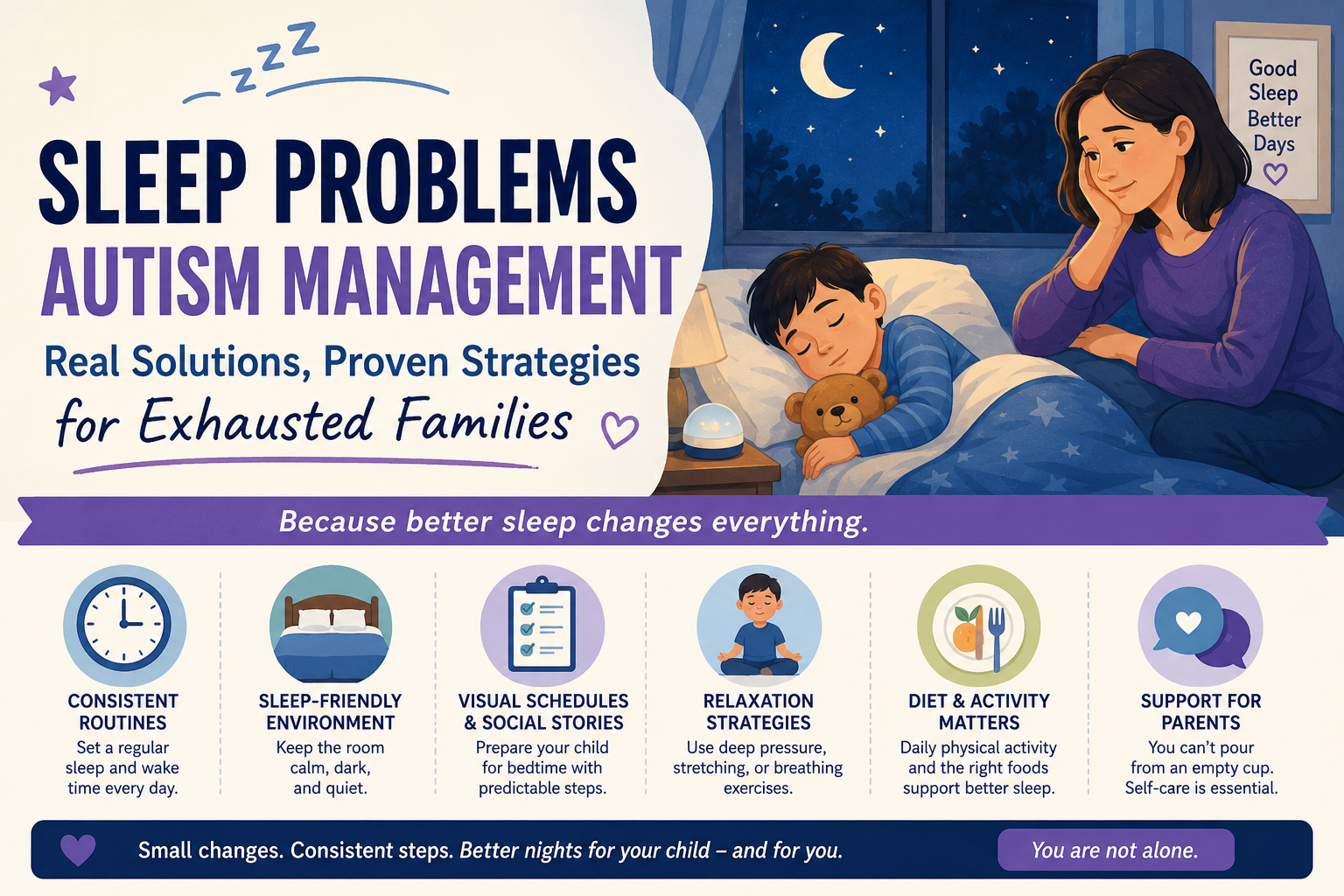
Sleep problems autism management is one of the most urgent challenges facing families of autistic children. Research shows 50–80% of autistic children have significant sleep difficulties — far higher than the general population. Effective management combines consistent bedtime routines, sensory environment modifications, melatonin (under medical guidance), behavioral strategies, and addressing co-occurring conditions. Most families see real improvement within 4–8 weeks of consistent implementation. 💙
If you are reading this at 2 AM while your autistic child is still awake — this guide is written for you.
Not just the advice. The honesty too. The acknowledgment that sleep problems in autism are genuinely among the most exhausting, most researched, and most poorly-solved challenges in the entire special needs landscape.
This guide gives you everything that actually works. The science. The step-by-step strategies. The real parent stories. The things most websites miss.
Because your family deserves sleep. All of you. Tonight, and every night after.

- ⚡ What You Need to Know First
- 🧠 Why Sleep Problems Are So Common in Autism
- 1. 🌙 Melatonin — The Sleep Hormone Works Differently
- 2. 👁️ Sensory Processing — The Environment Feels Different at Night
- 3. 😰 Anxiety — The Racing Mind
- 4. 🔄 Circadian Rhythm Differences
- 5. 🧬 Co-occurring Conditions
- 😴 Types of Sleep Problems in Autistic Children
- Type 1 — Difficulty Falling Asleep (Sleep Onset Insomnia)
- Type 2 — Frequent Night Waking
- Type 3 — Early Morning Waking
- Type 4 — Bedtime Resistance
- Type 5 — Parasomnia (Night Terrors, Sleepwalking)
- 🔬 The Science Behind Autism and Sleep
- Sleep Architecture in Autism
- The Serotonin-Melatonin Connection
- Sensory Gating Differences During Sleep
- 😢 How Sleep Deprivation Affects Autistic Children
- 😰 How Sleep Deprivation Affects Parents
- 🔍 Assessment — Understanding Your Child’s Sleep Problem
- 🛏️ The Sleep Environment — Sensory Modifications That Work
- 📅 Bedtime Routine — Building One That Actually Sticks
- Why Routine Works for Autistic Children
- The Ideal Bedtime Routine Structure
- Visual Schedule for Bedtime Routine
- 🧩 Behavioral Strategies for Autism Sleep Problems
- Strategy 1 — Graduated Extinction (Controlled Fading)
- Strategy 2 — The Sleep Passport (for Autistic Children)
- Strategy 3 — Fading the Parent (Gradual Withdrawal)
- Strategy 4 — Sleep Restriction (for Older Children)
- Strategy 5 — Social Stories About Sleep
- 💊 Melatonin and Medication — What Parents Need to Know
- Melatonin — The Evidence
- Important Melatonin Guidelines
- What Melatonin Does NOT Do
- Other Medications — When Behavioral Strategies and Melatonin Are Not Enough
- 🥗 Diet, Exercise and Daytime Habits That Affect Sleep
- 🔄 Co-occurring Conditions That Disrupt Sleep
- 👶 Sleep Strategies by Age Group
- 📊 Key Statistics — Sleep Problems and Autism
- 💛 A Parent’s Real Story: “We Had Not Slept Properly in Four Years. Then Everything Changed.”
- 🔍 What You Must Not Miss About Autism Sleep
- 1. 🌡️ Temperature Dysregulation — The Overlooked Sensory Factor
- 2. 🦷 Dental Pain and Night Waking — The Hidden Cause
- 3. 📺 Screen Content, Not Just Screen Time
- 4. 🌙 Nocturnal Enuresis — The Sleep Disruptor Nobody Discusses
- 5. 🧘 The Parent’s Sleep — A Neglected Clinical Priority
- 6. 🌍 Cultural Factors — Co-sleeping and Autism in India
- ❓ FAQs — Long-Tail Questions Answered
- Why do autistic children have trouble sleeping?
- What is the best sleep routine for an autistic child?
- Does melatonin help autistic children sleep?
- What weighted blanket weight is best for autistic children?
- How many hours should an autistic child sleep?
- Can diet affect sleep in autistic children?
- What is the best white noise for autistic children’s sleep?
- When should I see a doctor about my autistic child’s sleep problems?
- Is it safe to let an autistic child cry at night to learn to sleep?
- How can I help my autistic teenager with sleep problems?
- 🔗 Trusted Resources — Sleep Problems Autism Management
- ✨ Final Thoughts: Sleep Is Possible. For Your Child. For You.
🧠 Why Sleep Problems Are So Common in Autism
Sleep problems autism management starts with understanding why autistic children struggle with sleep so much more than their neurotypical peers.
This is not a parenting failure. This is neurobiology.
The autistic brain is wired differently in ways that directly affect sleep — through sensory processing, melatonin production, anxiety regulation, and circadian rhythm function. Understanding each of these helps you target the right solution for your specific child.
1. 🌙 Melatonin — The Sleep Hormone Works Differently
Melatonin is the hormone that tells the brain “it is getting dark — time to prepare for sleep.” In neurotypical children, melatonin rises naturally in the evening and peaks at night.
Research shows that many autistic children have abnormal melatonin production patterns — specifically:
- Lower overall melatonin levels at night
- Delayed melatonin onset — the hormone rises later, making the child feel alert long after they “should” be sleepy
This biological difference explains why many autistic children genuinely cannot fall asleep at a typical bedtime — their brain is simply not receiving the chemical signal that sleep is coming.
Source: Tordjman et al. — Melatonin in Autism, Frontiers in Psychiatry
2. 👁️ Sensory Processing — The Environment Feels Different at Night
Many autistic children have heightened sensory sensitivities. At night, sensory challenges that are manageable during the day become amplified:
- The texture of bedsheets can feel unbearable
- Small sounds — a fan, traffic, a sibling breathing — can be impossible to ignore
- Darkness can be terrifying for children with visual sensitivity
- The feeling of clothing or pyjamas can prevent relaxation
These are not behavioral issues. They are genuine sensory experiences that prevent the nervous system from downregulating into sleep.
3. 😰 Anxiety — The Racing Mind
Anxiety affects a majority of autistic children. At night — when the structure and predictability of the day disappears — anxiety often peaks. The autistic mind that needs routine and predictability finds itself in an unstructured, undefined space.
Common anxious thoughts at bedtime for autistic children:
- Worrying about what tomorrow holds
- Fear of the dark or the unknown
- Obsessive thoughts that intensify without daytime distractions
4. 🔄 Circadian Rhythm Differences
Some autistic children have fundamentally shifted circadian rhythms — their biological clock runs later than typical. This is called delayed sleep phase and it means the child’s body genuinely is not prepared for sleep until late at night — regardless of what the clock says.
5. 🧬 Co-occurring Conditions
Autism frequently co-occurs with conditions that independently disrupt sleep:
- ADHD — racing thoughts, hyperarousal
- Epilepsy — nocturnal seizures
- Gastrointestinal problems — pain, reflux
- Sleep apnea — particularly in children who snore
- Anxiety and OCD — intrusive thoughts
- Sensory processing disorder — physical discomfort
💡 Voice Search Answer — Why do autistic children have sleep problems?
Autistic children have sleep problems due to several neurological factors: abnormal melatonin production causing delayed sleep onset, heightened sensory sensitivities making the sleep environment uncomfortable, anxiety that peaks at bedtime, circadian rhythm differences, and co-occurring conditions like ADHD, epilepsy, and gastrointestinal problems. These are biological differences — not behavioral choices — and respond best to targeted management strategies.
Source: Malow et al. — Sleep in Children With Autism, Pediatrics
😴 Types of Sleep Problems in Autistic Children
Effective sleep problems autism management requires identifying which specific type of sleep problem your child has — because different problems need different solutions.
Type 1 — Difficulty Falling Asleep (Sleep Onset Insomnia)
What it looks like: Child takes 1–3 hours to fall asleep after going to bed. May be calm but alert, or distressed and crying. Parents report lying with the child for hours.
Most common cause: Delayed melatonin production; anxiety; insufficient sleep pressure (not tired enough); screen light exposure.
Primary management approach: Melatonin support (medical guidance); strict screen curfew; increased daytime physical activity; consistent bedtime routine.
Type 2 — Frequent Night Waking
What it looks like: Child falls asleep reasonably but wakes repeatedly during the night — sometimes every 1–2 hours. May struggle to self-settle and calls for parent each time.
Most common cause: Sensory issues disrupting sleep stages; sleep apnea; GI discomfort; anxiety on waking in darkness; inability to self-settle (sleep onset association).
Primary management approach: Sensory environment audit; medical evaluation for sleep apnea; behavioral self-settling strategies; address GI issues.
Type 3 — Early Morning Waking
What it looks like: Child wakes at 3–5 AM, fully alert, and cannot return to sleep. Day begins several hours before the rest of the family.
Most common cause: Advanced sleep phase (circadian rhythm runs earlier); brief nap during the day pushing sleep time earlier; melatonin wearing off too early.
Primary management approach: Eliminate daytime naps; gradually push bedtime later; blackout curtains to block early morning light; adjust physical activity timing.
Type 4 — Bedtime Resistance
What it looks like: Extreme distress, meltdowns, escape behaviors, prolonged delay tactics when bedtime is initiated. Child may be exhausted but fights sleep consistently.
Most common cause: Sensory sensitivities to bedtime environment; transition difficulty (autism-related demand avoidance); anxiety about separation; unclear bedtime expectations.
Primary management approach: Visual schedule for bedtime routine; gradual desensitization; sensory environment modification; choice-giving within structure.
Type 5 — Parasomnia (Night Terrors, Sleepwalking)
What it looks like: Child appears awake but is unresponsive during an episode; intense fear or purposeless movement; no memory of episode next morning.
Most common cause: Sleep architecture differences; sleep deprivation deepening slow-wave sleep; fever; stress.
Primary management approach: Safety first — bed rails, door alarms; do not try to wake during episode; address underlying sleep deprivation; consult pediatric neurologist if frequent.
🔬 The Science Behind Autism and Sleep
Sleep problems autism management is grounded in understanding what happens in the autistic brain during sleep. This science guides every effective strategy.
Sleep Architecture in Autism
Sleep is divided into cycles of different stages:
| Sleep Stage | What Happens | In Autism |
|---|---|---|
| Stage 1 NREM | Light sleep; transition | May be prolonged; harder to sustain |
| Stage 2 NREM | Sleep spindles; memory consolidation | Fewer sleep spindles observed in research |
| Stage 3 NREM (Deep Sleep) | Growth hormone release; physical restoration | Often normal duration |
| REM Sleep | Dreaming; emotional processing; social learning | Reduced REM in some autistic children; linked to social processing differences |
Source: Buckley et al. — Sleep in Autism, Autism Research
The Serotonin-Melatonin Connection
Many autistic individuals have differences in serotonin metabolism — the neurotransmitter from which melatonin is produced. Lower serotonin availability may reduce melatonin synthesis, contributing to the sleep onset difficulties so commonly reported.
This is why dietary factors (serotonin precursors like tryptophan), light exposure management, and supplemental melatonin are all relevant sleep problems autism management tools — they all work on the same underlying pathway.
Sensory Gating Differences During Sleep
Neurotypical brains reduce their response to sensory stimuli during sleep — a process called sensory gating. In many autistic individuals, this gating is less effective. The brain continues processing environmental sounds and physical sensations more actively during sleep — explaining frequent arousal and waking from stimuli that would not disturb most sleepers.
😢 How Sleep Deprivation Affects Autistic Children
Sleep problems autism management matters so urgently because sleep deprivation has measurable, serious consequences for autistic children — beyond simple tiredness.
The Cascade Effect
| Effect of Sleep Deprivation | How It Manifests in Autism |
|---|---|
| Increased sensory sensitivity | Child becomes more overwhelmed by previously tolerable sensory input |
| Reduced emotional regulation | More frequent and more intense meltdowns |
| Worsened executive function | Greater difficulty with transitions, planning, flexible thinking |
| Increased repetitive behaviors | Stimming increases as a self-regulation response |
| Reduced learning and memory | Academic and skill development suffer |
| Increased anxiety | Already elevated anxiety becomes more acute |
| Physical health impacts | Immune function; growth hormone; cardiovascular markers |
| Worsened social engagement | Already challenging social processing becomes more difficult |
Source: Malow et al. — Sleep Disruption and Autism, Pediatrics
This cascade is important because it means: improving sleep in an autistic child often produces improvements across multiple other areas of their functioning — not just reduced tiredness.
Many families report that when they successfully address their child’s sleep, they see improvements in behavior, communication, and emotional regulation that they had previously attributed to the autism itself — when in fact they were symptoms of chronic sleep deprivation.
😰 How Sleep Deprivation Affects Parents
This section matters as much as the rest. Sleep problems autism management is not just about the child.
Research consistently shows that parents of autistic children with sleep problems have:
- Significantly higher rates of depression and anxiety
- More marital conflict and relationship strain
- Reduced capacity for consistent therapeutic engagement with their child
- Higher rates of physical illness from chronic sleep deprivation
- Reduced ability to maintain employment
Source: Hayes & Watson — Parental Wellbeing in Autism Families, Clinical Psychology Review
The irony is cruel: the parent most needing patience, consistency, and emotional regulation to support a behaviorally complex child — is the parent most sleep-deprived, making all of those qualities hardest to maintain.
This is not a character flaw. It is biology. And it is why sleep problems autism management is a family emergency, not just a child care issue.
🔍 Assessment — Understanding Your Child’s Sleep Problem
Before implementing any sleep problems autism management strategy, you need to understand your child’s specific sleep pattern clearly.
The Sleep Diary — Your Most Important First Tool
Keep a detailed sleep diary for 2 weeks before doing anything else. Record:
| Time | What to Note |
|---|---|
| Bedtime routine start | What time; what steps |
| Lights out | When the child is in bed |
| Time to fall asleep | Estimated from parent observation |
| Night wakings | Time; duration; behavior |
| Wake time | Final wake; first wake |
| Daytime naps | Time; duration |
| Screen time | Last screen use before bed |
| Exercise | Physical activity and timing |
| Anxiety events | School, social, schedule changes |
| Medication | Any medications and timing |
Two weeks of diary data allows you and your child’s doctor or pediatric sleep specialist to identify specific patterns — and target the right intervention.
Free Sleep Diary Tools
When to See a Doctor First
Before beginning any behavioral sleep management, consult your pediatrician if:
- ⚠️ Your child snores loudly or stops breathing during sleep (possible sleep apnea)
- ⚠️ Your child has known or suspected epilepsy
- ⚠️ The child is extremely distressed at night consistently
- ⚠️ Sleep problems began suddenly after a period of normal sleep
- ⚠️ You suspect pain (GI discomfort, reflux, dental pain) is waking your child
🛏️ The Sleep Environment — Sensory Modifications That Work
The sleep environment is often the most powerful and the most underestimated element of sleep problems autism management. Getting this right can produce dramatic improvement — sometimes within days.
The Sensory Sleep Environment Checklist
Light:
- ✅ Blackout curtains — complete darkness for children who wake from light; or nightlight for children afraid of the dark (use red-spectrum nightlight — least disruptive to melatonin)
- ✅ Blue light elimination — all screens off at least 1 hour before bed; blue light blocking glasses for older children
- ✅ Avoid bright bathroom light for nighttime toilet trips — use a dim nightlight in the corridor
Sound:
- ✅ White noise machine — masks unpredictable household and external sounds. Consistent, controllable sound is far less disruptive than intermittent noise
- ✅ Brown noise or pink noise — some autistic children find these more calming than white noise
- ✅ Ear defenders or soft foam earplugs — for children with extreme sound sensitivity
- ✅ Assess the room for unexpected sounds — pipes, heating systems, outdoor traffic — and address where possible
Touch and Texture:
- ✅ Sensory audit of bedding — let the child feel and choose their own sheets. Seamless, soft jersey-knit or bamboo fabrics work well for tactile sensitivity
- ✅ Weighted blanket — research supports use for some autistic children for calming the nervous system. Weight should be approximately 10% of body weight. Start gradually and only if the child tolerates it
- ✅ Temperature — many autistic children sleep better slightly cooler than typical recommendation. 18–20°C is a commonly reported optimal range
Source: Reynolds et al. — Weighted Blankets in Autism, American Journal of Occupational Therapy
Smell:
- ✅ Consistent sleep-associated scent — lavender has mild evidence for promoting relaxation. Introduce as part of a consistent bedtime routine (in a diffuser or pillow spray) to build sleep association
- ✅ Avoid strong or changing smells in the bedroom — food smells, cleaning products, new furniture
Visual Environment:
- ✅ Declutter the sleep space — visual complexity maintains alertness. A simple, calm visual environment supports sleep onset
- ✅ Visual schedule on the wall — a picture-based bedtime routine schedule reduces anxiety about “what comes next”
- ✅ Predictable, unchanging room layout — autistic children often find comfort in environmental consistency
📅 Bedtime Routine — Building One That Actually Sticks
A consistent bedtime routine is the single most evidence-supported sleep problems autism management intervention. It works across age groups, disability levels, and cultural contexts.
Why Routine Works for Autistic Children
Autistic children are often described as “routine dependent.” This is not a limitation in this context — it is an asset. A predictable, consistent bedtime routine works with the autistic brain’s preference for predictability rather than against it.
Each step of the routine becomes a conditioned cue for sleep. The brain learns: “Bath → pyjamas → story → bed” means sleep is coming. Over time, these steps lower arousal and prepare the nervous system for rest automatically.
The Ideal Bedtime Routine Structure
Total duration: 30–45 minutes
Step 1 — Warning and Transition (5–10 minutes before routine starts)
- Visual timer showing routine will begin soon
- Verbal warning: “In 5 minutes, bedtime routine starts”
- Same warning every night
Step 2 — Wind-Down Activity (10 minutes)
- Calm, low-stimulation activity
- Options: gentle sensory play (playdough, kinetic sand), colouring, sorting activity, simple puzzle
- No screens, no vigorous play, no exciting content
Step 3 — Bath or Wash (10 minutes)
- Warm bath is particularly effective — the subsequent body temperature drop signals the brain to sleep
- Keep bath time calm — same temperature, same routine, same products
- If the child resists full bath — warm foot soak or face wash maintains the temperature-drop benefit
Step 4 — Pyjamas and Sensory Comfort (5 minutes)
- Child chooses preferred pyjamas from limited options
- Weighted blanket, comfort objects, positioning of pillows — all consistent nightly
Step 5 — Final Communication and Anxiety Check (5 minutes)
- Brief check-in using the child’s communication system: “How are you feeling? Is there anything worrying you?”
- Address concerns briefly — do not open long conversations that delay sleep
- Tomorrow’s schedule preview (visual, brief) for children who worry about the next day
Step 6 — Story, Music or Sensory Relaxation (10 minutes)
- Same story, audiobook, or music playlist each night — familiarity reduces stimulation
- Avoid exciting content — choose calm, repetitive, predictable stories
- Progressive muscle relaxation script (read aloud by parent) works well for older children
Step 7 — Lights Out
- Same phrase every night: “Goodnight. I love you. Time to sleep.”
- Same physical arrangement (lights off/dim nightlight, door open/closed — consistent)
- Parent leaves within 1–2 minutes
Visual Schedule for Bedtime Routine
Create a picture-based visual schedule posted at child’s eye level in their room. Include photographs or symbols for each step. This gives the child predictability, reduces the number of parental verbal instructions needed, and builds independence in the routine.
Resource: Autism Speaks — Visual Schedules
🧩 Behavioral Strategies for Autism Sleep Problems
Beyond environment and routine, specific behavioral strategies support sleep problems autism management for children who need more intensive intervention.
Strategy 1 — Graduated Extinction (Controlled Fading)
What it is: Gradually increasing the time before responding to a child’s calls from bed — teaching the child to self-settle progressively.
How it works:
- Night 1: Respond after 2 minutes
- Night 2–3: Respond after 5 minutes
- Night 4–5: Respond after 10 minutes
- Progressively increase until the child settles independently
Important: This only works if the child is safe and not in distress from pain or fear. It is not appropriate for all autistic children — particularly those with high anxiety or separation difficulties.
Evidence: Moderate evidence supports graduated extinction for autistic children when implemented consistently.
Strategy 2 — The Sleep Passport (for Autistic Children)
What it is: A personalized visual document that explains the child’s sleep routine, preferences, and needs. Useful for consistency when different carers are involved.
How it helps: Ensures all caregivers implement exactly the same routine — critical because autistic children are particularly sensitive to routine inconsistency.
Strategy 3 — Fading the Parent (Gradual Withdrawal)
What it is: If a parent currently lies with the child until they fall asleep, this strategy gradually moves the parent further from the child over successive nights.
How it works:
- Week 1: Parent lies next to child
- Week 2: Parent sits on edge of bed
- Week 3: Parent sits in chair next to bed
- Week 4: Parent sits in chair by door
- Week 5: Parent outside door (door open)
- Week 6: Parent checks in briefly then leaves
Evidence: Well-supported for children with sleep onset association (needing parent present to fall asleep). Requires patience and complete consistency.
Strategy 4 — Sleep Restriction (for Older Children)
What it is: Temporarily restricting time in bed to match actual sleep time — building sleep pressure that leads to faster sleep onset.
How it works:
- If child averages 8 hours of actual sleep despite 11 hours in bed — restrict time in bed to 8.5 hours
- Gradually extend bedtime earlier as sleep efficiency improves
Important: This strategy requires medical or clinical sleep specialist guidance for autistic children. Not appropriate for very young children.
Strategy 5 — Social Stories About Sleep
What it is: Personalized, first-person narrative stories describing the bedtime routine and why sleep is important — written in a style that helps the autistic child understand expectations.
Example story opening: “When it gets dark outside, it means my body needs rest. My body works hard all day. Sleep helps my brain be strong for tomorrow. When I lie in my bed with my soft blanket, my body starts to feel calm…”
Resource: Carol Gray — Social Stories Framework
💊 Melatonin and Medication — What Parents Need to Know
Sleep problems autism management frequently involves melatonin. Here is honest, evidence-based information.
Melatonin — The Evidence
Melatonin is the best-studied and most evidence-supported pharmacological intervention for autism-related sleep problems. Multiple randomized controlled trials demonstrate that supplemental melatonin:
- ✅ Reduces time to fall asleep (sleep onset latency)
- ✅ Increases total sleep time
- ✅ Reduces night wakings (less evidence for this)
- ✅ Is generally well tolerated with minimal side effects at appropriate doses
Source: Gringras et al. — Melatonin in Autism, New England Journal of Medicine
Important Melatonin Guidelines
Always consult a doctor before starting melatonin for your child. While melatonin is available over the counter in some countries, in India it is a prescription medicine and should be:
- Prescribed and dosed by a pediatrician or child neurologist
- Timed correctly — typically 30–60 minutes before desired sleep onset (not at bedtime)
- Started at the lowest effective dose
- Used alongside behavioral strategies — not instead of them
Typical dosing ranges (for clinical reference only — always follow doctor’s guidance):
- Children 2–5 years: 0.5–1 mg
- Children 6–12 years: 1–3 mg
- Adolescents: 3–5 mg
Source: American Academy of Pediatrics — Melatonin Use in Children
What Melatonin Does NOT Do
- ❌ It does not treat anxiety-based sleep problems
- ❌ It does not treat night wakings caused by sensory issues
- ❌ It does not work long-term without behavioral strategies in place
- ❌ It does not replace addressing the root causes of sleep problems
Other Medications — When Behavioral Strategies and Melatonin Are Not Enough
For severe, treatment-resistant sleep problems in autism, a pediatric sleep specialist or child psychiatrist may consider:
- Clonidine — can help with sleep onset and reduce night wakings in autistic children; often used when ADHD co-occurs
- Trazodone — sometimes used for severe sleep-onset insomnia in older children/adolescents
- Antihistamines (promethazine) — occasionally used short-term; sedative effect diminishes with regular use
All medication decisions for sleep problems autism management must be made with a qualified medical professional.
🥗 Diet, Exercise and Daytime Habits That Affect Sleep
Sleep problems autism management extends well beyond the bedroom. What your child does during the day directly affects how they sleep at night.
Daytime Habits That Improve Sleep
Physical Exercise:
- ✅ Regular vigorous physical activity during the day builds “sleep pressure” — the biological drive to sleep
- ✅ Best timing: morning to mid-afternoon. Vigorous exercise within 2 hours of bedtime can increase arousal and delay sleep
- ✅ For non-ambulatory children: hydrotherapy, physiotherapy activities, standing frame time, sensory gym activities all contribute
Avoiding Daytime Naps (for school-age children):
- If your child naps after age 5–6 — this almost certainly reduces sleep pressure at bedtime
- If naps are medically necessary (post-seizure, extreme fatigue from medical conditions) — keep them short (20 minutes maximum) and early (before 2 PM)
Light Exposure:
- ✅ Bright morning light exposure helps set the circadian clock — opens curtains immediately on waking
- ✅ Outdoor time in natural daylight supports melatonin timing
Dietary Factors
Foods That Support Sleep:
- ✅ Tryptophan-rich foods (milk, turkey, eggs, bananas, nuts) — tryptophan is converted to serotonin and then melatonin
- ✅ Complex carbohydrates at dinner — facilitate tryptophan transport to the brain
- ✅ Magnesium-rich foods (leafy greens, nuts, seeds) — magnesium supports muscle relaxation and sleep quality
Foods and Substances to Avoid:
- ❌ Caffeine — in chocolates, sodas, energy drinks, tea. Caffeine’s half-life is 5–7 hours. A chocolate biscuit at 4 PM can still be affecting sleep at 9 PM
- ❌ High sugar foods within 2 hours of bedtime — blood sugar swings can cause night waking
- ❌ Large meals within 2 hours of bed — digestive discomfort and acid reflux are common autism sleep disruptors
GI Health — The Gut-Sleep Connection
Gastrointestinal problems are significantly more common in autistic children than the general population — affecting an estimated 47–76% of autistic individuals. Abdominal pain, constipation, reflux, and bloating cause pain that disrupts sleep and is often undetected because the child cannot communicate the source of their distress.
Signs that GI issues may be disrupting sleep:
- Child wakes arching their back
- Child wakes pulling knees to chest
- Night waking worse after certain foods
- Child is gassy or constipated
- Behavioral difficulties worsen after eating
If you suspect GI issues — request a pediatric gastroenterology evaluation. Treating the GI problem often produces dramatic improvement in sleep.
Source: Buie et al. — GI Issues in Autism, Pediatrics
🔄 Co-occurring Conditions That Disrupt Sleep
Sleep problems autism management must address co-occurring conditions — because treating the sleep problem without addressing these will produce limited results.
Sleep Apnea and Autism
Sleep apnea — where breathing repeatedly stops and starts during sleep — is more common in autistic children than the general population, partly due to anatomical features and partly due to reduced arousal during apnea events.
Signs of sleep apnea:
- Loud snoring
- Observed pauses in breathing
- Mouth breathing during sleep
- Restless sleep; sweating
- Unexplained night waking
- Excessive daytime sleepiness despite adequate time in bed
- Morning headaches
If suspected — request a polysomnography (sleep study) referral from your pediatrician. In India, pediatric sleep studies are available at AIIMS, major children’s hospitals, and several private sleep centers.
ADHD and Sleep
ADHD co-occurs in approximately 30–50% of autistic children. ADHD is independently associated with sleep onset insomnia — the racing, stimulated mind cannot quieten at bedtime.
ADHD medication timing also affects sleep — stimulant medications (methylphenidate, amphetamines) taken too late in the day significantly delay sleep onset. Review medication timing with your prescribing doctor.
Anxiety and Sleep
Anxiety and autism are almost universal companions. At bedtime, anxiety removes the “nothing to do” distraction buffer and floods the mind with worries.
Strategies specifically for anxiety-driven sleep problems:
- Worry journal — write or draw worries 1 hour before bed (not at bedtime)
- “Worry box” — physical box where written worries are placed and “locked up” for the night
- Progressive muscle relaxation — taught during the day, applied at bedtime
- Cognitive behavioral therapy adapted for autism (CBT-A) — with a psychologist trained in autism
Epilepsy and Nocturnal Seizures
Epilepsy affects approximately 30% of autistic individuals. Many seizures occur during sleep. If your child wakes confused, has unusual movements during sleep, or wets the bed unexpectedly — consult a neurologist. An EEG study may be recommended. Anti-epileptic medication optimization can dramatically improve sleep quality.
👶 Sleep Strategies by Age Group
Sleep problems autism management looks different at different developmental stages.

Toddlers and Preschoolers (Ages 2–5)
| Strategy | Approach |
|---|---|
| Sleep environment | Maximum sensory modification — weighted blanket, white noise, blackout, sensory bedding |
| Routine | Visual picture schedule; same 4–5 steps every night |
| Melatonin | Only under pediatric guidance; lowest effective dose |
| Parent presence | Gradual withdrawal over weeks; rapid change causes high distress |
| Expected sleep need | 10–14 hours total including naps |
School Age (Ages 6–12)
| Strategy | Approach |
|---|---|
| Sleep environment | Child involvement in sensory choices; weighted blanket if helpful |
| Routine | Child can follow visual schedule semi-independently |
| Behavioral strategies | Graduated extinction; social stories; sleep passport |
| Screen management | Strict 1-hour screen curfew; blue light glasses if needed |
| Expected sleep need | 9–11 hours |
Adolescents (Ages 13–18)
| Strategy | Approach |
|---|---|
| Sleep environment | Adolescent input on their own space; blackout curtains important |
| Circadian rhythm | Delayed sleep phase common in adolescence — realistic bedtimes |
| Screen management | Phones out of bedroom; charging station outside room |
| Melatonin | Can help delayed sleep phase; timing is critical |
| CBT for insomnia | CBT-I adapted for autism — most evidence-based adult intervention |
| Expected sleep need | 8–10 hours |
📊 Key Statistics — Sleep Problems and Autism
| Statistic | Figure | Source |
|---|---|---|
| Percentage of autistic children with significant sleep problems | 50–80% | Malow et al. — Pediatrics |
| General population children with sleep problems | ~25–30% | American Academy of Sleep Medicine |
| Autistic children with abnormal melatonin production | ~60–70% | Tordjman et al. — Frontiers in Psychiatry |
| GI problems in autistic children (affecting sleep) | 47–76% | Buie et al. — Pediatrics |
| Epilepsy prevalence in autism | ~30% | Tuchman et al. — Pediatric Neurology |
| Co-occurring ADHD in autism | 30–50% | Leitner — Frontiers in Human Neuroscience |
| Improvement in autism behaviors with improved sleep | Significant across multiple domains | Malow et al. — JAMA Pediatrics |
| Evidence level for melatonin in autism sleep | Good — multiple RCTs | Gringras et al. — NEJM |
| Parents of autistic children with sleep problems reporting depression | ~40–50% | Hayes & Watson — Clinical Psychology Review |
| Improvement in family functioning with autism sleep treatment | Significant | Autism Speaks — Sleep Research |
💛 A Parent’s Real Story: “We Had Not Slept Properly in Four Years. Then Everything Changed.”
“My daughter Priya is nine. She was diagnosed with autism at age two. From age four — when she stopped napping — she did not fall asleep before midnight. Every night.
We tried everything we could think of. Strict bedtimes. Later bedtimes. Earlier bedtimes. We tried removing her iPad. We tried giving her the iPad. We tried lying with her. We tried not lying with her.
Nothing worked. By the time she was eight, my husband and I were running on 4–5 hours of sleep per night. I had stopped functioning properly at work. My husband had a minor car accident from fatigue. Our marriage was held together by love and exhaustion.
Then a developmental pediatrician at a children’s hospital finally took us seriously. She recommended a sleep diary for two weeks. Then she referred us to a behavioral sleep therapist who specialized in autism.
The assessment identified three separate problems: delayed melatonin production, sensory sensitivity to Priya’s bedding, and anxiety about the next day.
We made changes over six weeks:
Week 1 and 2 — We changed all of Priya’s bedding to seamless bamboo jersey. We installed a white noise machine. We put blackout curtains up.
Week 3 — We built a consistent 35-minute visual bedtime routine. Priya helped choose the steps. She loves the laminated picture cards.
Week 4 — The pediatrician prescribed 1mg melatonin, 45 minutes before bedtime. We added a brief “tomorrow’s schedule” review using pictures — 2 minutes, same time each night.
Week 6 — Priya was falling asleep by 9:15 PM. Consistently.
I am not exaggerating when I say it changed our family’s life. Within a month of Priya sleeping properly, her meltdowns reduced by more than half. Her teacher commented that she seemed calmer and more focused at school. My husband and I started talking again — real conversations, not just handovers about Priya’s needs.
The sleep therapist said something I will never forget: “Sleep is not a reward your child earns. It is a biological need they have. Our job is to remove what gets in the way.”
We had spent four years trying to force sleep. We needed to remove the barriers.“
— Ananya S., mother of Priya (autism), Bangalore, India 💙
🔍 What You Must Not Miss About Autism Sleep
1. 🌡️ Temperature Dysregulation — The Overlooked Sensory Factor
Many autistic children have difficulty with body temperature regulation — a function of autonomic nervous system differences. At night, this manifests as excessive sweating, repeatedly kicking off blankets, or the opposite — feeling cold even in warm conditions. Standard sleep advice assumes typical temperature regulation.
For autistic children, investing in temperature-regulating bedding (bamboo, Tencel, moisture-wicking fabrics), maintaining a slightly cooler room temperature, and allowing the child to choose their own bedding weight independently can produce sleep improvements that no behavioral strategy alone achieves.
2. 🦷 Dental Pain and Night Waking — The Hidden Cause
A significant number of autistic children have dental problems — from sensory aversion to dental care, selective eating that increases decay risk, and medication side effects (dry mouth from some ADHD medications). Dental pain causes night waking that is easily misattributed to behavioral causes.
If night waking is associated with the child holding their jaw, grinding teeth, or refusing food — request a dental evaluation under sedation if necessary before pursuing behavioral sleep interventions.
3. 📺 Screen Content, Not Just Screen Time
Most autism sleep advice focuses on screen time limits — and this is important. But fewer guides address screen content as a separate factor. An autistic child who is deeply restricted in their interests may engage with their preferred content (a specific YouTube channel, a favorite TV series) with significantly elevated arousal compared to neutral content. T
he emotional and cognitive arousal from highly preferred content can delay sleep onset even when viewing stops 2 hours before bed. This is not about more restriction — it is about understanding that for autistic children with intense interests, preferred content is neurologically different from casual screen use.
4. 🌙 Nocturnal Enuresis — The Sleep Disruptor Nobody Discusses
Bedwetting (nocturnal enuresis) is more common in autistic children than the general population and is a direct sleep disruptor — both from the physical discomfort of wet sheets and the arousal required to change and resettle. Yet almost no autism sleep guide addresses it.
Management includes: fluid restriction after 5 PM, toilet visit as the final bedtime routine step, waterproof mattress protection, and in persistent cases — consultation with a pediatric urologist. A bedwetting alarm has strong evidence for treatment. Managing nocturnal enuresis often simultaneously improves sleep quality significantly.
5. 🧘 The Parent’s Sleep — A Neglected Clinical Priority
Pediatric sleep guidelines focus exclusively on the child. Yet research is clear that when parents are severely sleep-deprived, their capacity to implement behavioral sleep strategies — which require patience, consistency, and emotional regulation — is directly impaired.
The intervention cannot be effectively delivered by someone running on four hours of sleep. Clinicians treating autism sleep problems should assess and address parental sleep as part of the treatment plan — not as an afterthought. Parents reading this: your sleep is medically relevant to your child’s treatment. Ask for support for yourself explicitly.
6. 🌍 Cultural Factors — Co-sleeping and Autism in India
The widespread practice of co-sleeping in Indian families intersects with autism sleep management in important and underaddressed ways. For many Indian families, the child sleeping in the parents’ bed is a cultural norm — and for an autistic child, co-sleeping may provide genuine comfort, sensory regulation, and anxiety management. However, it can also entrench sleep onset associations that become problematic as the child grows.
The Western-centric advice to immediately transition autistic children to solo sleeping is not culturally appropriate or always necessary. Work with a sleep professional who understands cultural context — and find a middle path that addresses sleep quality for the whole family within your cultural framework.
❓ FAQs — Long-Tail Questions Answered
Why do autistic children have trouble sleeping?
Autistic children have trouble sleeping due to abnormal melatonin production causing delayed sleep onset, heightened sensory sensitivities making the sleep environment uncomfortable, anxiety that peaks at bedtime, circadian rhythm differences, and co-occurring conditions like ADHD, epilepsy, and gastrointestinal problems. These are neurological differences, not behavioral choices.
What is the best sleep routine for an autistic child?
The best sleep routine for an autistic child is consistent, predictable, and sensory-appropriate — typically 30–45 minutes long. It should include a warning transition, wind-down activity, warm bath, pyjamas, brief anxiety check-in, and a calm story or music. A visual picture schedule displayed in the room increases independence and reduces anxiety.
Does melatonin help autistic children sleep?
Yes. Multiple randomized controlled trials show melatonin reduces sleep onset time and increases total sleep duration in autistic children. It should be prescribed and dosed by a pediatrician, timed 30–60 minutes before desired sleep, and used alongside behavioral strategies. In India, melatonin requires a prescription.
What weighted blanket weight is best for autistic children?
The commonly recommended weight for a weighted blanket is approximately 10% of the child’s body weight. For example, a 25kg child would use a 2.5kg blanket. Always introduce gradually and only if the child finds it comfortable — never force use. Consult your occupational therapist for a personalized recommendation.
How many hours should an autistic child sleep?
Sleep needs vary by age: toddlers (2–5 years) need 10–14 hours, school-age children (6–12) need 9–11 hours, and adolescents (13–18) need 8–10 hours. Many autistic children get significantly less than this due to sleep onset difficulties and night wakings — which has measurable negative effects on behavior, learning, and emotional regulation.
Can diet affect sleep in autistic children?
Yes. Caffeine in chocolates, sodas, and tea delays sleep onset. High sugar close to bedtime causes blood sugar disruption. GI problems — very common in autism — cause physical discomfort that wakes children. Tryptophan-rich foods support melatonin production. A pediatric dietitian familiar with autism can help optimize diet for sleep.
What is the best white noise for autistic children’s sleep?
Brown noise and pink noise are reported by many autism families as more calming than standard white noise — they have a deeper, softer quality. Trial different settings on a white noise machine or app. Consistency is more important than the specific type — the brain learns to associate the sound with sleep through repeated pairing.
When should I see a doctor about my autistic child’s sleep problems?
See a doctor if your child snores loudly or stops breathing during sleep (possible sleep apnea), has nocturnal seizures, is in extreme distress at night, or if sleep problems began suddenly. Also seek medical advice before starting melatonin, if you suspect pain is causing wakings, or if behavioral strategies have been consistently implemented for 4–6 weeks without improvement.
Is it safe to let an autistic child cry at night to learn to sleep?
Standard “cry it out” methods are generally not recommended for autistic children — particularly those with high anxiety, sensory sensitivities, or communication difficulties. Modified approaches like graduated extinction (brief response delays, gradually extended) have more evidence support. Work with a behavioral sleep specialist familiar with autism before implementing any extinction-based strategy.
How can I help my autistic teenager with sleep problems?
Autistic teenagers often have delayed sleep phase — their biological clock runs later. Strategies include: realistic later bedtime that matches their biology, strict phone-out-of-bedroom rule, morning bright light exposure, consistent wake time even on weekends, melatonin timed appropriately, and CBT for insomnia adapted for autism. Avoid fighting the biology — work with it.
🔗 Trusted Resources — Sleep Problems Autism Management
🏥 Clinical and Research Resources
- Autism Speaks — Sleep Strategies — Practical guides; sleep diary templates
- American Academy of Pediatrics — Sleep — Clinical guidelines
- AASM — American Academy of Sleep Medicine — Sleep disorder information
- Frontiers in Psychiatry — Autism and Sleep — Research access
💛 Indian Resources
- NIMHANS — Child Psychiatry — Assessment and referral
- Action for Autism India — Autism-specific support; parent resources
- Ummeed Child Development Centre — Developmental support including sleep
- National Trust — Autism support schemes
🧠 Sleep-Specific Tools
- Autism Speaks — Visual Supports Toolkit — Visual schedules for bedtime
- AASPIRE — Autism and Sleep Resources — Research-based autism sleep tools
✨ Final Thoughts: Sleep Is Possible. For Your Child. For You.
Sleep problems autism management is not a problem you have to accept as permanent. It is not simply “part of autism” that cannot be changed. It is a treatable, manageable cluster of challenges — with real solutions that work for real children and real families.
Ananya in Bangalore had four years of midnight bedtimes. Then — with the right assessment, the right environmental changes, the right routine, and the right medical support — Priya was asleep by 9:15 PM. Consistently. 💙
The path is not always quick. It is rarely linear. Some strategies will not work for your child. Others will transform your nights.
But the path exists. And you now have the most complete map available.
Here is what to do next:
✅ This week: Start a two-week sleep diary. Record everything — bedtime, wake time, wakings, screens, exercise, food.
✅ This week: Do a sensory audit of your child’s bedroom. Bedding, light, sound, temperature — assess each one.
✅ Next week: Book a pediatrician appointment. Share the sleep diary. Ask specifically about melatonin, sleep apnea, and GI evaluation.
✅ This month: Build a visual bedtime routine. Consistent. Every night. Give it six weeks before evaluating.
✅ Ongoing: Ask for help. From your child’s therapy team. From a sleep specialist. From other autism parents who have walked this path before you.
Your family deserves sleep. Your child deserves rest. And you — the parent who is still searching for answers at whatever hour you are reading this — deserve to wake up tomorrow less exhausted than today. 🎗️
⚠️ Disclaimer: This article is written for informational and educational purposes only. Always consult a qualified pediatrician, child neurologist, or behavioral sleep specialist for assessment and treatment decisions specific to your child.


