

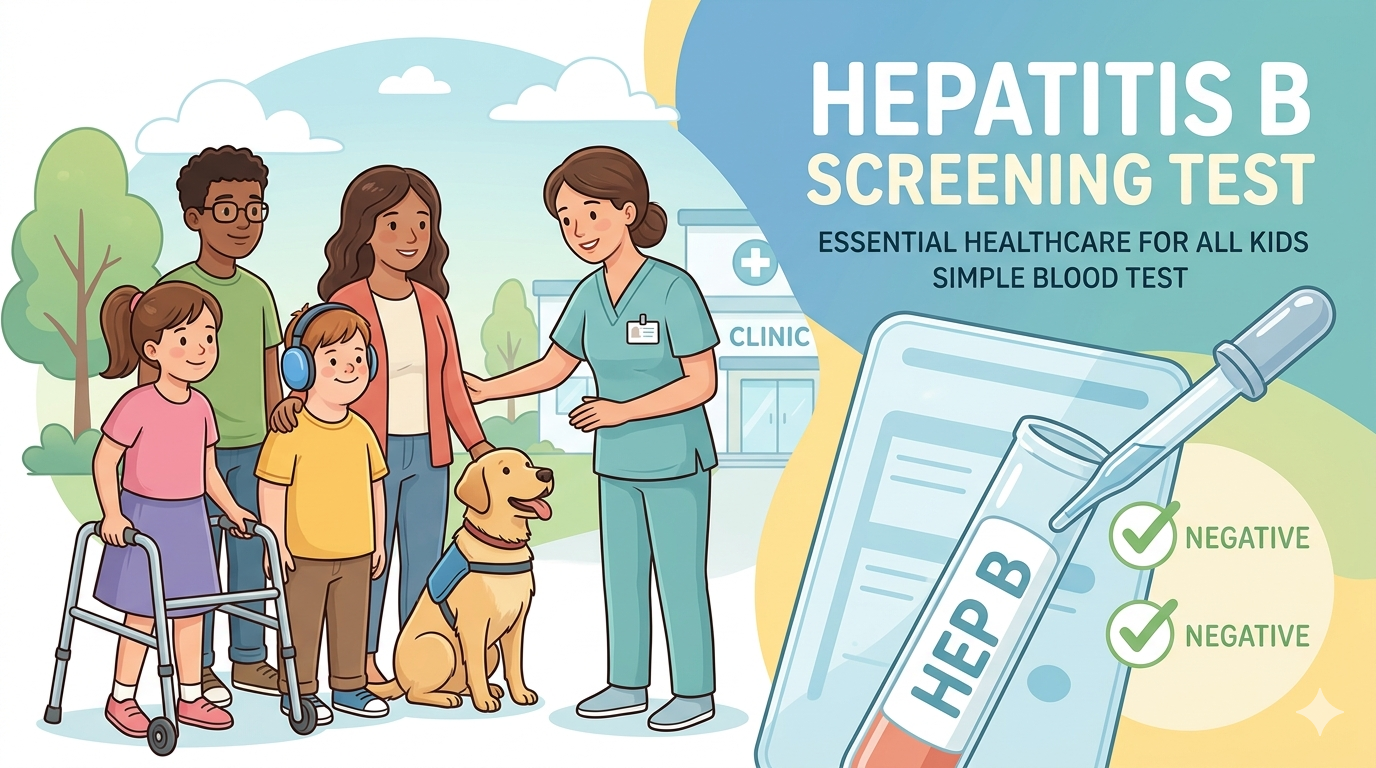
Hepatitis B Screening Test 2026: What Every Special Needs Parent Must Know to Protect Their Child for Life 💛
Hepatitis B Screening Test: Many with Hep B don’t know they have it, including special needs kids. Discover the triple-panel test and new CDC birth rules and what every parent MUST ask their doctor. 👇

- 🌟 What Is a Hepatitis B Screening Test and Why Does It Matter for Your Child?
- 🔬 What Is the Hepatitis B Screening Test? The Science Made Simple
- 📊 Hepatitis B Screening Test — Key Statistics 2025–2026
- 🚨 The December 2025 CDC Policy Change — What Every Parent Must Know
- 👶 Hepatitis B Screening Test for Children — The Complete Guide by Age
- Newborns — The Critical First Hours
- Infants and Young Children — Post-Vaccination Serology
- Older Children and Adolescents — When to Screen
- 🌟 Hepatitis B Screening Test and Special Needs Children
- Why Special Needs Children Have Unique HBV Risks and Testing Needs
- The Immunosuppression Issue — Life-Critical and Widely Missed
- Post-Vaccination Serology — The Test Most Parents Don’t Know Exists
- 🧪 Understanding Your Child’s Hepatitis B Screening Test Results — Every Scenario Explained
- Scenario 1: All Three Tests Negative — Susceptible
- Scenario 2: Anti-HBs Positive, Others Negative — Vaccinated and Immune ✅
- Scenario 3: HBsAg Positive — Active Infection 🔴
- Scenario 4: Anti-HBc Positive Only — The Confusing Result
- Scenario 5: Anti-HBs and Anti-HBc Both Positive — Past Infection, Now Immune ✅
- 🏥 The Hepatitis B Screening Test Step-by-Step — What to Expect
- 🇮🇳 Hepatitis B Screening in India — What Parents Need to Know in 2026
- 💊 What Happens If Your Child’s Hepatitis B Screening Test Is Positive?
- ❓ FAQs — Hepatitis B Screening Test 2026
- Q1: What is the hepatitis B screening test?
- Q2: Who should get a hepatitis B screening test?
- Q3: What does a positive HBsAg result mean in a child?
- Q4: Did the CDC change hepatitis B vaccine rules in 2025?
- Q5: Can a vaccinated child still test positive for hepatitis B?
- Q6: Does the hepatitis B screening test require fasting?
- Q7: How accurate is the hepatitis B screening test?
- Q8: Should my child with Down Syndrome be tested for hepatitis B?
- Q9: Where can families in India get a free hepatitis B screening test?
- Q10: Is the hepatitis B screening test the same as the hepatitis B antibody test?
- 💛 Final Words: Knowledge Is the Most Powerful Protection You Can Give Your Child
🌟 What Is a Hepatitis B Screening Test and Why Does It Matter for Your Child?
The hepatitis B screening test is a blood test that detects whether a person has been infected with the hepatitis B virus (HBV) — and whether they are protected against it. Simply put, the test looks for specific proteins and antibodies in the blood to determine if there is an active infection, a past infection, or immunity through vaccination.
The critical reality? More than half of people with hepatitis B are unaware of their infection status, and approximately 50–70% of people with acute hepatitis B are asymptomatic. This means hepatitis B is silently harming millions of people — including children — while remaining completely undetected.
For families of children with special needs — children who undergo more medical procedures, have more complex immune profiles, and may face greater healthcare barriers — understanding the hepatitis B screening test is not just important. It is essential.
This guide will walk you through every aspect of the hepatitis B screening test in plain, parent-friendly language. You will understand what the triple-panel test is, how to interpret every possible result, what the landmark December 2025 CDC policy change means for your child, and why special needs children deserve proactive HBV screening as part of their routine care.
🔬 What Is the Hepatitis B Screening Test? The Science Made Simple
Without testing, people with hepatitis B virus (HBV) infection can unknowingly transmit the virus to others. (Source: CDC — Clinical Testing and Diagnosis for Hepatitis B, January 2025)
The hepatitis B screening test is not a single test. It is a triple panel — three separate blood markers measured together, each telling a different part of the story.
The Triple Panel — What Each Test Measures
The new CDC guidance recommends utilising a 3-test panel, which includes hepatitis B surface antigen (HBsAg), antibody to hepatitis B surface antigen (anti-HBs), and total antibody to hepatitis B core antigen (anti-HBc). (Source: University of Washington Hepatitis B Online)
| Test Name | Abbreviation | What It Detects | What a Positive Means |
|---|---|---|---|
| Hepatitis B Surface Antigen | HBsAg | The virus itself — a protein on the HBV surface | Active infection (acute or chronic) |
| Antibody to Hepatitis B Surface Antigen | Anti-HBs | Antibodies that neutralise HBV | Immunity — from vaccination OR past infection that cleared |
| Total Antibody to Hepatitis B Core Antigen | Anti-HBc (total) | Exposure to HBV at any point | Past or current infection — NOT produced by vaccination |
Why All Three Are Needed — Together
The power of the triple panel comes from interpreting all three results together. No single test alone tells the complete story.
| HBsAg | Anti-HBs | Anti-HBc | Interpretation |
|---|---|---|---|
| Negative | Positive | Negative | ✅ Vaccinated and immune — no infection ever |
| Negative | Negative | Negative | ⚠️ Susceptible — never infected, no immunity; should be vaccinated |
| Positive | Negative | Positive | 🔴 Active infection (acute or chronic) — needs medical evaluation |
| Negative | Positive | Positive | ✅ Past infection that resolved — now immune |
| Negative | Negative | Positive | ⚠️ Ambiguous — may indicate past infection, false positive, or window period; needs follow-up |
Understanding these patterns removes the fear from a positive result. A positive HBsAg is concerning and requires follow-up. But a positive anti-HBs means protection — which is exactly what you want.
📊 Hepatitis B Screening Test — Key Statistics 2025–2026
| Statistic | Data | Source |
|---|---|---|
| People globally living with chronic HBV (2022) | Approximately 254 million people worldwide with HBV infection in 2022 — only a marginal decline from 257 million in 2015 | Indian Journal of Gastroenterology / Springer, 2025 |
| Global deaths from HBV annually | HBV accounted for 83% of the 1.3 million global deaths due to viral hepatitis in 2022 | Indian Journal of Gastroenterology, 2025 |
| US people with acute or chronic HBV | Up to 2.4 million people in the United States have acute or chronic hepatitis B virus infection | American Family Physician, March 2026 |
| US adults unaware of their HBV status | Approximately two-thirds of people with chronic infection in the United States are unaware of their diagnosis | AAFP, March 2026 |
| Adults with asymptomatic HBV | Approximately 50–70% of people with acute hepatitis B are asymptomatic | CDC, January 2025 |
| WHO 2030 target — HBsAg in children under 5 | WHO target: 0.1% prevalence of HBsAg among children less than 5 years by 2030 | WHO / Indian J Gastroenterol, 2025 |
| Global progress — HBV diagnosis coverage by 2022 | Only 13% of chronic HBV-infected individuals globally were diagnosed by end 2022, with mere 3% receiving antiviral treatment | Indian Journal of Gastroenterology, 2025 |
| US vaccinated adults for HBV | Only 30% of adults in the United States are vaccinated for hepatitis B | AAFP, 2026 |
| India — HBV combined prevalence (children, Odisha 2025) | The combined prevalence of HBV infection based on positivity for either HBsAg or anti-HBc was 0.8% (95% CI: 0.5–1.2) among children in Mayurbhanj district | ICMR-RMRC / PubMed, 2025 |
| India — children missing HBV birth dose | Around 42% of children aged 48–59 months did not receive the birth dose of hepatitis B vaccine | PLOS Global Public Health / PMC, 2022 |
🚨 The December 2025 CDC Policy Change — What Every Parent Must Know
This is the most significant hepatitis B vaccination and screening policy change in decades — and most parents have not yet heard about it.
At its December 2025 meeting, the Advisory Committee on Immunization Practices (ACIP) voted to recommend individual-based decision-making for infants born to mothers who test negative for hepatitis B. The CDC adopted this recommendation on December 16, 2025.
This means parents and clinicians may decide together whether to administer the hepatitis B vaccine at birth or begin the series later in infancy. If the birth dose is deferred, it is suggested that the series should begin no earlier than 2 months of age. (Source: CDC Fact Sheet — Hepatitis B Immunization, December 2025)
What This Means — Broken Down Simply
| Situation | Old Recommendation | New 2025 CDC Recommendation |
|---|---|---|
| Mother tests negative for HBV | Universal birth dose for all infants | Shared decision between parents and clinician — birth dose or delay to 2 months+ |
| Mother tests positive for HBV | Birth dose within 12 hours | Unchanged — birth dose within 12 hours, plus HBIG |
| Mother’s HBV status unknown | Birth dose within 12 hours | Unchanged — birth dose within 12 hours |
This change to the child immunisation recommendation for hepatitis B reflects the conclusions of ACIP, which determined that high reliability of prenatal hepatitis B screening identifies nearly all hepatitis B infections during pregnancy.
What ACIP Also Added About Serology Testing for Children
In the same December 2025 vote, ACIP made another important recommendation: ACIP voted to recommend clinicians and parents consider serology (antibody level) testing when evaluating the need for subsequent hepatitis B doses in children.
This is significant for special needs families. Children with immunocompromising conditions may not respond to the HBV vaccine series as strongly as other children. A post-vaccination serology test can confirm whether your child has actually developed protective immunity — or whether additional doses are needed.
👶 Hepatitis B Screening Test for Children — The Complete Guide by Age
Newborns — The Critical First Hours
The hepatitis B screening test that matters most for newborns is not a test of the baby — it is the prenatal screening test of the mother.
New recommendations include hepatitis B screening using three laboratory tests at least once during a lifetime for adults aged ≥18 years. For pregnant women, HBsAg screening is already standard practice during prenatal care — and this maternal test directly determines what happens at birth. (Source: CDC MMWR, 2023)
If the mother is HBsAg-positive, the baby must receive:
- The hepatitis B vaccine within 12 hours of birth
- Hepatitis B Immune Globulin (HBIG) within 12 hours of birth
- Post-vaccination serology testing at 9–12 months to confirm protection
Infants and Young Children — Post-Vaccination Serology
Most children complete the HBV vaccination series — typically at birth (or 2 months), 2 months, and 6 months. However, completing the series does not guarantee immunity.
Post-vaccination serology testing (anti-HBs testing) is recommended for:
- Children born to HBsAg-positive mothers
- Children with special needs and immunocompromising conditions
- Children whose vaccination history is incomplete or uncertain
- Children adopted internationally, especially from high-prevalence regions
Older Children and Adolescents — When to Screen
The new CDC guidance recommends universal hepatitis B screening using a 3-test panel at least once during a lifetime for all adults aged ≥18 years, plus expanded risk-based and repeat testing for selected groups.
For children and adolescents specifically, hepatitis B testing is indicated when:
- The child was born to a mother with unknown or positive HBV status
- The child has received blood transfusions (especially before 1992 in countries with limited screening)
- The child has an immunocompromising condition
- The child has liver disease of unknown cause — elevated liver enzymes warrant HBV testing
- The family is from a region of high HBV prevalence (Southeast Asia, Sub-Saharan Africa, parts of India)
🌟 Hepatitis B Screening Test and Special Needs Children
This is the most important section for our HopeForSpecial community.
Why Special Needs Children Have Unique HBV Risks and Testing Needs
| Special Need / Situation | HBV Risk Connection | Action Required |
|---|---|---|
| Children with immunocompromising conditions | May not respond adequately to HBV vaccine series | Post-vaccination serology testing is essential to confirm immunity |
| Children on immunosuppressive medications (steroids, methotrexate, biologics) | Reduced vaccine response; also risk of HBV reactivation if previously infected | Screening before immunosuppressive therapy begins is critical |
| Children with Down Syndrome | Immune differences may affect vaccine response; higher risk of chronic infection if exposed | Confirm immunity with anti-HBs testing after vaccine series |
| Children with frequent medical procedures, IV access, or hospitalisation | Greater exposure opportunities across healthcare settings | Regular hepatitis B screening as part of routine care |
| Children with blood transfusion history | Historical risk before comprehensive HBV blood bank screening | Test if history of transfusion, especially in low-resource settings |
| Children adopted internationally from high-prevalence regions | May not have documented vaccination history; possible prior HBV exposure | Triple-panel screening as part of comprehensive adoption medical evaluation |
| Children with unexplained elevated liver enzymes (ALT/AST) | HBV is a major cause of chronic liver disease in children | HBV screening should always be part of elevated enzyme workup |
The Immunosuppression Issue — Life-Critical and Widely Missed
This is a specific situation that many parents and even some healthcare providers are unaware of.
Children with special needs who take immunosuppressive medications — including corticosteroids for autoimmune conditions, methotrexate for juvenile arthritis, or biologic therapies — face a significant risk: HBV reactivation. If a child had previous HBV exposure (even an infection that appeared to resolve), immunosuppressive therapy can cause dormant virus to re-emerge — sometimes with severe and rapidly progressing liver disease.
The American Gastroenterological Association published updated guidance in 2025 specifically addressing this: the AGA Clinical Practice Guideline on the Prevention and Treatment of Hepatitis B Virus Reactivation in At-Risk Individuals was published in Gastroenterology in 2025. (Source: Gastroenterology, 2025, via NIH)
The practical action for parents: Before your special needs child starts any new immunosuppressive medication, ask their doctor: “Has my child been screened for hepatitis B using the triple panel test? If they have any prior HBV exposure, how will we monitor for reactivation?”
Post-Vaccination Serology — The Test Most Parents Don’t Know Exists
Completing the hepatitis B vaccination series is not the end of the story for children with special needs. The December 2025 ACIP recommendation specifically highlighted the importance of serology testing to confirm that vaccination actually worked.
The test is simple: an anti-HBs blood level.
- Anti-HBs ≥ 10 mIU/mL = immune — your child is protected ✅
- Anti-HBs < 10 mIU/mL = not immune — additional doses needed ⚠️
For children with immunocompromising conditions, a level of ≥10 mIU/mL may be sufficient, but some specialists advocate for higher thresholds. Discuss the appropriate target with your child’s specialist.
💬 A Parent’s Experience
“My daughter Ananya has Down Syndrome. We were told at her 18-month check-up that she had completed her hepatitis B vaccine series on schedule. We assumed she was protected. Three years later, a new paediatric gastroenterologist ordered a routine hepatitis B serology check — something I had never heard of.
Her anti-HBs level was only 4 mIU/mL — below the protective threshold. She had completed three doses but her immune system hadn’t responded adequately. We gave her two additional doses, re-tested, and she’s now fully protected.
I had no idea you could be vaccinated and still not be immune. This test matters.” — Smita R., mother of a child with Down Syndrome, Hyderabad, India
🧪 Understanding Your Child’s Hepatitis B Screening Test Results — Every Scenario Explained
Scenario 1: All Three Tests Negative — Susceptible
HBsAg: Negative | Anti-HBs: Negative | Anti-HBc: Negative
This means your child has never been infected and has no immunity. They need the hepatitis B vaccine series immediately if not already started. For children who have received the vaccine series but show this result, post-vaccination serology confirms non-response — additional doses are required.
Scenario 2: Anti-HBs Positive, Others Negative — Vaccinated and Immune ✅
HBsAg: Negative | Anti-HBs: Positive | Anti-HBc: Negative
This is the ideal result. Your child is immune through vaccination. No infection has ever occurred. No further action needed for the standard population — but for immunocompromised children, periodic re-testing to confirm immunity is maintained may be appropriate.
Scenario 3: HBsAg Positive — Active Infection 🔴
HBsAg: Positive | Anti-HBs: Negative | Anti-HBc: Positive
Active hepatitis B infection is present. This requires immediate referral to a paediatric gastroenterologist or hepatologist. Additional tests will follow — HBV DNA viral load, liver function tests (ALT/AST), and HBe antigen/antibody testing — to determine whether the infection is acute or chronic and whether treatment is indicated.
Scenario 4: Anti-HBc Positive Only — The Confusing Result
HBsAg: Negative | Anti-HBs: Negative | Anti-HBc: Positive
This isolated anti-HBc positive pattern is the most confusing result parents encounter. It can indicate:
- A past infection that resolved (but anti-HBs has waned below detection)
- A false positive anti-HBc result
- A low-level chronic infection with HBsAg below detection threshold
- The “window period” of early acute infection
This result requires clinical evaluation and often an HBV DNA test to resolve. It should never be ignored or dismissed.
Scenario 5: Anti-HBs and Anti-HBc Both Positive — Past Infection, Now Immune ✅
HBsAg: Negative | Anti-HBs: Positive | Anti-HBc: Positive
Past infection that resolved naturally. Your child’s immune system cleared the virus. They are now immune to HBV. This is a good outcome — though it indicates the child was infected at some point and recovered.
🏥 The Hepatitis B Screening Test Step-by-Step — What to Expect
For many children with special needs, medical procedures are a source of significant anxiety. Here is exactly what the hepatitis B screening test involves.
Before the Test
- No fasting is required — your child can eat and drink normally
- Tell the doctor about all medications, especially immunosuppressants — they affect result interpretation
- Mention if your child has received HBIG (hepatitis B immune globulin) recently — this can temporarily affect anti-HBs results
- For children with autism, sensory sensitivities, or needle anxiety, request:
- EMLA numbing cream — apply 45–60 minutes before the draw
- Butterfly needle — smaller gauge for children with difficult veins
- A child life specialist if available at your facility
During the Test
- A small blood sample is taken from a vein (usually the inner elbow or back of the hand)
- For infants, a heel-stick or finger-stick may be used instead
- The draw takes less than 2 minutes in most cases
- For anxious children, parental lap positioning, distraction tools (videos, music), and slow breathing guidance all help
After the Test
- Results are typically available within 1–5 business days
- Some hospital systems provide rapid results within 24 hours
- Understand ALL three results before accepting a “normal” or “abnormal” summary — the pattern of all three markers together is what matters
- If any result requires follow-up, ask specifically what the next test is and why
🇮🇳 Hepatitis B Screening in India — What Parents Need to Know in 2026
India carries a significant hepatitis B burden. WHO’s Global Hepatitis Report 2024 estimated approximately 254 million people were living with HBV infection in 2022. HBV accounted for 83% of the 1.3 million global deaths due to viral hepatitis in the same year.
For Indian children, the situation has improved dramatically since the hepatitis B vaccine was introduced into the Universal Immunization Programme in 2011–2012. However, challenges remain. Around 42% of children aged 48–59 months did not receive the birth dose of hepatitis B vaccine, and 52% in the same age group missed the third dose. (Source: PLOS Global Public Health / PMC)
Free Hepatitis B Testing and Services in India
| Programme | What It Offers | How to Access |
|---|---|---|
| National Viral Hepatitis Control Programme (NVHCP) | Free HBV testing and treatment at government facilities | Visit nearest government hospital or community health centre |
| Ayushman Bharat (PM-JAY) | Covers hepatitis B treatment at empanelled hospitals | Apply at pmjay.gov.in or through district hospital |
| Health and Wellness Centres (HWCs) | Free HBsAg screening | Contact ASHA worker or local PHC |
| ICMR-Regional Medical Research Centres | Confirmed high-quality serological testing | Through government hospital referral |
Important Point for Parents in India
Children from states with higher HBV prevalence — including parts of Odisha, northeast India, and several tribal districts — face higher exposure risk. Parents in these regions should proactively request the full triple-panel hepatitis B screening test for their children at their next health centre visit.
💊 What Happens If Your Child’s Hepatitis B Screening Test Is Positive?
Finding out your child has active hepatitis B infection is frightening. But 2026 brings more treatment options than at any point in history — and many children with hepatitis B live healthy, full lives.

Immediate Steps After a Positive HBsAg Result
- Do not panic. A positive HBsAg means the virus is present — it does not tell you yet whether the infection is acute (recent) or chronic (long-term).
- Request liver function tests — ALT and AST levels show how much the liver is currently affected.
- Get a referral to a paediatric hepatologist — HBV management in children requires specialist knowledge.
Treatment Options for Children with Chronic HBV
| Treatment | How It Works | Who It Is For |
|---|---|---|
| Tenofovir disoproxil fumarate (TDF) | Suppresses HBV replication | Adolescents 12+ with active disease |
| Entecavir | Highly effective antiviral; very low resistance rate | Children 2+ with active liver disease |
| Pegylated interferon alfa | Stimulates immune system to fight HBV | Selected cases in older children |
| Monitoring without treatment | Regular ALT and viral load monitoring | Children with low viral activity and normal liver enzymes |
Treatment does not cure hepatitis B but suppresses the virus, protects the liver, and dramatically reduces the risk of cirrhosis and liver cancer. The goal is a healthy liver for life.
❓ FAQs — Hepatitis B Screening Test 2026
Q1: What is the hepatitis B screening test?
The hepatitis B screening test is a triple-panel blood test that includes HBsAg (hepatitis B surface antigen), anti-HBs (antibody to HBsAg), and total anti-HBc (antibody to hepatitis B core antigen). Together, these three results determine whether a person has active infection, past infection, vaccination-based immunity, or no exposure at all. (Source: UW Hepatitis B Online)
Q2: Who should get a hepatitis B screening test?
The CDC recommends screening all adults 18 and older for hepatitis B at least once in a lifetime. For children, screening is recommended when they are born to HBsAg-positive mothers, have immunocompromising conditions, have received blood transfusions, or are from high-prevalence countries. Additionally, anyone who requests HBV testing should receive it, regardless of disclosure of risk. (Source: Hepatitis B Foundation / CDC)
Q3: What does a positive HBsAg result mean in a child?
A positive HBsAg means the hepatitis B virus is currently present in your child’s blood — they have an active infection, either acute (new) or chronic (long-term). This requires immediate referral to a paediatric hepatologist for full evaluation including viral load testing and liver function tests.
Q4: Did the CDC change hepatitis B vaccine rules in 2025?
Yes — significantly. At its December 2025 meeting, ACIP voted to recommend individual-based decision-making for infants born to mothers who test negative for hepatitis B. Parents and clinicians may now decide together whether to administer the hepatitis B vaccine at birth or begin the series later in infancy. However, infants born to HBsAg-positive or unknown-status mothers must still receive the vaccine within 12 hours. (Source: CDC Fact Sheet, December 2025)
Q5: Can a vaccinated child still test positive for hepatitis B?
Yes — in specific circumstances. Completing the vaccine series does not guarantee immunity, particularly in children with immunocompromising conditions. Post-vaccination serology (anti-HBs testing) is the only way to confirm protection. Additionally, the anti-HBc marker will be negative in vaccinated individuals — distinguishing vaccine immunity from natural infection.
Q6: Does the hepatitis B screening test require fasting?
No. No fasting is required for the hepatitis B screening test. Your child can eat and drink normally before the blood draw. The test is performed on a standard venous blood sample.
Q7: How accurate is the hepatitis B screening test?
The HBsAg test has very high sensitivity and specificity — among the most accurate of all infectious disease screening tests. False positives can occur but are uncommon. Any positive HBsAg result is confirmed with additional testing (viral load, additional serology) before a diagnosis of hepatitis B is made.
Q8: Should my child with Down Syndrome be tested for hepatitis B?
Yes — for two reasons. First, children with Down Syndrome may not respond as strongly to the hepatitis B vaccine series due to immune differences. Post-vaccination serology (anti-HBs) testing is important to confirm protective immunity. Second, ACIP voted to recommend clinicians and parents consider serology testing when evaluating the need for subsequent hepatitis B doses in children — particularly relevant for immunocompromised children. (Source: CDC, December 2025)
Q9: Where can families in India get a free hepatitis B screening test?
Free HBsAg screening is available under the National Viral Hepatitis Control Programme (NVHCP) at government hospitals and Health and Wellness Centres. The Ayushman Bharat (PM-JAY) scheme covers hepatitis B treatment costs at empanelled hospitals. Contact your local ASHA worker or Primary Health Centre to access these services at no cost.
Q10: Is the hepatitis B screening test the same as the hepatitis B antibody test?
Not exactly. The hepatitis B antibody test usually refers to the anti-HBs test, which measures protective antibodies. The full hepatitis B screening test is the triple panel — HBsAg, anti-HBs, and anti-HBc together. The triple panel gives a complete picture; the anti-HBs alone only tells you about immunity, not infection status.
💛 Final Words: Knowledge Is the Most Powerful Protection You Can Give Your Child
The hepatitis B screening test is a simple blood draw. But the knowledge it provides is anything but simple.
It tells you whether your child is protected. Whether infection has occurred silently. Whether additional vaccine doses are needed. Whether treatment is required before liver damage accumulates.
For children with special needs — who already navigate so much — this knowledge is not just useful. It is protective. It is life-altering. And in some cases, it is life-saving.
You do not need to wait for symptoms. Approximately 50–70% of people with acute hepatitis B are asymptomatic. The screening test finds what symptoms hide.
Ask for it. Understand the results. And give your child the protection they deserve. 💛
🔗 Essential Resources
- 🌐 CDC — Hepatitis B Clinical Testing and Diagnosis
- 🌐 Hepatitis B Foundation — US Screening Recommendations
- 🌐 UW Hepatitis B Online — Triple Panel Guide
- 🌐 CDC MMWR 2023 — Screening Recommendations Full Text
- 🌐 CDC Fact Sheet — December 2025 Birth Dose Policy Change
- 🌐 WHO — Global Hepatitis Report 2024
- 🌐 India NVHCP Programme
This article is written for educational and informational purposes only. It does not constitute medical advice. Always consult a qualified paediatrician or infectious disease specialist for hepatitis B screening and management decisions for your child.


