

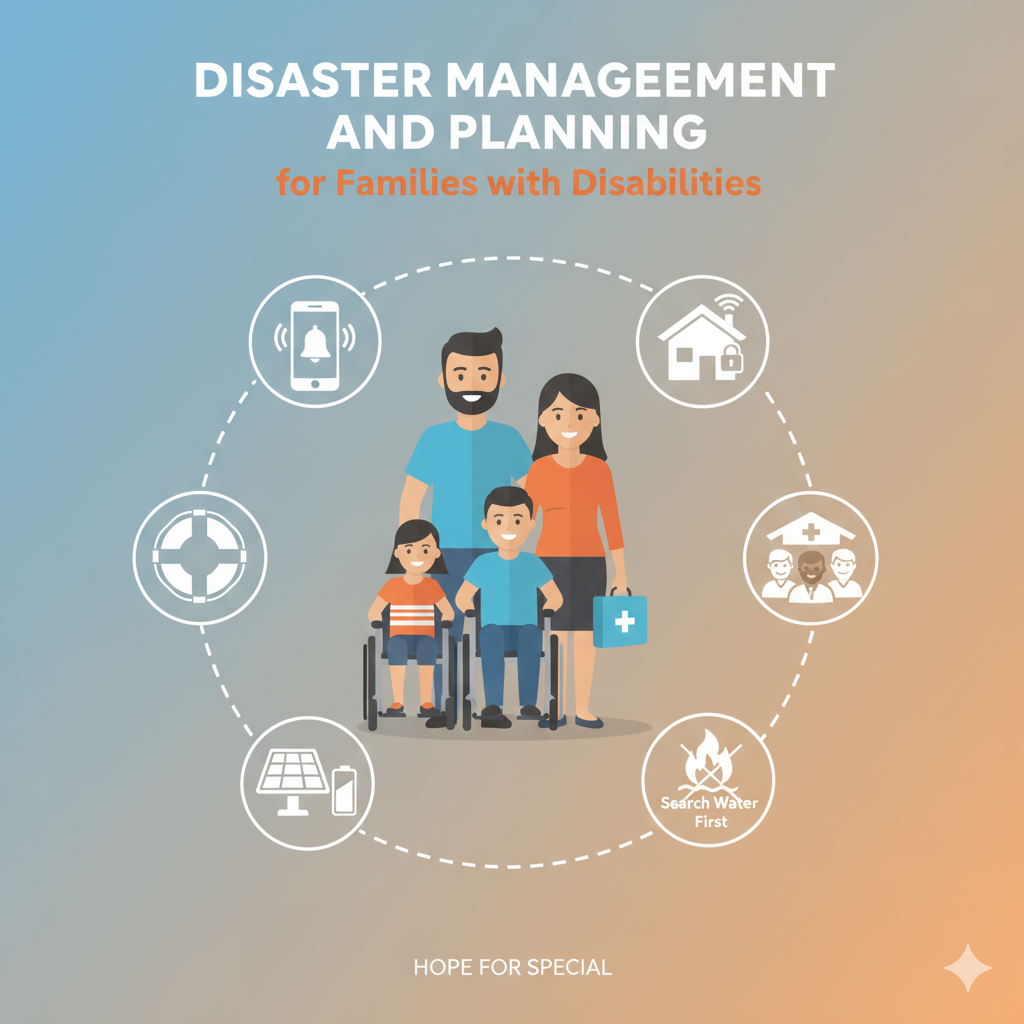
🚨 Disability Disaster Management and Planning: Complete Preparedness Guide (2026)
Disasters can happen at any time.
Floods, earthquakes, fires, or even sudden emergencies can disrupt daily life.
For individuals with disabilities, these situations can be more challenging.
👉 Movement may be limited
👉 Communication may be difficult
👉 Access to help may be delayed
That is why disability disaster management and planning or Disability Disaster Preparedness Plan is not optional. It is essential.

- 🧩 What Is Disability Disaster Management or Disability Disaster Preparedness Plan?
- 🧠 Why Disaster Planning Is Important
- 🏠 Real-Life Experience
- 🛠️ Step-by-Step Disability Disaster Preparedness Plan
- 1. 📋 Assess Individual Needs
- 2. 🧑🤝🧑 Build a Support Network
- 3. 📞 Keep Emergency Contacts Ready
- 4. 🎒 Prepare an Emergency Kit
- 5. 🗺️ Plan Evacuation Routes
- 6. 🗣️ Communication Plan
- 7. 🏥 Medical Preparedness
- 8. 🧘 Emotional Support Plan
- 📊 Emergency Kit Checklist
- 🧠 Disability-Specific Planning Tips
- ♿ For Mobility Disabilities
- 🧠 For Intellectual Disabilities
- 👂 For Hearing Impairment
- 👁️ For Vision Impairment
- 🧩 For Autism
- 🏫 Role of Schools and Communities
- 📱 Technology in Disaster Management (2026)
- ⚠️ Common Mistakes to Avoid
- 📊 Preparedness Plan Summary
- 🤖 Voice Search Section
- ❤️ Final Thoughts
- ❓ Disability Disaster Preparedness Plan FAQs
- 1. What is disability disaster management?
- 2. Why is disaster planning important for people with disabilities?
- 3. What should be in a disability emergency kit?
- 4. How can families prepare for disasters?
- 5. How often should emergency plans be updated?
- 6. Can schools help in disaster preparedness?
- 7. What challenges do disabled individuals face in disasters?
- 8. How can technology help?
- 9. What is the most important part of planning?
- 10. Is disaster planning complicated?
- 🌐 Sources
In my experience working with families, one thing becomes clear:
Families who plan ahead respond better and feel more confident during emergencies.
This guide will help you create a practical and effective disaster preparedness plan.
🧩 What Is Disability Disaster Management or Disability Disaster Preparedness Plan?
Disability disaster management focuses on:
👉 Protecting individuals with disabilities during emergencies
👉 Ensuring equal access to safety and support
👉 Planning ahead for unique needs
According to
👉 https://www.ready.gov/disability
people with disabilities need personalized emergency plans to stay safe.

🧠 Why Disaster Planning Is Important
People with disabilities face higher risks during disasters.
According to
👉 https://www.who.int/news-room/fact-sheets/detail/disability-and-health
individuals with disabilities are more vulnerable during emergencies.
📊 Key Risks
| Challenge | Impact |
|---|---|
| Mobility issues | Difficult evacuation |
| Communication barriers | Delayed help |
| Medical needs | Interrupted care |
| Sensory issues | Increased anxiety |
👉 Planning reduces these risks.
🏠 Real-Life Experience
A caregiver once shared:
“When the power went out, we didn’t know what to do. After that, we created a simple plan—and it changed everything.”
👉 Preparation brings confidence.
👉 Personalization is the key to safety.
🛠️ Step-by-Step Disability Disaster Preparedness Plan
1. 📋 Assess Individual Needs
Start by understanding:
- Mobility level
- Medical conditions
- Communication needs
👉 This is the foundation of your plan.
2. 🧑🤝🧑 Build a Support Network
Create a list of people who can help:
- Family members
- Neighbors
- Caregivers
👉 Share your plan with them.
3. 📞 Keep Emergency Contacts Ready
Include:
- Doctors
- Emergency services
- Family members
👉 Store contacts in both phone and written form.
4. 🎒 Prepare an Emergency Kit
Essential Items:
- Medications
- Medical records
- First aid kit
- Food and water (3 days supply)
- Flashlight
- Batteries
👉 According to
https://www.ready.gov/kit
emergency kits are critical for survival.
5. 🗺️ Plan Evacuation Routes
Identify:
- Safe exits
- Accessible routes
- Transportation options
👉 Practice evacuation regularly.
6. 🗣️ Communication Plan
Plan how to communicate during emergencies.
Use:
- Visual cards
- Text messages
- Emergency apps
👉 This is important for non-verbal individuals.
7. 🏥 Medical Preparedness
Keep:
- Medication list
- Doctor’s contact
- Medical equipment backup
👉 Ensure continuity of care.
8. 🧘 Emotional Support Plan
Disasters can cause anxiety.
Prepare:
- Comfort items
- Calming strategies
👉 Emotional safety is equally important.
📊 Emergency Kit Checklist
| Item | Purpose | Importance |
|---|---|---|
| Medications | Health needs | Critical |
| Water | Hydration | Essential |
| Food | Energy | Essential |
| Flashlight | Visibility | Important |
| Documents | Identification | Critical |
🧠 Disability-Specific Planning Tips
♿ For Mobility Disabilities
- Use wheelchair-accessible routes
- Arrange transport in advance
🧠 For Intellectual Disabilities
- Use simple instructions
- Practice drills
👂 For Hearing Impairment
- Use visual alerts
- Keep written instructions
👁️ For Vision Impairment
- Use tactile markers
- Keep items in fixed places
🧩 For Autism
- Maintain routine as much as possible
- Prepare sensory kits
👉 These tailored strategies improve safety.
🏫 Role of Schools and Communities
Schools should:
- Have inclusive disaster plans
- Conduct drills
- Train staff
According to
👉 https://www.unicef.org
inclusive planning ensures safety for all children.
📱 Technology in Disaster Management (2026)
Modern tools include:
- Emergency alert apps
- GPS tracking
- Smart medical devices
👉 Technology improves response time.
⚠️ Common Mistakes to Avoid
- ❌ Not having a plan
- ❌ Ignoring individual needs
- ❌ Not updating emergency kit
👉 Avoid these to stay prepared.
📊 Preparedness Plan Summary
| Step | Action | Benefit |
|---|---|---|
| Assess needs | Understand requirements | Better planning |
| Build network | Create support system | Quick help |
| Prepare kit | Gather essentials | Survival |
| Plan evacuation | Identify routes | Safety |
🤖 Voice Search Section
What is a disability disaster preparedness plan?
It is a personalized plan to help individuals with disabilities stay safe during emergencies.
Why is disaster planning important for disabled individuals?
Because they face higher risks and need customized support.
What should be included in an emergency kit?
Food, water, medications, documents, and basic supplies.
❤️ Final Thoughts
Disaster planning may feel overwhelming.
But remember:
👉 Preparation saves lives
👉 Planning reduces fear
👉 Awareness builds confidence
Every small step you take today can make a big difference tomorrow.
❓ Disability Disaster Preparedness Plan FAQs
1. What is disability disaster management?
It is planning and preparation to protect individuals with disabilities during emergencies.
👉 It focuses on safety and accessibility.
2. Why is disaster planning important for people with disabilities?
Because they may face:
- Mobility challenges
- Communication barriers
👉 Planning reduces risks.
3. What should be in a disability emergency kit?
Include:
- Medications
- Food and water
- Medical documents
- Emergency contacts
4. How can families prepare for disasters?
- Create a plan
- Build a support network
- Practice drills
5. How often should emergency plans be updated?
At least once a year or when needs change.
6. Can schools help in disaster preparedness?
Yes.
Schools should have:
- Inclusive plans
- Safety drills
7. What challenges do disabled individuals face in disasters?
They may face:
- Evacuation difficulties
- Communication issues
8. How can technology help?
Technology can:
- Provide alerts
- Track location
- Improve communication
9. What is the most important part of planning?
👉 Understanding individual needs.
10. Is disaster planning complicated?
No.
👉 Start simple and build step by step.
🌐 Sources
- https://www.ready.gov/disability
- https://www.who.int/news-room/fact-sheets/detail/disability-and-health
- https://www.unicef.org/disabilities
- https://www.cdc.gov/disasters/disability.html
👉 These provide expert-backed guidance.


