

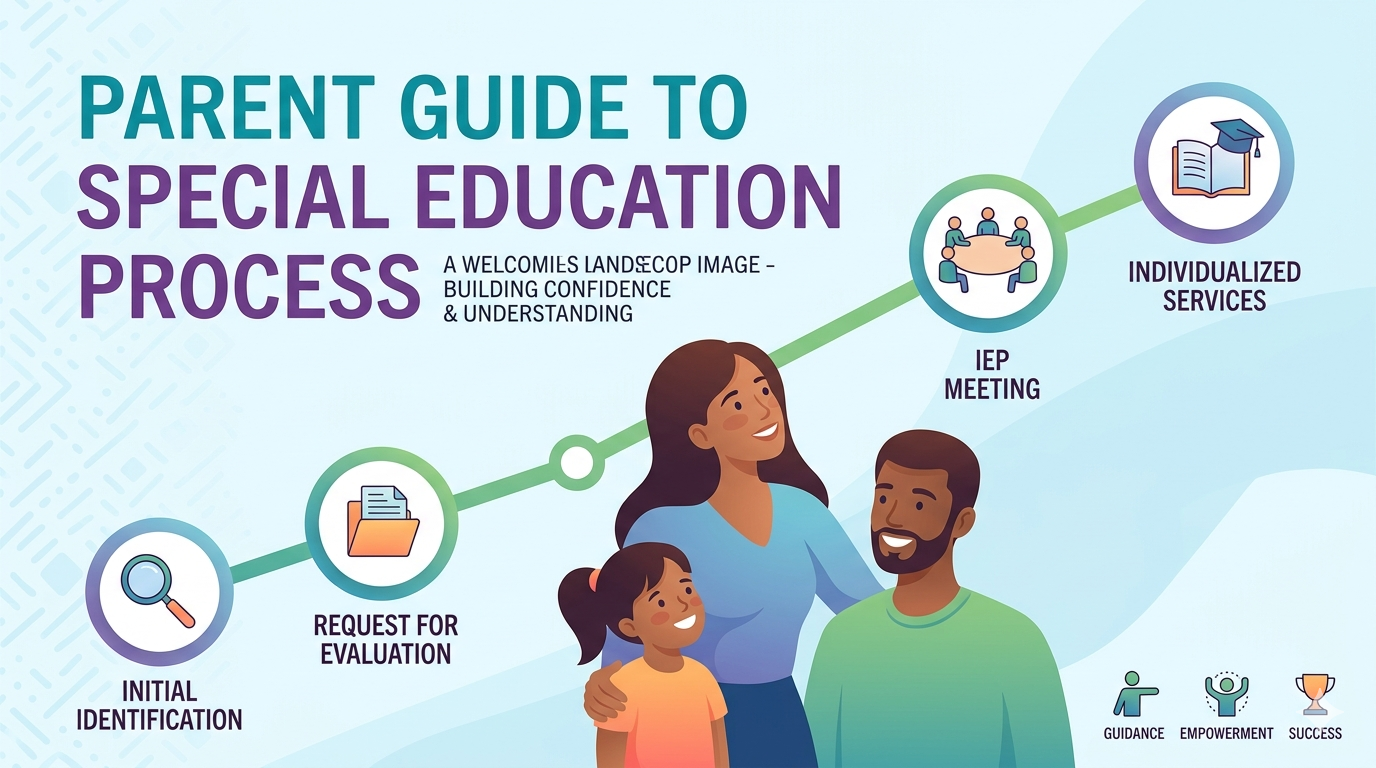
Parent Guide to Special Education Process (2026 Complete Beginner Guide)
Understanding the special education process can feel confusing at first. Many parents do not know where to begin. However, once you learn the steps, it becomes much easier to manage.
This parent guide to special education process will walk you through everything. It explains each step in simple words. It also helps you support your child with confidence.

- What Is Special Education?
- Why Parents Need to Understand the Process
- 📊 Table: Special Education Process Steps
- 📊 Table: What an IEP Includes
- 📊 Table: Typical Timeline
- Before Evaluation
- During IEP Meeting
- After Implementation
- 1. What is the first step in the special education process?
- 2. How long does the special education process take?
- 3. What if my child is not eligible?
- 4. Can I attend IEP meetings?
- 5. What services can my child receive?
- 6. How often is the IEP reviewed?
- 7. What are my rights as a parent?
What Is Special Education?
Special education is a system of support for children with disabilities. It provides:
- Individual learning plans
- Therapy services
- Classroom accommodations
The goal is simple:
👉 Help every child succeed in school and life.
According to the U.S. Department of Education, special education ensures students receive Free Appropriate Public Education (FAPE) under the law.
https://sites.ed.gov/idea/

Why Parents Need to Understand the Process
Parents play a key role. You are part of every major decision.
When you understand the process, you can:
- Advocate better
- Ask the right questions
- Ensure proper support
Research shows that parent involvement improves student outcomes.
https://www.parentcenterhub.org/parent-participation/
Overview of the Special Education Process
The process follows clear steps. Let’s look at them one by one.
📊 Table: Special Education Process Steps
| Step | Description |
|---|---|
| 1. Identification | Child is identified for support |
| 2. Evaluation | Child is assessed |
| 3. Eligibility | Decision is made |
| 4. IEP Development | Plan is created |
| 5. Implementation | Services begin |
| 6. Progress Monitoring | Progress is tracked |
| 7. Annual Review | Plan is reviewed yearly |
Step 1: Identification
The process starts when a concern is noticed.
This may come from:
- Parents
- Teachers
- Doctors
Common concerns include:
- Learning difficulties
- Speech delays
- Behavioral issues
Parents can request an evaluation at any time.
👉 Early identification is very important.
According to the CDC, early identification improves long-term outcomes.
https://www.cdc.gov/ncbddd/actearly/index.html
Step 2: Evaluation
After identification, the child is evaluated.
This includes:
- Academic testing
- Psychological assessments
- Speech and language testing
The evaluation must be:
✔ Fair
✔ Comprehensive
✔ Based on multiple tools
Schools must complete evaluation within a specific timeline.
Step 3: Eligibility
After evaluation, the school decides if your child qualifies.
Eligibility depends on:
- Type of disability
- Impact on learning
Examples include:
- Autism
- ADHD
- Learning disabilities
If eligible, your child moves to the next step.
Step 4: IEP Development
This is one of the most important steps.
An Individualized Education Program (IEP) is created.
It includes:
- Goals
- Services
- Accommodations
📊 Table: What an IEP Includes
| Component | Description |
|---|---|
| Present Levels | Current performance |
| Goals | Learning targets |
| Services | Therapy and support |
| Accommodations | Classroom adjustments |
| Progress Tracking | Measurement methods |
Experts explain that IEPs must be tailored to each child’s unique needs.
https://www.understood.org/en/articles/what-is-an-iep
Step 5: Implementation
Once the IEP is approved, services begin.
This may include:
- Speech therapy
- Occupational therapy
- Special education classes
Teachers and specialists work together.
👉 Parents should stay involved during this stage.
Step 6: Progress Monitoring
Schools must track progress regularly.
They measure:
- Academic growth
- Behavior changes
- Skill development
Parents receive progress reports.
Step 7: Annual Review
IEPs are reviewed at least once a year.
During the review:
- Goals are updated
- Services are adjusted
- Progress is discussed
Parents can request changes anytime.
Understanding Your Rights as a Parent
Parents have legal rights under special education laws.
These include:
✔ Right to participate in meetings
✔ Right to access records
✔ Right to disagree
✔ Right to request changes
According to IDEA, parents are equal members of the IEP team.
https://sites.ed.gov/idea/regs/b/d/300.322
Common Challenges Parents Face
Many parents face difficulties such as:
- Understanding legal terms
- Managing paperwork
- Communicating with schools
However, with knowledge, these challenges become easier.
Tips for Parents: Navigating the Process
✔ Stay Organized
Keep all documents in one place.
✔ Ask Questions
Never hesitate to ask for clarification.
✔ Build Communication
Stay in touch with teachers.
✔ Focus on Your Child’s Needs
Every decision should support your child.
Real-Life Example
Neha noticed her child struggling in school.
She:
- Requested evaluation
- Attended meetings
- Followed up regularly
Within months:
✔ Her child received support
✔ Academic performance improved
This shows the power of parent involvement.
Special Education Process Timeline
📊 Table: Typical Timeline
| Stage | Timeframe |
|---|---|
| Evaluation | 30–60 days |
| IEP Creation | Within 30 days |
| Review | Every 12 months |
How to Prepare for Each Step
Before Evaluation
- Write concerns
- Gather reports
During IEP Meeting
- Ask questions
- Take notes
After Implementation
- Monitor progress
- Communicate regularly
Benefits of Understanding the Process
When parents understand the system:
- Children get better support
- Stress reduces
- Decisions improve
Common Mistakes to Avoid
Avoid these:
❌ Waiting too long
❌ Not asking questions
❌ Ignoring progress reports
Instead:
✔ Stay proactive
✔ Stay involved
FAQs: Parent Guide to Special Education Process
1. What is the first step in the special education process?
The first step is identification. A parent, teacher, or doctor notices that a child may need extra support. After that, the school is informed, and the evaluation process begins. Parents can also request this step directly in writing.
2. How long does the special education process take?
The timeline can vary. However, in most cases:
- Evaluation takes about 30–60 days
- IEP creation happens within 30 days after eligibility
Overall, the process may take a few months from start to services.
3. What if my child is not eligible?
If your child is not eligible, you still have options:
- Request a second evaluation
- Ask for independent assessment
- Explore other school support plans
You have the right to disagree with the decision.
4. Can I attend IEP meetings?
Yes. Parents are required members of the IEP team. You can:
- Attend meetings
- Suggest changes
Your voice is important in every decision.
5. What services can my child receive?
Services depend on your child’s needs. They may include:
- Speech therapy
- Occupational therapy
- Behavioral support
- Academic assistance
Each service is listed in the IEP.
6. How often is the IEP reviewed?
IEPs are reviewed at least once a year. However, you can request a meeting anytime if you feel changes are needed.
7. What are my rights as a parent?
You have several rights, including:
- Access to records
- Participation in decisions
- Right to disagree
- Right to request changes
These rights are protected under special education law.
Final Thoughts
The parent guide to special education process is not just about understanding steps. It is about empowering yourself.
Remember:
👉 You are your child’s strongest advocate
👉 Knowledge gives you confidence
👉 Early action leads to better results
Take one step at a time. Stay informed. Stay involved.
Your efforts can make a life-changing difference.


