

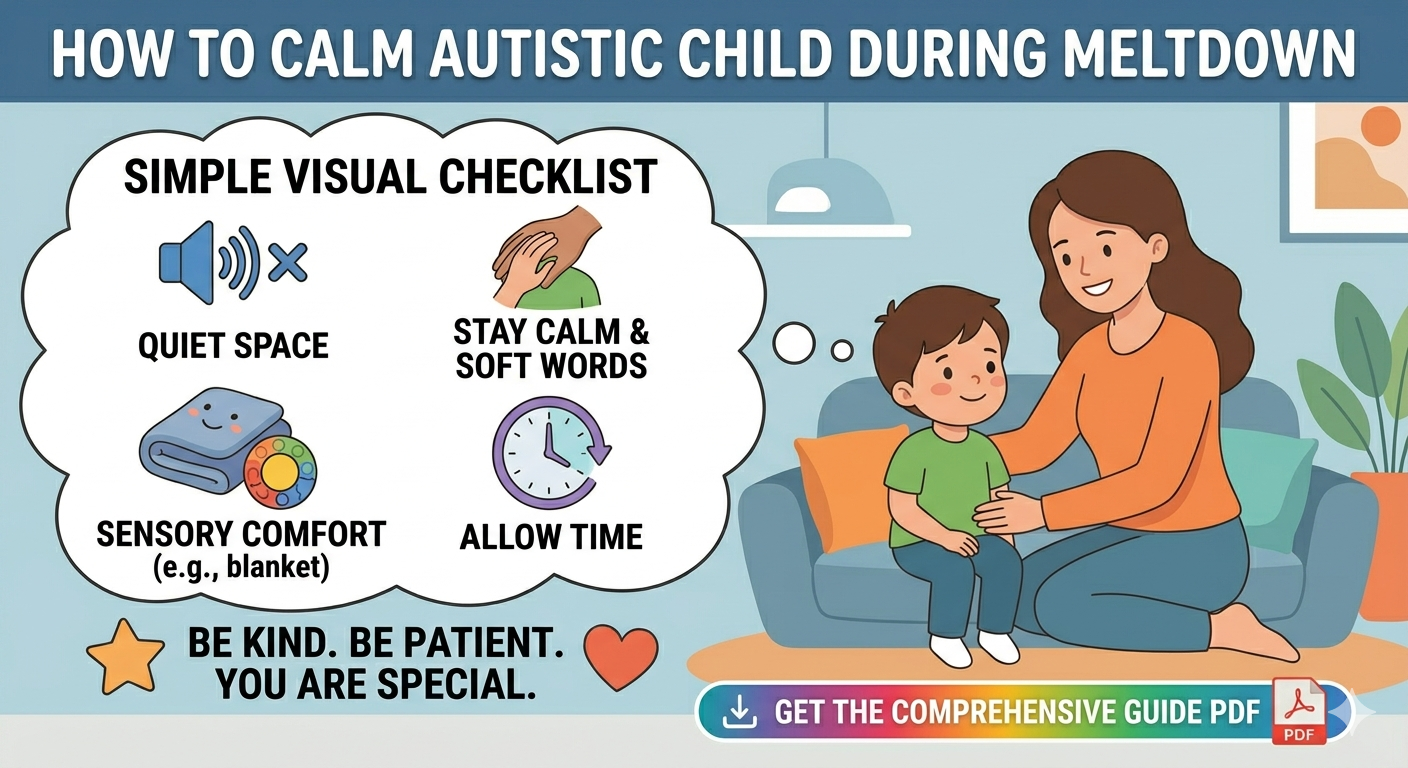
How to Calm Autistic Child During Meltdown (2026 Emergency Parent Guide)
Autism meltdowns can feel intense and overwhelming. For both the child and the parent.
In that moment, you may ask:
👉 How do I calm my child right now?
This guide gives you simple, practical, and proven steps to handle meltdowns safely and calmly.

- What Is an Autism Meltdown?
- 1. Sensory Overload
- 2. Communication Difficulty
- 3. Sudden Changes
- 4. Emotional Stress
- 5. Physical Discomfort
- Step 1: Stay Calm Yourself
- Step 2: Reduce Stimulation
- Step 3: Give Space (If Needed)
- Step 4: Use Simple Words
- Step 5: Offer Comfort Tools
- Step 6: Avoid Demands
- Step 7: Wait It Out
- ✔ Helpful vs ❌ Harmful Actions
- 1. Deep Pressure Therapy
- 2. Sensory Tools
- 3. Breathing Techniques
- 4. Visual Supports
- 5. Safe Calm Space
- 1. Follow a Routine
- 2. Use Visual Schedules
- 3. Identify Triggers
- 4. Teach Communication Skills
- 5. Practice Calm Strategies Daily
- 1. Give Time to Relax
- 2. Offer Comfort
- 3. Talk Later (If Possible)
- 4. Learn from the Situation
What Is an Autism Meltdown?
An autism meltdown is not a tantrum.
It is a response to overwhelm.
This may happen due to:
- Sensory overload
- Emotional stress
- Communication difficulties
According to the CDC, children with autism may experience challenges in communication and behavior regulation.
https://www.cdc.gov/autism/index.html
👉 Important: A meltdown is not intentional behavior. It is a loss of control.

How to calm autistic child during meltdown?
✔ Stay calm and quiet
✔ Reduce noise and stimulation
✔ Give space (if safe)
✔ Use simple words
✔ Offer comfort tools (toy, blanket)
✔ Wait patiently
Signs a Meltdown Is Coming
Early signs help you act faster.
Common Warning Signs:
- Covering ears
- Repetitive movements
- Crying or shouting
- Increased anxiety
- Withdrawal
Experts highlight early signs as key to preventing full meltdowns.
https://www.autismspeaks.org/meltdowns
Why Do Autism Meltdowns Happen?
Understanding the cause helps you respond better.
1. Sensory Overload
Too much:
- Noise
- Light
- Crowds
2. Communication Difficulty
The child cannot express needs.
3. Sudden Changes
Unexpected changes in routine.
4. Emotional Stress
Fear, frustration, or confusion.
5. Physical Discomfort
Hunger, tiredness, or illness.
Step-by-Step: How to Calm Autistic Child During Meltdown
Follow these steps in order.
Step 1: Stay Calm Yourself
Your reaction matters.
👉 If you panic, your child feels more stress.
Take a deep breath. Stay quiet.
Step 2: Reduce Stimulation
Remove triggers immediately.
- Turn off loud sounds
- Dim lights
- Move to a quiet place
Step 3: Give Space (If Needed)
Some children need space.
👉 Do not force interaction.
However, stay nearby for safety.
Step 4: Use Simple Words
Avoid long sentences.
Say:
- “You’re safe”
- “I’m here”
Step 5: Offer Comfort Tools
Use calming items:
- Favorite toy
- Weighted blanket
- Headphones
Step 6: Avoid Demands
Do not ask questions like:
❌ “Why are you crying?”
Instead:
✔ Wait quietly
Step 7: Wait It Out
Meltdowns take time.
👉 Be patient. Do not rush recovery.
What Helps vs What Makes It Worse
✔ Helpful vs ❌ Harmful Actions
| Helpful Actions | Harmful Actions |
|---|---|
| Stay calm | Yelling |
| Reduce noise | Forcing eye contact |
| Give space | Asking many questions |
| Use simple words | Punishing |
| Offer comfort | Ignoring safety |
Best Calming Techniques (Proven Methods)
1. Deep Pressure Therapy
- Hugs (if child likes)
- Weighted blanket
Research shows deep pressure can reduce anxiety.
https://www.ncbi.nlm.nih.gov/pmc/articles/PMC5613981/
2. Sensory Tools
- Noise-canceling headphones
- Fidget toys
3. Breathing Techniques
Teach simple breathing:
👉 Inhale → Exhale slowly
4. Visual Supports
Use:
- Picture cards
- Emotion charts
5. Safe Calm Space
Create a quiet corner at home.
Emergency Meltdown Plan (Printable Table)
| Situation | What to Do |
|---|---|
| Loud environment | Move to quiet place |
| Child crying loudly | Stay calm, reduce noise |
| Hitting or aggression | Ensure safety, give space |
| Overstimulation | Remove triggers |
| Communication issue | Use visuals or gestures |
How to Prevent Future Meltdowns
Prevention is powerful.
1. Follow a Routine
Children feel safe with structure.
2. Use Visual Schedules
Helps children know what comes next.
3. Identify Triggers
Track:
- Time
- Place
- Situation
4. Teach Communication Skills
Use:
- Words
- Pictures
- Apps
5. Practice Calm Strategies Daily
Do not wait for meltdown.
Real-Life Example
Priya, a parent, struggled with her child’s meltdowns in public places.
She started:
- Carrying headphones
- Using visual cards
- Leaving early when signs appeared
Result?
✔ Fewer meltdowns
✔ Faster recovery
✔ Less stress
Expert Insights
Experts agree:
👉 Early intervention and calm response reduce meltdown intensity.
According to Autism Speaks, understanding triggers and providing support helps manage meltdowns effectively.
https://www.autismspeaks.org/
Common Mistakes Parents Should Avoid
Avoid these:
❌ Yelling
❌ Punishing
❌ Forcing communication
❌ Ignoring triggers
Instead:
✔ Stay calm
✔ Be patient
✔ Focus on safety
After the Meltdown: What to Do Next
Recovery is important.
1. Give Time to Relax
Do not rush back to activities.
2. Offer Comfort
- Hug
- Quiet time
3. Talk Later (If Possible)
Use simple words:
👉 “You were upset. It’s okay.”
4. Learn from the Situation
Ask:
- What triggered it?
- What helped?
Parent Self-Care Matters
Caring for a child during meltdowns is hard.
You may feel:
- Exhausted
- Stressed
So:
✔ Take breaks
✔ Ask for support
✔ Talk to someone
FAQs: How to Calm Autistic Child During Meltdown
1. How long do meltdowns last?
They can last from minutes to over an hour.
2. Should I ignore a meltdown?
No. Stay nearby and ensure safety.
3. Can meltdowns be prevented?
Yes, with routine and trigger awareness.
4. Is punishment helpful?
No. It makes things worse.
5. What is the fastest way to calm a meltdown?
Reduce stimulation and stay calm.
Final Thoughts
Now you know how to calm autistic child during meltdown.
Remember:
👉 Stay calm
👉 Reduce triggers
👉 Be patient
Your calm response is the most powerful tool.


