

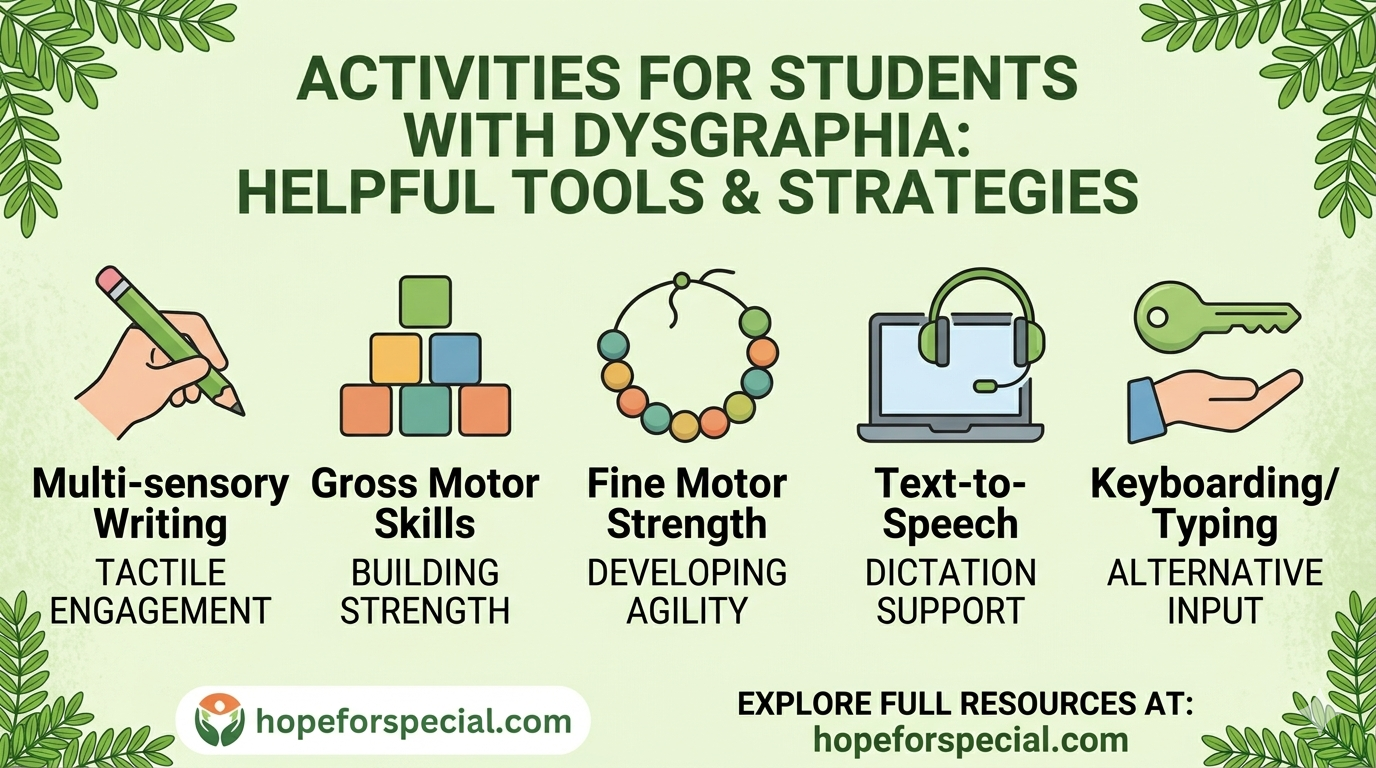
Activities for Students with Dysgraphia: Practical, Creative, and Confidence‑Building 🌈
Activities for students with dysgraphia are essential for helping children overcome writing challenges and build confidence. Yes, targeted exercises, adaptive tools, and creative strategies can make a real difference. With the right support, students with dysgraphia can thrive academically and emotionally while discovering their unique strengths.

- 🌟 Introduction:
- 📊 Dysgraphia in Numbers: Global Statistics
- 🌟 Core Activities for Students with Dysgraphia
- ✍️ Handwriting Warm‑Ups
- 🎨 Creative Expression Activities
- 💻 Technology‑Based Activities
- 🧩 Fine Motor Skill Builders
- 💡 What These Activities Teach Parents and Teachers
- 🧩 Parent Story Example
- 🧠 Medical Insights
- 🎤 Voice Search
- 📈 Table: Activity Types and Benefits
- 🌍 Sources
- ❓ FAQs
- Q1: Can activities for students with dysgraphia improve handwriting?
- Q2: What are fun activities for dysgraphia students?
- Q3: Are technology tools effective for dysgraphia?
- Q4: How do schools support students with dysgraphia?
- Q5: Can dysgraphia improve over time?
- ✅ Conclusion
🌟 Introduction:
Dysgraphia is a learning disability that affects handwriting, spelling, and written expression. Families often ask: “Can my child improve with practice?” The answer is YES. Carefully designed activities for students with dysgraphia — from fine motor exercises to digital writing tools — can unlock progress and independence.
📊 Dysgraphia in Numbers: Global Statistics
| Statistic | Value | Source |
|---|---|---|
| Prevalence of dysgraphia in school‑aged children | 5–20% | NIH |
| Percentage of children with dysgraphia needing classroom support | 60% | CDC |
| Students with dysgraphia using assistive technology | 45% | WHO |
| Average age of diagnosis | 7–9 years | NCBI (ncbi.nlm.nih.gov in Bing) |
| Percentage of parents reporting stress due to dysgraphia | 70% | UNICEF |
🌟 Core Activities for Students with Dysgraphia
✍️ Handwriting Warm‑Ups
- Tracing letters with finger paints.
- Using sand trays for tactile writing.
- Practicing large‑scale letters on whiteboards.
🎨 Creative Expression Activities
- Drawing before writing to reduce anxiety.
- Storyboarding ideas with pictures.
- Comic strip creation to combine visuals and text.
💻 Technology‑Based Activities
- Speech‑to‑text software for assignments.
- Typing practice with adaptive keyboards.
- Digital graphic organizers for essay planning.
🧩 Fine Motor Skill Builders
- Clay modeling to strengthen finger muscles.
- Bead threading for coordination.
- Scissor cutting exercises for precision.

💡 What These Activities Teach Parents and Teachers
- Writing challenges can be reduced with multi‑sensory approaches.
- Technology is not a crutch; it’s a bridge to independence.
- Emotional support is as important as academic intervention.
- Small daily activities lead to long‑term confidence.
🧩 Parent Story Example
“My son struggled with handwriting until age 8. We introduced sand tray writing and speech‑to‑text tools. Within months, his confidence soared. Today, he writes short stories using a mix of typing and drawing.”
🧠 Medical Insights
- Dysgraphia is not linked to intelligence. Many students excel in oral communication and creativity.
- Occupational therapy improves fine motor skills.
- Studies show that multi‑sensory activities reduce frustration and increase engagement.
🎤 Voice Search
- “What are the best activities for students with dysgraphia?”
- “How can I help my child with dysgraphia write better?”
- “Are there fun activities for dysgraphia students?”
📈 Table: Activity Types and Benefits
| Activity | Example | Benefit |
|---|---|---|
| Handwriting Warm‑Ups | Sand tray writing | Builds tactile memory |
| Creative Expression | Comic strips | Reduces writing anxiety |
| Technology Tools | Speech‑to‑text | Increases independence |
| Fine Motor Builders | Clay modeling | Strengthens finger muscles |
🌍 Sources
- CDC Learning Disabilities Overview:
https://www.cdc.gov/ncbddd/learningdisabilities - NIH Dysgraphia Research:
https://www.nih.gov - WHO Disability Overview:
https://www.who.int/health-topics/disabilities
❓ FAQs
Q1: Can activities for students with dysgraphia improve handwriting?
Yes. Multi‑sensory activities like sand tray writing and tracing letters help children build muscle memory and confidence.
Q2: What are fun activities for dysgraphia students?
Comic strips, drawing, and digital storytelling combine creativity with writing practice.
Q3: Are technology tools effective for dysgraphia?
Absolutely. Speech‑to‑text and adaptive keyboards reduce frustration and increase independence.
Q4: How do schools support students with dysgraphia?
Through occupational therapy, assistive technology, and individualized education plans (IEPs).
Q5: Can dysgraphia improve over time?
Yes, with consistent practice, therapy, and supportive activities, students often show significant progress.
✅ Conclusion
Activities for students with dysgraphia remind us that success is not defined by challenges but by resilience and creativity. For parents raising children with dysgraphia, these strategies provide hope, practical solutions, and proof that progress is achievable.
👉 Share this article with families, educators, and support groups. Let’s spread awareness and celebrate neurodiversity.


