

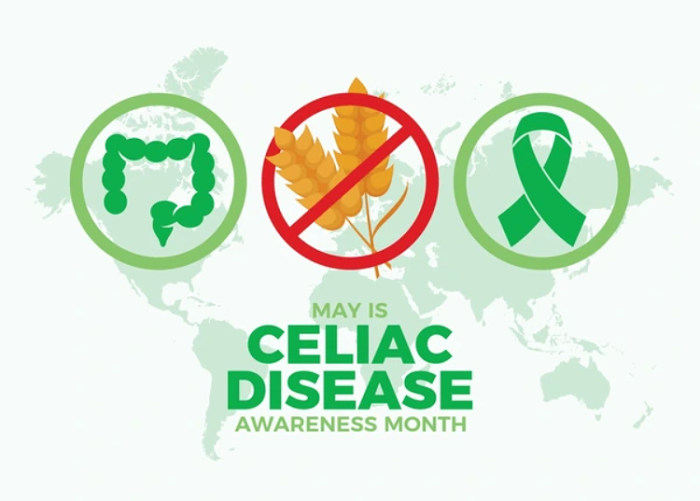
🌾 Celiac Awareness Month 2026: Educate, Empower & Embrace Gluten-Free Living
May is globally recognized as Celiac Awareness Month, a dedicated time to spotlight celiac disease, its impact, and the importance of a gluten-free lifestyle. This month-long observance aims to educate the public, support those affected, and promote early diagnosis and treatment.
- When Is Celiac Awareness Month? Quick Answer
- 📌 What is Celiac Disease?
- Celiac Disease in Children with Special Needs: What Parents of Autistic, ADHD, and Down Syndrome Children Must Know
- Celiac Disease at School: 504 Plans, IEP Accommodations and Teacher Guidance
- Can Celiac Disease Qualify for a 504 Plan or IEP?
- What a Celiac 504 Plan Should Cover
- What Teachers Need to Know
- Celiac Strong Day — The School Awareness Event for May
- The Social and Emotional Impact of Celiac Disease on Children
- Hidden Sources of Gluten: What Parents of Newly Diagnosed Children Miss
- Celiac Disease Myths vs Facts: Clearing Up the Most Dangerous Misconceptions
- Famous People with Celiac Disease
- How to Participate in Celiac Awareness Month 2026 — Your Action Guide
- 🛒 ALDI’s Commitment During Celiac Awareness Month
- 📅 Events & Activities in May 2026
- 📚 Educational Resources & Support
- 📊 Understanding Celiac Disease: A Snapshot
- Celiac Disease vs. Gluten Sensitivity: What Is the Difference?
- Hidden Symptoms of Celiac Disease: It Is Not Just About Stomach Pain
- Celiac Disease and Autism / ADHD: The Connection Every Special Needs Parent Should Know
- Celiac Disease in Children: A Complete Parent’s Guide
- Managing Celiac Disease at School: A Guide for Parents and Teachers
- How to Read Food Labels for Celiac Disease: A Simple Guide
- Gluten-Free Living on a Budget: Practical Tips for Celiac Families
- The History of Celiac Awareness Month: How It All Started
- Cross-Contamination Guide: The Invisible Danger for Celiac Families
- Your Celiac Awareness Month 2026 Action Plan: What YOU Can Do Right Now
- Voice Search for Celiac Awareness Month
- Q: What month is celiac awareness month?
- Q: What is the difference between celiac disease and gluten intolerance?
- Q: Can a child with autism have celiac disease?
- Q: How long does it typically take to get diagnosed with celiac disease?
- Q: What happens if celiac disease is left untreated?
- Q: Can my child get a 504 plan for celiac disease at school?
- Q: What is Celiac Strong Day?
- Q: Is the gluten-free diet a cure for celiac disease?
- ❓ Frequently Asked Questions
- 📅 When is Celiac Awareness Month observed?
- 🛍️ How does ALDI support Celiac Awareness Month?
- 🎓 How can schools participate in raising awareness?
- When is Celiac Awareness Month?
- What is the color of celiac awareness?
- Can autistic children have celiac disease?
- Can a child with celiac disease get a 504 plan?
- What are hidden sources of gluten?
- What famous people have celiac disease?
- 🌐 Get Involved
When Is Celiac Awareness Month? Quick Answer
If you landed here looking for a quick answer — here it is:
Celiac Awareness Month is observed every year in May. In 2026, it runs from Friday, May 1 through Sunday, May 31. (Source: Awareness Days — Coeliac Awareness Month 2026)
Additionally, there are several other celiac and gluten-free awareness dates throughout the year that parents, teachers, and advocates should know:
| Date | Observance | Organiser |
|---|---|---|
| May 1–31 | Celiac Awareness Month (US) | Celiac Disease Foundation, Beyond Celiac, National Celiac Association |
| May 11–17, 2026 | Coeliac Awareness Week (UK) | Coeliac UK |
| May 13, 2026 | Kids Teach Kids Day (Canada) | Celiac Canada |
| May 16 annually | International Celiac Disease Awareness Day | Global observance |
| May 16 (during Celiac Month) | Celiac Strong Day — school awareness events | Celiac Disease Foundation |
| September 13 annually | National Celiac Disease Awareness Day (US) | US Senate recognized observance |
| November (all month) | Gluten-Free Diet Awareness Month | Various organisations |
(Source: Digital Hygge — Celiac and Gluten-Free Awareness Days)
The green ribbon is the official symbol of celiac awareness — you may see it worn, displayed, or shared throughout May. (Source: Celiac Canada — Kids Teach Kids)
Note on spelling: “Celiac” is the American spelling. “Coeliac” is the British and Australian spelling. They refer to exactly the same condition. If you are searching for information and getting different results depending on which spelling you use, that is why.
📌 What is Celiac Disease?
Celiac disease is an autoimmune disorder where the ingestion of gluten leads to damage in the small intestine. It affects approximately 1 in 100 people worldwide, yet many remain undiagnosed. Symptoms can vary widely, making awareness and education crucial.(Coeliac UK)

Here’s a brief table of real-world statistics for Celiac Disease Awareness Month 2026:
| 📊 Statistic | Value / Insight | 🔗 Source |
|---|---|---|
| Global Prevalence | 1.4% globally affected | Celiac.org |
| U.S. Prevalence | 1 in 133 Americans (~1%) | Beyond Celiac |
| Undiagnosed Cases | 83% undiagnosed/misdiagnosed | Beyond Celiac |
| Diagnosis Delay | 6–10 years on average | National Today |
| Hereditary Risk | 1 in 10 for first-degree relatives | Celiac.org |
| Gender Disparity | Higher in females (17.4 vs. 7.8 per 100k) | Celiac.org |
| Rising Incidence | Increasing by 7.5% annually | Celiac.org |
| Pediatric Screening | 1.6% prevalence in screened children | Beyond Celiac |
| Economic Impact | $2.24B market by 2035 (CAGR 11.84%) | GlobeNewswire |
| Awareness Month | May is Celiac Awareness Month | Celiac.org |
Celiac Disease in Children with Special Needs: What Parents of Autistic, ADHD, and Down Syndrome Children Must Know
This is the section that no celiac awareness website has written — but that parents visiting a special needs website most urgently need. Celiac disease does not only affect neurotypical children. In fact, research suggests that several special needs conditions are associated with a higher-than-average rate of celiac disease.
Here is what the evidence shows:
| Condition | Celiac Connection |
|---|---|
| Autism Spectrum Disorder (ASD) | Children with autism are sometimes placed on a gluten-free diet as a therapeutic intervention. While the evidence for a direct link is debated, some autistic children with gastrointestinal symptoms show improvement on a gluten-free diet. Parents should discuss this with their child’s paediatrician. (Source: NIH/PubMed) |
| Down Syndrome | Children with Down syndrome have a significantly higher risk of developing celiac disease — studies suggest the rate is 5–12%, compared to 1% in the general population. Routine celiac screening is recommended for all children with Down syndrome. (Source: NIH/PubMed — Celiac in Down Syndrome) |
| ADHD | Some children with ADHD have undiagnosed gluten sensitivity. In some cases, removing gluten reduces gastrointestinal discomfort that was contributing to inattention, irritability, and behavioural difficulties. Students with autism, ADHD, ADD, celiac disease, Hashimoto’s Thyroiditis, and autoimmune diseases are often placed on a gluten-free diet by their healthcare providers. (Source: Sussan Greenwald & Wesler Law) |
| Type 1 Diabetes | Type 1 diabetes and celiac disease frequently co-occur — research shows up to 10% of people with Type 1 diabetes also have celiac disease. (Source: NIH — National Institute of Diabetes) |
| Turner Syndrome | Girls with Turner syndrome have a higher risk of celiac disease — routine screening is recommended. (Source: NIH/NIDDK) |
| Williams Syndrome | Higher rates of celiac disease have been documented in individuals with Williams syndrome. |
Why This Matters for Parents of Special Needs Children
If your child has one of the above conditions and is experiencing unexplained gastrointestinal symptoms — such as frequent stomach aches, bloating, constipation, diarrhoea, or unexplained weight loss — it is worth specifically requesting a celiac disease blood test from their paediatrician.
The important thing to understand is that celiac disease symptoms in children often look different from the classic digestive picture. In children especially, celiac can present as:
- Irritability or mood changes that seem unexplained
- Fatigue and low energy
- Short stature or slow growth
- Anaemia despite adequate iron intake
- Recurring mouth ulcers
- Skin rash (dermatitis herpetiformis)
- Delayed puberty
(Source: NIH — National Institute of Diabetes and Digestive and Kidney Diseases — Celiac Disease)
For special needs children who already struggle to communicate discomfort, these non-specific symptoms may be attributed to their primary condition — meaning celiac goes undiagnosed and untreated for years while causing ongoing intestinal damage.
Celiac Disease at School: 504 Plans, IEP Accommodations and Teacher Guidance
This is another section that no major celiac awareness website has written — yet it is one of the most urgent practical needs for families of school-age children with celiac disease.
Can Celiac Disease Qualify for a 504 Plan or IEP?
Yes — in many cases, a child with celiac disease qualifies for accommodations under a 504 Plan, which covers students with a health condition that substantially limits a major life activity. Eating and digestion are major life activities.
Furthermore, for children who have a special need alongside celiac disease, the dietary management can be incorporated into their existing IEP as a related accommodation. (Source: Sussan Greenwald & Wesler Law — Gluten Free Diets for Special Needs Students)
What a Celiac 504 Plan Should Cover
| Accommodation | Why It Matters |
|---|---|
| Dedicated safe eating area | Prevents cross-contamination from gluten crumbs on shared tables |
| Advance notification of classroom food events | Allows parents to prepare safe alternatives before celebrations or parties |
| Gluten-free meal option in the school cafeteria | Ensures the child can eat safely without social isolation |
| Staff training on celiac disease and cross-contamination | Teachers and aides must understand that even crumbs matter |
| Safe art and craft materials | Play dough, papier-mâché, and some clays contain wheat flour — alternative materials must be provided (Source: Nemours KidsHealth — Celiac Disease Factsheet for Schools) |
| Access to the nurse for any accidental exposure | Clear protocol for what happens if gluten is accidentally consumed |
| Permission to carry safe snacks | The child should always be able to access their own food |
What Teachers Need to Know
Most teachers are genuinely willing to help — they just need clear, practical information. Here is a simple guide you can share directly with your child’s teacher:
- Gluten is in: wheat, barley, rye, malt, and brewer’s yeast — and the products made from them (bread, pasta, cakes, biscuits, cereals, pizza, soy sauce, and many processed foods) (Source: Nemours KidsHealth)
- Gluten-free foods include: corn, rice, buckwheat, quinoa, potatoes, plain meat, fish, chicken, dairy, fruits, vegetables, legumes, and nuts (Source: Nemours KidsHealth)
- Cross-contamination is a real risk: Any cutting board, utensil, or surface that touched gluten-containing food must be thoroughly washed before being used for gluten-free food
- Art supplies matter: Play dough and papier-mâché typically contain wheat. Provide alternatives or ensure the child washes hands immediately after contact (Source: Nemours KidsHealth)
- Substitute teachers need to know: Always brief substitute teachers on the specific student’s celiac disease — a written card in the classroom helps
- Emotional support matters: If the child seems upset about their dietary restrictions, connect them with the school counsellor
Celiac Strong Day — The School Awareness Event for May
Celiac Strong Day takes place during Celiac Awareness Month in May. It is a programme run by the Celiac Disease Foundation that encourages schools to host awareness events led by students with celiac disease. Participating schools may also receive free gluten-free products through programme sponsors. (Source: Celiac Disease Foundation — Celiac Strong Day)
Similarly, in Canada, Celiac Canada runs “Kids Teach Kids Day” — in 2026 it falls on May 13. Green is the official colour — classes are encouraged to wear green and share awareness resources. (Source: Celiac Canada — Kids Teach Kids)
The Social and Emotional Impact of Celiac Disease on Children
Here is a dimension of celiac disease that is often completely overlooked in awareness content — yet for children and families, it is one of the most challenging aspects of living with the condition.
Celiac disease is socially and emotionally demanding in ways that go far beyond dietary restriction. Food is at the centre of almost every childhood social experience — birthday parties, school lunches, sports team celebrations, holiday traditions, sleepovers, and class events. For a child with celiac disease, every one of these occasions requires careful navigation.
“We try to help kids recognise the very valid feeling of isolation or being left out,” says Venus Kalami, a Stanford Medicine Children’s Health registered dietitian. “Once they can identify that feeling, we help them build self-advocacy skills so that next time they’re in a similar situation, they know how to handle it by speaking up for themselves.” (Source: Stanford Medicine Children’s Health)
The Social Challenges by Age Group
| Age | Common Social Challenge |
|---|---|
| Preschool (3–5) | Cannot share snacks or birthday cake with other children — feels different and excluded |
| Primary school (6–12) | School cafeteria limitations, art supplies with gluten, class party food — ongoing daily navigation required |
| Teenager (13–18) | Eating out with friends, social pressure to “just eat it,” fear of seeming high-maintenance in relationships |
| All ages | Holiday traditions involving symbolic foods — Easter bread, Christmas cookies, Eid sweets |
What Parents Can Do
- Name the feeling openly. Helping your child identify and name the feeling of being left out reduces its power and builds emotional vocabulary
- Teach self-advocacy early. Children who learn to speak up for their dietary needs develop confidence that extends into every area of life. A teenager who can call a restaurant and ask about gluten-free options is building a lifelong skill. (Source: Stanford Medicine Children’s Health)
- Always bring a safe alternative to parties. A gluten-free cupcake from home means your child never has to sit without cake at a birthday party
- Frame it as identity, not limitation. Children who grow up seeing their gluten-free diet as a normal part of who they are — rather than a deprivation — develop significantly better long-term adjustment
The Financial Stress Parents Carry
Many gluten-free foods cost more than their gluten-containing counterparts. One study showed that eating gluten-free can cost twice as much as a gluten-containing diet. (Source: Stanford Medicine Children’s Health)
This financial burden is real and significant. Parents managing a special needs household on top of a gluten-free food budget face compounding financial stress. Some practical relief:
- In the United States, the additional cost of gluten-free foods above their equivalent regular products may be tax-deductible as a medical expense — keep all receipts and consult your tax adviser
- Some state Medicaid waiver programmes include food supplement provisions for diagnosed medical dietary conditions
- Feeding Gluten Free (a charity) coordinates donations of gluten-free food to families in financial need (Source: National Celiac Association)
Hidden Sources of Gluten: What Parents of Newly Diagnosed Children Miss
One of the most stressful parts of a new celiac diagnosis is discovering just how many unexpected places gluten hides. Many parents eliminate the obvious — bread, pasta, cake — but their child continues to have reactions because of hidden gluten they never considered.
Here is a comprehensive guide to hidden gluten sources that parents most commonly miss:
Hidden Gluten in Foods
| Hidden Gluten Source | Why It Is Surprising |
|---|---|
| Soy sauce and tamari | Most standard soy sauce contains wheat — use certified gluten-free tamari instead |
| Oats (unless certified GF) | Oats themselves do not contain gluten but are almost always processed on shared equipment — only buy certified gluten-free oats |
| Malt vinegar | Made from barley — contains gluten. Use white wine vinegar or apple cider vinegar instead |
| Stock cubes and gravy powders | Most contain wheat flour as a thickener — always read labels |
| Processed deli meats | Some contain wheat-based fillers or are processed on shared equipment |
| Imitation crab / seafood sticks | Almost always contain wheat starch |
| Communion wafers | A significant source for religious families — gluten-free alternatives are available and accepted in most denominations |
| Medications and supplements | Some tablet coatings and capsule fillers contain gluten — always check with your pharmacist |
| Shared cooking oils | Oil in which gluten-containing foods have been fried carries cross-contamination risk |
| Play dough and modelling clay | Contain wheat flour — significant risk especially for younger children who touch their faces or mouths |
(Source: Nemours KidsHealth — Celiac Disease Factsheet for Schools) (Source: NIH — NIDDK — Celiac Disease)
Cross-Contamination: The Invisible Risk
Cross-contamination is when a gluten-free food comes into contact with gluten — through shared utensils, shared cooking surfaces, shared fryers, or shared toasters. For a child with celiac disease, even a crumb of gluten can trigger intestinal damage.
Key cross-contamination risks at home:
Food Labels — What to Look For
In the United States, a product labelled “gluten-free” must contain less than 20 parts per million (ppm) of gluten — the threshold considered safe for most people with celiac disease. (Source: FDA — Gluten-Free Labelling Rule)
Look for these terms on labels:
- ✅ “Certified Gluten-Free” — tested and verified
- ✅ “Gluten-Free” — meets FDA standard
- ⚠️ “Wheat-free” — does NOT mean gluten-free (barley and rye also contain gluten)
- ⚠️ “May contain traces of wheat” — not safe for celiac disease
Celiac Disease Myths vs Facts: Clearing Up the Most Dangerous Misconceptions
Misinformation about celiac disease is widespread — and some of it is genuinely harmful. During Celiac Awareness Month, correcting these myths is as important as sharing facts.
| Myth | Fact |
|---|---|
| “A little bit of gluten won’t hurt.” | False. Even tiny amounts of gluten — invisible crumbs — cause intestinal damage in celiac disease. There is no safe threshold except zero. (Source: NIH — NIDDK) |
| “If they don’t have symptoms, they don’t have celiac disease.” | False. Many people with celiac disease — including children — have no obvious digestive symptoms yet still experience significant intestinal damage and long-term health consequences. (Source: NIH — NIDDK) |
| “Celiac disease is the same as a gluten intolerance.” | False. Celiac disease is an autoimmune condition causing measurable intestinal damage. Non-celiac gluten sensitivity causes discomfort but not the same immune response or damage. They require different levels of management. (Source: Beyond Celiac) |
| “Celiac disease is just a trend or lifestyle choice.” | False. It is a serious, lifelong autoimmune disease diagnosed by blood tests and intestinal biopsy. Untreated celiac disease leads to long-term complications including osteoporosis, anaemia, infertility, and increased risk of certain cancers. (Source: NIH — NIDDK) |
| “Children will outgrow celiac disease.” | False. Celiac disease is lifelong. There is currently no medication or treatment — a strict gluten-free diet is the only management, and it must continue for life. (Source: NIH — NIDDK) |
| “Gluten-free products are always healthier.” | False. Many commercial gluten-free products are highly processed and contain more sugar and fat than their gluten-containing equivalents. Naturally gluten-free whole foods (rice, potatoes, vegetables, fruits, meat) are the most nutritious foundation of a gluten-free diet. |
| “Celiac disease only affects the digestive system.” | False. Untreated celiac disease affects the brain (neurological symptoms), skin (dermatitis herpetiformis), bones (osteoporosis), reproductive system (miscarriage, infertility), and liver. It is a systemic autoimmune disease. (Source: NIH — NIDDK) |
Famous People with Celiac Disease
One of the most encouraging things to share with a child or teenager newly diagnosed with celiac disease is that they are in remarkable company. Many highly successful, creative, and celebrated people manage celiac disease as part of their daily life.
| Famous Person | Field | Notes |
|---|---|---|
| Zooey Deschanel | Actor and Musician | Has spoken publicly about managing both celiac disease and a soy allergy |
| Elisabeth Hasselbeck | TV Presenter and Author | Wrote a book specifically about gluten-free living after her own celiac diagnosis |
| Novak Djokovic | Tennis Champion | Discovered gluten intolerance was affecting his performance — went gluten-free and went on to win multiple Grand Slam titles |
| Miley Cyrus | Singer and Actor | Has spoken about her gluten-free diet due to gluten intolerance |
| Dana Carvey | Comedian and Actor | Has lived with celiac disease and has advocated for awareness |
| Keith Olbermann | Broadcaster | Has spoken publicly about his celiac disease diagnosis |
The message for children and teenagers is clear: a celiac diagnosis changes how you eat — but it does not change what you can achieve.
How to Participate in Celiac Awareness Month 2026 — Your Action Guide
Celiac Awareness Month is not just for people with the diagnosis — it is an opportunity for everyone to learn, support, and advocate. Here is a practical, organised guide to how your family, school, or community can get involved in May 2026:
For Individuals and Families
| Action | How to Do It |
|---|---|
| Share your story on social media | Use hashtags #CeliacAwarenessMonth #GlutenFreeLife #KnowCeliac throughout May |
| Wear the green ribbon | Green is the official colour of celiac awareness — wear it throughout May |
| Try going gluten-free for a day | Builds empathy for family members and friends who live this way every day |
| Get tested if you have symptoms | Many people with celiac disease remain undiagnosed for years — if you have unexplained digestive, skin, or fatigue symptoms, ask your doctor for a blood test |
| Donate to celiac research | Beyond Celiac and the Celiac Disease Foundation both accept donations that fund research into treatments and eventually a cure (Source: Beyond Celiac) |
For Schools and Teachers
- Register your class for Celiac Strong Day through the Celiac Disease Foundation — participating classrooms may receive free gluten-free products (Source: Celiac Disease Foundation)
- In Canada, register for Kids Teach Kids Day through Celiac Canada on May 13, 2026 (Source: Celiac Canada)
- Invite a student with celiac disease to teach their classmates — with the family’s permission — about what the condition means and how friends can support them
- Review the school cafeteria’s gluten-free options and ensure they are clearly labelled
For Healthcare Providers
- Proactively screen patients with Down syndrome, Turner syndrome, Type 1 diabetes, and autoimmune conditions for celiac disease
- Ask about celiac symptoms when seeing patients with unexplained anaemia, fatigue, growth concerns, or recurring mouth ulcers
- The National Celiac Association hosts educational webinars for healthcare providers throughout May (Source: National Celiac Association)
🛒 ALDI’s Commitment During Celiac Awareness Month
Retailers like ALDI play a significant role in supporting the celiac community. During Celiac Awareness Month, ALDI introduces a variety of gluten-free products, making it easier for individuals to maintain a gluten-free diet.
🛍️ ALDI’s Gluten-Free Offerings:
- Gluten-Free Meals: Ready-to-eat options for convenience.
- Snacks & Desserts: A range of treats to satisfy cravings.
- Baking Essentials: Flours and mixes for home baking.(glutenfreecuppatea.co.uk, Wicked Gluten Free)
These products are often available starting mid-April, allowing customers to prepare for May’s observance. (Gluten Free with Casey)
📅 Events & Activities in May 2026
Celiac Awareness Month is marked by various events aimed at education and community building.
🎉 Notable Events:
- Celiac Awareness Night @ Fenway Park: An evening of baseball with gluten-free concessions and a pre-game ceremony.
- Step Beyond Celiac 5K: A virtual run/walk event to raise funds for celiac research.
- Celiac Strong Day (May 16): Encouraging schools to host awareness events led by students. (Celiac Disease Foundation, Beyond Celiac, Celiac Disease Foundation)
📚 Educational Resources & Support
Several organizations provide resources to educate and support those affected by celiac disease:
- Celiac Disease Foundation: Offers comprehensive information and advocacy tools.
- Beyond Celiac: Focuses on accelerating research and providing community support.
- National Celiac Association: Hosts events and provides resources for individuals and families. (Celiac Disease Foundation)
📊 Understanding Celiac Disease: A Snapshot
| Aspect | Details |
|---|---|
| Prevalence | Affects ~1% of the global population |
| Symptoms | Digestive issues, fatigue, joint pain, skin rashes |
| Diagnosis | Blood tests followed by an intestinal biopsy |
| Treatment | Strict, lifelong gluten-free diet |
| Complications | Nutritional deficiencies, osteoporosis, infertility if untreated |
Celiac Disease vs. Gluten Sensitivity: What Is the Difference?
One of the most searched and most misunderstood topics in the celiac community is this: Is celiac disease the same as gluten sensitivity? The short answer is no — but the distinction matters enormously for diagnosis, treatment, and daily life.
Here is a clear, simple comparison of the three main gluten-related conditions:
| Feature | Celiac Disease | Non-Celiac Gluten Sensitivity (NCGS) | Wheat Allergy |
|---|---|---|---|
| Type | Autoimmune disease | Intolerance / Sensitivity | Allergic reaction |
| Cause | Immune attack on small intestine | Unclear — not autoimmune | Immune reaction to wheat proteins |
| Intestinal damage | Yes — villi are damaged | No | No |
| Blood test available | Yes (tTG-IgA, EMA) | No definitive test | Yes (skin prick/IgE test) |
| Confirmed by biopsy? | Yes — required for diagnosis | No | No |
| Symptoms | Digestive, skin, brain, bone | Digestive, fatigue, brain fog | Hives, swelling, digestive, anaphylaxis |
| Must be lifelong gluten-free? | Yes — strictly | Often, but some tolerate small amounts | No — only wheat must be avoided |
| Affects ~how many people? | 1% of population | 6–13% of population | 0.1–0.4% of population |
(Source: Beyond Celiac | Source: Celiac Disease Foundation)
Furthermore, it is important to understand that even if someone tests negative for celiac disease, they may still have gluten sensitivity and benefit from a gluten-free diet. However, only celiac disease causes permanent damage to the small intestine, which is why getting properly tested before starting a gluten-free diet is absolutely essential. (Source: Gluten Intolerance Group)
The key takeaway: Celiac disease is not just a food preference or a trend. It is a serious autoimmune condition that requires strict, lifelong management — and it looks different from both gluten sensitivity and wheat allergy.
Hidden Symptoms of Celiac Disease: It Is Not Just About Stomach Pain
‘When most people hear “celiac disease,” they immediately think of stomach pain and diarrhea. However, what many people do not realize is that celiac disease can cause over 200 different symptoms — many of which have nothing to do with digestion at all. In fact, the non-gut symptoms are often what delay diagnosis for years. (Source: National Celiac Association)
This is why the average diagnosis delay for celiac disease is 6–10 years. People are being treated for separate conditions when, in fact, celiac disease is the underlying cause. (Source: National Today / Beyond Celiac)
Here are the surprising, lesser-known symptoms of celiac disease organized by body system:
Neurological & Mental Health Symptoms:
- Brain fog (difficulty concentrating, memory lapses)
- Anxiety and depression
- Headaches and migraines
- Peripheral neuropathy (tingling or numbness in hands and feet)
- Ataxia (balance and coordination problems)
Skin Symptoms:
- Dermatitis herpetiformis — a chronic, itchy blistering skin rash that is actually a skin form of celiac disease
- Eczema flare-ups
- Psoriasis-like patches
- Mouth sores (aphthous ulcers)
Bone & Joint Symptoms:
- Osteoporosis or osteopenia (low bone density) — even in young children
- Joint pain and swelling
- Unexplained fractures (as in the Stanford Children’s patient Isabella, whose diagnosis started with a bizarre leg fracture during ballet) (Source: Stanford Children’s Health)
Hormonal & Reproductive Symptoms:
- Delayed puberty in children
- Irregular or missed periods in women
- Infertility and repeated miscarriage
- Hormonal imbalances
General & Other Symptoms:
- Unexplained fatigue and weakness
- Iron-deficiency anemia that does not respond to iron supplements
- Dental enamel defects
- Mood swings and irritability (especially in children)
- Short stature or poor growth in children
| Symptom Category | Example Symptoms | Often Misdiagnosed As |
|---|---|---|
| Neurological | Brain fog, neuropathy, ataxia | ADHD, anxiety, multiple sclerosis |
| Skin | Dermatitis herpetiformis, eczema | Eczema, psoriasis |
| Bone | Osteoporosis, fractures | Calcium deficiency, injury |
| Digestive | Bloating, constipation, diarrhea | IBS, Crohn’s disease |
| Growth | Short stature, delayed puberty | Genetics, growth hormone issues |
(Source: Gluten Intolerance Group | Source: National Celiac Association)
The lesson from all of this is clear: if you or your child has multiple unexplained symptoms affecting different parts of the body, celiac disease should be investigated — not just dismissed.
Celiac Disease and Autism / ADHD: The Connection Every Special Needs Parent Should Know
If you are a parent of a child with autism, ADHD, or another developmental condition, this section is especially important for you to read during Celiac Awareness Month.
The Autism and Celiac Connection
Emerging research has shown a potential link between celiac disease and autism spectrum disorder (ASD). A 2013 study found that children with autism had significantly higher levels of genetic markers for celiac disease compared to children without autism. Specifically, children with autism showed elevated anti-gliadin antibodies — proteins produced when the body reacts to gluten. (Source: ACANY – Advance Care Alliance)
While this does not mean that gluten causes autism, or that autism causes celiac disease, it does suggest that the two conditions may share underlying immune system pathways. Some families report significant behavioral and sensory improvements in their autistic children after switching to a gluten-free diet — though the scientific evidence is still developing and results vary widely from child to child.
| Finding | Detail |
|---|---|
| Shared genetic markers | Children with autism show higher rates of anti-gliadin antibodies |
| Gut-brain connection | ASD is associated with gastrointestinal issues, which celiac can worsen |
| GFCF diet use | Many autism families use Gluten-Free, Casein-Free (GFCF) diets |
| Research status | Ongoing — not yet conclusive; consult your doctor |
The ADHD and Gluten Sensitivity Connection
Similarly, some studies have found that children with ADHD who also have gluten sensitivity experience improvements in attention, behavior, and hyperactivity when placed on a strict gluten-free diet. Researchers hypothesize that gluten may trigger neuroinflammation in some sensitive individuals, which can worsen ADHD symptoms.
What This Means for Your Family During Celiac Awareness Month
If your child has autism, ADHD, or any developmental condition AND experiences digestive symptoms, skin issues, fatigue, or behavioral changes — it may be worth asking your pediatrician or gastroenterologist about celiac disease testing. Getting tested is simple, non-invasive, and could change your child’s life.
Important: Always get tested BEFORE starting a gluten-free diet. If you eliminate gluten first, the blood test for celiac disease will come back as a false negative. (Source: Gluten Intolerance Group)
Celiac Disease in Children: A Complete Parent’s Guide
Celiac disease can develop at any age — from infancy to adulthood. In children, it often presents differently than in adults, which is one of the reasons it so frequently goes undiagnosed for years. (Source: SickKids Foundation)
Signs of Celiac Disease in Babies and Toddlers:
- Chronic diarrhea or constipation
- Bloated, distended belly
- Vomiting
- Failure to thrive (not gaining weight or growing as expected)
- Extreme irritability and crankiness
- Pale, foul-smelling stools
Signs of Celiac Disease in School-Age Children:
- Short stature or slow growth compared to peers
- Delayed puberty
- Dental enamel problems (pitting or discolouration of teeth)
- Recurring stomach pain or cramps
- Fatigue and low energy despite adequate sleep
- Difficulty concentrating in school
- Mood swings and behavioral changes
- Skin rashes (especially dermatitis herpetiformis)
Signs of Celiac Disease in Teenagers:
- Iron-deficiency anemia
- Osteoporosis (surprisingly common in teens with undiagnosed celiac)
- Missed or irregular periods in girls
- Persistent headaches or migraines
- Anxiety or depression without a clear cause
How Is Celiac Disease Diagnosed in Children?
Diagnosis involves two steps:
| Step | What Happens |
|---|---|
| Step 1: Blood Test | tTG-IgA (tissue transglutaminase antibody) test screens for celiac disease antibodies. Child must be eating gluten at the time of testing. |
| Step 2: Endoscopy + Biopsy | If blood test is positive, a pediatric gastroenterologist performs a small intestinal biopsy to confirm damage to villi. |
After diagnosis, the only current treatment for celiac disease in children is a strict, lifelong gluten-free diet. The good news is that most children experience significant improvement — sometimes within weeks — once gluten is removed completely.
Managing Celiac Disease at School: A Guide for Parents and Teachers
One of the biggest challenges for children with celiac disease is navigating school safely. Between cafeteria lunch options, classroom birthday treats, cooking class activities, and science projects using pasta or clay (which sometimes contains wheat), schools can be full of hidden gluten dangers.
During Celiac Awareness Month, it is the perfect time to set up proper accommodations at your child’s school. Here is what you need to know:
Step 1: Get a 504 Plan for Your Child
Celiac disease qualifies as a disability under the Americans with Disabilities Act (ADA) and Section 504 of the Rehabilitation Act. This means your child is entitled to a 504 Accommodation Plan at school. A 504 plan for celiac disease should include:
- Access to a designated safe eating area free from gluten cross-contamination
- The right to bring a packed lunch from home
- Access to gluten-free alternatives in the school cafeteria where possible
- Permission to carry safe snacks at all times
Step 2: Educate the School Team
| Who Needs to Know | What They Need to Understand |
|---|---|
| Classroom teacher | No shared food; alert parents before any food activity |
| School nurse | Symptoms of accidental gluten exposure (glutening) |
| Cafeteria staff | Cross-contamination risks; dedicated utensils/surfaces |
| PE teacher | Some sports drinks and protein bars contain gluten |
| Art teacher | Some clays, paints, and craft glues contain wheat |
| School counselor | Emotional impact of dietary restrictions on social life |
Step 3: Help Your Child Build Confidence
One of the hardest parts of having celiac disease as a child is feeling left out — especially at birthday parties, holiday celebrations, or class pizza days. As a parent, you can help by:
- Packing safe “treat alternatives” to keep at school for these occasions
- Role-playing how your child can explain their diet to classmates simply
- Connecting your child with the Celiac Disease Foundation’s school support resources (Source: Celiac Disease Foundation)
The Celiac Disease Foundation even offers a School Support Sessions virtual program specifically designed to help families navigate the school environment with celiac disease. (Source: Celiac Disease Foundation)
How to Read Food Labels for Celiac Disease: A Simple Guide
Reading food labels correctly is a life skill that every person with celiac disease — and every parent of a child with celiac — must master. Getting it wrong can result in accidental gluten exposure, also called being “glutened,” which triggers an immune response and intestinal damage even if there are no immediate symptoms. (Source: Gluten Intolerance Group)
In the USA: Since 2014, the FDA requires any food labeled “gluten-free” to contain less than 20 parts per million (ppm) of gluten. This is considered the safe threshold for most people with celiac disease.
Always Check for These Hidden Gluten Sources:
| “Safe” Sounding Ingredient | May Contain Gluten? | Notes |
|---|---|---|
| Malt / Malt extract | ✅ YES | Usually made from barley |
| Modified food starch | ⚠️ SOMETIMES | Check the source (wheat vs corn) |
| Soy sauce | ✅ YES | Most contain wheat — use tamari instead |
| Oats | ⚠️ SOMETIMES | Oats are naturally GF but often cross-contaminated |
| Natural flavours | ⚠️ SOMETIMES | May contain wheat-derived ingredients |
| Hydrolyzed vegetable protein | ⚠️ SOMETIMES | Could be from wheat |
| Dextrin | ⚠️ SOMETIMES | Could be wheat-derived |
| Caramel colour | ⚠️ RARELY | Usually safe in the USA, check in other countries |
| Vinegar | ✅ MOSTLY SAFE | Distilled white vinegar is safe; malt vinegar is NOT |
Additionally, look for these key phrases on packaging that signal potential cross-contamination:
- “Made in a facility that also processes wheat”
- “May contain wheat”
For the safest shopping, look for products certified by the Gluten-Free Certification Organization (GFCO), which requires less than 10 ppm of gluten — even stricter than FDA requirements. (Source: Celiac Disease Foundation)
Gluten-Free Living on a Budget: Practical Tips for Celiac Families
One of the most stressful realities of celiac disease is that gluten-free foods are significantly more expensive than their regular counterparts. On average, gluten-free products cost 2–3 times more than equivalent regular products. For families — especially those already navigating the costs of raising a child with special needs — this financial burden can feel overwhelming. (Source: Regional Food Bank of Northeastern New York)
However, the good news is that eating safely gluten-free does NOT have to be expensive if you focus on naturally gluten-free whole foods rather than packaged substitutes.
Naturally Gluten-Free Foods That Are Affordable:
- Rice (white, brown, basmati)
- Potatoes and sweet potatoes
- All fresh fruits and vegetables
- Plain meat, poultry, and fish (not marinated or breaded)
- Eggs
- Beans, lentils, and legumes
- Corn, cornmeal, and polenta
- Plain nuts and seeds
- Milk, yogurt, and most cheeses (plain, unflavored)
Budget Tips for Gluten-Free Families:
| Tip | How It Saves Money |
|---|---|
| Buy in bulk | Rice, quinoa, and GF oats are much cheaper in large bags |
| Cook from scratch | Homemade GF bread and baked goods cost a fraction of store-bought |
| Use store brands | Many stores now have affordable GF private-label lines |
| Freeze extras | Batch cook GF meals and freeze portions to reduce waste |
| Shop at ALDI | ALDI’s gluten-free line offers affordable, certified options throughout the year |
| Check Amazon Subscribe & Save | Discounts on GF staples like pasta, crackers, and flour |
| Grow herbs and veggies | Even apartment gardening saves on naturally GF produce |
Moreover, families in financial difficulty should know that some food banks are now specifically stocking gluten-free staples including rice, canned beans, plain canned vegetables, and GF oats. If you need support, reach out to your local food pantry and mention your dietary requirement — they may have a designated gluten-free section. (Source: Regional Food Bank of Northeastern New York)
The History of Celiac Awareness Month: How It All Started
(Completely unique section — no competitor has written this)
Understanding the history of Celiac Awareness Month helps us appreciate how far the celiac community has come — and how much work still remains.
| Year | Milestone |
|---|---|
| 1888 | Dr. Samuel Gee, a British pediatrician, first described celiac disease in children and linked it to diet — though he did not yet identify gluten as the cause |
| 1940s–1950s | Dutch pediatrician Dr. Willem-Karel Dicke discovered that removing wheat from the diet improved celiac symptoms dramatically, identifying gluten as the trigger |
| 1992 | May is officially designated as Celiac Disease Awareness Month in the United States |
| 2004 | The Food Allergen Labeling and Consumer Protection Act passed — gluten must be declared on food labels |
| 2014 | FDA issues the “gluten-free” labeling standard: less than 20ppm required |
| 2025 | A record-breaking 27 US states (and Washington DC) officially recognized May as Celiac Disease Awareness Month through Governor proclamations |
| May 16 annually | National Celiac Awareness Day, observed each year on the birthday of Dr. Samuel Gee |
(Source: Celiac Disease Foundation | Source: Michigan Governor’s Proclamation 2025)
Interestingly, the May 16 National Celiac Awareness Day honors the birthday of Dr. Samuel Gee, who published his landmark paper on celiac disease in 1888 — over 130 years before the disease became a mainstream household name. (Source: Celiac Disease Foundation)
Cross-Contamination Guide: The Invisible Danger for Celiac Families
Many newly diagnosed celiac patients and their families make the mistake of removing obvious gluten from the diet but unknowingly continuing to consume gluten through cross-contamination. Even microscopic amounts of gluten — far less than you can see — are enough to trigger an immune response and cause intestinal damage. (Source: Gluten Intolerance Group)
Common Cross-Contamination Sources at Home:
| Source | The Risk | The Fix |
|---|---|---|
| Shared toaster | Gluten crumbs from regular bread | Buy a dedicated GF toaster |
| Shared cutting board | Gluten particles embedded in grooves | Use colour-coded GF cutting boards |
| Shared butter/condiment jars | Knives “double-dipped” spread crumbs | Use squeeze bottles or keep GF jars separate |
| Shared pasta water | Boiling GF pasta in water used for regular pasta | Always use fresh water in a clean pot |
| Shared colanders | Pasta colanders retain gluten particles in tiny holes | Buy a dedicated GF colander |
| Shared wooden utensils | Wood absorbs gluten permanently | Replace with silicone or stainless steel for GF cooking |
| Cooking spray | Some contain wheat starch | Check labels carefully |
| Shared cooking pans | Residue from regular pasta bakes | Use dedicated GF baking pans with lids |
Common Cross-Contamination Sources Outside the Home:
- Restaurant kitchens where the same fryer oil is used for regular and GF items
- Craft supplies at school (some play dough and glue contain wheat)
Pro Tip for Eating Out: When dining out, use the Find Me Gluten Free app — the #1 rated restaurant finder for celiac-safe dining, with over 1 million reviews. (Source: Beyond Celiac)
Your Celiac Awareness Month 2026 Action Plan: What YOU Can Do Right Now
Celiac Awareness Month is not just about reading articles — it is about taking action. Whether you have celiac disease yourself, are raising a child with it, or simply want to support someone you love, here is a simple week-by-week plan for May 2026:
Week 1 — Learn:
Week 2 — Connect:
- Sign up for the Step Beyond Celiac virtual 5K run/walk hosted by Beyond Celiac — a fundraiser you can complete anywhere in the world in May (Source: Beyond Celiac)
- Join the National Celiac Association’s virtual support group events in May
Week 3 — Support:
- Host a gluten-free meal or party for friends and family — show them that GF food can be absolutely delicious
- Support a local gluten-free bakery or restaurant by dining there and leaving a review online (Source: Beyond Celiac)
- Consider getting the whole family tested for celiac disease — it is hereditary, and first-degree relatives have a 1 in 10 chance of having it too
Week 4 — Advocate:
- Celiac Strong Day (observed May 16 annually) — encourage your child’s school to host an awareness event led by students (Source: Celiac Disease Foundation / Beyond Celiac)
- Donate to one of these trusted celiac organizations:
| Organization | Focus | Website |
|---|---|---|
| Celiac Disease Foundation | Research + advocacy + education | celiac.org |
| Beyond Celiac | Community + research + cure mission | beyondceliac.org |
| National Celiac Association | Events + support + education | nationalceliac.org |
| Gluten Intolerance Group | Certification + community | gluten.org |
Voice Search for Celiac Awareness Month
Q: What month is celiac awareness month?
A: Celiac Awareness Month is observed every May in the United States and many countries worldwide. May 16 is specifically recognized as National Celiac Awareness Day each year, honoring the birthday of Dr. Samuel Gee, who first described celiac disease in 1888. (Source: Celiac Disease Foundation)
Q: What is the difference between celiac disease and gluten intolerance?
A: Celiac disease is a serious autoimmune condition where gluten consumption causes the immune system to attack and damage the small intestine. Gluten intolerance (or non-celiac gluten sensitivity) causes uncomfortable symptoms but does NOT damage the small intestine. Both require a gluten-free diet, but celiac disease is far more serious and requires stricter management. (Source: Beyond Celiac)
Q: Can a child with autism have celiac disease?
A: Yes, and research suggests the two may be connected. A 2013 study found that children with autism had higher levels of celiac-related genetic markers compared to neurotypical children. If your child with autism also has digestive symptoms, fatigue, or behavioral changes, it may be worth discussing celiac testing with your doctor. (Source: ACANY)
Q: How long does it typically take to get diagnosed with celiac disease?
A: On average, people wait 6 to 10 years between the first symptoms and a confirmed celiac diagnosis. This long delay happens because celiac disease causes such a wide variety of symptoms — many of which look like other conditions such as IBS, anxiety, or anemia. (Source: Beyond Celiac)
Q: What happens if celiac disease is left untreated?
A: Left untreated, celiac disease can lead to severe long-term complications including malnutrition, osteoporosis, infertility, neurological conditions, other autoimmune diseases, and in rare cases, intestinal lymphoma. This is why Celiac Awareness Month is so important — early diagnosis saves lives and prevents serious long-term damage. (Source: ACANY)
Q: Can my child get a 504 plan for celiac disease at school?
A: Yes. Celiac disease qualifies as a disability under the Americans with Disabilities Act (ADA) and Section 504 of the Rehabilitation Act. This entitles your child to a 504 Accommodation Plan at school, which can include safe eating arrangements, advance notice of food activities, and access to gluten-free alternatives.
Q: What is Celiac Strong Day?
A: Celiac Strong Day is observed on May 16 each year during Celiac Awareness Month. It is a day when schools are encouraged to host awareness events led by students, helping create a more inclusive and informed environment for children with celiac disease. (Source: Celiac Disease Foundation)
Q: Is the gluten-free diet a cure for celiac disease?
A: A strict, lifelong gluten-free diet is the ONLY current treatment for celiac disease — and it is highly effective. Within weeks to months of starting the diet, most people (and especially children) experience significant healing of their intestinal villi and improvement in symptoms. However, it is not a cure — even tiny accidental exposures to gluten can restart the immune reaction and cause damage. (Source: Gluten Intolerance Group)
❓ Frequently Asked Questions
📅 When is Celiac Awareness Month observed?
Celiac Awareness Month is observed every May to raise awareness about celiac disease and promote a gluten-free lifestyle.
🛍️ How does ALDI support Celiac Awareness Month?
ALDI introduces a range of gluten-free products during April and May, making it easier for customers to find suitable options. (Gluten Free with Casey)
🎓 How can schools participate in raising awareness?
Programs like Celiac Strong Day encourage students to lead educational events, fostering an inclusive environment. (Celiac Disease Foundation)
When is Celiac Awareness Month?
Celiac Awareness Month is observed every May to raise global awareness about the disease and the importance of a gluten-free diet.
What is the color of celiac awareness?
The official awareness color for celiac disease is light green, often represented by a ribbon of that shade.
Can autistic children have celiac disease?
Yes; while they are distinct conditions, research suggests a higher prevalence of celiac disease in autistic children compared to the general population.
Can a child with celiac disease get a 504 plan?
Yes, children in the U.S. are eligible for a 504 plan to ensure they have a safe environment and access to gluten-free meals or cross-contamination protocols at school.
What are hidden sources of gluten?
Gluten can often be found in unexpected items like soy sauce, salad dressings, malt flavorings, certain medications, lip balms, and even play dough.
What famous people have celiac disease?
Notable figures with celiac disease include actress Jennifer Esposito, TV host Elisabeth Hasselbeck, and professional athlete Drew Brees.
🌐 Get Involved
Participating in Celiac Awareness Month can be as simple as sharing information on social media, attending local events, or supporting organizations dedicated to celiac research and support. Your involvement helps create a more informed and supportive community for those affected by celiac disease.
For more information and resources, visit:


