

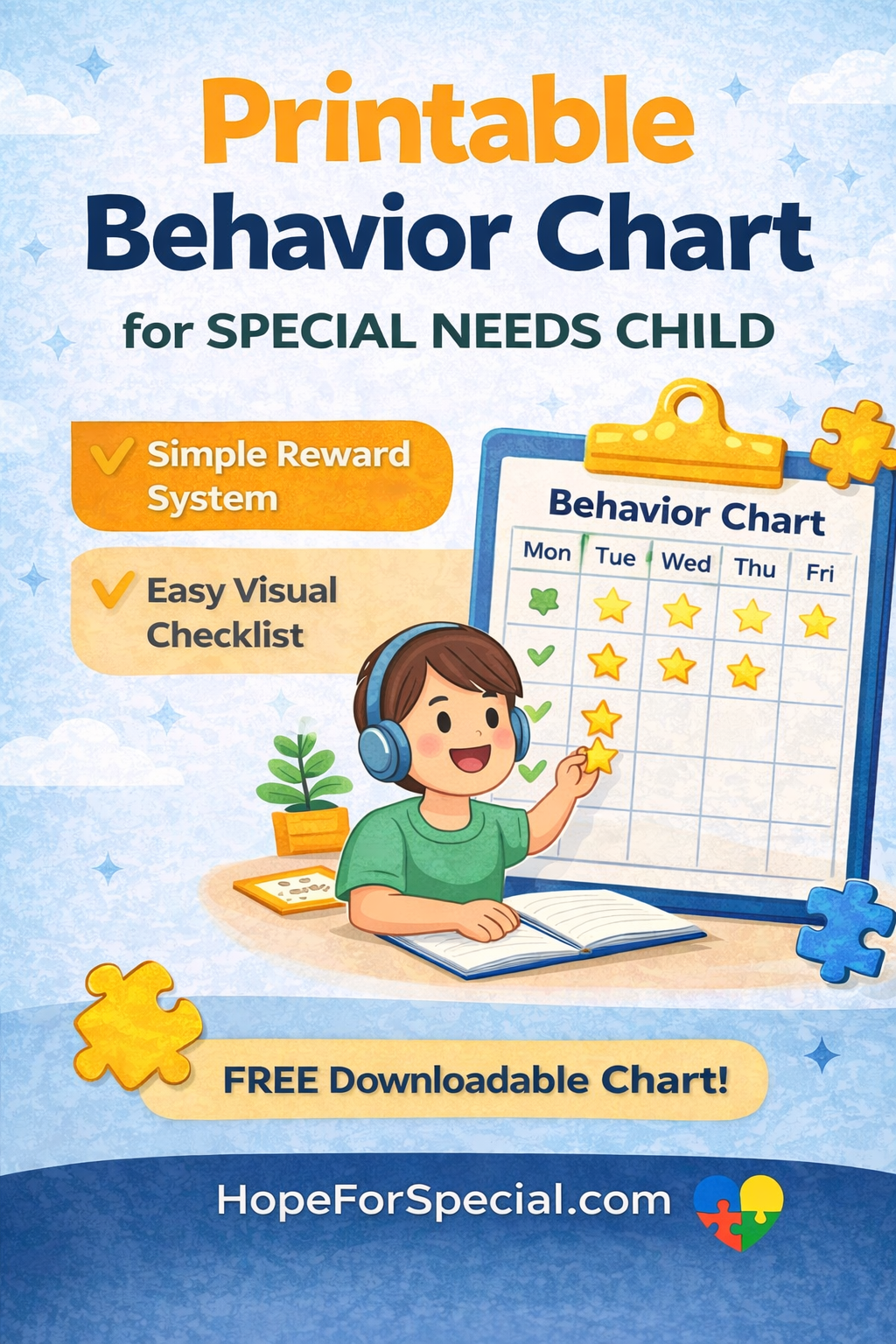
Printable Behavior Chart for Special Needs Child (Free Templates + 2026 Guide)
Managing behavior in children with special needs can feel challenging. However, the right tools can make a big difference.
One of the most effective tools is a printable behavior chart for special needs child.
It is simple. It is visual. And most importantly, it works.
In this guide, you will learn:
- What behavior charts are
- Why they are helpful
- How to use them
- Free printable templates (ready to use)

- What Is a Printable Behavior Chart?
- Why Behavior Charts Work for Special Needs Children
- Types of Printable Behavior Charts
- 1. Daily Behavior Chart
- 2. Weekly Behavior Chart
- 3. Reward-Based Chart
- 4. Task-Based Chart
- 5. Visual Behavior Chart
- Free Printable Behavior Chart Templates (Table)
- How to Use a Printable Behavior Chart (Step-by-Step)
- Step 1: Choose the Right Chart
- Step 2: Set Clear Goals
- Step 3: Explain the Chart
- Step 4: Track Daily Progress
- Step 5: Give Rewards
- Behavior Chart Example (Simple Table)
- Best Rewards for Special Needs Children
- Tips to Make Behavior Charts Effective
- 1. Keep It Simple
- 2. Be Consistent
- 3. Use Positive Language
- 4. Celebrate Small Wins
- 5. Involve Your Child
- Common Mistakes to Avoid
- Printable Behavior Chart for Autism (Special Tips)
- Real-Life Example
- How to Create Your Own Printable Behavior Chart
- FAQs: Printable Behavior Chart for Special Needs Child
- 1. Are behavior charts effective?
- 2. What age works best?
- 3. How many tasks should I include?
- 4. Can I use it for autism?
- 5. How long before results?
- Final Thoughts
What Is a Printable Behavior Chart?
A behavior chart is a visual tool. It tracks a child’s behavior over time.
It usually includes:
- Tasks or behaviors
- Rewards or stars
- Daily or weekly tracking
👉 In simple words:
It helps children understand what is expected.

Why Behavior Charts Work for Special Needs Children
Children with special needs often respond well to visual supports.
According to Centers for Disease Control and Prevention, structured routines and visual tools help improve behavior and emotional control.
https://www.cdc.gov/parents/essentials/structure/index.html
Also, Autism Speaks explains that visual supports help children understand expectations and reduce anxiety.
https://www.autismspeaks.org/tool-kit-excerpt/visual-supports-and-autism
Key Benefits
✔ Improves behavior
✔ Builds routine
✔ Encourages independence
✔ Reduces stress for parents
Types of Printable Behavior Charts
Different children need different approaches.
Here are the most common types:
1. Daily Behavior Chart
Tracks behavior throughout the day.
Best for:
- Young children
- Beginners
2. Weekly Behavior Chart
Tracks progress over a week.
Best for:
- Long-term habits
3. Reward-Based Chart
Children earn:
- Stars
- Points
- Stickers
4. Task-Based Chart
Focuses on:
- Completing tasks
- Following routines
5. Visual Behavior Chart
Uses:
- Pictures
- Icons
👉 Best for children with autism or communication challenges.
Free Printable Behavior Chart Templates (Table)
Here are simple templates you can recreate or download:
📋 Template Examples
| Chart Type | Description | Best For | Example Reward |
|---|---|---|---|
| Daily Chart | Tracks behavior hourly | Young children | Stickers |
| Weekly Chart | Tracks weekly progress | Older kids | Small rewards |
| Star Chart | Earn stars for tasks | Motivation | Toy or treat |
| Visual Chart | Uses pictures/icons | Autism | Screen time |
| Routine Chart | Daily tasks checklist | Structure | Extra playtime |
How to Use a Printable Behavior Chart (Step-by-Step)
Follow these simple steps:
Step 1: Choose the Right Chart
Pick based on:
- Age
- Needs
- Ability
Step 2: Set Clear Goals
Be specific.
❌ “Be good”
✔ “Finish homework”
Step 3: Explain the Chart
Show your child:
- What to do
- What they earn
Step 4: Track Daily Progress
Use:
- Stars
- Stickers
Step 5: Give Rewards
Rewards should be:
- Immediate
- Meaningful
Behavior Chart Example (Simple Table)
| Task | Monday | Tuesday | Wednesday | Reward |
|---|---|---|---|---|
| Brush Teeth | ⭐ | ⭐ | ⭐ | 10 min play |
| Homework | ⭐ | ⭐ | ⭐ | Treat |
| Clean Room | ⭐ | ⭐ | ⭐ | Toy |
Best Rewards for Special Needs Children
Rewards do not have to be expensive.
Simple Reward Ideas:
- Extra screen time
- Favorite snack
- Outdoor play
- Stickers
- Praise
👉 Positive reinforcement works best.
Tips to Make Behavior Charts Effective
1. Keep It Simple
Too many tasks can overwhelm the child.
2. Be Consistent
Use the chart every day.
3. Use Positive Language
Focus on what the child should do.
4. Celebrate Small Wins
Every step matters.
5. Involve Your Child
Let them:
- Choose stickers
- Pick rewards
Common Mistakes to Avoid
Avoid these:
❌ Too many goals
❌ Inconsistent tracking
❌ No rewards
❌ Negative focus
Instead:
✔ Keep it simple
✔ Stay positive
Printable Behavior Chart for Autism (Special Tips)
Children with autism need more visual structure.
Experts from National Autistic Society recommend using visual tools to support routines.
https://www.autism.org.uk/advice-and-guidance/topics/communication/visual-supports
Tips for Autism:
- Use pictures instead of words
- Keep routine consistent
- Avoid sudden changes
- Use clear rewards
Real-Life Example
A parent of a child with autism struggled with daily routines.
There were:
- Frequent meltdowns
- No structure
Then they started using a behavior chart.
They:
- Added simple tasks
- Used visual icons
- Gave rewards
Result?
✔ Better behavior
✔ Less stress
✔ Improved routine
How to Create Your Own Printable Behavior Chart
You can easily create one.
Tools You Can Use:
- Canva
- Google Docs
- Excel
What to Include:
✔ Child’s name
✔ Tasks
✔ Reward system
✔ Tracking columns
FAQs: Printable Behavior Chart for Special Needs Child
1. Are behavior charts effective?
Yes. They help improve behavior through visual learning.
2. What age works best?
Ages 3–12 benefit the most.
3. How many tasks should I include?
Start with 2–3 tasks.
4. Can I use it for autism?
Yes. Visual charts work very well.
5. How long before results?
Usually within 1–2 weeks.
Final Thoughts
A printable behavior chart for special needs child is a powerful tool.
It helps:
- Build routine
- Improve behavior
- Reduce stress
Start simple. Stay consistent. And celebrate progress.
Because small steps lead to big changes.


