

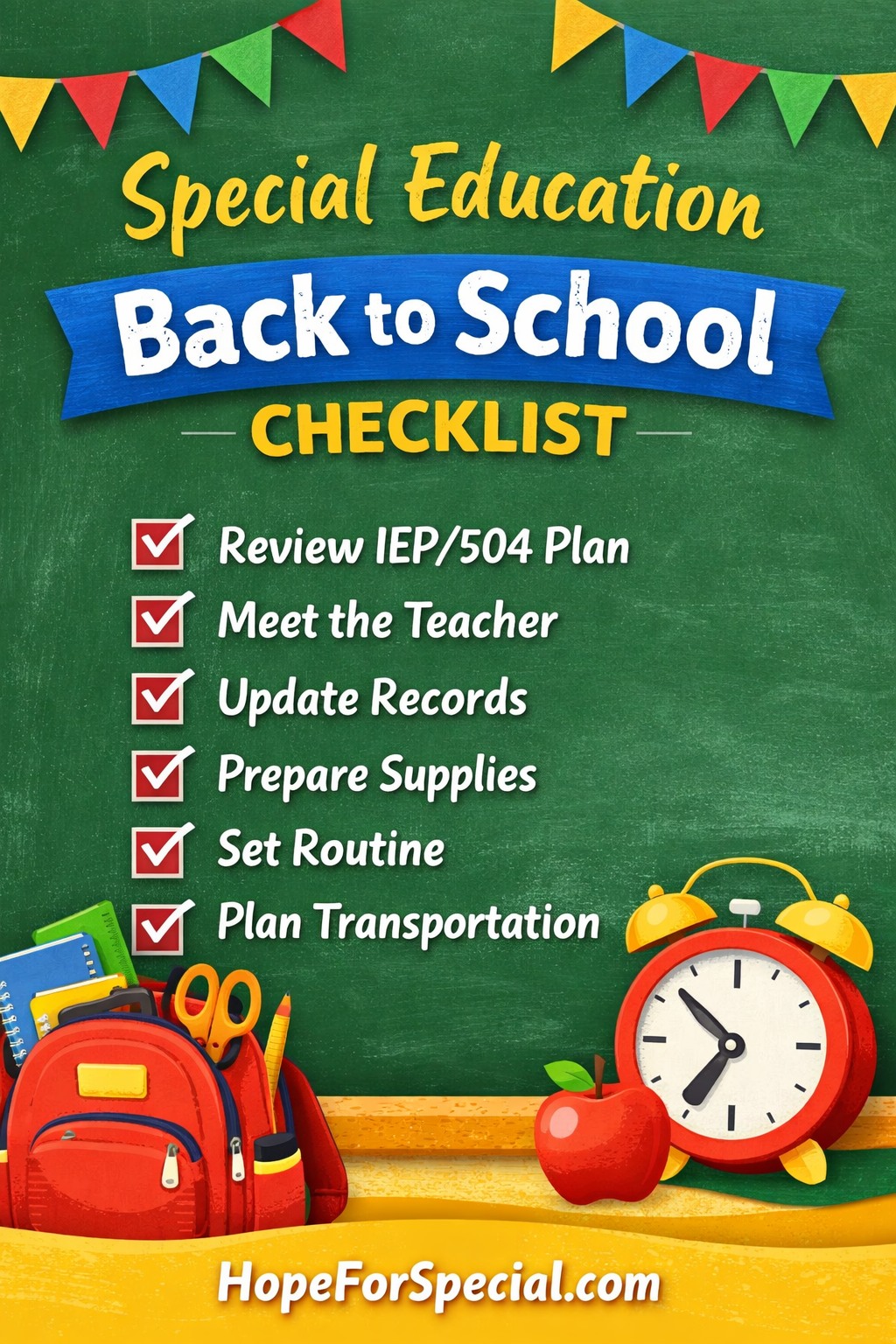
Special Education Back to School Checklist (2026 Guide for Parents)
Starting a new school year can feel overwhelming. This is especially true for parents of children with special needs. However, with the right plan, you can make the transition smooth and stress-free.
This special education back to school checklist will help you stay organized. It also ensures your child gets the support they need from day one.

- Why a Special Education Back to School Checklist Matters
- Complete Special Education Back to School Checklist
- 1. Review Your Child’s IEP or 504 Plan
- 2. Update School Records and Documents
- 3. Communicate with Teachers Early
- 4. Create a Transition Plan
- 5. Plan Transportation in Advance
- 6. Set Up a Structured Daily Routine
- 7. Prepare School Supplies (with Special Needs in Mind)
- 8. Organize a Dedicated Study Space at Home
- 9. Focus on Health and Wellness
- 10. Build Emotional Readiness
- 11. Prepare for Behavior and Support Needs
- 12. Understand Your Legal Rights as a Parent
- 13. Build a Strong Parent-School Partnership
- 14. Plan for Meals and Nutrition
- 15. Use Technology for Better Organization
- 16. Prepare for Emergencies
- Printable Special Education Back to School Checklist
- Common Mistakes Parents Should Avoid
- Expert Tips for a Smooth School Transition
- Real-Life Example
- FAQs: Special Education Back to School Checklist
- 1. When should I start preparing for back to school?
- 2. What is the most important item on the checklist?
- 3. How can I reduce my child’s anxiety?
- 4. What documents are required?
- 5. How can I communicate effectively with teachers?
- Final Thoughts
Why a Special Education Back to School Checklist Matters
A structured checklist helps parents stay prepared. It reduces last-minute stress. More importantly, it ensures that no critical step is missed.
Research shows that parent involvement improves academic performance, social skills, and behavior. (archive.cdc.gov)
In special education, preparation is even more important because:
- Each child has unique needs
- Schools require proper documentation
- Support services must be coordinated early
Complete Special Education Back to School Checklist
Let’s break it down step by step.

1. Review Your Child’s IEP or 504 Plan
Start here. This is the most important step.
Carefully review:
- Goals and objectives
- Accommodations and modifications
- Therapy services (speech, OT, etc.)
- Behavior support plans
Make sure everything is still relevant.
👉 If something has changed, request a meeting before school starts.
📌 Tip: Always keep a printed and digital copy.
Authoritative reference:
- U.S. Department of Education Back-to-School Checklist
https://sites.ed.gov/backtoschool/back-to-school-checklist-for-parents/ (safesupportivelearning.ed.gov)
2. Update School Records and Documents
Schools need accurate information to support your child.
Checklist:
- Medical records
- Immunization records
- Emergency contacts
- Diagnosis reports
- Therapy notes
- IEP/504 documents
According to school readiness guidelines, updated records ensure proper care and safety. (specialeducation.dc.gov)
3. Communicate with Teachers Early
Strong communication is key.
Before school starts:
- Email or call the teacher
- Discuss triggers and calming strategies
- Explain accommodations clearly
Also, attend:
- Open house
- Orientation sessions
Meeting teachers early helps reduce anxiety for both parents and children. (GoodRx)
4. Create a Transition Plan
Transitions can be difficult for children with special needs.
So, prepare in advance:
- Visit the school building
- Practice classroom routines
- Walk through daily schedule
- Meet support staff
This builds confidence and reduces fear.
5. Plan Transportation in Advance
Transportation issues can cause stress.
Checklist:
- Confirm pickup and drop timings
- Meet the bus driver if possible
- Practice the route
- Ensure safety instructions
For special education transport:
- Verify accommodations
- Check seating arrangements
6. Set Up a Structured Daily Routine
Children thrive on routines.
Start 1–2 weeks before school:
- Fixed bedtime
- Wake-up schedule
- Homework time
- Meal routine
Healthy routines improve learning and behavior. (CDC)
7. Prepare School Supplies (with Special Needs in Mind)
Go beyond basic supplies.
Include:
- Sensory tools (fidget toys, weighted items)
- Visual schedules
- Noise-canceling headphones
- Adaptive writing tools
Also check:
- School supply list
- Uniform requirements
8. Organize a Dedicated Study Space at Home
A quiet space improves focus.
Set up:
- A clutter-free desk
- Proper lighting
- Minimal distractions
Experts recommend structured study areas to build strong learning habits. (GoodRx)
9. Focus on Health and Wellness
Health directly affects learning.
Checklist:
- Schedule doctor visits
- Update vaccinations
- Check vision and hearing
- Discuss medications with school
Children who are healthy and well-rested perform better academically. (University Health)
10. Build Emotional Readiness
Back-to-school anxiety is common.
Help your child by:
- Talking about expectations
- Using visual stories
Also:
- Validate their feelings
- Encourage positive self-talk
11. Prepare for Behavior and Support Needs
If your child has behavioral challenges:
- Review behavior intervention plan
- Provide calming tools
Consistency between home and school is essential.
12. Understand Your Legal Rights as a Parent
This is critical.
You have rights under special education laws:
- Free Appropriate Public Education (FAPE)
- Individualized Education Program (IEP)
- Least Restrictive Environment (LRE)
Learn more here:
- IDEA (Individuals with Disabilities Education Act)
https://sites.ed.gov/idea/
Being informed helps you advocate effectively.
13. Build a Strong Parent-School Partnership
Parent engagement is powerful.
Studies show that engaged parents help children:
- Get better grades
- Build confidence (CDC)
Ways to stay involved:
- Attend meetings
- Join school groups
- Maintain regular communication
14. Plan for Meals and Nutrition
Decide in advance:
- School lunch or home meals
- Dietary restrictions
- Allergies
Also:
- Inform school staff about food sensitivities
15. Use Technology for Better Organization
Helpful tools:
- Reminder apps
- School communication apps
- Visual schedule apps
This improves coordination and reduces stress.
16. Prepare for Emergencies
Always have a backup plan.
Checklist:
- Emergency contacts
- Backup pickup person
- Medical instructions
Preparedness ensures safety at all times.
Printable Special Education Back to School Checklist
You can turn this into a printable checklist:
✔ Review IEP/504 plan
✔ Update school records
✔ Meet teachers
✔ Visit school
✔ Confirm transport
✔ Set routine
✔ Prepare supplies
✔ Create study space
✔ Schedule doctor visits
✔ Support emotional readiness
✔ Review behavior plans
✔ Know your rights
✔ Plan meals
✔ Use organization tools
✔ Prepare emergency plan
Common Mistakes Parents Should Avoid
Avoid these common errors:
❌ Waiting until the last minute
❌ Not reviewing the IEP
❌ Poor communication with teachers
❌ Ignoring emotional preparation
❌ Skipping routine building
Instead, start early and stay organized.
Expert Tips for a Smooth School Transition
Here are proven strategies:
- Start preparation at least 2 weeks early
- Use visual aids for routines
- Keep communication simple and consistent
- Celebrate small successes
- Stay flexible
Real-Life Example
Riya, a mother of a child with autism, struggled every school year.
Then she started using a special education back to school checklist.
She:
- Met teachers early
- Practiced school routines
- Used visual schedules
Result?
Her child transitioned smoothly with less anxiety and better classroom participation.
FAQs: Special Education Back to School Checklist
1. When should I start preparing for back to school?
Start at least 2–4 weeks before school begins.
2. What is the most important item on the checklist?
Reviewing and updating the IEP or 504 plan.
3. How can I reduce my child’s anxiety?
- Visit the school
- Meet teachers
- Practice routines
4. What documents are required?
- Medical records
- IEP/504 plan
- Emergency contacts
- Academic reports
5. How can I communicate effectively with teachers?
- Be clear and concise
- Maintain regular updates
Final Thoughts
A well-prepared parent creates a confident child.
This special education back to school checklist is more than a list. It is a strategy for success.
Start early. Stay organized. Communicate clearly.
And most importantly—believe in your child’s potential.


