

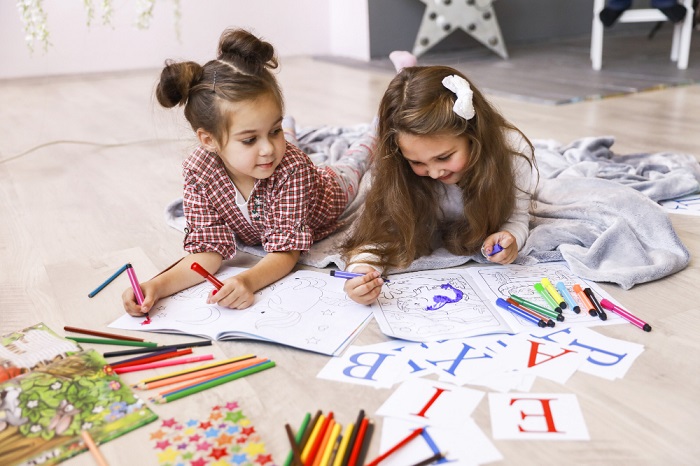
Preschool Activities for Special Needs Children: Sensory, Fine Motor, Speech, Outdoor Play
Preschool is an important phase for every child’s development and this becomes more vital when it comes to children with special needs. Early intervention, guidance, and support can make a huge difference in their lives. As you are here to find ideas for preschool activities for special needs, we will not disappoint you.
Here you will learn about an almost endless list of engaging and inclusive activities designed to promote the development and well-being of children with special needs.
Our focus here is to provide you with practical ideas that are easy to understand and implement, catering to children of all abilities. Whether you are a parent, caregiver, or educator, these activities are tailored to create a nurturing and enjoyable learning environment.
So, are you ready to explore?

- Why Play and Activity Matter for Special Needs Preschoolers: What the Research Shows
- Anganwadi Preschool Activities for Special Needs
- Farm Animals Preschool Activities and Crafts
- Preschool Activities 3 Year Olds
- Preschool Activities Ideas
- Easy Preschool Activities for Special Needs
- Preschool Activities Ideas Classroom
- Fun Preschool Activities for Special Needs
- Preschool Activities for Kids
- Summer Preschool Activities for Special Needs
- Language Preschool Activities for Special Needs
- Preschool Activities Worksheets
- Preschool Activities Ideas Classroom
- Why Play and Activity Matter for Special Needs Preschoolers: What the Research Shows
- Speech and Language Activities for Special Needs Preschoolers
- Activity 1: Commenting, Not Questioning — The Most Powerful Language Strategy
- Activity 2: Interactive Book Reading with Repetition
- Activity 3: Song and Rhyme — Phonological Foundation
- Activity 4: Simple Cause-and-Effect Toys for AAC Users
- Budget-Friendly Sensory Activities and Sensory Room Ideas for Special Needs Preschoolers
- Playground and Outdoor Activities with IEP Accommodations for Special Needs Preschoolers
- Common Playground Challenges and Solutions
- IEP Accommodations You Can Request for Playground Time
- Simple Outdoor Activities with Big Developmental Benefits
- Fine Motor Activities for Special Needs Preschoolers: A Structured Guide
- Stage 1 — Foundational Grasping and Hand Strength (Earliest Level)
- Stage 2 — Controlled Manipulation (Intermediate Level)
- Stage 3 — Pre-Writing Activities (Advanced Preschool Level)
- Gross Motor Activities for Special Needs Preschoolers
- Emotional Regulation Activities for Special Needs Preschoolers
- Understanding the Window of Tolerance
- Calming Activities (For an Over-Aroused, Dysregulated Child)
- Alerting Activities (For an Under-Aroused, Disengaged Child)
- Emotion Identification Activities
- Preschool Activities Linked to IEP Goals: A Practical Guide for Parents and Teachers
- Communication and Language Goals
- Fine Motor Goals
- Gross Motor Goals
- Social and Play Skills Goals
- Adaptive Behaviour (Self-Care) Goals
- Activities for Special Needs Preschoolers by Disability Type
- 🔵 Activities for Preschoolers with Autism
- 🟡 Activities for Preschoolers with Down Syndrome
- 🟠 Activities for Preschoolers with Cerebral Palsy
- Red Flags: When Activities at Home Are Not Enough
- Voice Search
- What activities are good for special needs preschoolers?
- What are fine motor activities for special needs children?
- What are speech therapy activities for preschoolers with autism?
- How do you make a sensory room on a budget?
- What IEP goals are appropriate for preschoolers?
- When should I be worried about my special needs preschooler’s development?
- FAQs
- How do I address challenging behaviors during activities with special needs children?
- How do preschool activities help child development?
- Are there any safety considerations I should keep in mind for special needs children during activities?
- Is there any importance to preschool activities?
- What are the benefits of sensory play for special needs children?
- Is parent involvement in preschool activities important?
- How can I adapt sensory activities for children with sensory sensitivities?
- What is the benefit of Inclusion of children with special needs?
- Are there any specific activities that can help improve communication skills in non-verbal special needs children?
- What should I do if a child with special needs seems disinterested in group activities?
Why Play and Activity Matter for Special Needs Preschoolers: What the Research Shows
Before diving into specific activities, it is worth understanding exactly why structured, intentional play activities are so important for preschoolers with special needs — because the evidence is more powerful than most parents realise.
Play is not just a nice-to-have for young children with disabilities. It is a neurological necessity. And the activities you do at home or at preschool in the early years have a measurable, lasting impact on your child’s development.
Here is what the research tells us:
| Research Finding | What It Means for Your Child |
|---|---|
| Motor skill interventions for children with special educational needs aged 3–7 produce significant improvements in both physical and cognitive outcomes | The activities that build gross motor skills also build thinking, memory, and academic readiness (Source: NIH/PMC — Motor Skills and Cognition Review, 2022) |
| Sensory-based interventions with caregiver training produce statistically significant improvements in quality of life and behavioural and emotional functioning | When parents are shown how to use sensory strategies at home, their children’s behaviour improves measurably (Source: NIH/PMC — Sensory Interventions Systematic Review, 2025) |
| Deep pressure tactile input has strong evidence for improving functional outcomes in children with sensory processing differences | Activities involving deep pressure — bear hugs, weighted blankets, firm massage — are among the most evidence-backed sensory interventions available (Source: NIH/PMC — Sensory Interventions Systematic Review, 2025) |
| IEP goal quality accounts for approximately 25% of variance in child outcomes — more than teacher experience | Well-chosen, play-based goals in the IEP predict your child’s progress more than anything else (Source: PMC — Ruble et al., IEP Quality and Outcomes, 2013) |
| Early intensive intervention during the preschool years produces the largest and most durable gains across all developmental outcomes | The preschool years are the highest-impact window for intervention — activities during this period have outsized effects on long-term outcomes (Source: NIH/PMC — Early Intervention Review, 2025) |
In short, the activities you choose for your special needs preschooler are not just filling time. They are actively shaping your child’s brain during the period when it is most capable of change. That is why getting them right matters so much.
Anganwadi Preschool Activities for Special Needs
In many countries, including India, Anganwadis play a vital role in providing early childhood education and nutrition support to children, including those with special needs. These centers often use innovative and practical approaches to engage children. Here are some Anganwadi-inspired preschool activities that can be adapted for special needs children:
Sensory Play
Engage children in sensory activities like finger painting, playing with sand, or exploring various textures. Sensory play helps children develop fine motor skills and sensory processing.
Music and Movement
Incorporate music and movement activities to encourage physical coordination. Dancing, clapping, and using this musical instruments toy can be both enjoyable and therapeutic.
Outdoor Exploration
Take children outdoors to explore nature. Simple activities like observing and collecting leaves, flowers, or rocks can be great for sensory stimulation.
Farm Animals Preschool Activities and Crafts
Exploring the world of farm animals can be an exciting and educational experience for preschoolers, including those with special needs. Here are some farm-themed crafts and preschool activities for special needs that are easy to set up and enjoyable for young learners.
Animal Sounds
Introduce children to different farm animal sounds. Play audio clips or use toys that mimic the sounds of dogs, cows, chickens, ducks, and more. This activity helps with auditory recognition and language development. This Amazon battery-operated jumping puppy toy can be helpful.
Farm Animal Sensory Bins
Create sensory bins filled with items like rice, hay, or shredded paper. Hide small farm animal figurines in the bin, and children can explore and dig for them. Sensory bins promote tactile and sensory development. This farm sensory bin is worth buying.
Farm Animal Scavenger Hunt
Organize a scavenger hunt with pictures or use this ToyMagic Animal Figure Toy Set of farm animals hidden around the room or outdoors. Children can search for and collect these items, enhancing their observation and problem-solving skills.
Preschool Activities 3 Year Olds
At the age of three, children are eager to explore and learn about the world around them. Here are some age-appropriate activities that are perfect for 3-year-olds, including those with special needs:
Color Sorting
Use colorful objects like building blocks, buttons, or toy cars and ask children to sort them by color. This activity helps improve color recognition and fine motor skills.
Counting Fun
Engage children in counting games using everyday objects or toys. You can count fingers, toes, or even snacks during snack time. Counting promotes early math skills.
Playdough Play
Playdough is a versatile tool for sensory and fine motor development. Let children mold shapes, create animals, and explore their creativity with this playdough set.

Preschool Activities Ideas
There are too many creative and educational activity ideas available that can be helpful for special needs preschoolers. Here are the best picks:
Colorful Water Play
Fill containers with water and add a few drops of food coloring to create a rainbow of colored water. Children can have fun mixing colors and playing with cups and scoops in the water.
Indoor Obstacle Course
Set up a safe and simple obstacle course using cushions, tunnels, and soft toys. This activity helps with gross motor skills and spatial awareness.
Gardening
Gardening is a therapeutic and educational activity. Planting seeds, watering plants, and watching them grow can teach patience, responsibility, and a connection to nature.
Balloon Play
Inexpensive and entertaining, balloons can be used for various activities like balloon volleyball, tossing, and even static electricity experiments. Balloon play enhances hand-eye coordination.
Easy Preschool Activities for Special Needs
Simplicity can be the key to successful activities for special needs preschoolers. Here are some easy and uncomplicated activities that can be enjoyed by both children and caregivers:
Bubbles
Blowing bubbles is a simple yet delightful activity. Children can chase and pop bubbles, improving their visual tracking and hand-eye coordination. This bubble gun toy can be a good solution.

Texture Boards
Create texture boards using materials like sandpaper, velvet, and fabric scraps. Children can touch and explore different textures, enhancing sensory awareness.
Sock Puppets
Transform old socks into lovable sock puppets with buttons for eyes and yarn for hair. Children can use these puppets for imaginative play and storytelling.
Follow the Leader
A simple game of “follow the leader” can promote motor skills and imitation. Take turns being the leader, and encourage children to mimic your movements.
Preschool Activities Ideas Classroom
Creating a stimulating and inclusive classroom environment is essential for special needs preschoolers. Here are some classroom-specific activity ideas:
Quiet Reading Corner
Create a cozy reading corner with a variety of age-appropriate books. Encourage children to explore books independently or participate in group reading sessions.
Interactive Whiteboard Games
Use interactive whiteboards to play educational games that cater to different learning styles. These boards can be adapted for visual, auditory, and kinesthetic learners.
Art Exploration
Set up an art corner with a variety of art supplies like crayons, markers, and stickers. Art activities promote creativity, self-expression, and fine motor skills.
Circle Time
Incorporate circle time into the daily routine, where children can engage in group activities such as singing songs, playing games, and sharing stories. Circle time encourages social interaction and communication.
Fun Preschool Activities for Special Needs
Learning should be fun, and that’s no different for special needs preschoolers. Here are some fun and enjoyable activities that can be integrated into their daily routines:
Dance Parties
Put on some music and have spontaneous dance parties. Dancing helps with coordination and rhythm and provides a fun outlet for self-expression.
Theme Days
Organize theme days where children can dress up, learn about a specific topic, and participate in related activities. Themes could include space, animals, or seasons.
Science Experiments
Conduct age-appropriate science experiments that are safe and captivating. Simple experiments like making a volcano with baking soda and vinegar can spark curiosity.
Nature Scavenger Hunts
Take children on outdoor scavenger hunts to search for items like pinecones, feathers, or rocks. It is one of the excellent preschool activities for special needs that connects them to nature and encourages observation skills.
Preschool Activities for Kids
As children grow and develop, their interests and abilities evolve as well. Here are some activities designed to cater to the evolving needs of special needs preschoolers:
Building with Blocks
Use wooden or foam building blocks to encourage creativity and spatial awareness. Children can build towers, bridges, or imaginative structures.
Math Games
Introduce basic math concepts through games like counting with dice, sorting objects by size, or using measuring cups during water play.
Yoga and Mindfulness
Incorporate yoga and mindfulness exercises to promote relaxation and self-awareness. Simple yoga poses and deep breathing exercises can be calming and beneficial.

Art Gallery
Organize an art gallery in the classroom where children can showcase their artwork. This activity encourages creativity and self-expression.
Summer Preschool Activities for Special Needs
Summer is a wonderful time to engage special needs preschoolers in outdoor and sensory activities. Here are some summer-themed activities to beat the heat and keep young minds active:
Water Play
Set up a kiddie pool, water table, or even a sprinkler in the yard. Water play is not only refreshing but also enhances sensory awareness and motor skills.
Nature Art
Use natural materials like leaves, sticks, and flowers to create art. Children can make leaf rubbings, paint with natural brushes, or construct nature sculptures.
Ice Cream Making
Have a fun ice cream-making session. Children can assist in mixing ingredients, adding toppings, and enjoying the delicious results.
Outdoor Yoga
Take yoga and mindfulness exercises outdoors. Practicing yoga in the fresh air can provide a unique sensory experience and promote relaxation.
Language Preschool Activities for Special Needs
Developing language skills is a critical aspect of preschool education. Here are some language-focused activities that cater to the needs of special needs preschoolers:
Picture Cards
Create picture cards with common objects, animals, or actions. Encourage children to identify and name the items on the cards, promoting vocabulary development.
Story Sequencing
Use picture sequences or storyboards to help children understand and retell stories in the correct order. This activity enhances comprehension and storytelling abilities.
Rhyming Games
Engage children in rhyming games and activities. Rhymes are an enjoyable way to develop phonological awareness and pre-reading skills.
Sensory Letter Play
Use sensory materials like sand or shaving cream to practice forming letters. This tactile approach can make learning the alphabet more engaging.
Preschool Activities Worksheets
Worksheets can be valuable tools for reinforcing skills and providing structured learning opportunities. Here are some preschool worksheets that can be adapted for special needs children:
Coloring Pages
Coloring pages with simple shapes and objects can help improve fine motor skills and hand-eye coordination.
Connect-the-Dots
Connect-the-Dots worksheets with simple shapes or numbers can be both fun and educational, promoting counting and sequencing skills.
Pattern Recognition
Use worksheets that require children to complete patterns with colors, shapes, or objects. This activity significantly boosts the problem-solving and critical thinking.
Word Search Puzzles
Simple word search puzzles with familiar words or themes is one of the effective preschool activities for special needs that can improve vocabulary and word recognition.
Preschool Activities Ideas Classroom
In this section, we will revisit classroom-specific activity ideas to emphasize their importance in creating an inclusive learning environment for special needs preschoolers:
Quiet Reading Corner
A cozy reading corner encourages a love for books and literacy skills while providing a calming space in the classroom.
Interactive Whiteboard Games
Interactive whiteboards offer a versatile tool for catering to different learning styles and abilities within the classroom.
Art Exploration
Art activities are essential for fostering creativity and self-expression among preschoolers, including those with special needs.
Circle Time
Group activities during circle time promote social interaction and communication skills, which are vital for all children.
Why Play and Activity Matter for Special Needs Preschoolers: What the Research Shows
Before diving into specific activities, it is worth understanding exactly why structured, intentional play activities are so important for preschoolers with special needs — because the evidence is more powerful than most parents realise.
Play is not just a nice-to-have for young children with disabilities. It is a neurological necessity. And the activities you do at home or at preschool in the early years have a measurable, lasting impact on your child’s development.
Here is what the research tells us:
| Research Finding | What It Means for Your Child |
|---|---|
| Motor skill interventions for children with special educational needs aged 3–7 produce significant improvements in both physical and cognitive outcomes | The activities that build gross motor skills also build thinking, memory, and academic readiness (Source: NIH/PMC — Motor Skills and Cognition Review, 2022) |
| Sensory-based interventions with caregiver training produce statistically significant improvements in quality of life and behavioural and emotional functioning | When parents are shown how to use sensory strategies at home, their children’s behaviour improves measurably (Source: NIH/PMC — Sensory Interventions Systematic Review, 2025) |
| Deep pressure tactile input has strong evidence for improving functional outcomes in children with sensory processing differences | Activities involving deep pressure — bear hugs, weighted blankets, firm massage — are among the most evidence-backed sensory interventions available (Source: NIH/PMC — Sensory Interventions Systematic Review, 2025) |
| IEP goal quality accounts for approximately 25% of variance in child outcomes — more than teacher experience | Well-chosen, play-based goals in the IEP predict your child’s progress more than anything else (Source: PMC — Ruble et al., IEP Quality and Outcomes, 2013) |
| Early intensive intervention during the preschool years produces the largest and most durable gains across all developmental outcomes | The preschool years are the highest-impact window for intervention — activities during this period have outsized effects on long-term outcomes (Source: NIH/PMC — Early Intervention Review, 2025) |
In short, the activities you choose for your special needs preschooler are not just filling time. They are actively shaping your child’s brain during the period when it is most capable of change. That is why getting them right matters so much.
Speech and Language Activities for Special Needs Preschoolers
This is the section most parents of special needs preschoolers need first — because communication challenges are the most common and most urgent concern at this age. Whether your child has autism, Down syndrome, a speech delay, hearing loss, or another condition affecting language, the right activities can meaningfully accelerate their communication development.
Here is an important fact to start with: early, intensive language intervention during the preschool years produces the largest and most durable gains across all other developmental outcomes. Language is the foundation everything else builds on. (Source: NIH/PMC — Early Intervention Review, 2025)
Activity 1: Commenting, Not Questioning — The Most Powerful Language Strategy
Most parents instinctively ask their child questions: “What is that?” “What colour is it?” “What are you doing?” However, for children with language delays, questions create pressure and often produce silence or shutdown.
Instead, try commenting on what your child is doing without asking anything:
- “Oh, you are rolling the ball!”
- “That block is big!”
- “You found the dog!”
This reduces pressure, models language naturally, and gives your child time to process. Research shows this approach — called parallel talk and self-talk — produces significantly faster language gains in children with speech delays than questioning does. (Source: American Speech-Language-Hearing Association — ASHA)
Activity 2: Interactive Book Reading with Repetition
Choose board books with simple, repetitive text. Read the same books over and over — repetition is not boring for a child with a language delay, it is essential. Repeated exposure to the same language patterns helps the brain consolidate new words and sentence structures.
How to maximise language learning during book reading:
- Point to pictures and name them simply: “Dog. Dog barks. Woof!”
- Pause on pages and wait expectantly — give your child 5–10 seconds to respond before you speak
- If your child points, immediately label what they pointed to: “Yes! Ball!”
- Use sound effects and exaggerated intonation — varied voice pitch holds attention and aids memory
(Source: ASHA — Language Development Resources)
Activity 3: Song and Rhyme — Phonological Foundation
Singing nursery rhymes and action songs is one of the most evidence-backed early language activities available. Songs provide:
- Repetitive language in predictable patterns — the brain anticipates and fills in gaps
- Strong rhythm that supports phonological awareness (the precursor to reading)
- A reason to communicate — predicting the next word in a familiar song
Best action songs for special needs preschoolers:
- “Wheels on the Bus” — action-based, highly predictable
- “Head, Shoulders, Knees and Toes” — body awareness + vocabulary
- “If You’re Happy and You Know It” — emotion vocabulary + action
- “Row, Row, Row Your Boat” — turn-taking and predictive language
(Source: NIH/PMC — Music and Language Development)
Activity 4: Simple Cause-and-Effect Toys for AAC Users
For preschoolers who are not yet speaking, cause-and-effect activities build the foundational understanding that actions produce results — the very concept that underlies intentional communication. Activities include:
- Simple musical toys that respond to touch
- Light-up switches connected to favourite toys
- Bubble machines activated by a switch
Alongside these activities, introduce a simple communication system — picture exchange, eye gaze boards, or a basic AAC device. For preschool-aged children, research supports early AAC use — it does not reduce motivation to speak. It increases it. (Source: IRIS Center — AAC for Early Childhood)
Budget-Friendly Sensory Activities and Sensory Room Ideas for Special Needs Preschoolers
Here is the truth that most sensory activity guides hide: you do not need an expensive sensory room, a therapy gym, or specialist equipment to provide powerful sensory experiences for your preschooler. Some of the most effective sensory activities cost almost nothing.
Research published in 2025 confirms that sensory-based interventions — including those provided by trained caregivers at home — produce statistically significant improvements in quality of life and behavioural and emotional functioning for children with developmental disorders. (Source: NIH/PMC — Sensory Interventions Systematic Review, 2025)
Building a Budget Sensory Space at Home
You do not need a dedicated room — a corner works perfectly. Here is what to include at different budget levels:
| Budget Level | What to Include | Approximate Cost |
|---|---|---|
| Under $20 | Tactile tray (baking tin + dried rice or pasta), a string of fairy lights, a soft blanket corner | $5–$20 |
| Under $50 | Crash cushion (large pillows in a pillowcase), bubble machine, stretchy lycra sheet for proprioceptive input | $20–$50 |
| Under $100 | Small indoor trampoline (rebounder), balance board, weighted lap pad, foam puzzle mat | $50–$100 |
| Classroom level | Bean bag chairs, light table, sensory bins with lids, noise-cancelling headphones for each child | $100–$300 |
Free and Near-Free Sensory Activity Ideas
Deep pressure activities (strong evidence base):
- Firm bear hugs held for 5–10 seconds — deep pressure is one of the most evidence-backed sensory interventions (Source: NIH/PMC — Sensory Systematic Review, 2025)
- Squeezing between two couch cushions — provides firm bilateral pressure
- Rolling a large therapy ball gently over the child’s back while they lie down
- “Sandwich” game — child lies on a blanket and is gently rolled up inside it
Tactile sensory bins (make from kitchen supplies):
| Sensory Bin Filler | Sensory Input | What to Add |
|---|---|---|
| Dried rice or pasta | Light tactile, auditory | Small toy animals to find |
| Cooked, cooled spaghetti | Heavy tactile, slippery | Food colouring for visual interest |
| Cornflour and water (oobleck) | Proprioceptive, fascinating | Just hands — no tools needed |
| Shaving foam | Tactile, olfactory | Plastic letters or numbers to find |
| Kinetic sand (buy once, reuse) | Proprioceptive, calming | Moulds and small figures |
Vestibular (movement) activities:
- Rocking in a rocking chair — rhythmic rocking is deeply regulating for many children with sensory differences
- Spinning slowly in an office chair — provides rotary vestibular input
- Jumping on a sofa cushion placed on the floor
- Swinging in a blanket held by two adults — “hammock swing”
Playground and Outdoor Activities with IEP Accommodations for Special Needs Preschoolers
Outdoor and playground time is one of the most overlooked areas of preschool activity planning for children with special needs. Yet research clearly shows that outdoor movement activities produce significant cognitive and physical benefits for young children with special educational needs. (Source: NIH/PMC — Motor Skills and Academic Outcomes Review, 2022)
However, for many special needs preschoolers, the standard playground is a challenging environment — unpredictable, noisy, socially complex, and physically demanding. With the right adaptations and IEP accommodations, it becomes accessible and beneficial.
Common Playground Challenges and Solutions
| Challenge | Solution |
|---|---|
| Sensory overload from noise and crowds | Schedule outdoor time when the playground is less busy; noise-cancelling headphones for particularly sensitive children |
| Physical access barriers | Ensure equipment meets ADA accessibility standards; request an adult-assisted play option in the IEP |
| Difficulty initiating play with peers | Pre-teach specific play scripts (“Can I play?” “My turn!”); pair the child with a consistent peer buddy |
| Safety risks from impulsivity or poor body awareness | Stay close during climbing; mark safe boundaries clearly; use a visual schedule for playground time |
| Difficulty transitioning from playground back to class | Use a 5-minute warning with a visual timer; establish a consistent re-entry routine |
IEP Accommodations You Can Request for Playground Time
Under IDEA, an IEP must address all environments where the disability affects your child’s functioning — including outdoor play time. Here are specific accommodations you can request:
- Adult support during unstructured outdoor time — a paraprofessional or aide present specifically during playground periods
- Sensory break access — permission for the child to use a designated quiet space during high-stimulation outdoor periods
- Structured play activities during recess — instead of fully unstructured free play, a brief organised activity with 2–3 peers
- Adaptive playground equipment — if the child uses a wheelchair or mobility aid, accessible equipment must be available
- Peer buddy system — a trained peer partner supports inclusion during outdoor time
(Source: IDEA.gov — Preschool Special Education Requirements)
Simple Outdoor Activities with Big Developmental Benefits
Gross motor activities that build academic readiness:
- Hopscotch — number recognition, gross motor, sequencing
- Obstacle course — motor planning, sequencing, following multi-step directions
- Throwing and catching large balls — hand-eye coordination, turn-taking, spatial awareness
- Chalk drawing on the ground — large motor writing movements, colour identification, creativity
- Scavenger hunt — following instructions, observation, categorisation
Research shows that fundamental motor skill interventions for children with special educational needs aged 3–7 produce significant improvements in counting, number recognition, letter recognition, and working memory — not just physical fitness. (Source: NIH/PMC — Motor Skills and Cognitive Outcomes, 2022) In other words, time running and jumping is time learning.
Fine Motor Activities for Special Needs Preschoolers: A Structured Guide
Fine motor skills — the ability to use the small muscles of the hands and fingers for precise tasks — are foundational for writing, self-care, and classroom participation. Many special needs preschoolers have fine motor delays, and targeted activities make a real, measurable difference.
Here is a structured guide from easiest to most challenging, so you can start where your child is and progress step by step:
Stage 1 — Foundational Grasping and Hand Strength (Earliest Level)
These activities build the basic hand strength and grip needed for everything else:
- Playdough squeezing, poking, and rolling — builds intrinsic hand muscles. Let the child explore freely first, then introduce rolling snakes and pressing stamps
- Peeling stickers off a sheet — requires pincer grip and precise finger control
- Tearing paper — encourages bilateral hand use and builds grip strength
- Squeezing sponges in water — water play with sponge squeezing builds hand strength engagingly
- Picking up small objects with tongs or clothes pegs — develops the pincer grip needed for pencil holding
(Source: OT Mom Learning Activities — Fine Motor for Special Needs)
Stage 2 — Controlled Manipulation (Intermediate Level)
| Activity | Fine Motor Skill Developed |
|---|---|
| Posting coins or counters through a slot | Precision grip, hand-eye coordination |
| Threading large beads onto a thick shoelace | Bilateral coordination, hand-eye coordination, sequencing |
| Stacking blocks or pegs in a pegboard | Precision placement, hand steadiness |
| Completing simple inset puzzles (3–6 pieces) | Spatial reasoning, precision grip, problem-solving |
| Using scissors to snip paper (with loop scissors if needed) | Bilateral coordination, hand strength, controlled movement |
Stage 3 — Pre-Writing Activities (Advanced Preschool Level)
- Tracing lines, curves, and shapes — start with thick crayon on large paper, progress to pencil on lined guides
- Dot-to-dot activities — directional control and line planning
- Colouring within simple shapes — controlled pressure and directional movement
- Copying simple shapes — vertical line, horizontal line, cross, circle, square — in this developmental order
- Playdough letter formation — forming letters in 3D before writing on paper removes the visual-motor demand
All pre-writing activities should use the correct pencil grip from the beginning — a tripod grip (thumb, index finger, and middle finger) — with a triangular grip pencil or pencil grip adapter if needed. (Source: IRIS Center — Fine Motor and Writing Skills)
Gross Motor Activities for Special Needs Preschoolers
Gross motor skills — the ability to control large muscle groups for walking, running, jumping, balancing, and coordinated movement — are not just about physical fitness. Research reviewed in 2022 across 13 studies found that physical activity and gross motor skill interventions for children with special educational needs aged 3–7 produced significant improvements in counting, working memory, and academic readiness skills. (Source: NIH/PMC — Cognitive and Academic Outcomes of Motor Interventions, 2022)
In simple terms: your child’s body and brain develop together. Activities that build movement skills simultaneously build thinking skills.
Gross Motor Activities by Skill Level
Beginning Level — Building Body Awareness:
- Rolling down a gentle grassy slope — provides vestibular input and body awareness without needing coordinated movement
- Walking on different surfaces — carpet, grass, gravel, sand — builds sensory awareness and adaptive foot placement
- Animal walks — “walk like a crab,” “hop like a frog” — develops coordination, body awareness, and following instructions
- Catching a large beach ball — start close, increase distance gradually. Much easier than a standard ball for children with coordination difficulties
Intermediate Level — Building Coordination:
- Stepping on lily pads — place coloured floor spots around the room. “Jump to the blue!” — targets coordination, colour recognition, and instruction-following simultaneously
- Balance beam walking — a piece of masking tape on the floor is free and effective
- Kicking a stationary ball — weight shift, balance, and foot-eye coordination
- Marching to music — bilateral coordination and auditory processing
Advanced Level — Building Strength and Endurance:
- Obstacle courses — over a cushion, under a table, through a hoop, around a cone
- Jumping from a low step with two-foot landing — bilateral leg strength and landing control
- Skipping (with hand-over-hand teaching if needed) — complex bilateral coordination
- Throwing at a target — shoulder stability, aim, and motor planning
Emotional Regulation Activities for Special Needs Preschoolers
Emotional regulation — the ability to recognise, understand, and manage emotional states — is one of the most important and most underestimated developmental areas for special needs preschoolers. Without foundational emotional regulation skills, all other learning is more difficult.
Research shows that if a child cannot function socially and emotionally, cannot navigate a space, and cannot follow a routine, acquiring academic skills becomes nearly impossible — regardless of cognitive ability. (Source: The Autism Helper — IEP Goals in Early Childhood)
Understanding the Window of Tolerance
Before exploring activities, it helps to understand one concept: the window of tolerance. This is the emotional state in which your child is calm enough to learn — not over-aroused (hyperactive, panicking, melting down) and not under-aroused (zoned out, shut down, unresponsive).
Most special needs preschoolers spend more time outside this window than inside it. Activities that move the child into and keep them in their window of tolerance are the most valuable activities you can provide.
Calming Activities (For an Over-Aroused, Dysregulated Child)
| Activity | Why It Works |
|---|---|
| Slow, firm bear hugs held for 10 seconds | Deep pressure input to the proprioceptive system — calms the nervous system rapidly (Source: NIH/PMC — Sensory Systematic Review, 2025) |
| Slow rocking in a rocking chair or on a parent’s lap | Rhythmic vestibular input — one of the most consistent calming inputs for the nervous system |
| Blowing bubbles | Natural deep breathing — the out-breath activates the parasympathetic nervous system |
| Playing with kinetic sand or oobleck | Slow, repetitive tactile input — deeply absorbing and calming |
| Listening to slow, instrumental music | Regulates heart rate and respiratory rhythm |
Alerting Activities (For an Under-Aroused, Disengaged Child)
- Jumping on a mini trampoline — vestibular + proprioceptive input
- Spinning briefly (3–5 rotations) in a desk chair
- Cold water sensory play
- Loud music or drumming with hands on a drum
- Vigorous animal walks (galloping like a horse, jumping like a frog)
Emotion Identification Activities
Before a child can regulate emotions, they must be able to identify them. These activities build emotion vocabulary:
- Emotion face mirror game — make faces in the mirror together. “This is happy!” “This is surprised!”
- Emotion cards — show simple picture cards of faces with one clear emotion. Name it. Act it. Find it in a book.
- Zones of Regulation colour system — introduce the concept of Blue (tired/sad), Green (calm/ready), Yellow (worried/silly), Red (very angry/scared). Use visual reference cards. (Source: Zones of Regulation)
- Story-based emotion exploration — read books about characters with clear emotional experiences. Stop and name the feeling: “How do you think she feels right now?”
Preschool Activities Linked to IEP Goals: A Practical Guide for Parents and Teachers
One of the most valuable things this post can offer — and the section that no competitor has written — is a direct link between everyday preschool activities and the IEP goals your child’s team is working toward. If you understand which activities build which skills, you can turn ordinary play time into powerful therapy-aligned learning.
Here is a practical guide linking common IEP goal domains to specific activities you can implement at home or in the classroom:
Communication and Language Goals
| Sample IEP Goal | Linked Activities |
|---|---|
| Child will request preferred items using a word or sign in 4 of 5 opportunities | Snack time choice-making, bubbles (must request “more”), preferred toy within sight but out of reach to create communication motivation |
| Child will follow 2-step directions in 3 of 4 opportunities | Simon Says with 2 steps, obstacle courses with verbal instructions, morning routine with 2-step instruction chains |
| Child will use 2-word combinations in 3 of 5 interactions | Commenting during play (“big ball,” “dog eating”), reading repetitive books together |
(Source: ASHA — Early Language Development)
Fine Motor Goals
| Sample IEP Goal | Linked Activities |
|---|---|
| Child will use a pincer grasp to pick up small objects in 4 of 5 opportunities | Peeling stickers, picking up cereal with two fingers, threading beads |
| Child will cut along a straight line with scissors in 4 of 5 attempts | Snipping straws, cutting playdough with scissors, cutting fringed paper |
| Child will complete a 6-piece puzzle independently | Daily puzzle time with graduated complexity |
(Source: IRIS Center — OT and Fine Motor Goals)
Gross Motor Goals
| Sample IEP Goal | Linked Activities |
|---|---|
| Child will jump with two feet simultaneously from a low surface in 3 of 5 attempts | Jumping off a low step onto a cushion, jumping over a tape line |
| Child will walk on a balance beam for 3 steps without assistance | Tape on the floor, graduated width as confidence builds |
| Child will catch a large ball thrown from 3 feet in 3 of 5 attempts | Daily ball play, gradually increasing distance |
(Source: NIH/PMC — Motor Skills Review)
Social and Play Skills Goals
| Sample IEP Goal | Linked Activities |
|---|---|
| Child will play alongside a peer for 5 minutes without conflict | Parallel play art activities at the same table |
| Child will take turns during a structured game in 3 of 4 opportunities | Simple board games (Snakes and Ladders), rolling a ball back and forth |
| Child will initiate play with a peer 2 times per session | Taught play scripts practised at home first; favourite toy used as a bridge to peer |
(Source: Everyday Speech — IEP Goals for Preschool Social Skills)
Adaptive Behaviour (Self-Care) Goals
| Sample IEP Goal | Linked Activities |
|---|---|
| Child will independently wash hands using a 5-step visual sequence | Post visual hand-washing guide at the sink; practice daily with the same routine |
| Child will put on their coat with minimal assistance | Practice at home daily; velcro fastenings instead of buttons; backward chaining (start with just pulling the zip) |
| Child will use a spoon to eat independently | Thick-handled spoon, practice with foods that scoop easily (yoghurt, mashed potato) |
(Source: ABA In School — Adaptive IEP Goals for Preschoolers)
Activities for Special Needs Preschoolers by Disability Type
🔵 Activities for Preschoolers with Autism
Children with autism often benefit most from activities that are:
- Predictable and routine-based — the same song at circle time, the same opening routine before sensory play
- Sensory-rich but controlled — you choose the sensory input rather than letting it be overwhelming
- Communication-motivating — create reasons to communicate, then wait expectantly
Best activities:
- Visual schedule building — teach your child to move picture cards from a “to do” column to a “done” column through the day. This builds routine, reduces anxiety, and teaches sequencing
- Cause-and-effect toy play — pop-up toys, light-up switches, bubble machines
- Sorting and categorising — colour sorting, shape sorting, sorting toy animals by type
(Source: IRIS Center — Evidence-Based Practices for Autism)
🟡 Activities for Preschoolers with Down Syndrome
Children with Down syndrome particularly benefit from:
- Music and rhythm activities — children with Down syndrome often have strong musical responsiveness and memory for songs
- Visual learning activities — picture-based sorting, matching, and sequencing
- Fine motor skill building — specific focus here due to typically lower muscle tone affecting grip
Best activities:
- Singing action songs with clear body movement cues
- Bead threading and stacking (builds fine motor and sequencing)
- Matching picture cards (memory card games)
- Simple cooking activities — measuring, pouring, stirring
(Source: National Down Syndrome Society — Early Intervention Resources)
🟠 Activities for Preschoolers with Cerebral Palsy
For children with cerebral palsy, activity planning needs to consider physical access carefully. The goal is maximum participation with appropriate physical support:
- Adapted art activities — paint on a vertical surface (a wall or easel) rather than a flat table reduces arm fatigue. Adapted grip paintbrushes make independent mark-making possible
- Water play — excellent for children with physical disabilities; the water provides support and reduces the effort required for movement
- Music and rhythm — drumming with adapted sticks, listening and responding to music, singing
- Switch-accessible toys and technology — a single switch can give a child with significant physical limitations control over cause-and-effect toys, music, and eventually communication devices
(Source: CDC — Cerebral Palsy Early Intervention)
Red Flags: When Activities at Home Are Not Enough
This section fills a genuine gap that no competitor addresses. Activities at home and at preschool are powerful — but there are situations where the right response is professional assessment and intervention, not more activities.
Here are the signs that your special needs preschooler may need more than a home activity programme:
| Red Flag | What It May Indicate | Who to Contact |
|---|---|---|
| No words or single words only by age 2, no 2-word phrases by age 2.5 | Speech and language delay requiring SLP intervention | Paediatrician → referral to speech-language pathologist |
| Cannot follow simple 1-step instructions by age 2 | Receptive language or cognitive delay | Paediatrician → developmental evaluation |
| No pointing, waving, or showing objects by 12 months | Potential autism red flag | Paediatrician → early autism screening (M-CHAT) |
| Consistent toe-walking after age 3 | May indicate sensory processing differences or neurological issue | Paediatrician → referral to OT or neurologist |
| Cannot jump off the ground with both feet by age 3 | Gross motor delay | Paediatrician → referral to physiotherapist |
| Cannot use a pincer grasp by age 12 months | Fine motor delay | Paediatrician → referral to occupational therapist |
| Consistent emotional dysregulation lasting more than 4 weeks | May need behavioural or therapeutic assessment | Paediatrician → referral to developmental paediatrician or psychologist |
(Source: CDC — Developmental Milestones)
The most important thing to know: early identification and early intervention consistently produce better outcomes than waiting to see if the child will catch up on their own. If you are worried, act on that worry.
Request a full developmental evaluation from your paediatrician. Under IDEA Part C in the United States, every child under 3 with a suspected developmental delay is entitled to a free evaluation and, if eligible, free early intervention services. (Source: IDEA.gov — Part C Early Intervention)
Voice Search
What activities are good for special needs preschoolers?
Engaging in sensory play like water tables, music-based movement, and structured “First-Then” visual play helps build both engagement and routine. Inclusive games that focus on cause-and-effect, such as popping bubbles or rolling a ball, are also excellent for early development.
What are fine motor activities for special needs children?
Activities like squeezing playdough, threading large beads, using tongs to move pom-poms, and finger painting are effective for building hand strength. These tasks help refine the precision needed for later skills like writing and self-dressing.
What are speech therapy activities for preschoolers with autism?
Using Visual Support Cards (PECS) to request items and practicing turn-taking through simple “blow and stop” bubble play can encourage functional communication. Interactive songs with repetitive motions or “fill-in-the-blank” lyrics also help stimulate vocalizations.
How do you make a sensory room on a budget?
You can create a calming space using affordable items like holiday string lights for soft illumination, a DIY “crash pad” made of blankets and pillows, and homemade sensory bins filled with rice or beans. Utilization of vertical space with textured fabrics or mirrors can also enhance the experience without high costs.
What IEP goals are appropriate for preschoolers?
Appropriate goals often focus on foundational “learning to learn” skills, such as following one-step directions, practicing joint attention, and basic self-regulation. Social goals might include parallel play or using a preferred method to communicate basic needs to a teacher.
When should I be worried about my special needs preschooler’s development?
Concerns are typically warranted if there is a noticeable regression in previously mastered skills or a persistent lack of engagement with peers and caregivers. Significant delays in reaching milestones related to functional communication or physical safety should be discussed with your pediatrician or therapy team.
FAQs
How do I address challenging behaviors during activities with special needs children?
Identify triggers for challenging behaviors and develop strategies to address them. Use positive reinforcement and provide clear expectations and visual support.
How do preschool activities help child development?
Preschool activities for special needs stimulate cognitive, social, and motor skill development through play and interaction.
Are there any safety considerations I should keep in mind for special needs children during activities?
Always prioritize safety. Supervise closely, use age-appropriate materials, and make adaptations for any physical or sensory challenges. Ensure a safe and inclusive environment.
Is there any importance to preschool activities?
Preschool activities for special needs are crucial for early learning, enhancing cognitive abilities and social skills, and preparing them for school.
What are the benefits of sensory play for special needs children?
Sensory play can help children regulate their sensory systems, improve focus, and enhance fine and gross motor skills. It is also famous for providing an enjoyable and calming experience.
Is parent involvement in preschool activities important?
Parent involvement in preschool activities for special needs strengthens learning at home, reinforces skills, and fosters a supportive educational environment.
How can I adapt sensory activities for children with sensory sensitivities?
To accommodate sensory sensitivities, start with low-intensity activities and gradually introduce sensory elements. Pay attention to each child’s preferences and comfort levels, allowing them to opt-out if necessary.
What is the benefit of Inclusion of children with special needs?
Inclusion ensures that children with special needs receive equal opportunities and support to learn alongside their peers in a diverse preschool setting.
Are there any specific activities that can help improve communication skills in non-verbal special needs children?
Yes, activities like using communication boards, sign language, and picture exchange systems can be effective in improving communication for non-verbal children with special needs.
What should I do if a child with special needs seems disinterested in group activities?
Individualize activities and allow the child to participate at their own pace. Consider their interests and preferences to make activities for special needs more engaging.


