

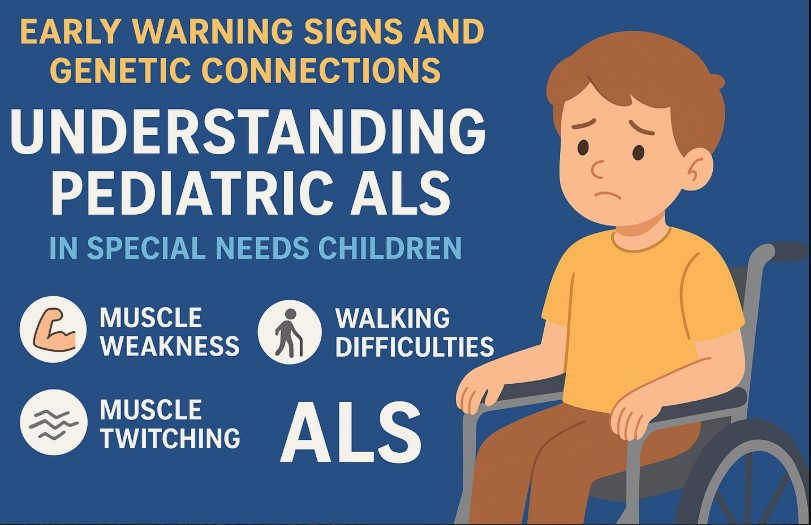
Early Warning Signs and Genetic Connections: Understanding Pediatric ALS in Special Needs Children
When you hear Amyotrophic Lateral Sclerosis (ALS), you likely think of older adults — but there is a rare and often under-recognized form that can affect children and adolescents. Known as Juvenile ALS (JALS) — and in even rarer cases Pediatric ALS — this condition can emerge in families already managing other neurodevelopmental or special needs challenges, making early detection and understanding critical.
For parents and caregivers of special-needs children, awareness of early signs, genetic risk factors, and available diagnostic options can make a world of difference. This article explores what pediatric and juvenile ALS is, its genetic underpinnings (including mutations in genes such as SPTLC1, FUS, SETX, and SOD1), how it may present in special-needs children, and why early detection and genetic counselling matters.
- What is Pediatric / Juvenile ALS?
- Why Genetic Connections Matter
- Early Warning Signs & Symptoms to Watch For in Children
- Genetic Mutations Behind Pediatric / Juvenile ALS
- Why Early Detection & Genetic Testing Matters for Special Needs Children
- Case Study Snapshot: Childhood-Onset ALS Linked to SPTLC1
- What Other Neuromuscular Disorders Are Commonly Mistaken — and How ALS Differs
- Recommendations for Families and Caregivers of Special-Needs Children
- FAQs (Long-tail, Voice-Search & Parent-Focused)
- Why This Matters for Children with Other Special Needs
- Conclusion & Key Takeaways
- External Authoritative Resources (for Further Reading)
What is Pediatric / Juvenile ALS?
- Typical ALS generally manifests in middle to late adulthood — average age of onset is around 58–60 years. ScienceDirect+1
- In contrast, Juvenile ALS is defined as onset of symptoms before age 25. PubMed+1
- Pediatric ALS refers to even earlier onset, often during childhood (under age 18). My Site+1
- While ALS remains uncommon overall — incidence for typical adult ALS is approximately 1–2.6 per 100,000 per year, prevalence around 5–6 per 100,000 in Western countries. ScienceDirect+1
- In contrast, pediatric/juvenile ALS is extremely rare. Only a small number of cases have been documented worldwide. orpha.net+1
Because of its rarity and potentially slow or atypical presentation, pediatric ALS can be easily missed — especially in children already dealing with other developmental, neurological, or special-needs conditions.
Why Genetic Connections Matter
One of the key differences between adult-onset ALS and pediatric/juvenile ALS is the genetic underpinning.
🔬 Genetic Basis
- Juvenile ALS is more often genetic than sporadic. Up to ~40% of JALS cases have a known genetic cause. PubMed+1
- Among the genes linked to JALS, the most common include FUS, SETX, ALS2, and others. PubMed+2PMC+2
- Recently, variants in SPTLC1 have been identified as a cause of childhood-onset ALS. JAMA Network+2SpringerLink+2
What this means for special-needs children:
- A child already diagnosed with a neurodevelopmental or motor delay — particularly if unexplained — could, in rare instances, be manifesting early signs of juvenile ALS rather than or in addition to the original diagnosis.
- Genetic testing / counseling becomes essential — especially when there is unexplained progressive muscle weakness, declining motor skills, or new features such as gait problems, muscle twitching, or respiratory difficulties.
Early Warning Signs & Symptoms to Watch For in Children

Because pediatric / juvenile ALS is rare and its progression variable, the early signs may be subtle, especially in children with special needs. However, certain red flags deserve attention.
🔎 Common Early and Progressive Symptoms
| Symptom / Sign | What to Observe | Why It Matters |
|---|---|---|
| Muscle weakness in children (hands, legs, neck) | Child loses strength in limbs, difficulty lifting objects, frequent falls, trouble climbing stairs | Weakness often emerges in distal muscles or legs first — may be mistaken for developmental delay or muscular dystrophy. My Site+1 |
| Muscle twitching / fasciculations (arms, legs) | Fine twitches under skin, visible in limbs, especially at rest or during sleep | Fasciculations signal lower motor neuron involvement. Common in ALS but rare in many other pediatric neuromuscular conditions. PMC+1 |
| Spasticity or increased muscle tone / reflexes | Stiffness in legs, tightness when moving, hyperreflexia, spastic gait, difficulty bending joints | Suggests upper motor neuron involvement — key sign of motor neuron disease rather than muscle disease (myopathy). Karger Publishers+1 |
| Walking difficulties / gait abnormalities (walking difficulties ALS) | Frequent stumbling, difficulty walking, dragging legs, needing help to walk | Loss of motor control in legs may lead to spastic gait, falls, impaired mobility. orpha.net+1 |
| Speech problems (speech problems ALS children) | Slurred speech, slow speech, changes in voice, difficulty articulating words | Bulbar involvement — a sign of more widespread neurodegeneration. My Site+1 |
| Swallowing difficulties (swallowing difficulties ALS kids) | Choking, coughing on food/liquids, slow eating, drooling | Bulbar muscle weakness is common as disease progresses. My Site+1 |
| Respiratory issues pediatric ALS | Shortness of breath, reduced stamina, shallow breathing, history of respiratory infections | Respiratory muscle degeneration can lead to life-threatening complications — key reason for early detection. PMC+1 |
| Loss of previously acquired motor skills / slowed motor development | A child who could run, climb or walk earlier begins to fall behind or regress in skills | Progressive loss rather than static delay — red flag for neurodegenerative process. |
⚠️ Important: In special-needs children, such symptoms may overlap with or be attributed to existing developmental disorders (cerebral palsy, neuromuscular disorders, genetic syndromes). That’s why careful monitoring over time — and periodic reassessment — is crucial.
Genetic Mutations Behind Pediatric / Juvenile ALS
Recent years have seen major advances in understanding the genetic causes of juvenile ALS. This offers hope — and also clarity for families already navigating other neurodevelopmental or disability-related issues.
Major Genes Implicated
- FUS — One of the most common genes linked with juvenile ALS. In a study of early-onset sporadic ALS patients, FUS mutations were found in 25% of cases; a SOD1 mutation in 6%. PubMed+1
- SETX — Known to cause a form of juvenile/early ALS (sometimes called ALS4), often with a slow progression and onset in the second decade of life. PMC+1
- SPTLC1 — A breakthrough discovery: de novo variants in SPTLC1 have been associated with pediatric/juvenile ALS in multiple case series. JAMA Network+2NINDS+2
- SOD1 — Historically the first gene linked to ALS; rarely implicated in juvenile onset, but documented. PubMed+1
- Other genes — Depending on reports: ALS2, SPG11, SIGMAR1, among others, though less common. PubMed+1
Why SPTLC1 Matters Greatly
- These mutations do not cause the classic sensory neuropathy previously associated with SPTLC1; instead they cause a pure motor neuron disease, expanding the known phenotype of SPTLC1. JAMA Network+1
- Biochemical work shows these variants lead to overproduction of sphingolipids and ceramides, which appears to be toxic to motor neurons, offering a distinct metabolic-mechanistic pathway. SpringerLink+1
- Some patients with SPTLC1-associated JALS had onset as early as 3–16 years old. PMC+2Karger Publishers+2
This genetic insight is especially relevant for special-needs children with unexplained or worsening motor difficulties — because a child’s symptoms might be misattributed to a static developmental disorder, when in fact a progressive neurodegenerative disease is at work.
Why Early Detection & Genetic Testing Matters for Special Needs Children
✅ Benefits of Early Diagnosis
- Targeted care and therapy
- Early recognition allows multidisciplinary care (neurology, physiotherapy, respiratory therapy, occupational therapy, speech therapy) from the start.
- Early intervention may slow functional decline and preserve quality of life.
- Access to emerging treatments & clinical trials
- With discoveries like SPTLC1-linked ALS, gene-based therapies (e.g. gene silencing, lipid-modulating drugs) are increasingly being developed. NINDS+1
- Patients diagnosed early may qualify for novel therapeutic trials — particularly important for children.
- Genetic counselling and family planning
- Families with a child diagnosed with hereditary or de novo juvenile ALS can benefit from genetic counselling to understand recurrence risk, implications for siblings, and early monitoring.
- Important in contexts where other special-needs or neurodevelopmental conditions are present, to avoid misdiagnosis.
- Better symptom management & anticipatory care
- Respiratory decline, swallowing problems, fatigue, mobility loss can be anticipated and managed proactively.
- Quality-of-life planning, assistive devices, supportive equipment can be introduced timely.
⚠️ Challenges & Why Many Cases Are Missed
- Pediatric ALS is extremely rare ➜ many pediatric neurologists or pediatricians may never see a case in their career.
- Early signs (weakness, clumsiness, speech changes) overlap with many more common conditions (cerebral palsy, muscular dystrophy, developmental delays).
- Genetic testing may not be standard, especially in resource-limited settings or when the child already has a diagnosis (e.g. special needs due to another cause).
- Lack of awareness among caregivers: progressive decline may be attributed to the known disability, not suspected as a new neurodegenerative process.
That is why raising awareness among families and special-needs care communities is critical.
Case Study Snapshot: Childhood-Onset ALS Linked to SPTLC1
Here’s a summary of what researchers have observed in cases of SPTLC1-associated juvenile ALS, based on the longest follow-up to date:
| Patient / Study | Age at Onset | Key Features | Progression & Outcome |
|---|---|---|---|
| 30-year follow-up case study (SPTLC1 variant) PMC+1 | Around 22 years (upper-limb weakness first) | Upper & lower limb weakness, hyperreflexia, fasciculations; progressive decline over decades | Lost independent ambulation by age 45; forced vital capacity dropped from 94% at 27 to 49% at 47; hospitalizations for respiratory failure |
| Initial childhood-onset SPTLC1 cases from 2021 report JAMA Network+1 | Age 3–16 years (onset) | Progressive weakness, spasticity, gait problems, motor neuron signs — no sensory neuropathy | Varying progression: slow, but neurodegenerative course, with eventual motor decline |
Takeaway for families: even if onset is slow and symptoms seem mild for years, SPTLC1-linked juvenile ALS remains progressive — and early recognition can help plan supportive care, monitor decline, and possibly benefit from future therapies.
What Other Neuromuscular Disorders Are Commonly Mistaken — and How ALS Differs
In special-needs children, especially those with existing neurological or developmental diagnoses, pediatric ALS can mimic or be mistaken for other neuromuscular or neurodevelopmental conditions. Commonly considered diagnoses include:
- Cerebral palsy
- Spastic paraplegia
- Muscular dystrophy
- Congenital myopathies
- Static encephalopathy or developmental delay
Key Differences That Suggest a Motor-Neuron Disease (Like ALS) Instead of Static / Myopathy
| Feature | More Typical of Static/Myopathy | More Suggestive of ALS / Motor-Neuron Disease |
|---|---|---|
| Progression over time | Little or no worsening; possibly stable or improved with therapy | Gradual decline in strength, motor skills, gait, respiratory muscles |
| Muscle tone & reflexes | Often normal or decreased reflexes (in myopathy) | Spasticity, hyperreflexia (upper motor neuron signs), fasciculations (lower motor neuron) |
| Sensory involvement | Depends — could have sensory loss or neuropathy | Typically no sensory loss — purely motor; in SPTLC1 ALS, sensory neuropathy is absent. SpringerLink+1 |
| Onset of bulbar symptoms (speech / swallowing) | Rare unless severe myopathy or central involvement | Slurred speech, dysarthria, swallowing difficulties often develop as disease progresses |
| Family history / genetics | May or may not be present | High chance of genetic mutations — especially in juvenile-onset ALS. PubMed+2JAMA Network+2 |
Recommendations for Families and Caregivers of Special-Needs Children
If you care for a child with developmental delays or special needs — especially when motor function, gait, or speech is affected — consider the following proactive steps to help rule out or detect pediatric / juvenile ALS early:
- Monitor for progression: Keep periodic records of motor skills (walking, climbing stairs, fine motor tasks), speech changes, fatigue, and muscle weakness.
- Seek neurology evaluation if regression is noted: If you observe a decline in previously mastered skills — especially with muscle weakness, twitching, spasticity or increased reflexes — ask for a pediatric neurology referral.
- Request genetic testing / counselling: If ALS is suspected, genetic testing for known ALS-associated genes (FUS, SPTLC1, SETX, etc.) can clarify diagnosis and inform prognosis.
- Multidisciplinary care: Involve physiotherapists, occupational therapists, speech & swallowing therapists early. Also plan for respiratory monitoring (e.g., pulmonary function tests) if bulbar or respiratory signs appear.
- Stay updated on research and emerging therapies: With newer genetic discoveries (like SPTLC1), research into gene-based therapies, lipid-modulating treatments, or neuroprotective strategies is ongoing. Early diagnosis may increase access to trials.
FAQs (Long-tail, Voice-Search & Parent-Focused)
Q: What is pediatric ALS and how is it different from adult ALS?
A: Pediatric ALS (or juvenile ALS) refers to ALS onset in childhood or adolescence — typically before age 18–25 — whereas adult ALS usually begins at middle to older age (around 58–60 on average). Pediatric ALS is rare, more often genetic, and may progress more slowly.
Q: What are early signs of ALS in children?
A: Early signs can include unexplained muscle weakness (in arms, legs, neck), muscle twitching (fasciculations), difficulty walking or frequent falls, spasticity or stiffness, loss of previously acquired motor skills, slurred speech, swallowing difficulties, and, over time, respiratory issues.
Q: Which genes are linked to juvenile or pediatric ALS?
A: Known ALS-associated genes in children include FUS, SETX, SOD1, ALS2 — and more recently, SPTLC1 (and sometimes SPTLC2). Genetic mutations may be inherited or arise de novo (newly) in the child.
Q: Should special-needs children be tested for ALS genetically?
A: If a special-needs child shows progressive decline in motor skills, muscle weakness, or new signs like twitching, spasticity, or bulbar symptoms — genetic testing should be considered. Genetic counselling is recommended to understand implications for the child and family.
Q: Is there a cure for juvenile ALS?
A: Currently, there is no cure for ALS — adult or juvenile. Treatment is focused on supportive care (physiotherapy, respiratory support, nutritional support, assistive devices). However, new research (especially for genetic forms like SPTLC1) is exploring gene-based therapies. Early diagnosis may offer access to emerging trials.
Q: What makes ALS different from muscular dystrophy or cerebral palsy in children?
A: Unlike muscular dystrophy or cerebral palsy, ALS typically involves both upper and lower motor neurons, leading to a combination of spasticity + hyperreflexia (upper motor neuron signs) and fasciculations + muscle wasting (lower motor neuron signs). ALS also tends to progress over time, whereas many developmental or muscular disorders are static or slowly progressive.
Why This Matters for Children with Other Special Needs
Many children with special needs — e.g., developmental delays, genetic syndromes, cerebral palsy, neuromuscular disorders — already have complex care needs. In such a context:
- New or worsening motor difficulties may be dismissed as part of the “original” condition.
- A rare but serious disorder like pediatric or juvenile ALS may go unnoticed until late.
- Early detection and diagnosis can open doors to better symptom management, supportive therapy, and — possibly in future — gene-based or metabolic treatments.
Conclusion & Key Takeaways
- Pediatric and juvenile ALS — though extremely rare — does occur, including in childhood via genes such as SPTLC1, FUS, SETX, SOD1, among others.
- Early warning signs often include muscle weakness, twitching, spasticity, gait problems, speech or swallowing difficulties, or respiratory decline. In special-needs children, these may be mistaken for the existing condition — so vigilance and periodic re-evaluation are crucial.
- Genetic testing and counselling are essential if ALS is suspected, especially in children with regression or unexplained progression of motor symptoms.
- Early diagnosis allows for multidisciplinary care, planning, supportive therapy, and — potentially — future access to therapeutic trials targeting genetic or metabolic mechanisms.
- For parents and caregivers, awareness and advocacy are key — knowing the signs, asking the right questions, and working with neurologists can make a significant difference in care and quality of life.
With growing scientific understanding — including the discovery of SPTLC1-linked pediatric ALS — we can hope that research, awareness, and early intervention will improve outcomes for affected children and families.
External Authoritative Resources (for Further Reading)
- NIH / NINDS press release on childhood-onset ALS linked to SPTLC1 NINDS
- Review article on juvenile ALS genetic causes and variability PubMed+1
- Case report of 30-year follow-up in SPTLC1-associated juvenile ALS PMC+1
Medical Disclaimer (Parent-Friendly):
This article is for educational purposes only and should not be considered medical advice. Please consult a pediatric neurologist for diagnosis or concerns.


