

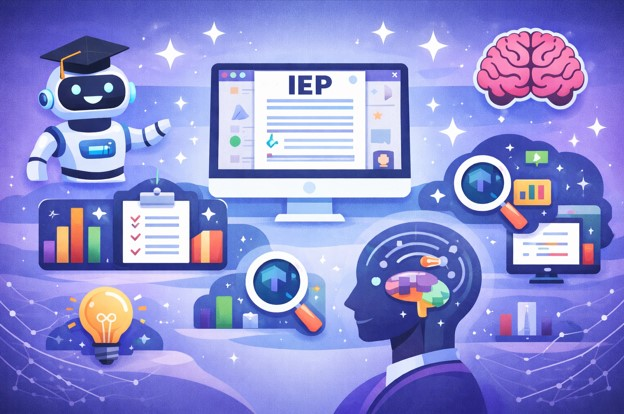
🧠 How to Use AI to Draft SMART IEP Goals for Dyslexia
(AI for SMART IEP goals for dyslexia)
Published January 17, 2026 • Written for parents, educators, and special education professionals
📌 Introduction
Every child with dyslexia deserves clear, individualized milestones that guide their learning progress. SMART IEP goals — specific, measurable, achievable, relevant, time-bound — form the backbone of successful individualized education program goals 📘. But writing quality IEP goals consistently is time-consuming and complex.
Enter AI for SMART IEP goals for dyslexia — leveraging the best of AI in special education, AI for IEP writing, and special education AI tools to create data-driven IEP goals that are truly personalized, research-backed, and easier to manage.
In this tutorial-style guide, we’ll walk you through:
✔ What SMART IEP goals are and why they matter
✔ How AI and assistive technology for dyslexia can transform IEP goal writing
✔ Step-by-step workflow with real tool examples
✔ Live-case illustrations with charts
✔ FAQs focused on long-tail voice queries like “how can AI help with dyslexia IEPs?”
Let’s begin! 🚀
- 📌 Introduction
- 🧩 What Are SMART IEP Goals?
- 📊 Why SMART IEP Goals Help Students with Dyslexia
- 🤖 How AI Empowers SMART IEP Goal Writing
- 📋 Step-by-Step Guide: Using AI to Draft SMART IEP Goals for Dyslexia
- ✅ Step 1: Gather Baseline Data
- ✅ Step 2: Prepare Student Profile
- ✅ Step 3: Prompt Your AI Tool
- ✅ Step 4: Embed Progress Monitoring Metrics
- ✅ Step 5: Add Relevant Accommodations & Strategies
- 🧠 Real-World Example: AI-Enhanced Dyslexia IEP Goal
- 📈 AI Results: What Research Shows
- 🧰 Top Tools & Technologies Supporting This Process
- 📌 Best Practices for Using AI in IEP Goal Writing
- 🧠 Voice-Search Optimized FAQs (Long-Tail)
- 📎 Recommended External Resources
- 🧾 Conclusion

🧩 What Are SMART IEP Goals?
SMART is an acronym educators use to design high-quality special education goals:
- Specific — Clearly defined target behavior
- Measurable — Quantifiable evidence of progress
- Achievable — Realistic based on the child’s baseline
- Relevant — Directly connected to the child’s needs
- Time-bound — With a clear deadline
🎯 Example goal without SMART:
“Improve reading”
🎯 SMART version:
“Given structured literacy support, the student will increase multisyllabic word decoding accuracy from 45% to 70% in grade-level text within 12 weeks.”
SMART goals ensure consistency in progress reporting and support dyslexia IEP strategies that produce real outcomes.
📊 Why SMART IEP Goals Help Students with Dyslexia
Students with learning disabilities like dyslexia often struggle with reading fluency, decoding, and written expression 🌟. According to global estimates, dyslexia affects 10–15% of the population, making it one of the most common learning disorders worldwide. 📌
Yet too often, classroom goals are vague or inconsistent. SMART IEP goals solve that by:
✔ Giving teachers clear targets
✔ Helping parents track progress easily
✔ Motivating students with measurable success
✔ Aligning interventions to research-based practices
Now imagine a technology that helps write those goals in seconds — that’s where AI steps in.
🤖 How AI Empowers SMART IEP Goal Writing
Modern AI-powered education tools are reshaping special education planning. Educators increasingly report using AI to support individualized planning — including goal drafting, progress tracking, and accommodations. In a recent survey of special education teachers:
📊 57% used AI to help with IEPs or accommodations in 2024–25, up significantly from previous years. 📌
🔍 AI Capabilities Relevant to IEPs
| AI Functionality | How It Helps IEP Goal Writing |
|---|---|
| Natural Language Generation | Suggests SMART IEP goal phrases tailored to student profiles |
| Progress Analysis Tools | Converts raw student data into readable insights for measurable goals |
| Adaptive Learning Analytics | Identifies patterns in performance to recommend interventions |
| Assistive Feedback Engines | Supports students in reading and writing tasks linked to goals |
These tools help reduce administrative workload — not replace the teacher — ensuring more time for direct student support.
📋 Step-by-Step Guide: Using AI to Draft SMART IEP Goals for Dyslexia
Here’s a practical workflow you can follow:
✅ Step 1: Gather Baseline Data
Collect current performance data from formal assessments, reading fluency scores, and progress reports. This becomes the “S” and “M” in SMART.
Example:
| Skill | Baseline | Target |
|---|---|---|
| Grade-level reading accuracy | 48% | 70% |
| Multisyllabic word decoding | 42% | 65% |
| Written expression | 2 sentences with errors | 5 error-free sentences |
✅ Step 2: Prepare Student Profile
Include details such as age, standardized reading scores, accommodations used, and preferred learning supports. This ensures goals are relevant and personalized.
Tip: AI tools can generate a clean student profile summary from uploaded reports.
✅ Step 3: Prompt Your AI Tool
Use clear, structured prompts that reflect SMART criteria.
Example Prompt (voice/UI assisted):
“Create SMART IEP goals for dyslexia for a 3rd grader who decodes text at 45% accuracy, with measurable outcomes by the next quarterly report.”
Good AI tools will produce items like:
➡ “Given daily multisensory literacy lessons, the student will improve reading fluency from 45% to 70% accuracy by [date].”
➡ “Using text-to-speech and guided practice, the student will write informative paragraphs with correct spelling in 4 out of 5 trials by [timeframe].”
Always review AI output with educational judgment — AI augments, not replaces, planning.
✅ Step 4: Embed Progress Monitoring Metrics
To make goals truly measurable, include tools like checklists, probes, running record scores, or reading rate metrics. AI can suggest progress checkpoints automatically.
For example:
📍 “Use DIBELS reading probes weekly to measure word reading accuracy.”
✅ Step 5: Add Relevant Accommodations & Strategies
This is where dyslexia IEP strategies and assistive technology for dyslexia shine.
✔ Text-to-speech support
✔ Graphic organizers
✔ Structured literacy apps
✔ Speech-to-text for writing assignments
AI tools can recommend and match these directly to student challenges.
🧠 Real-World Example: AI-Enhanced Dyslexia IEP Goal
Student Profile: 9-year-old with dyslexia.
Baseline: Reads Grade 3 text at 45% accuracy.
Goal Written With AI + Teacher Input:
📌 SMART Goal:
“Over the next 12 weeks, when provided explicit, structured literacy interventions and AI-assisted reading supports, the student will increase grade-level text reading accuracy from 45% to 70% as measured by weekly running records and teacher data logs.”
This SMART goal is specific, measurable, achievable, relevant, and time-bound — and informed by baseline data and AI recommendations.
📈 AI Results: What Research Shows
AI adoption in special education is rising:
✔ 57% of special educators reported using AI to support IEPs. 📌
✔ Adaptive AI systems improve engagement and reading outcomes for dyslexia students. 📌
✔ AI-based reading assistants can boost comprehension by ~35% over 8 weeks in dyslexia support pilots. 📌
These growth numbers highlight why AI for SMART IEP goals for dyslexia represents the future of personalized special education.
🧰 Top Tools & Technologies Supporting This Process
| Category | Example Tools |
|---|---|
| IEP Writing Support | AI text generation with education-specific templates |
| Adaptive Learning Tools | Personalized reading apps with AI scaffolding |
| Progress Analytics | Dashboards that convert raw data into insights |
| Assistive Tech | AI speech-to-text and text-to-speech for students |
(Use tools that comply with privacy laws — never feed student PII directly into open AI services.)
📌 Best Practices for Using AI in IEP Goal Writing
🟢 Always review AI suggestions for compliance and legal requirements.
🟢 Pair AI insights with teacher expertise and parent input.
🟢 Use AI to generate options — not final drafts.
🟢 Keep human review to ensure relevance and accuracy.
🧠 Voice-Search Optimized FAQs (Long-Tail)
Q1: How can AI help me write individualized education program goals for dyslexia?
AI helps by analyzing student performance data, suggesting SMART IEP goals, recommending dyslexia-specific strategies, and offering measurable objectives parents and teachers can track.
Q2: Are there AI tools for special education that write IEP goals?
Yes — some AI systems include education-specific templates that generate IEP goal language, accomodation suggestions, and progress monitoring plans with minimal manual input.
Q3: What are best practices for AI in special education planning?
Combine AI suggestions with teacher knowledge, data interpretation, and parental insights to create evidence-based IEP goals for dyslexia.
Q4: Can AI help with dyslexia support in schools and progress monitoring?
Absolutely — AI tools can track student data, adapt literacy tasks, and offer real-time insights that support ongoing progress toward SMART IEP goals.
📎 Recommended External Resources
📌 National Center for Learning Disabilities – https://www.ncld.org
📌 International Dyslexia Association – https://dyslexiaida.org
📌 U.S. Dept. of Education – IEP Information – https://www.ed.gov
🧾 Conclusion
Today’s classrooms are more complex than ever, and students with dyslexia deserve supports that are strategic, measurable, and adaptive. AI for SMART IEP goals for dyslexia provides a powerful bridge between data-driven insights and compassionate, individualized education.
By combining the precision of AI in special education with human expertise, educators can write better IEP goals for dyslexia, monitor progress effectively, and ensure every student has the tools they need to succeed 📚✨.


777yono seems promising folks. I just signed up, the layout seems user-friendly, and the options for games are plentiful. Hopefully it’ll go well, cheers 777yono.