

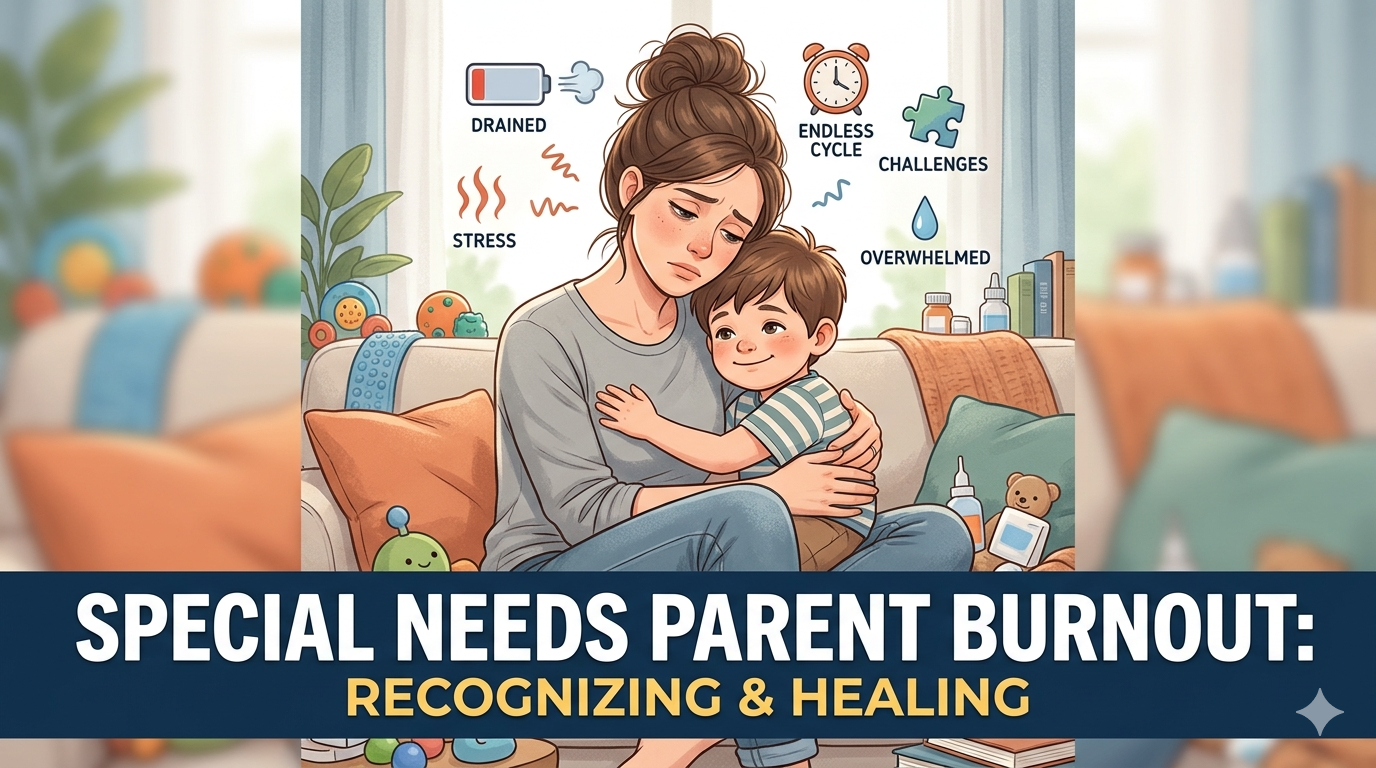
Special Needs Parent Burnout: Signs, Causes, and How to Cope (2026 Guide)
Parenting is not easy. However, raising a child with special needs can be even more demanding.
Over time, this can lead to special needs parent burnout.
If you feel exhausted, overwhelmed, or emotionally drained, you are not alone. Many parents experience this. The good news is that support and strategies can help.

- What Is Special Needs Parent Burnout?
- Why Is Burnout More Common in Special Needs Parents?
- 1. Continuous Caregiving
- 2. Emotional Stress
- 3. Financial Pressure
- 4. Lack of Support
- 5. Complex Systems
- Signs of Special Needs Parent Burnout
- Real-Life Experience (From Parents)
- Causes of Special Needs Parent Burnout
- Effects of Burnout on Parents and Children
- How to Prevent Special Needs Parent Burnout
- 1. Build a Support System
- 2. Take Breaks Without Guilt
- 3. Practice Self-Care
- 4. Join Parent Support Groups
- 5. Set Realistic Expectations
- How to Cope With Special Needs Parent Burnout
- 1. Recognize and Accept Your Feelings
- 2. Create a Daily Routine
- 3. Seek Professional Help
- 4. Use Respite Care
- 5. Stay Connected
- Expert Tips for Managing Burnout
- Daily Self-Care Checklist for Parents
- Special Needs Parent Burnout vs Stress: What’s the Difference?
- When Should You Seek Help?
- Benefits of Addressing Burnout Early
- Real-Life Recovery Story
- FAQs: Special Needs Parent Burnout
- 1. Is burnout common in special needs parents?
- 2. Can burnout affect my child?
- 3. How long does burnout last?
- 4. What is the fastest way to reduce burnout?
- 5. Should I seek therapy?
- Final Thoughts
What Is Special Needs Parent Burnout?
Special needs parent burnout is a state of physical, emotional, and mental exhaustion caused by long-term caregiving stress.
It often includes:
- Constant fatigue
- Emotional overload
- Feeling disconnected
- Loss of personal identity
According to research, parental burnout is linked to chronic stress and lack of support resources. (Nature)
In simple terms:
👉 When demands become too high and support becomes too low, burnout happens.
Why Is Burnout More Common in Special Needs Parents?
Parents of children with disabilities face unique challenges.
Research shows that parents of children with special needs have higher burnout levels compared to others. (PMC)
Here’s why:
1. Continuous Caregiving
There are no breaks. Many children need 24/7 support.
2. Emotional Stress
Parents often worry about:
- Their child’s future
- Health issues
3. Financial Pressure
Therapies, treatments, and education can be expensive.
4. Lack of Support
Many parents feel isolated or unsupported.
5. Complex Systems
Managing IEPs, therapies, and appointments can feel overwhelming.
Signs of Special Needs Parent Burnout
Recognizing early signs is important.

Common symptoms include:
Physical Signs
- Constant tiredness
- Headaches
- Sleep problems
Emotional Signs
- Irritability
- Feeling hopeless
- Anxiety or sadness
Behavioral Signs
- Withdrawing from others
- Loss of interest
- Reduced patience
Experts highlight symptoms like fatigue, irritability, and feeling overwhelmed as key warning signs. (Apex ABA Therapy)
Real-Life Experience (From Parents)
Many parents openly share their struggles.
From online parenting communities:
“I am stressed to the absolute max and burnt out… I’ve lived in survival mode for years.” (Reddit)
“We are just burnt out… trying to manage everything is breaking us.” (Reddit)
These voices show that burnout is real—and common.
Causes of Special Needs Parent Burnout
Burnout does not happen suddenly. It builds over time.
1. Chronic Stress
Caregiving stress never fully stops.
Research shows burnout develops due to long-term imbalance between stress and support. (PMC)
2. High Expectations
Parents often feel pressure to:
- Do everything perfectly
- Always stay strong
3. Lack of Time for Self
Many parents neglect:
- Sleep
- Personal goals
4. Emotional Guilt
Parents may feel:
- “I should do more”
- “I am not doing enough”
5. Social Isolation
Friends and family may not fully understand the situation.
Effects of Burnout on Parents and Children
Burnout affects the whole family.
Impact on Parents
- Mental health issues
- Physical health problems
- Relationship strain
Impact on Children
- Reduced emotional connection
- Increased stress at home
Research warns that severe burnout can affect both parent-child relationships and family well-being. (Nature)
How to Prevent Special Needs Parent Burnout
Prevention is possible. Small steps make a big difference.
1. Build a Support System
You do not have to do everything alone.
Ask for help from:
- Family
- Friends
- Support groups
2. Take Breaks Without Guilt
Even short breaks help:
- 10–15 minutes daily
- Weekly personal time
3. Practice Self-Care
Simple habits matter:
- Sleep well
- Eat healthy
- Exercise regularly
4. Join Parent Support Groups
Talking to others helps you feel understood.
5. Set Realistic Expectations
You do not need to be perfect.
How to Cope With Special Needs Parent Burnout
If you already feel burned out, take action now.
1. Recognize and Accept Your Feelings
First, acknowledge the problem.
This is not weakness. It is a human response.
2. Create a Daily Routine
Structure reduces stress.
Include:
- Caregiving tasks
- Rest time
- Personal time
3. Seek Professional Help
Consider:
- Therapy
- Counseling
Mental health support can make a big difference.
4. Use Respite Care
Respite care allows parents to take a break.
Even a few hours can help.
5. Stay Connected
Do not isolate yourself.
Stay in touch with:
- Friends
- Support communities
Expert Tips for Managing Burnout
Experts recommend:
- Focus on small wins
- Practice mindfulness
- Build emotional resilience
Most importantly:
👉 Balance demands with available support
Daily Self-Care Checklist for Parents
Use this simple checklist:
✔ Sleep at least 6–8 hours
✔ Take short breaks
✔ Talk to someone
✔ Eat healthy meals
✔ Practice relaxation
Special Needs Parent Burnout vs Stress: What’s the Difference?
| Stress | Burnout |
|---|---|
| Temporary | Long-term |
| Manageable | Overwhelming |
| Motivates action | Causes exhaustion |
When Should You Seek Help?
Seek help if you:
- Feel constantly exhausted
- Lose interest in life
- Feel emotionally numb
- Have sleep issues
Early support prevents serious problems.
Benefits of Addressing Burnout Early
Taking action early helps:
- Improve mental health
- Strengthen family relationships
- Increase energy and focus
Real-Life Recovery Story
Meera, a parent of a child with autism, felt completely exhausted.
She:
- Joined a support group
- Took weekly breaks
- Started therapy
Within months:
- Her stress reduced
- Her energy improved
- Her parenting experience became more positive
FAQs: Special Needs Parent Burnout
1. Is burnout common in special needs parents?
Yes. Studies show higher burnout levels in these parents.
2. Can burnout affect my child?
Yes. It can impact emotional connection and family environment.
3. How long does burnout last?
It depends. With support, recovery is possible.
4. What is the fastest way to reduce burnout?
Start with:
- Rest
- Support
- Self-care
5. Should I seek therapy?
Yes, if burnout feels overwhelming.
Final Thoughts
Special needs parent burnout is real. But it is manageable.
Remember:
- You are not alone
- You are doing your best
- Support is available
Start small. Take one step today.
Because when you take care of yourself, you take better care of your child.


