

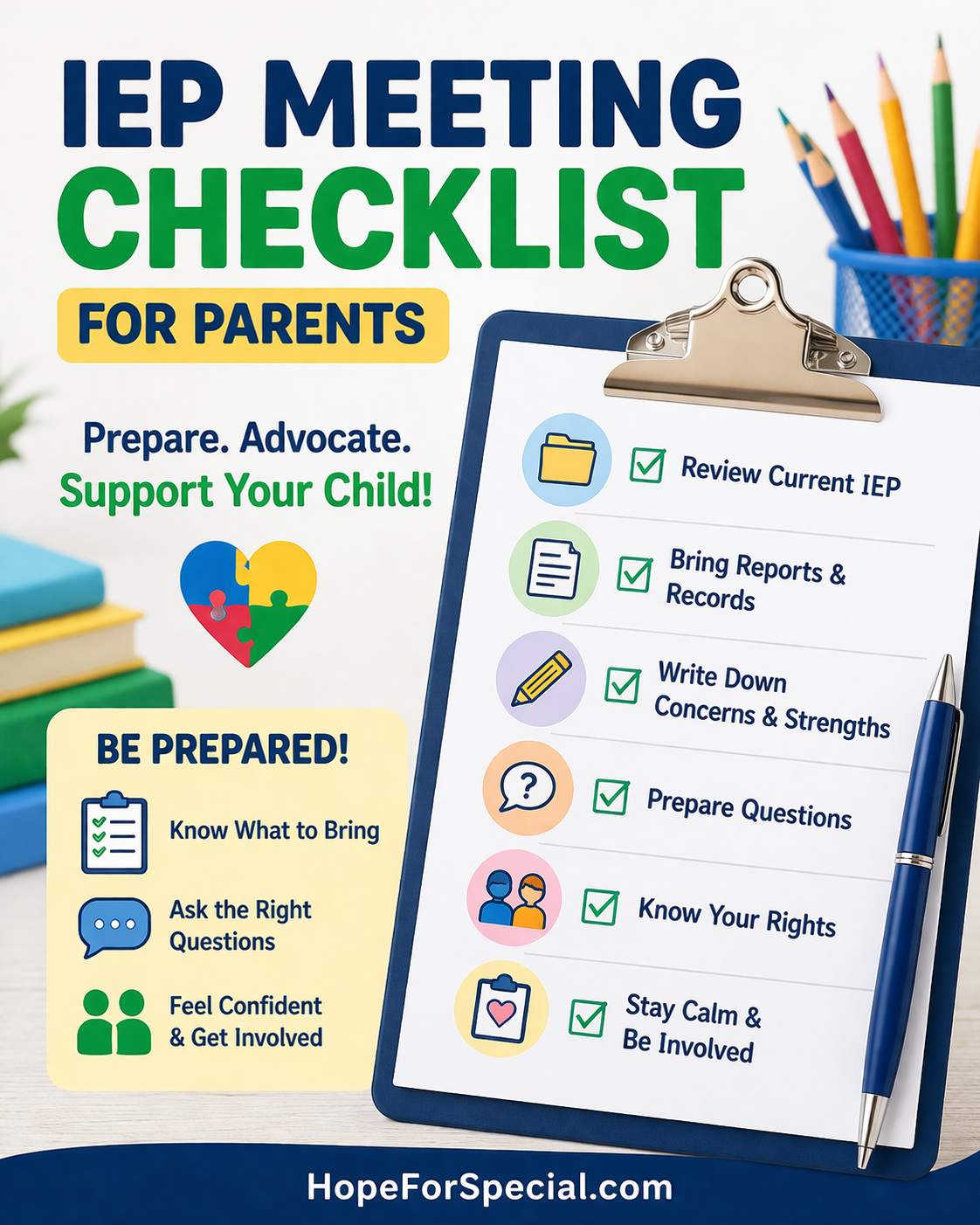
IEP Meeting Checklist for Parents (2026 Complete Guide)
IEP meetings can feel overwhelming. Many parents feel nervous before attending one.
However, with the right preparation, you can walk into the meeting feeling confident.
This guide explains a complete IEP meeting checklist for parents. It will help you stay organized, ask the right questions, and support your child effectively.

- What Is an IEP Meeting?
- Why Parents Need an IEP Meeting Checklist
- 1. Review Your Child’s Current IEP
- 2. Request Important Documents in Advance
- 3. Gather Your Own Records
- 4. Write Down Your Concerns
- 5. List Your Child’s Strengths
- 6. Prepare Questions
- 7. Understand Your Rights
- 8. Invite Support (If Needed)
- 9. Create a Vision for Your Child
- 10. Organize Everything
- 1. Arrive Prepared and On Time
- 2. Introduce Yourself and Your Role
- 3. Focus on Your Child’s Needs
- 4. Ask Questions Without Hesitation
- 5. Take Notes
- 6. Discuss Goals Clearly
- 7. Review Services and Support
- 8. Talk About Placement
- 9. Stay Calm and Confident
- 10. Do Not Feel Pressured to Sign
- 1. Review the Final IEP
- 2. Follow Up with the School
- 3. Monitor Progress
- 4. Stay in Touch with Teachers
- 5. Keep Records Updated
What Is an IEP Meeting?
An IEP (Individualized Education Program) meeting is a formal meeting between:
- Parents
- Teachers
- School staff
- Specialists
The goal is simple:
👉 To create or review a plan that supports your child’s education.
IEP meetings happen at least once a year. They focus on:
- Progress
- Goals
- Support services
Experts describe the IEP as a structured plan that ensures your child receives the right support at school. (brainbalancecenters.com)

Why Parents Need an IEP Meeting Checklist
Preparation is key.
Without a checklist, you may:
- Forget important questions
- Miss key details
- Feel overwhelmed
A checklist helps you:
✔ Stay focused
✔ Advocate better
✔ Ensure nothing is missed
According to parent advocacy resources, using a checklist ensures all important topics are discussed during the meeting. (parentcenterhub.org)
Complete IEP Meeting Checklist for Parents
Let’s break this into three stages:
- Before the meeting
- During the meeting
- After the meeting
1. Before the IEP Meeting Checklist for Parents
Preparation starts early. Do not wait until the last day.
1. Review Your Child’s Current IEP
Start here.
Carefully read:
- Current goals
- Services
- Accommodations
Ask yourself:
- What is working?
- What is not working?
Experts recommend reviewing the current IEP to understand progress and needs. (ietutor.com)
2. Request Important Documents in Advance
Ask the school for:
- Evaluation reports
- Progress reports
- Draft IEP
Try to get these at least 5 days before the meeting. (Ci Wear)
This gives you time to prepare.
3. Gather Your Own Records
Bring your own evidence.
This may include:
- Medical reports
- Therapy notes
- Work samples
- Videos
Experts suggest collecting all relevant documents to support your concerns. (Undivided)
4. Write Down Your Concerns
Do not rely on memory.
Write:
- Your child’s challenges
- Areas needing support
- Concerns about school
5. List Your Child’s Strengths
This is equally important.
Think about:
- Skills
- Interests
- Achievements
Experts recommend starting IEP discussions with strengths. (Perkins School for the Blind)
6. Prepare Questions
Write down questions like:
- Are the goals realistic?
- What progress has been made?
- What support is available?
Having a question list helps you stay focused. (brainbalancecenters.com)
7. Understand Your Rights
Learn about special education laws.
Know that:
- You are part of the decision-making team
- You can disagree
- You can request changes
Experts suggest reviewing your rights under IDEA before the meeting. (brainbalancecenters.com)
8. Invite Support (If Needed)
You can bring:
- Family member
- Therapist
- Advocate
Support helps you feel more confident.
9. Create a Vision for Your Child
Think about:
- Short-term goals
- Long-term goals
Experts recommend having a clear vision before the meeting. (AdLit)
10. Organize Everything
Keep everything in one folder:
- Documents
- Notes
- Questions
This saves time during the meeting.
2. During the IEP Meeting Checklist for Parents
Now comes the most important part.
1. Arrive Prepared and On Time
Bring:
- Documents
- Notebook
- Pen
Preparation builds confidence.
2. Introduce Yourself and Your Role
Remember:
👉 You are an equal member of the IEP team.
3. Focus on Your Child’s Needs
The discussion should cover:
- Strengths
- Challenges
- Goals
- Services
4. Ask Questions Without Hesitation
If you do not understand something:
👉 Ask immediately
Experts recommend asking questions whenever needed. (APH ConnectCenter)
5. Take Notes
Write down:
- Key decisions
- Important points
Or bring someone to take notes.
6. Discuss Goals Clearly
Ensure goals are:
- Specific
- Measurable
- Achievable
7. Review Services and Support
Check:
- Therapy services
- Classroom support
- Accommodations
8. Talk About Placement
Discuss:
- General classroom
- Special education setting
Ensure it is the least restrictive environment.
9. Stay Calm and Confident
Be:
- Polite
- Assertive
Experts advise staying respectful but firm. (APH ConnectCenter)
10. Do Not Feel Pressured to Sign
You can:
- Take the document home
- Review it later
3. After the IEP Meeting Checklist for Parents
Your work is not over yet.
1. Review the Final IEP
Read everything carefully.
Check:
- Goals
- Services
- Accuracy
2. Follow Up with the School
If something is unclear:
- Send an email
- Ask for clarification
3. Monitor Progress
Track:
- Academic progress
- Behavior
- Skills
4. Stay in Touch with Teachers
Regular communication helps:
- Solve issues early
- Track improvements
5. Keep Records Updated
Save:
- New reports
- Meeting notes
Simple Printable IEP Meeting Checklist for Parents
✔ Review current IEP
✔ Request documents
✔ Gather records
✔ Write concerns
✔ List strengths
✔ Prepare questions
✔ Know your rights
✔ Bring support
✔ Take notes
✔ Review final IEP
Common Mistakes Parents Should Avoid
Avoid these:
❌ Going unprepared
❌ Not asking questions
❌ Ignoring your rights
❌ Accepting unclear goals
❌ Feeling intimidated
Instead:
✔ Be confident
✔ Be prepared
✔ Be involved
Expert Tips for Parents
Experts suggest:
- Start preparing early
- Stay organized
- Focus on your child’s needs
- Communicate clearly
Preparation leads to better outcomes.
Real Parent Experience
Many parents feel nervous before their first IEP meeting.
From community discussions:
“It’s completely natural to feel overwhelmed… paperwork can feel like a lot.” (Reddit)
However, preparation changes everything.
Parents who prepare:
- Ask better questions
- Feel more confident
- Get better support
Benefits of Using an IEP Meeting Checklist
A checklist helps you:
- Stay organized
- Reduce stress
- Improve communication
- Advocate effectively
Most importantly, it ensures your child gets the right support.
FAQs: IEP Meeting Checklist for Parents
1. What should I bring to an IEP meeting?
Bring:
- IEP copy
- Reports
- Notes
- Questions
2. Can I bring someone with me?
Yes. You can bring a support person or advocate.
3. What if I disagree with the IEP?
You can:
- Request changes
- Ask for another meeting
4. Do I have to sign the IEP immediately?
No. You can review it at home first.
5. How often are IEP meetings held?
At least once a year.
Final Thoughts
An IEP meeting is your opportunity to speak for your child.
With the right IEP meeting checklist for parents, you can:
👉 Stay confident
👉 Stay organized
👉 Make better decisions
Remember:
You know your child best.
And your voice matters.


