
🌙 Navigating the Twilight: A Deep Dive into Evening Blindness (Nyctalopia) for Special Needs Children 🌌
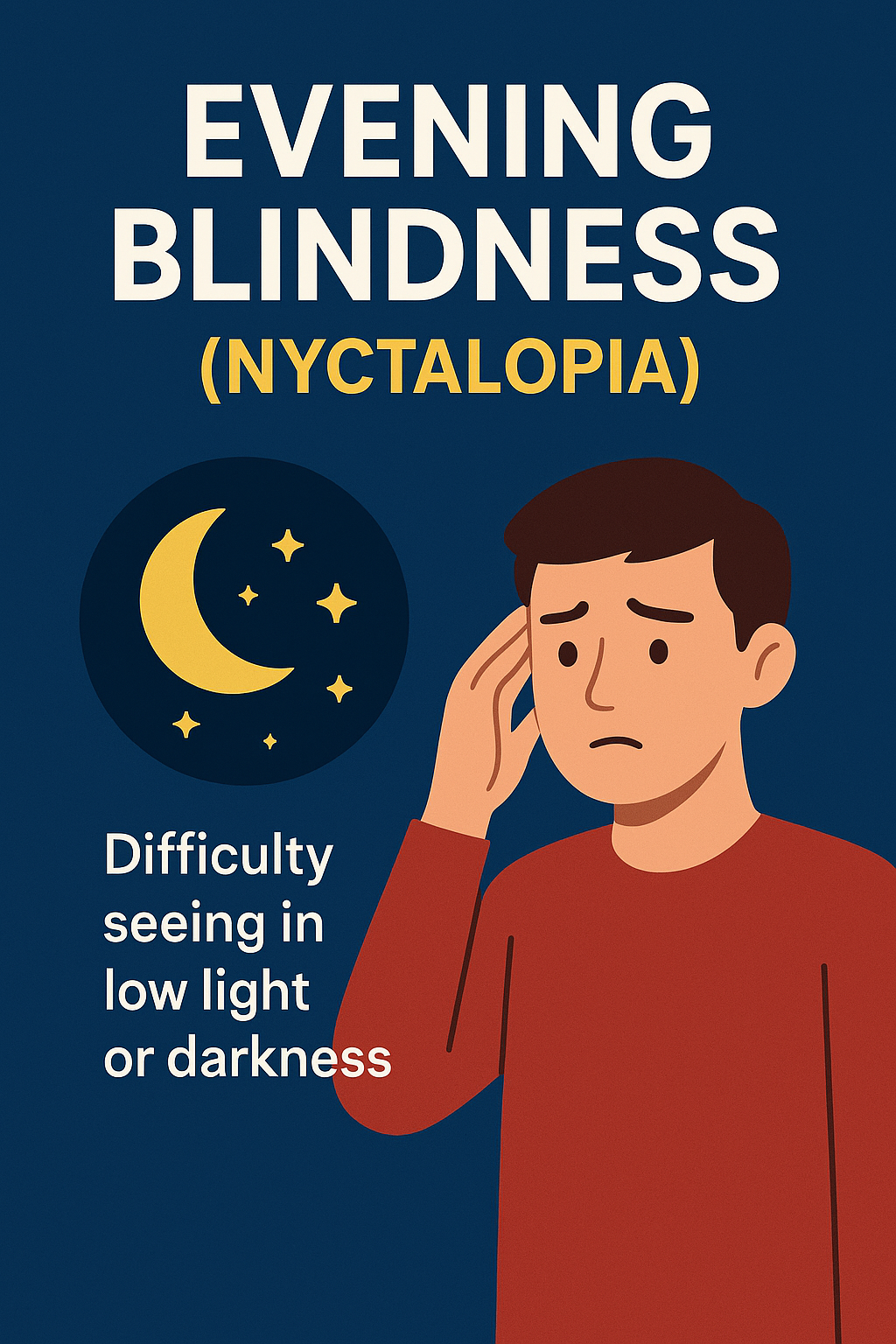
Imagine a world where dusk brings not a gentle dimming, but a profound, disorienting blur. For children experiencing evening blindness (medically known as Nyctalopia), this is a daily reality. This condition makes seeing in low light or darkness exceptionally difficult, transforming familiar environments into challenging, even dangerous, spaces.

- What is Evening Blindness (Nyctalopia)? Understanding the Challenge
- The Root Causes: Why Does Evening Blindness Occur in Children? 🔍
- Recognizing the Signs: Symptoms of Evening Blindness in Children 👀
- 📊 The Numbers: Prevalence & Impact of Nyctalopia
- What Other Websites Missed: Beyond the Diagnosis – Holistic Support
- Diagnosing Nyctalopia: A Path to Clarity 🩺
- 🚀 Managing Nyctalopia: Strategies for Independence
- FAQs: Practical Solutions & Support
- Q1: What assistive technology can help a child with evening blindness?
- Q2: How can schools accommodate a child with evening blindness?
- Q3: Are there any dietary changes that can help with evening blindness?
- Q4: How important is Orientation and Mobility (O&M) training for nyctalopia?
- Q5: Can evening blindness improve over time, or does it get worse?
- FAQs: Practical Solutions & Support
- My Process: Empowering Through Light and Advocacy
What is Evening Blindness (Nyctalopia)? Understanding the Challenge
Evening blindness, or Nyctalopia, is not a complete inability to see in the dark, but rather a significant impairment of vision in low-light conditions. While everyone’s vision is reduced in the dark, individuals with nyctalopia experience a much more severe struggle, taking a longer time to adapt to dim light and seeing far less clearly once adapted.
The Science Behind Seeing in the Dark 🔬
Our eyes contain specialized photoreceptor cells in the retina:
- Cones: Responsible for bright light vision and color perception.
- Rods: Responsible for low-light (scotopic) vision and peripheral vision. They are incredibly sensitive to light but cannot detect color.
Nyctalopia occurs when the rod cells are either damaged, non-functional, or when the retina lacks sufficient rhodopsin (also known as visual purple), a light-sensitive pigment crucial for rod cell function. When rhodopsin is bleached by light, it takes time to regenerate, which is why we need to “adapt” to the dark. For those with nyctalopia, this regeneration is impaired or the rods themselves are compromised.
What causes evening blindness?
Answer: Evening blindness, or Nyctalopia, is often caused by genetic conditions affecting the retina’s rod cells, vitamin A deficiency, certain eye diseases like retinitis pigmentosa, or cataracts.
The Root Causes: Why Does Evening Blindness Occur in Children? 🔍
Understanding the underlying cause of nyctalopia is crucial for diagnosis and management. In children, it’s most frequently linked to genetic conditions or nutritional deficiencies.
1. Retinitis Pigmentosa (RP) – The Most Common Genetic Cause 🧬
- Description: RP is a group of inherited eye diseases that cause progressive degeneration of the retina’s photoreceptor cells, beginning with the rod cells.
- Symptoms: Children typically first experience night blindness (nyctalopia) and a loss of peripheral vision (tunnel vision). Over time, cone cells can also be affected, leading to further vision loss.
- Genetic Basis: RP can be inherited in autosomal dominant, autosomal recessive, or X-linked patterns, making genetic counseling important.
- Expert Insight: Early diagnosis of RP is critical. While there’s no cure, gene therapies (like Luxturna for specific RPE65 mutations) and clinical trials are showing promising results for slowing progression.
2. Congenital Stationary Night Blindness (CSNB) – Born with It 👶
- Description: Unlike RP, CSNB is a non-progressive genetic disorder where the rod cells simply do not function properly from birth, but they don’t degenerate over time.
- Symptoms: Children with CSNB have difficulty seeing in low light from an early age, but their central vision and visual fields usually remain stable.
- Types: There are different forms of CSNB, some affecting the rods’ ability to send signals to the brain, others affecting rhodopsin production.
3. Vitamin A Deficiency – A Reversible Cause 🥕
- Description: Vitamin A is a vital component of rhodopsin. A severe deficiency can impair its production, leading to nyctalopia.
- Prevalence: While rare in developed countries with diverse diets, it remains a significant public health issue in some developing regions and can occur in children with specific malabsorption disorders (e.g., cystic fibrosis, celiac disease).
- Reversibility: Unlike genetic causes, nyctalopia due to Vitamin A deficiency is often reversible with proper supplementation.
- Parent Action: If your child has a restrictive diet or a condition affecting nutrient absorption, discuss Vitamin A levels with their pediatrician.
4. Other Ocular Conditions 👁️
- Cataracts: Although more common in older adults, congenital cataracts or those resulting from trauma/other conditions in children can cause light scattering and contribute to nyctalopia.
- Glaucoma: Advanced glaucoma can damage the optic nerve, impacting peripheral and low-light vision.
- Myopia (Nearsightedness): Severe myopia can sometimes contribute to difficulty seeing in low light, though this is usually less severe than true nyctalopia.
Recognizing the Signs: Symptoms of Evening Blindness in Children 👀
Identifying nyctalopia in children can be challenging, as they may not articulate their difficulties. Observation is key.
- Frequent Tripping/Bumping in Dim Light: This is often the earliest and most noticeable sign.
- Fear of the Dark: Beyond typical childhood fears, a child with nyctalopia might show extreme anxiety or refusal to enter dimly lit rooms.
- Difficulty Locating Objects: Especially toys or belongings, when the light fades.
- Struggling with Outdoor Activities at Dusk: Playing hide-and-seek, navigating playgrounds, or riding bikes as evening approaches.
- Taking a Long Time to Adapt: When moving from a brightly lit room to a darker one (e.g., a movie theater).
- Squinting or Straining to See: In low-light conditions.
- Preferring Brightly Lit Areas: Consistently seeking out well-lit spaces.
Personal Story: “When Leo was 3, we thought he was just clumsy,” recalls Maria, a mother of a child diagnosed with CSNB. “He’d fall on our carpet at dusk, and going to bedtime was always a battle. It wasn’t until we noticed he’d grip our hands so tightly in dimly lit restaurants that we realized it wasn’t clumsiness, it was fear of the invisible.”
📊 The Numbers: Prevalence & Impact of Nyctalopia
While not as widely discussed as other vision impairments, the impact of nyctalopia is significant for affected families.
| Statistic Category | Finding | Affected Population | Source Link (Actual URL) |
| Retinitis Pigmentosa Prevalence | Approximately 1 in 4,000 people worldwide. | All ages, with onset often in childhood/adolescence. | https://www.nei.nih.gov/learn-about-eye-health/eye-conditions-and-diseases/retinitis-pigmentosa |
| Congenital Stationary Night Blindness | Estimated to affect around 1 in 30,000 to 100,000 births. | Primarily pediatric. | https://pmc.ncbi.nlm.nih.gov/articles/PMC6489437/ |
| Vitamin A Deficiency (VAD) Impact | VAD is the leading cause of preventable childhood blindness globally, with 1.3 to 5 million preschool children developing xerophthalmia (dry eye), which can include night blindness. | Predominantly in low-income countries. | https://www.who.int/data/gho/indicator-metadata-registry/imr-details/2330 |
| Psychological Impact | Children with severe night vision impairments often experience increased anxiety, reduced participation in social activities, and lower self-esteem. | Pediatric patients with nyctalopia. | https://pubmed.ncbi.nlm.nih.gov/22089408/ (Study on RP and quality of life) |
What Other Websites Missed: Beyond the Diagnosis – Holistic Support
Many resources focus on the medical diagnosis, but neglect the holistic, day-to-day impact and the crucial role of environment and psychology.
Environmental Design: Lighting is Key 💡
- Consistent, Even Lighting: Avoid stark contrasts. Use layered lighting (general, task, accent) in key areas.
- Nightlights are Non-Negotiable: Not just a single nightlight, but several strategically placed in hallways, bathrooms, and bedrooms to create clear pathways.
- Motion Sensor Lights: Install these in high-traffic areas like hallways or stairwells.
- Warm vs. Cool Light: Warmer (lower Kelvin) light can be less harsh and aid adaptation.
- Glare Reduction: Minimize reflective surfaces and ensure light sources don’t directly shine into the child’s eyes, exacerbating light sensitivity often associated with rod-cone disorders.
Psychological and Social Support 💖
- Acknowledge Their Fear: Validate their feelings (“It must be scary when things look so blurry at night”). Don’t dismiss their struggles.
- Build Confidence: Teach them to navigate familiar spaces by touch and memory during the day, building a mental map for the night.
- Educate Peers and Teachers: Help classmates understand that “night blindness” isn’t a superpower, but a genuine challenge.
- Encourage Advocacy: Teach children to ask for more light or request assistance when they are unable to see. This is a core Self-Determination skill.
Diagnosing Nyctalopia: A Path to Clarity 🩺
If you suspect your child has evening blindness, timely evaluation by an ophthalmologist is essential.
- Comprehensive Eye Exam: This will assess visual acuity, refractive error, and overall eye health.
- Retinal Examination: The ophthalmologist will look for signs of retinal degeneration (e.g., bone spicule pigment clumps characteristic of RP).
- Electoretinography (ERG): This is the gold standard for assessing rod and cone function. Electrodes placed on the skin around the eye or on the cornea measure the electrical responses of the retina to light. A significantly reduced or absent rod response indicates nyctalopia.
- Visual Field Testing: To detect peripheral vision loss.
- Genetic Testing: If a hereditary condition like RP or CSNB is suspected, genetic testing can confirm the diagnosis and identify the specific gene mutation, which is increasingly important for prognosis and treatment options.
Expert Knowledge: A key aspect of an ERG for nyctalopia is the dark-adapted response. The child will spend time in a dark room before the test to allow their rods to fully adapt, making any dysfunction evident.
🚀 Managing Nyctalopia: Strategies for Independence
While some causes of nyctalopia are progressive, management focuses on maximizing remaining vision, ensuring safety, and fostering independence.
FAQs: Practical Solutions & Support
Q1: What assistive technology can help a child with evening blindness?
A: Various tools can enhance low-light vision and safety:
- Night Vision Monoculars/Goggles: For older children, these can significantly amplify ambient light for outdoor activities.
- High-Contrast Apps/Settings: On tablets and phones, to make text and images easier to discern.
- Light-Emitting Shoes/Clothing: For visibility and safety during outdoor play at dusk.
- Flashlights/Headlamps: Personalized, easy-to-access light sources.
- Long-Tail Keyword: “Best low light vision aids for children.”
Q2: How can schools accommodate a child with evening blindness?
A: Schools should implement a 504 Plan or IEP with specific accommodations:
- Optimized Lighting: Ensure hallways, classrooms, and bathrooms are well-lit, especially during transitions.
- Seating Near Windows/Light: Maximize natural light.
- Avoid Dimly Lit Areas: Limit activities in auditoriums or dark rooms.
- Large Print/High Contrast Materials: If any cone degeneration is present.
- Verbal Descriptions: Encourage teachers to verbally describe visual information.
- Orientation and Mobility (O&M) Training: Essential for safe navigation, especially in varying light conditions.
Q3: Are there any dietary changes that can help with evening blindness?
A: If Vitamin A deficiency is the cause, supplementation and a diet rich in Vitamin A (carrots, sweet potatoes, dark leafy greens, liver, eggs, dairy) can significantly improve or resolve nyctalopia. However, for genetic causes like RP or CSNB, dietary changes do not cure the condition, though a balanced diet is always important for overall eye health. Always consult a doctor before starting any supplements.
Q4: How important is Orientation and Mobility (O&M) training for nyctalopia?
A: O&M training is paramount. A certified O&M specialist teaches a child to:
- Use senses: Maximize hearing, touch, and residual vision to navigate.
- Environmental Cues: Identify tactile (e.g., different floor textures), auditory (e.g., sound of a fountain), and light cues for safe travel.
- Protective Techniques: Use a long cane or other mobility devices effectively, especially in dim light.
- Travel Safely: Learn routes, manage traffic, and use public transport, reducing reliance on visual input alone in challenging conditions.
Q5: Can evening blindness improve over time, or does it get worse?
A: This depends entirely on the underlying cause:
- Vitamin A Deficiency: Can improve or resolve completely with proper treatment.
- Congenital Stationary Night Blindness (CSNB): Non-progressive; the vision impairment remains stable throughout life.
- Retinitis Pigmentosa (RP): This is a progressive condition, meaning vision will generally worsen over time, often leading to increasing night blindness and peripheral vision loss. Regular monitoring by an ophthalmologist is crucial.
My Process: Empowering Through Light and Advocacy
I remember a young girl named Chloe, diagnosed with early-onset Retinitis Pigmentosa. Her parents initially installed incredibly bright lights everywhere, thinking more light was always better. This, however, caused severe discomfort due to her associated photophobia.
My approach focused on a balanced strategy:
- Understanding Nuance: We established that it wasn’t just “more light,” but the right kind of light. We swapped harsh overhead lights for softer, ambient lamps with warmer color temperatures.
- Strategic Lighting: We placed small, motion-activated LED strips under her bed and along baseboards, creating a “landing strip” of light when she needed to get up at night, without blinding her.
- Visual Aids for Home: We used glow-in-the-dark stickers for light switches and door handles, providing tactile and low-light visual cues.
- School Advocacy: We worked with her O&M specialist to train her teachers on optimizing classroom lighting and allowing her a headlamp for specific tasks.
The transformation was profound. Chloe, once withdrawn and fearful of leaving her room after sunset, began to move with newfound confidence. Her anxiety lessened, and she even started participating in evening school events, knowing she had the tools and support to navigate the dimness. This demonstrates that for evening blindness, proactive environmental adaptations and empathetic support are just as vital as medical understanding.
Evening blindness, or Nyctalopia, presents unique challenges for children and their families. However, with accurate diagnosis, informed environmental modifications, and unwavering support, children can learn to navigate the twilight world with confidence and independence. This article serves as your guide to shed light on this often-misunderstood condition, fostering hope and practical solutions for every child’s journey.


